

Hawaiʻi’s Fishing Industry Wants You To Know Where That Fresh Ahi Came From
State lawmakers have introduced a bill to ban the sale of raw ahi in retail establishments unless it carries a label that says the country where the tuna was landed.
Spicy, traditional, mayonnaise-laden or wasabi-spiked, ahi poke may not be as local as many are led to believe.
The bigeye tuna, the prized main ingredient, could hail from the Indian Ocean, the Atlantic or the Pacific. It may have been gassed with carbon monoxide to redden its browning flesh. Or it may be previously frozen. It could have been caught by exploited fishers. Or a member of Hawaiʻi’s longline fishing fleet may have caught it.
But for customers, there’s often no way to know.
Retailers have been trying to hoodwink their customers about “locally made” and “fresh” poke for too long, according to the local fishing industry, which supports legislation that would require raw ahi retailers to include country of origin on labels.
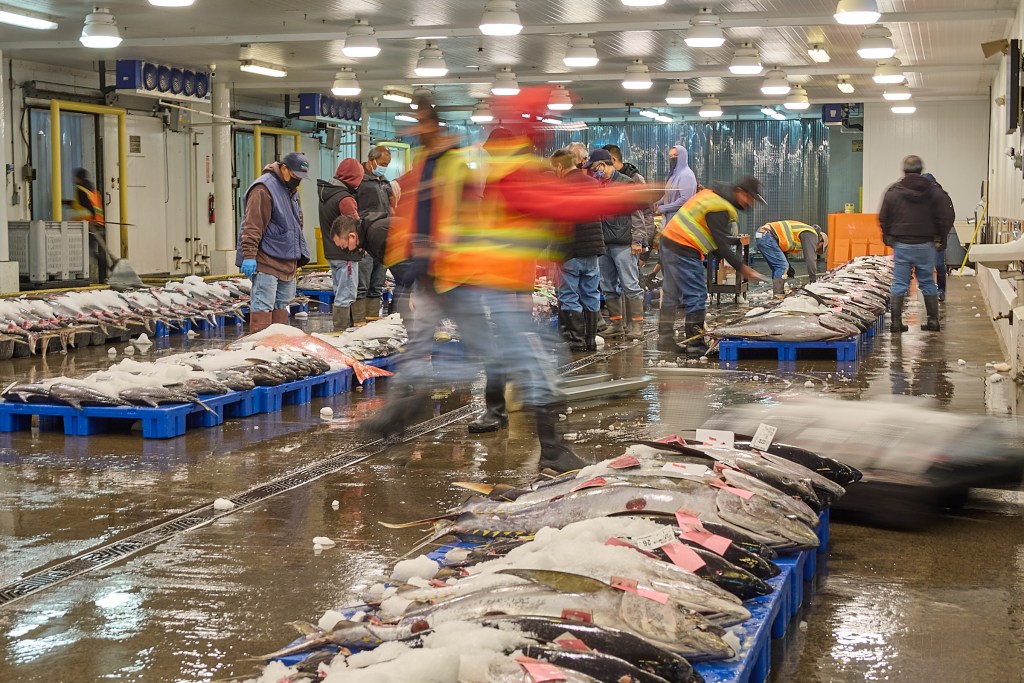
Senate Bill 129 and House Bill 534 call on retail outlets selling any raw ahi, including in poke and sushi, to clearly label where the fish was landed. The bills were introduced earlier this month and await scheduling of a committee hearing.
Even if they don’t read the labels, most people want to know where their fish comes from, said Hawaiʻi Seafood Council program manager John Kaneko.
Local grocery stores and poke outlets vary on how much they currently divulge about the origin of the ahi they sell. Poke appears in counters with labels declaring the product “fresh” or “locally made” when the main ingredient might be previously frozen and precut but packaged or prepared in house.
Federal law since 2008 has required all meat products, including fish, to be clearly labeled with country of origin. But that requirement no longer applies once a product undergoes “substantial transformation,” which the U.S. Department of Agriculture defines as when “a new article with a different name, character, and use is created.”
So ahi steaks would have to be labeled. But not ahi poke.
Without proper labelling that ahi could be from African fisheries and transshipped to Vietnam before making its way into Hawaiʻi’s poke bowls, said Eric Kingma, executive director of the Hawaiʻi Longline Association. The trade group represents a fleet of roughly 145 longline boats based out of Honolulu that primarily target bigeye tuna.
“It could have been frozen for years,” Kingma said.
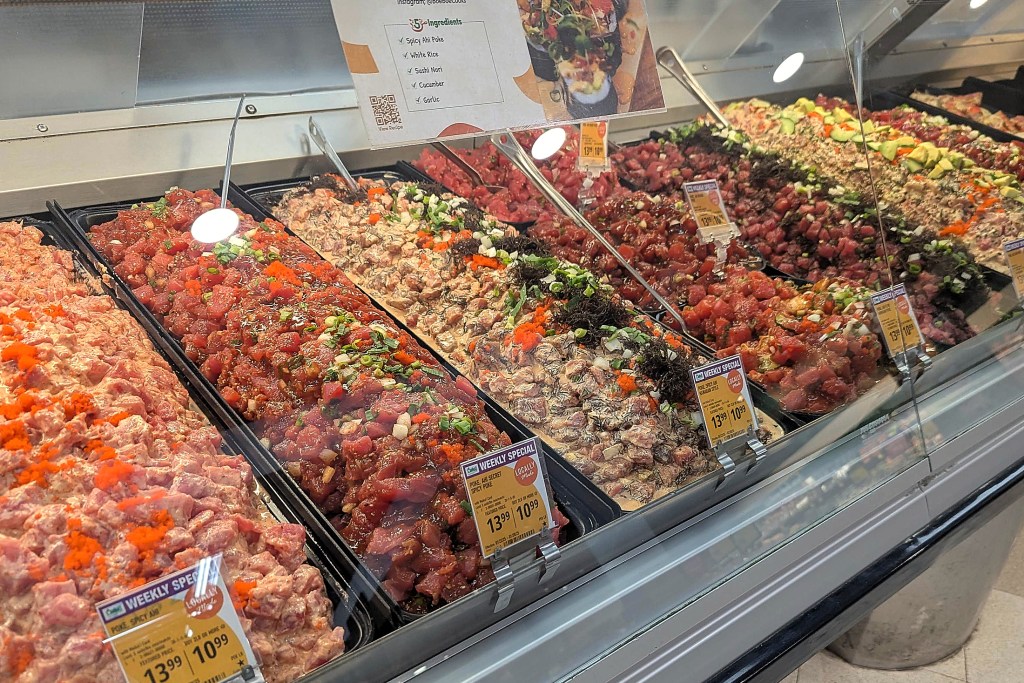

Nevertheless, on any given Friday, the prices vary as wildly as the labels. At Safeway, one pound of previously frozen poke was selling for $8.99 and fresh poke for $18.99 per pound. At Foodland, previously frozen ahi poke is not clearly labeled and runs for about $13.99 per pound. Times Supermarket sells its previously frozen ahi poke for $12.99 per pound, labeled “PF.” None listed the ahi’s origin.
Ashley Watts, whose Kaimukī business Local I‘a specializes in fish caught by small boat fishers, said more transparency in the seafood supply chain is needed, across the board. And mandating labeling is a good first step.
“There’s been a loophole of imported poke cubes being sold as local for a long time,” Watts said. “I don’t know if this will help them not buy those cubes but I think it will bring light on problems that we do have.”
The legislature has recognized the power of labelling and its ability to misguide consumers, as many products capitalize on Hawaiʻi’s name in branding. Last year, the state created new labelling regulations for Hawaiʻi’s coffee and macadamia nut industries.
So it is only natural ahi fishers receive the same support as a key player in the local food economy, HB 534 sponsor Rep. Tyson Miyake says, especially as consumers appear so supportive of increasing local food production.
“I personally didn’t know that a lot were just using ‘freshly made’ or ‘locally prepared’ but the ahi wasn’t from Hawaiʻi.” Miyake said. “So this is basically to protect Hawaiʻi consumers and Hawaiʻi fishermen.”
The ‘Stark Difference’ Between Foreign And Domestic
Fishing standards differ among countries, with different labor, sustainability and processing standards playing a major role in the eventual shelf price of seafood.
Those standards, and prices, mean fleets from nations such as China or Taiwan may flout international best practices by overfishing, exploiting resources and breaching labor standards for fishers. The fleets are subsidized by their governments too, to the tune of about $35 billion annually.
“There’s a stark difference between a foreign fleet and a U.S. fleet,” Kingma said.
U.S. standards are generally higher, with restrictions on how much can be caught, the welfare of fishers, sustainability issues, species protection and fishing areas, among other things. That means U.S. seafood is generally more expensive, sharing a smaller part of the national seafood market — imports are worth about $25 billion annually, while local seafood is worth approximately $11 billion.
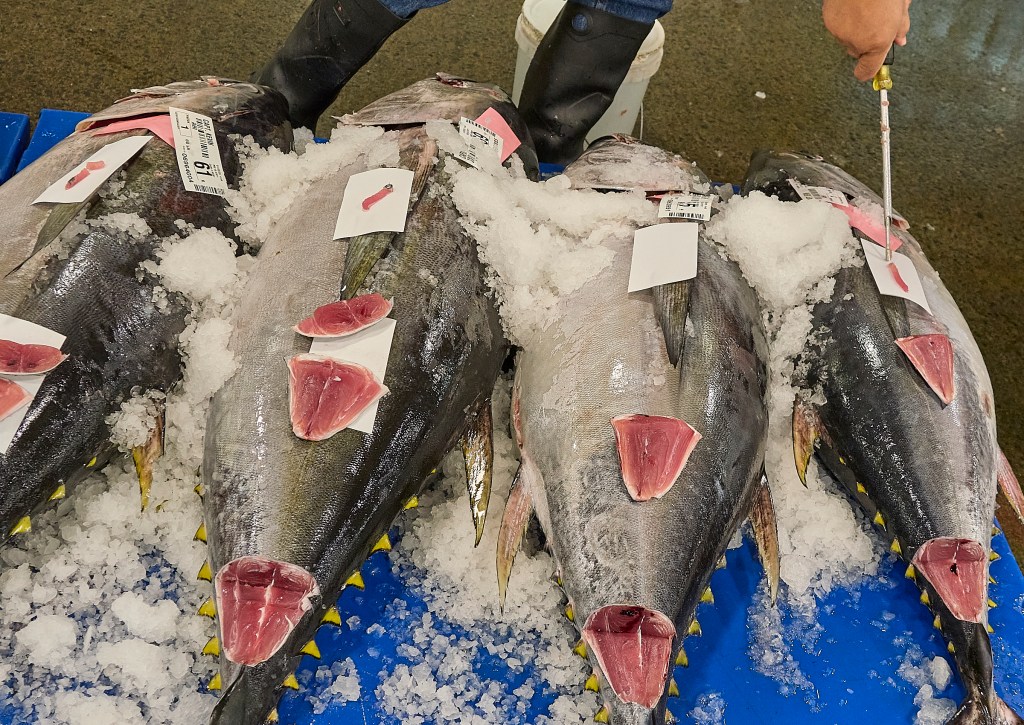
Within those imports is pre-cubed, pre-frozen ahi, which makes its way to local poke counters.
That tuna can retain its color almost indefinitely thanks to carbon monoxide gassing of the flesh, a process banned in many nations, and injection with a solution of vitamin C, beet juice and paprika, among other things.
That fish has been dubbed “vitamin tuna.”
“Most of the ahi poke, previously frozen, sold at retail in Hawaiʻi is that product,” Kingma said. “No one in Hawaiʻi is doing that.”
Empowering Local Fishermen To Speak Up
There is a clear price difference between local and imported ahi, generally about $10 per pound, which can be the determining factor for customers. Some prefer locally caught, fresh ahi in their poke, while others want to save money.
Flavor and texture cannot be discounted either, as many regulars at Tamura’s Market can attest, seafood program manager Shelly Ignacio said.
“If they see it’s not local, they might go somewhere else,” Ignacio said.
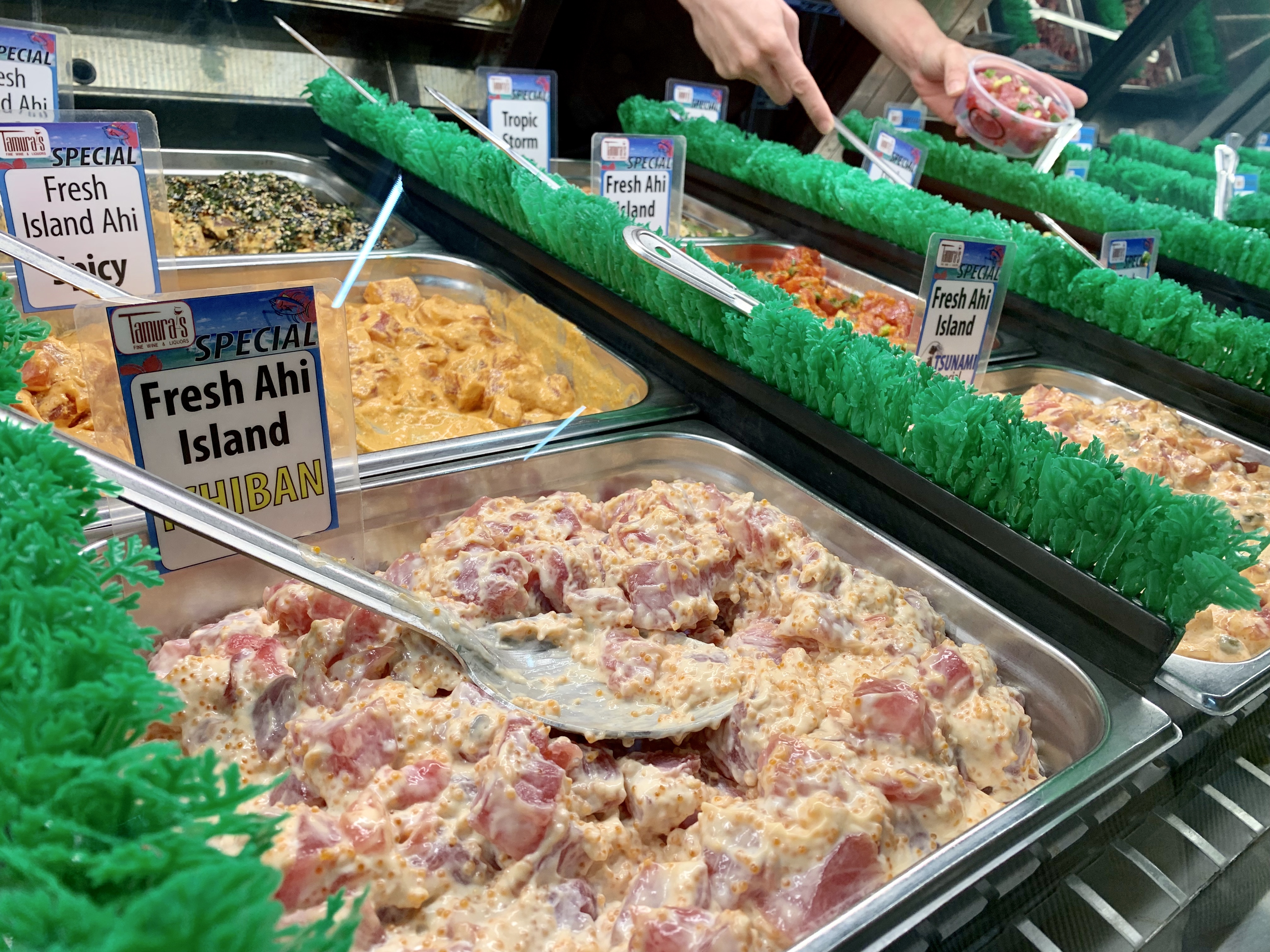
In early 2024 Tamura’s began exclusively using ahi from the Honolulu Fish Auction in response to local demand, Ignacio said, having earlier sold both local and previously frozen ahi “coming in from all over the world.”
On Friday the auction price for ahi sat at an average of $5.94 per pound — $6.20 for bigeye tuna and $5.68 for yellowfin, the other type of tuna known as ahi in Hawaiʻi — but it changes everyday.
Tamura’s poke prices fluctuate with the auction, which Ignacio said regular customers understand and even appreciate. But for the undiscerning customer, it’s hard to know the origin of the tuna they’re eating, “especially if it’s in a lot of the places I know that sell previously frozen ahi,” Ignacio said.
Foodland, which sells previously frozen poke, said in a written statement that it had not read the legislation but would comply should the rules pass.
Watts of Local I‘a said there is a lot more work to be done to help educate consumers on the realities of commercial fisheries, as well as its potential to help the state achieve its long-held goals to increase local food production and consumption.

The local ahi industry, which Kingma said is worth $120 million at the dock, is already more valuable than Hawaiʻi’s top agricultural commodity, seed corn. Once it is sold and transformed into various products like poke, its value skyrockets.
But fish is too often left out of the conversation about decreasing the state’s reliance on imported food from the U.S. mainland or elsewhere, local fishing industry experts said, even though its per-capita seafood consumption is the highest in the country.
It comes down to information and education, which Watts hopes will ramp up in the years to come.
“The fishermen have never been empowered to speak up,” Watts said. “They never really feel like they have a voice to say anything.”
“Hawai‘i Grown” is funded in part by grants from the Stupski Foundation, Ulupono Fund at the Hawai‘i Community Foundation and the Frost Family Foundation.

