Hawaiʻi Legislature: Green Fee, New Taxes, Fireworks Enforcement Move Ahead
As the Legislature reaches the halfway mark, the House killed a bill to remove vaccine exemptions for schoolchildren while the Senate approved creating an illegal fireworks enforcement division.
Lawmakers in the Hawaiʻi Legislature acted on hundreds of bills Tuesday as the session nears its halfway point.
The House voted to approve new taxes on capital gains and corporations and to eliminate dozens of tax credits. The measures could generate upwards of $390 million by 2031, helping to offset a massive income tax reduction lawmakers passed last year.
The Senate, meantime, is poised to approve a bill to raise revenue to pay for climate change mitigation. The Green administration has not been successful in advancing what’s sometimes called a green fee or visitor-impact fee, but the idea remains alive this session.
Thursday is the deadline for House bills to cross to the Senate and vice-versa.
The Legislature is set to adjourn May 2, but there is already talk that a special session may be necessary later this year in response to the Trump administration’s policies and how they might impact the state’s economy.
Vaxes, Taxes In The House
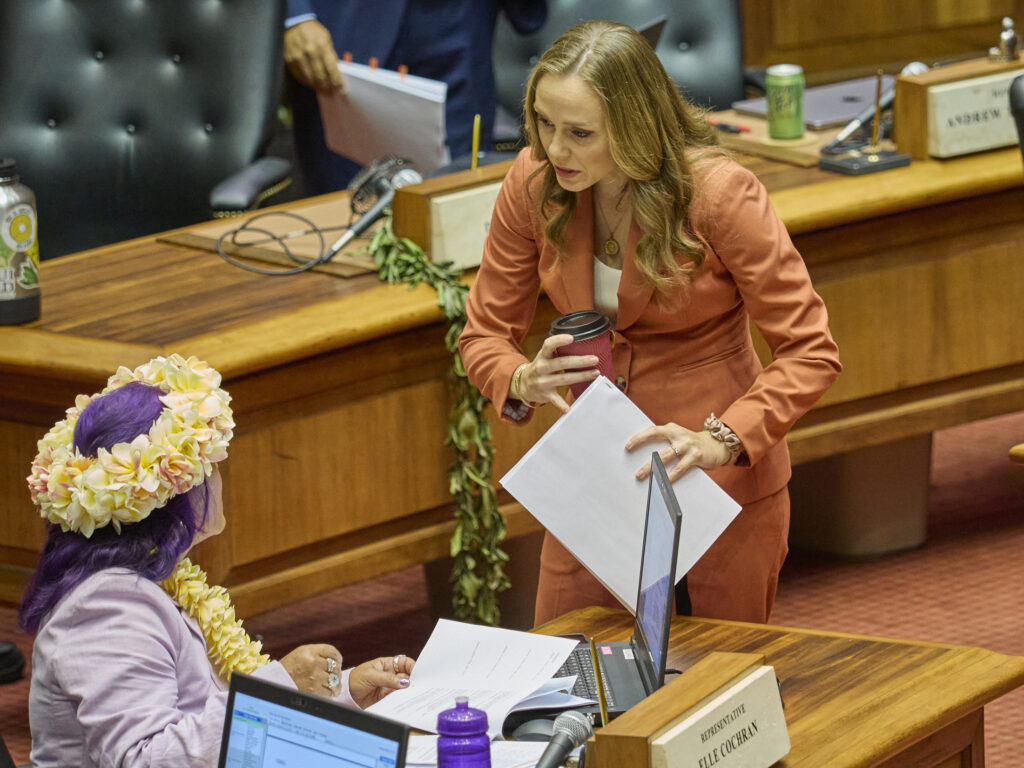
A heated discussion on a bill to regulate midwives lasted about an hour before lawmakers voted to move that bill to the Senate.
However, the House also voted unanimously to effectively kill House Bill 1118, which would have forced parents to get vaccinations for their kids even if they had religious objections. The bill has generated thousands of pages of testimony, far more than is typical for most bills.
Representatives also advanced House Bill 476, which raises the tax on capital gains earned through investment income and the sale of certain property.
Advocates of the tax increases have said that those capital gains are often taxed at rates lower than earned income. Rep. Della Au Belatti said the bill “closes a loophole that benefits the wealthiest among us while local families shoulder the burden.”
If HB 476 ultimately becomes law, it could generate more than $84 million in tax revenues by the end of the 2026 fiscal year.
Two other revenue bills also cleared the House with little discussion.
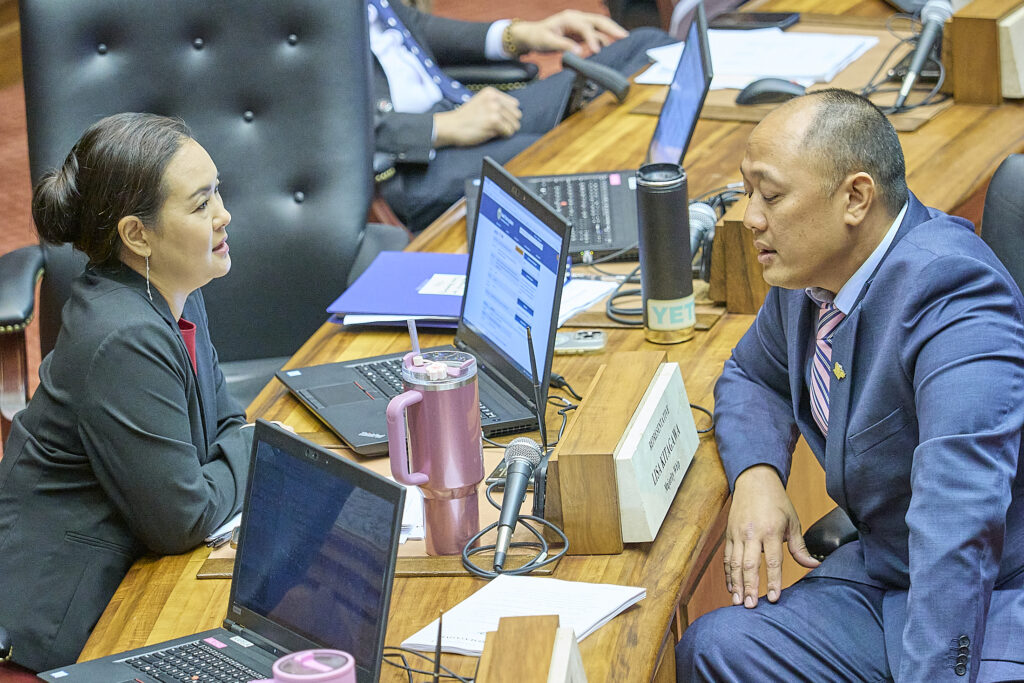
House Bill 1146 would tax members of so-called S corporations, entities that pass profits and losses on to shareholders. The proposed tax could potentially generate up to $29.3 million come 2026.
House Bill 1369 would repeal a raft of tax credits and general excise tax exemptions. The Department of Taxation estimates that could free up $33.8 million in 2026, with that value rising to more than $260 million in 2031 due to the phaseout of various credits.
Help For HECO
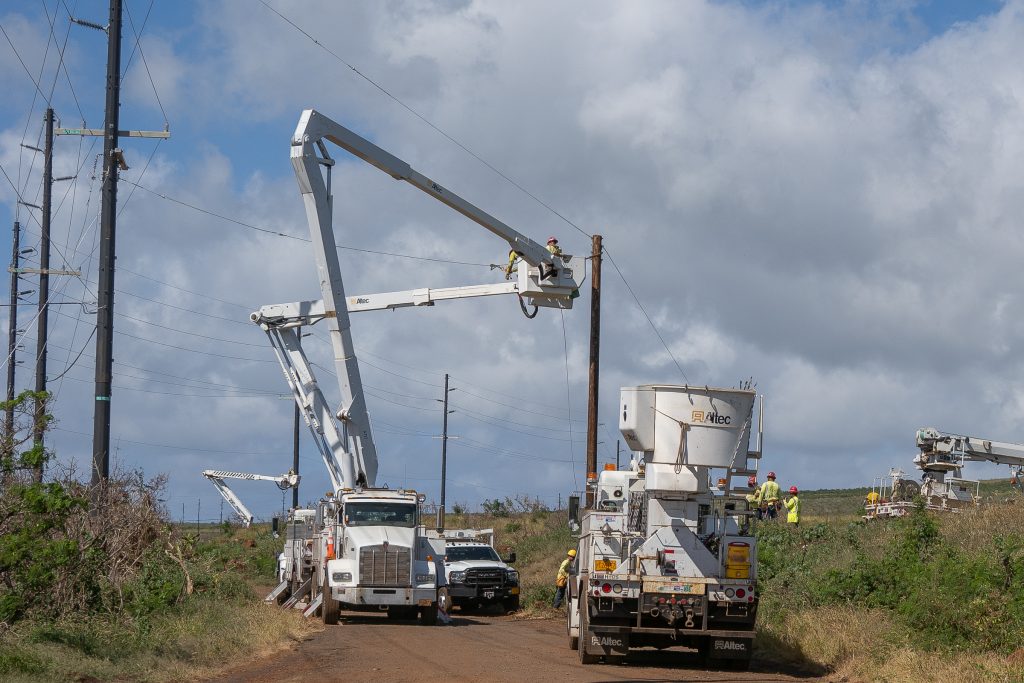
The House also passed a measure that would help Hawaiian Electric Co., the state’s largest electric utility that was partially responsible for the August 2023 wildfires that destroyed much of Lahaina and killed more than 100 people.
In its original form, the bill would have required ratepayers to pick up the company’s $1 billion contribution to the Wildfire Recovery Fund. That worked out to about $48 per customer a year.
The measure was amended to split the cost evenly between ratepayers and HECO’s shareholders — $500 million each. How much that will cost customers hasn’t been determined.
The bill that cleared the House on Tuesday did not include dollar amounts that the ratepayers and shareholders would be responsible for picking up.
Saddling ratepayers and Hawaiʻi residents, who already struggle under a high cost of living, was unpalatable to many House members.
“Balancing the bill of HECO (and Maui Electric Co.) on the backs of ratepayers, and in particular fire survivors in Lahaina, like myself — a hard no,” Maui Rep. Elle Cochran said.
Supporters warned that killing the bill could end up costing HECO customers more in the long run.
HECO’s bond rating, and therefore its ability to borrow money to build or improve infrastructure, has fallen due to its role in the wildfires. The company sought a similar measure last year to shore up its credit rating.
“There is a scenario where we don’t pass this, there’s a need for capital to be accessed and that costs ratepayers more,” Big Island Rep. Nicole Lowen said.
The House also voted unanimously to close a loophole on campaign donations from the officers of government contractors and recipients of state and county grants.
Move The Landfill And The Stadium
Representatives also sent a bill to the Senate that would pull funding from the development of a new Aloha Stadium and hand it to the University of Hawaiʻi to build a stadium facility in Mānoa. Developers now estimate that the new stadium could cost upwards of $600 million.
Rep. Andrew Garrett, who introduced the bill, worried that the 25% tarriffs levied by the Trump administration on imports from China and other countries could raise construction costs, potentially raising the cost of a stadium that has already become significantly more expensive since lawmakers first approved funding in 2019.
Although the university has opposed plans to put a full-fledged stadium on its Mānoa campus, Garrett said that shifting in that direction could help secure a permanent home for its athletics program.
“This isn’t just about football,” Garrett said. “This is about ensuring student athletes are not left behind due to poor planning and misplaced optimism.”

And the House also passed a measure to ban the construction of new landfills above aquifers.
Last year, the city unveiled plans to relocate Oʻahu’s landfill to a site in Wahiawā above a freshwater aquifer. The plan has drawn criticism and led to the proposed ban.
The measure was opposed by Westside lawmakers who worry that the City and County of Honolulu would keep the current landfill near Nānākuli open if it isn’t allowed to find an alternative site.
“The problem may be out of sight, out of mind for many of you, but not for me and my colleagues,” said GOP Rep. Chris Muraoka of Waiʻanae.
Rep. Darius Kila, a Democrat from Nānākuli, also opposed the bill. He urged lawmakers to evaluate how Hawaiʻi manages trash and find ways to reduce waste.
Lowen, who chairs the House Energy and Environmental Protection Committee, supported the bill but acknowledged the concerns from the Westside lawmakers and others who have said that measures leave city officials with few places to put a new dumpsite.
“There’s really no good place to put a landfill,” she said.
‘Excited Delirium’ In The Senate
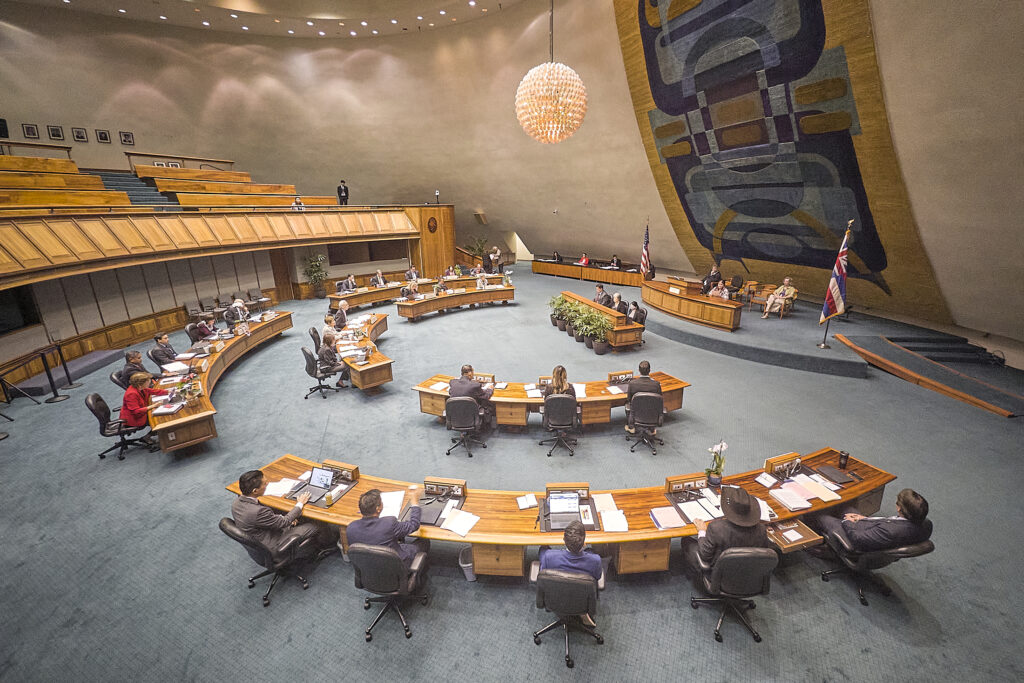
In comparison to the House floor session — which lasted about six hours — there was little drama on the Senate side.
In a floor session that lasted barely 90 minutes — and with very little voting opposition or discussion — senators approved bills to set up an illegal fireworks enforcement division in the Department of Law Enforcement, to prohibit excited delirium from being recognized as a valid medical diagnosis or cause of death (the House advanced its own excited delirium bill on Tuesday) and to allow police and sometimes citizens to break into cars to protect unattended pets.
Some of the Senate’s current legislation builds on earlier bills and appropriations that came after the 2023 Lahaina fires. Senate Bill 11, for example, requires the Department of Land and Natural Resources to create and update annually a wildfire hazard map.
Under the proposed legislation, private and public property owners would also be responsible for trimming grasses close to public rights of way and utility lines, and electric utilities would be allowed to enter private and public property to trim or remove hazardous vegetation. The state fire marshal, a position created last year by the Legislature, would conduct enforcement.
On Thursday, the Senate is expected to take up a final batch of bills to be considered before sending them to the House. They include measures setting up half-mile buffer zones around schools and parks for the use of pesticides, restricting how much private money can be placed in a special fund for a future Aloha Stadium, and increasing the transient accommodations tax to help pay for climate change mitigation efforts.
The House will likely have a light agenda Thursday after moving more than 370 bills in the last week.