Trump’s Actions Are Creating A Budget Problem For Hawaiʻi Lawmakers
Halfway through the session, legislative priorities are emerging. But the new uncertainties mean lawmakers may need a special session to fine tune.
The chaotic opening weeks of President Donald Trump’s second term have put the 2025 Hawaiʻi Legislature in a wait-and-see posture, making it almost impossible to confidently plan new initiatives or commit big money to solve old problems.
Many Hawaiʻi Democrats say they want to use state funds to try to backfill money stripped from programs targeted by the new federal administration, especially if funding is cut from lifelines for the poor such as Medicaid and the Supplemental Nutrition Assistance Program.
But no one can even guess yet how much money it might take to do that.
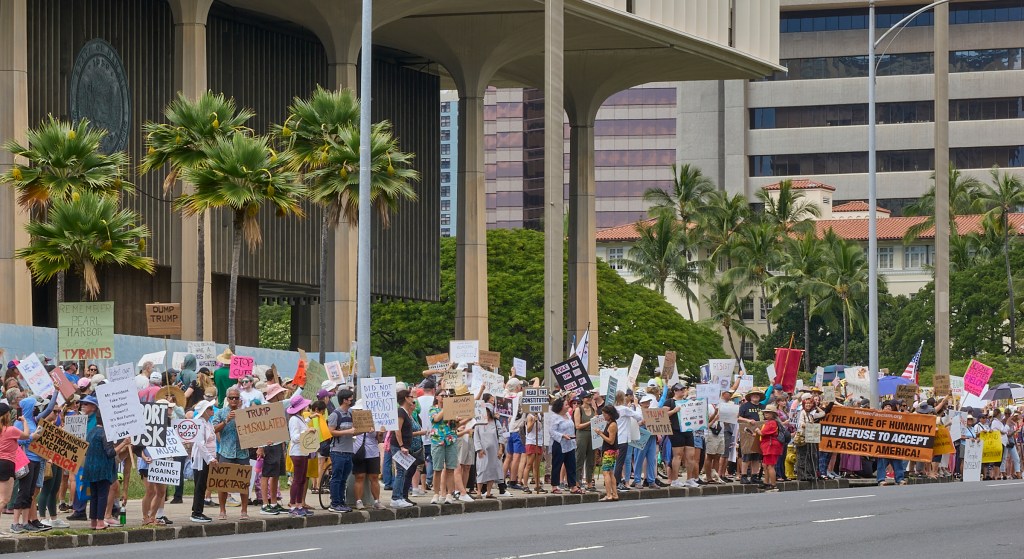
Lawmakers have barely reached the halfway point of this session, yet leading Democrats are already warning a special session may be needed later this year to respond to whatever federal budget cuts the Republican Congress and Trump administration finally impose.
Still, state lawmakers have been focused in recent weeks on prioritizing what bills they can pass at this point, and what they can’t.
As the House and Senate prepare for major floor votes Tuesday and Thursday, measures still alive would prohibit landfills over major aquifers, pay for climate mitigation efforts, beef up funding to combat invasive species, stabilize property insurance costs and set aside funds for the financing of workplace housing.
But already dead this session are an Office of Hawaiian Affairs initiative to build residential towers in Kakaʻako Makai, a paid family leave and medical insurance program, universal free school meals and insurance and licensing requirements for electric bikes.
Lawmakers are also considering a number of possible tax increases that could help offset any losses in federal funding in the years ahead, but those tax proposals are mostly dead or appear unlikely to pass this year.
The Biennial Budget Puzzle
Gov. Josh Green’s proposed budget for the next two years assumed that more than $3.8 billion in federal funding for operations would flow into state government each of the years, along with another $1.7 billion over those two years in federal support for highways and other construction projects.
The state departments with the most money at stake are the education and human services departments, although the Department of Labor and Industrial Relations also relies heavily on federal funding.
According to Green’s proposed budget, the state Department of Human Services expected to receive about $3 billion each year in federal money, including funding for Medicaid and SNAP. Those programs provide health care and food assistance to Hawaiʻi’s poorest residents.
The Hawaiʻi Department of Education was counting on about $340 million in federal funding for public education in each of the next two years. The state labor department expected to receive about $51 million each year, according to Green’s proposed budget.
No one knows how much of that money is now at risk.
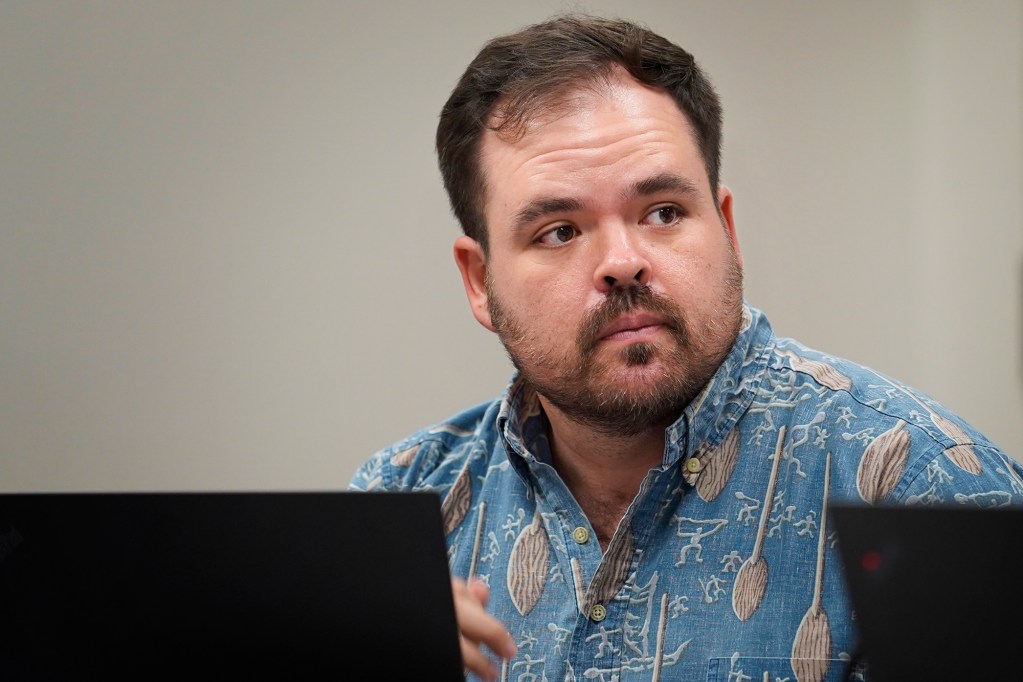
“A lot of the federal actions on the funding side of things, we’re not going to know the full implications for quite a while,” said House Democratic Majority Caucus Leader Chris Todd.
Lawmakers are watching Trump’s executive orders and the court challenges to those orders, while also monitoring the federal budgeting process. The long-term implications of the new federal budget may not be known until late summer or the fall, Todd said.
“Obviously there’s a lot of concern, but there’s so many mixed signals it’s kind of hard to know whether this is a very significant impact particularly to our state budget, and to necessary services that literally help keep people alive here in Hawaiʻi,” he said.
The state may be able to fill some shortfalls and absorb some of the impact of federal budget cuts, Todd said, but “depending on the scope of these cuts, the state does not have the capacity to absorb that completely.”
Freshman state Rep. Matthias Kusch of Hilo said the Legislature is “being pretty conservative from a fiscal standpoint because we just don’t know where our federal funds — which is a significant chunk of the state budget — where that’s going to be.”
“I don’t think you’ll see any gigantic programs spooling up this year,” said Kusch, who sits on the House Finance Committee.
Next Steps On Spending
The House, the Senate and the Green administration are in active talks, according to Todd, to identify “what are the areas where, if there is a large, substantial cut on the federal side of things, we’re prepared to step in.”
“These are in a lot of ways kind of life-and-death situations,” he said, “and also just making sure people have food on the table, and medical services.”
The state’s options may be limited somewhat by decisions lawmakers have already made.
The Legislature and Green approved the largest package of state tax cuts in Hawaiʻi history last year, designed to provide residents with urgently needed relief from Hawaiʻi’s high cost of living. Those tax cuts leave the state less money to cope with any federal budget cuts.
The tax cut package is to be phased in over each year of the Trump administration, and will mean more than $2.4 billion in total lost state revenue over the next three fiscal years, according to data from the state Tax Department.
When asked about the impact of those tax cuts as the state responds to Trump administration cuts, Todd pointed out the Legislature tweaks the tax code every year.
“Part of that conversation is, well, if we do end up with this massive hole that we need to fill, we’re going to have to look at all opportunities for that,” he said.
The House Finance Committee last week considered House Bill 476 to increase the state capital gains tax, a measure that could increase state tax collections by about $85 million a year if it passes.
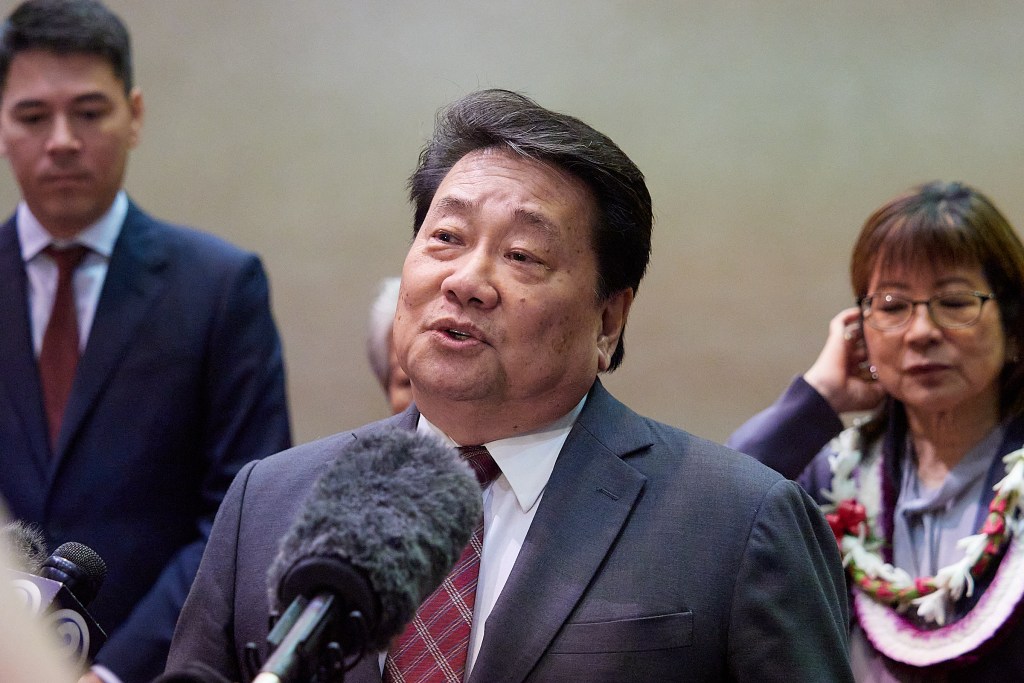
Finance Committee Chair Kyle Yamashita does not seem determined to push it through to final approval. The committee didn’t consider a capital gains increase bill last year, “so I thought we could have a discussion on it,” Yamashita told the Finance Committee members last week.
The committee passed the measure, but it needs to win the approval of the full House this week to stay alive.
Hawaiian Homelands
How budget negotiations shake out likely will have an impact on whether agencies serving Native Hawaiians receive additional funding.
In 2022, lawmakers passed a historic cash infusion of $600 million for the state Department of Hawaiian Home Lands. The department has put that to use on more than two dozen projects that could eventually result in about 6,000 housing lots to provide DHHL’s beneficiaries with homes.
Kali Watson, the department chairman, has told lawmakers that the agency will likely need an additional $600 million to continue all of those projects.
House Bill 606 would give the department another cash boost, but the amount of money involved isn’t known.
The Senate is also advancing a measure to fund DHHL’s purchase of a hangar in Kalaeloa. The department wants to turn it into a production facility for modular homes.
Fireworks Enforcement
After a New Year’s Eve explosion left six dead in Āliamanu, lawmakers appear keen to fund efforts that would crack down on illegal aerial fireworks.
The House and Senate have advanced a raft of measures to pay for container inspection programs, sting operations and the purchase of unmanned aerial vehicles to find fireworks violators.
The full Senate has already passed a bill to fund a fireworks task force through 2030. The task force, led by the state Department of Law Enforcement, has seized more than 200,000 pounds of fireworks in the last two years.
The Senate will also vote this week on a measure to fund an explosives enforcement unit in the department with full-time investigators and a lab for analysis.
Green Fees
Bills are still alive in both chambers that would collect more money to address Hawaiʻi’s costly climate change and conservation needs. Those measures might do this either by skimming interest from the state’s rainy day fund or by raising the transient accommodations tax charged for overnight visitor stays, although both the local hotel industry and some lawmakers have balked at that approach.
By some estimates, Hawaiʻi is short at least $560 million a year that it should be spending to protect the island state’s natural resources. Green’s newly formed Climate Action Team separately estimated that Hawaiʻi could suffer some $14 billion in property damage due to disasters over the next decade.
The governor and a coalition of local conservation groups have pushed for the past several years to create a climate resiliency fee, commonly referred to as a “green fee.”
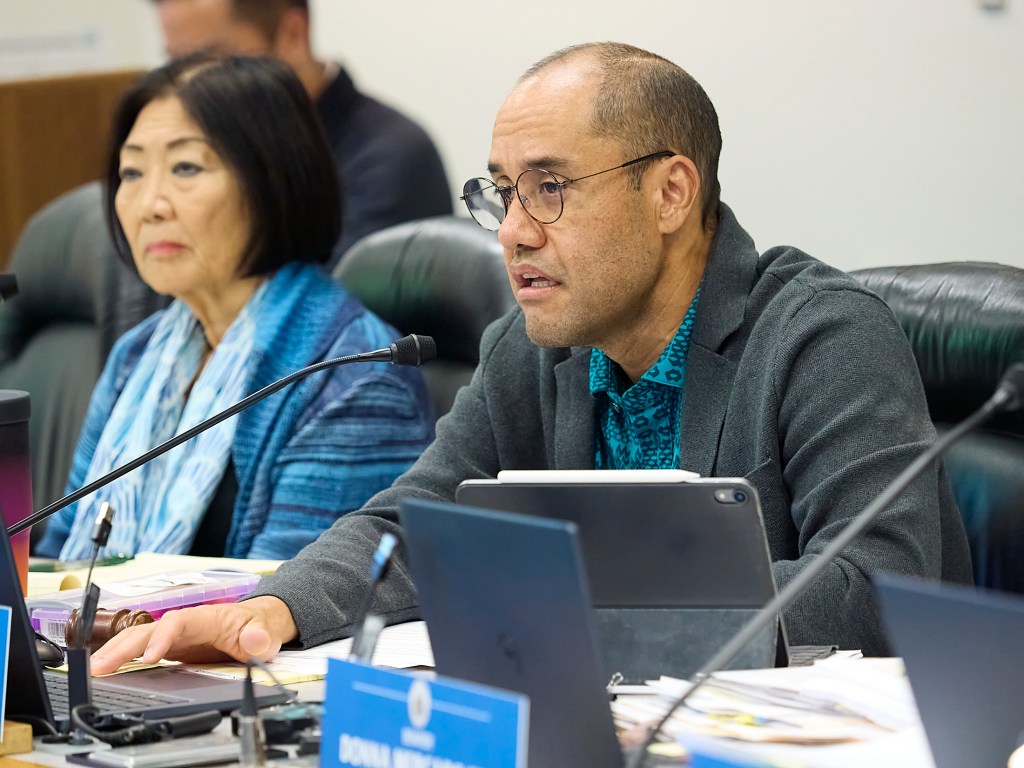
Senate leaders, however, want more direct control over how those dollars would be spent. They’ve removed from a bill the language creating a dedicated, special fund and directed that those dollars go to the general fund instead.
“If anything is raised, it goes into the general fund and whatever would have been in the special fund (the governor) has to now put that as part of his budget request,” Senate Ways and Means Chair Donovan Dela Cruz said Thursday. “There’s no special fund.”
The governor should have to request the money in his budget, Dela Cruz said, “because I really believe that we are the appropriating body.”
Two other major tax measures appear to be dead for the session. They include Senate Bill 1333, a Green administration bill to extend the half-percent general excise tax surcharge for the neighbor island counties until 2047, and Senate Bill 492, to extend the excise surcharge for the Oʻahu rail project until 2045. The rail tax surcharge extension would have raised $5 billion to $6 billion to pay for future extensions of the Honolulu rail line.
Neither of those bills won approval from the Senate Ways and Means Committee in time for Friday’s deadline to position them for a vote by the full Senate.
Vaccines, Cell Phones, Preschool
A bill to end the religious exemption for vaccines in schools has continued to move through the Legislature and most recently passed through the House Judiciary and Hawaiian Affairs Committee. It received over 2,000 pages of written testimony, largely in opposition from families who said ending the religious exemption would force them to homeschool their children or move out of state.
Currently, Hawaiʻi schools are allowed to set their own policies governing how students use their cell phones in class. But this could change under House Bill 1343, which would require the Board of Education to create a policy banning students from using personal electronic devices during the school day.
House Bill 692 would increase access to preschool and childcare tuition subsidies by expanding eligibility to include 2-year-olds in addition to 3- and 4-year-olds. The proposal also repeals the requirement for providers to be accredited to receive tuition subsidies.
HB 692 has cleared the House and awaits Senate hearings, while HB 1343 needs a House floor vote this week in order to cross over to the Senate.
Invasive Species
Dela Cruz, a longtime advocate for bolstering Hawaiʻi’s agriculture, and Rep. Kirstin Kahaloa, who chairs the agriculture and food committee in the House, are among lawmakers continuing the state’s crusade against invasive species.
Both are looking to add muscle and authority to the Department of Agriculture. In addition to including “biosecurity” in the department’s name, both chambers have proposed adding a second deputy position to the department to oversee the initiatives to shield Hawaiʻi from pests like little fire ants and coconut rhinoceros beetles.
But many are perturbed by the Senate’s proposal — in Senate Bill 1100 — to remove the Hawaiʻi Invasive Species Council from the state’s environmental agency and put it under the agriculture department even if it did add biosecurity to its name. That, many of the 71 opposing testifiers fear, would allow the state to put more focus on agriculture only.
House Bill 427, which has more public support and is also advancing, makes many of the same changes but leaves the council alone.
It is unclear how much legislators are willing to fork out as part of the bill, though they last year showed a willingness to invest $20 million, which Green slashed in half.
Housing And ADUs
A bill that would set aside funds for financing workplace housing has advanced steadily through the House. House Bill 432 would support mixed income rental housing projects for people earning up to 140% of the area median income — as opposed to housing solely for lower income residents — through an account in the state’s Rental Housing Revolving Fund.
There was one notable change along the way. While the first version of the bill supported Green’s request that the Legislature transfer $150 million to the fund over the next two fiscal years, subsequent versions blanked out any potential appropriation, leaving it in question.
Housing advocates are also closely watching House Bill 740 that would allocate funds to counties to give grants to homeowners to construct accessory dwelling units, or ADUs. The grants would be in exchange for a requirement that the ADU resident be someone living in Hawaiʻi and working 30 hours a week, or retired from such a job.
A bill that would take a similar tack, House Bill 739, known as the Kamaaina Homes Program, has moved forward as well. It would give the counties money to purchase voluntary deed restrictions from homeowners who — as with HB 740 — would have to live in Hawaiʻi and work 30 hours a week at an eligible employer, or have retired from such a job.
The bill is based on a Vail, Colorado, program credited with creating and preserving long-term affordable housing options for local residents.
“We really do see (deed restrictions) as an interesting, novel and frankly underutilized tool for preserving housing for our residents here in Hawaiʻi,” said Perry Arrasmith, director of policy at Housing Hawaiʻi’s Future.
Civil Beat reporters Thomas Heaton, Marcel Honoré, Megan Tagami, Blaze Lovell and Jeremy Hay contributed to this story.