

Maui County Faces Huge Funding Gap For Wildfire Recovery, Draft Plan Shows
The county is hosting public meetings on the plan starting Saturday. Billions of dollars from other funding sources must be identified to achieve long-term goals.
The stunning cost of rebuilding Maui has become clearer following the release of the county’s draft plan for spending $1.6 billion in federal wildfire recovery funds.
Replacing the thousands of homes destroyed by the 2023 wildfires will cost an average of $1 million per residence, far higher than what many people’s insurance will cover. Helping to meet that gap for residents is expected to push the county’s overall tab for recovery to $7 billion, the county’s Office of Recovery has found.
That’s higher than the $5.5 billion estimate the county issued shortly after the wildfires — a figure that didn’t include all costs of construction.

The $1.6 billion federal grant from a U.S. Department of Housing and Urban Development program announced in January amounts to less than 25% of the current estimated need.
Over $900 million from that grant is allocated to housing under the plan, but that’s less than half the amount needed. The plan makes clear the county hasn’t identified how it will make up the shortfall.
The clock is ticking for county officials to present their first detailed road map for rebuilding to the public and finalize the details for approval by HUD by the summer. The draft plan was developed with community input and is being presented at three public meetings starting Saturday.
But there’s another wrinkle. The federal funding stream for the $1.6 billion has already come into question after the Trump administration temporarily froze all federal grants on Jan. 28, and then announced plans to cut 84% of staff at the HUD department that manages the program.
A stay on the funding freezes in place since Feb. 25 was extended Thursday after a federal district judge ruled the Trump administration did not have the authority to freeze obligated funds.
“HUD has so much money in it right now,” Hawai‘i Congresswoman Jill Tokuda said on Feb. 20. “They’re looking to cut and looking to reappropriate funds.”
John Smith, who heads Maui’s Office of Recovery, said last month he had met with HUD officials and they had not been given any indication those funds are at risk. He did not return calls seeking an interview this week.
But the county must still identify billions of dollars from other sources of funding to reach its long-term goals for rebuilding.
“Even with FEMA assistance and insurance proceeds, more funding is needed to address the unmet housing, economic, and infrastructure needs in the County of Maui,” the recovery office found.
The county has already received $480 million for water infrastructure, economic recovery and road repairs in December, and a dozen other federal awards for Maui have been made separately to state departments, including the departments of Health and Labor and Industrial Relations.
Projected costs for recovery in the report include: $2.4 billion for housing; $1.8 billion for infrastructure, including a municipal water system for Lahaina; $2.4 billion for economic development to help make up for lost tourism revenue; and $240 million for public services including health care and job training.
A Million Dollars Per Home
More than half of HUD’s Community Development Block Grant — $903 million — will be allocated to housing. The county estimates a total of 5,527 residential units were destroyed by the wildfires — 75% of them rental units.
The draft plan assigns the largest housing portion, $370 million, to a program the office said “will provide opportunities for renters displaced by the fires to purchase homes, and expand rental housing stock.”
The program includes assistance for households facing high rent burdens, and “support for construction of new multi-family rental units” that will be available to households with sufficient income.
The draft proposes $235 million to replace multi-family rentals destroyed in the fire by matching funds from developers, and $298 million will be directed toward rebuilding primary residences.
The total unmet need for housing on Maui is $2.4 billion after subtracting insurance payouts, Federal Emergency Management Agency Individual Assistance and Small Business Administration Recovery Loans. That leaves $1.4 billion to source in the future after the block grant. FEMA funds cannot be used for permanent housing.
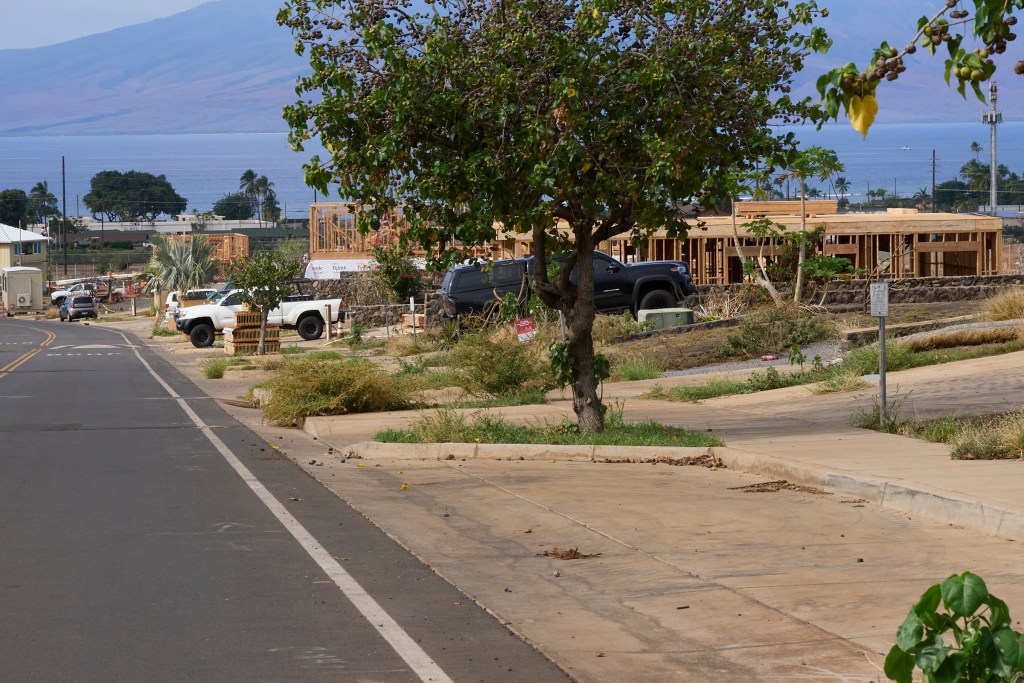
The Office of Recovery’s draft plan said that estimating the housing gap on Maui required additional research into destroyed residential properties.
Many of the county’s tax assessment records were outdated — based on calculations from 20 years ago or longer, and Maui home values have increased by 340% since 2000.
There was also a lack of localized data on home insurance, the office found. It turned to numbers from FEMA based on applications for individual assistance and used satellite imagery to confirm total property losses to perform the calculations.
The high concentration of multigenerational homes on Maui also means that “it is likely that many properties have not had their insurance values adjusted to reflect rising construction costs.”
The average $1 million price tag for rebuilding a home is based on a cost per square foot of $550, includes a 6% inflation factor, and reflects “real-world construction costs.”
The estimate allows for a mix of home sizes, with a higher proportion of four-bedroom dwellings to accommodate multigenerational families.

The draft plan proposes a maximum assistance cap of $1.21 million for qualified homeowners who will use the dwelling as their primary residence. They must have owned and occupied the home at the time of the disaster, and reconstruction will be based on the last legally permitted structure on the site.
The county’s post-fire infrastructure needs “are the most straightforward to identify,” according to the draft, and include Lahaina’s water supply system which would take $250 million of the $350 million in that funding allocation.
But the office also points to the same problem it will have filling in the housing gap.
“While various federal and state funding sources exist, none are confirmed at this time,” according to the plan. The county must assume that the HUD program will be the only available source, and the grant approved in the last days of the Biden administration won’t suffice, the office found.
The draft plan also details the infrastructure challenges related to rebuilding Lahaina’s famed Front Street.
The seaside roadway — heavily damaged in the 2023 wildfires — is the primary corridor of county sewer, water and gas mains and electricity lines, the office said. “Protecting Front Street and its subsurface infrastructure is essential to the restoration of Lahaina town,” the plan says.
Shoreline stabilization and land improvements there will cost well over $10 million, the county said.
The plan sets aside $213 million — 13% of the total grant — to mitigate against future disasters, and $170 million is split between public services and administration costs.
The public comment period on the draft plan closes March 26.
Civil Beat's coverage of Maui County is supported in part by a grant from the Nuestro Futuro Foundation.
Civil Beat’s coverage of environmental issues on Maui is supported by grants from the Center for Disaster Philanthropy and the Hawaii Wildfires Recovery Fund, the Knight Foundation and the Doris Duke Foundation.

