

Kauaʻi Tackles Child Care Crisis With New Spaces And Baby-Friendly Workplaces
Solving the problem is seen as an important step in helping recruit and retain much-needed workers on the Garden Island. Initiatives could be models for the rest of the state.
Three months after giving birth to her first child, Elizabeth “Bitta” Lindsey-Poe returned to her Kauaʻi County finance job. She quit a week later.
“I just said, ‘I can’t do this anymore,’” said Lindsey-Poe, 29, of Hanapēpē. “I would have been working for not even $1,000 a month because more than half my paycheck was going to child care.”
Lindsey-Poe’s struggle is emblematic of a wider problem that affects Kauaʻi parents, business owners and local government officials and is a leading cause of reduced labor force participation and family stress: The island’s child care industry is short-staffed, fragmented and limited to a patchwork of options that many families can’t afford.
Many facilities have long waitlists. For those able to find care for their children, it often comes at a cost that gobbles up the salaries of working parents already living on tight margins. That’s particularly true for Infant and toddler child care.
The island of 74,000 residents has two licensed day cares that cater to the younger demographic, according to data from Patch, a statewide child care resource and referral agency. One charges $2,400 a month for full-time care. The other, on the Pacific Missile Range Facility at Barking Sands, is open only to children of parents who work on the U.S. military base.
The lack of child care is a statewide problem, but it’s most acute in rural areas like Kauaʻi.
On-Site Child Care For County Employees
In September, Kauaʻi County expects to finish construction on a $7.5 million child care center in Līhuʻe, which is viewed as a solution for its persistent staffing recruitment and retention problems. The county is seeking a child care provider to operate the 25,000 square-foot facility at the civic center, named the Pi‘ikoi Youth Center. When it opens, both county workers and the public will be eligible for services.
“We plan to differentiate ourselves from other employers by offering associates on-site child care right here at the Līhu‘e Civic Center,” Mayor Derek Kawakami said in his state of the county address in March. “Child care challenges should not be a barrier for parents who want to get back to work.”
The issue is having a ripple effect on local businesses. Kauaʻi Chamber of Commerce President Mark Perriello said he frequently fields calls from Kauaʻi business owners who say it’s preventing them from finding workers.
“I know hotel (general managers) that are cleaning hotel rooms when people call in, and oftentimes child care issues are the issues that are keeping them at home,” Perriello said.
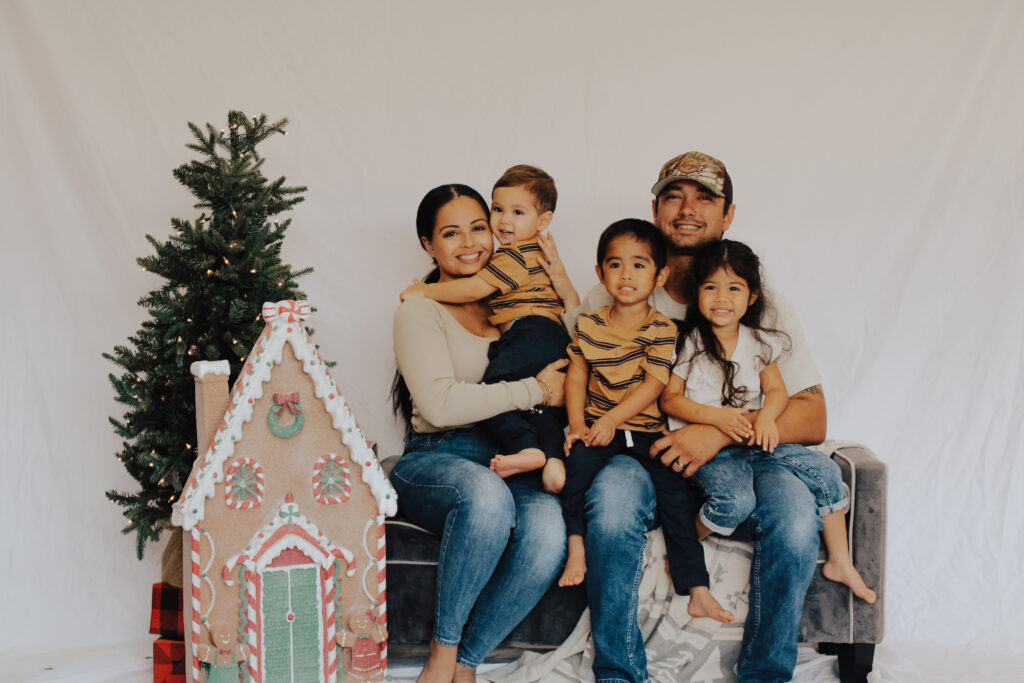
Tamara Lawrence, 28, of Puhi, said although she has struggled for years to find affordable care for her three children, she can’t justify dropping out of the workforce.
“We pay $2,800 rent,” Lawrence said. “We have bills, credit cards, car insurance, car registration, food that we need to put on the table. Not working is not an option.”
She delayed sending her 4-year-old twins to preschool because she couldn’t afford the fees and her family didn’t qualify for government subsidies, she said.
Lawrence recently launched a nonprofit called Na Keiki Collective with the goal of building a commercial indoor playground with on-site child care. To make it affordable for families, she plans to offer sponsored and donation-based care with help from funders.
For Lindsey-Poe, quitting her county job to become a stay-at-home mom was not a long-term solution. At night she’d lie awake puzzling over her predicament: How do I find good-paying work if I don’t have child care? How do I acquire funds for child care if I don’t have a job?
She has since found a full-time job in marketing. Her husband gave up his $95,000 a year construction job to become the primary caregiver to their sons, ages 2 and 4. He works gigs in farming and food catering when it agrees with his wife’s schedule.
An Industry On The Brink
Kauaʻi’s child care workers earn on average $37,430 per year, less than dishwashers, parking attendants and fast food workers, according to Bureau of Labor Statistics estimates.
Advocates say the sector needs significant pay gains to grow. But without help from local government, higher wages could merely serve to push care farther out of reach for many parents, Kauaʻi Planning and Action Alliance President Alice Luck said.
Hawaiʻi is making strides in expanding access to early childhood education, including preschool, with an ambitious goal of providing universal access by 2032. The state has invested heavily in building more preschool classrooms and offering tuition subsidies through Preschool Open Doors.

Challenges remain in that field as well, including a dearth of staff and facilities. Just over half of Hawaii’s 3- and 4-year-olds attend preschool, according to the Ready Keiki initiative, which is led by Lt. Gov. Sylvia Luke. The state estimates roughly 400 more classrooms are needed to have enough capacity to offer all youth in the state a slot at preschool.
The child care and early education sector also needs to overcome a longstanding diminished view of people who provide care to children, Luck said.
A lot of early child care is rooted in play. But it’s not only about having fun. Structured play builds essential skills, including problem-solving, creativity and social-emotional development. It sets a foundation for a child’s future success, according to research.
“It’s not babysitting,” Luck said, “it’s brain-architecting.”
Seeking Solutions
Kauaʻi Community College graduated eight students from its early childhood education associates degree program this semester, up from three students in the fall semester but slightly down from an all-time high of 10. The degree is required to teach in a preschool setting.
“Child care challenges should not be a barrier for parents who want to get back to work.”
Mayor Derek Kawakami
Toni Fujimoto, an assistant professor who oversees the college’s early education degree and certificate programs, said students interested in the field sometimes don’t pursue it due to low pay.
To address this, she’s trying to establish an apprenticeship program so students can earn a wage while learning — an opportunity offered to up-and-coming preschool teachers enrolled at Honolulu Community College on Oʻahu and Hawaiʻi Community College on the Big Island.
“This way, just like electricians and carpenters, you’ll be working hands-on at a school and you’ll be getting proper compensation while you’re getting a degree,” Fujimoto said.
Bringing Baby To Work
Addison Bulosan and Nikki Cristobal never planned on becoming parents. The husband and wife from Līhuʻe have long treated their work as their baby.
Bulosan is an entrepreneur and community organizer who serves on the Kauaʻi County Council. Cristobal is a domestic violence policy and research specialist who runs her own arts and culture nonprofit. More than a means to a paycheck, much of their work makes them feel fulfilled.
When Cristobal gave birth last April to the couple’s son Zenith, they sought a way to add mom and dad to their resumes without pulling back on their professional priorities. So the couple decided to bring their newborn to work.

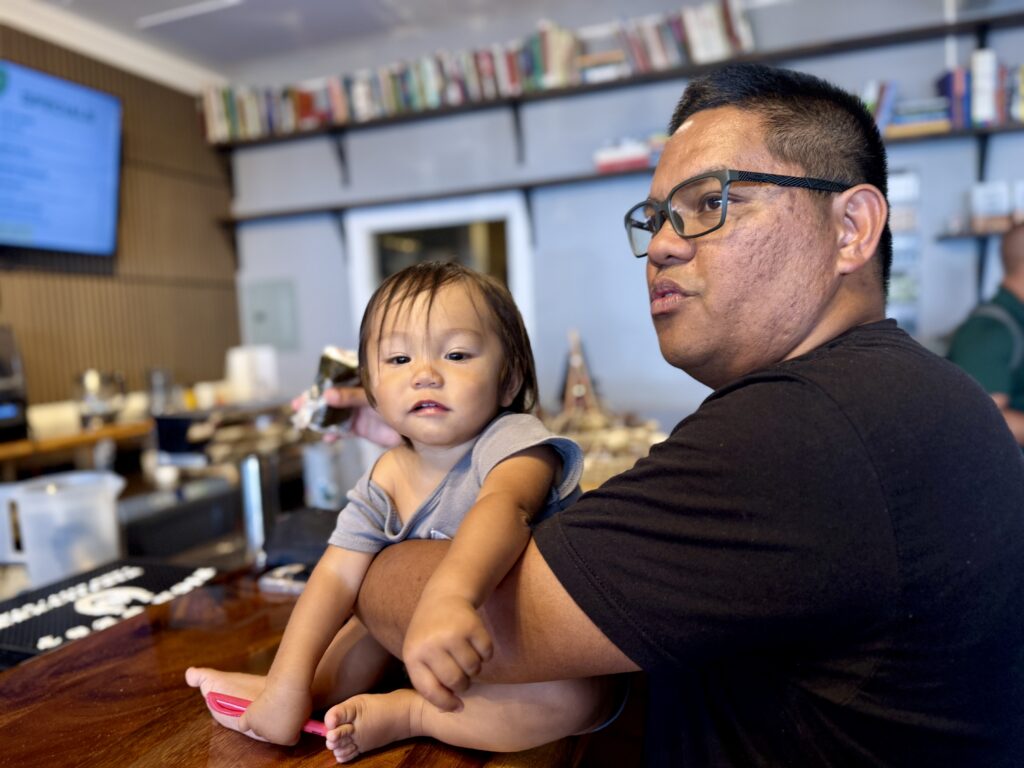
Zenith, now 13 months old, can often be seen snatching his dad’s glasses off his face during work meetings or curled in the arms of one of his parents’ co-workers. Negotiations about schedules and workloads informs the couple’s detailed child care planner.
“We split days, we split hours, we schedule handoffs,” said Bulosan, 37. “We act basically like a divorced couple.”

At Hale Līhuʻe on Rice Street, Bulosan wants to pioneer a unique child care solution. The community center and coworking space that Bulosan helped establish is popular among working parents. So he’s hatching a plan to help parents who use the facility become licensed child care providers. The idea is to create a family-centered work environment where everyone pitches in to care for the children milling about.
The community space also hosts free mommy-and-me yoga, Pilates and fitness classes, keiki-friendly coffee meetups for moms and a prenatal support group.
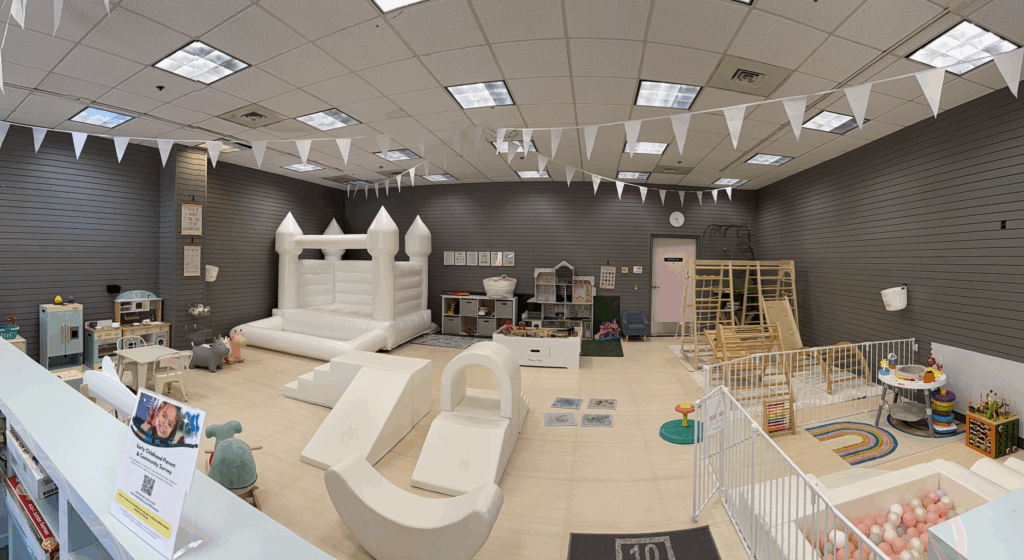
Kahea Collins, who organizes Hale Līhuʻe’s events calendar, said the entire facility has been baby-proofed. There’s a mountain of toys, rocking chairs for breastfeeding mothers and baby cameras to help parents to keep an eye on their children while working behind a computer.
“The only way I can work is if I can have my baby on my hip,” said Collins, who is 35 and lives in Kōloa. “We’re building this space for people like that because child care is expensive and we all need to work.”
Civil Beat’s community health coverage is supported in part by the Atherton Family Foundation.

