

DOE Faces Big Funding Shortfall For School Repairs And Construction
Lawmakers are wary about giving the education department more money and control over construction funds after leaders have struggled to spend millions of dollars in recent years.
At Kealakehe Elementary School on the Big Island, functioning bathrooms are hard to find.
Students travel across campus to reach working toilets — sometimes resulting in embarrassing accidents — and poor plumbing has led to sewage leaking through classroom ceilings, according to more than a dozen pages of testimony from parents and teachers at a recent Board of Education meeting.
“My second-grade child now feels anxious every day at school — not because of tests or social pressures, but because they worry about having an accident due to the long walk to the only available restroom,” parent Linsi Nuzum wrote to the board.
Kealakehe Elementary could see some improvements later this year as the education department works on fixing the plumbing in one of its buildings, according to a statewide facilities dashboard. But similar repair projects may be harder for the department to fund and execute in the coming years, after lawmakers gave school officials much less construction money than they requested in January.
The new state budget, signed into law on Monday, sets the budget for school maintenance and construction at roughly $490 million over the next two years — $1.4 billion less than what the Hawaiʻi Department of Education originally requested.
Lawmakers had also voted to give $150 million to the DOE in a separate fund to support preventative maintenance efforts. But Gov. Josh Green reduced that fund to $60 million over the next two years through a line-item veto, said Makana McClellan, the governor’s director of communications.
DOE is still determining what projects will be affected by the cuts, communications director Nanea Ching said in an emailed statement. At the start of the legislative session, the department had identified more than 100 priority projects ranging from upgrades to Kaimukī High School’s softball field to sewer improvements at King Kekaulike High School. Roughly 20% of Hawaiʻi schools are more than a century old.
The reductions to DOE’s budget come amid scrutiny and skepticism from lawmakers, who say school leaders need to prove that they can successfully manage construction funds before receiving more money and flexibility in how to spend it.
In 2023, DOE sparked the ire of legislators and the public when it proposed giving up nearly half a billion in funds that would go toward projects like new classrooms and repairs to campus roofs and fire alarm systems.
In early 2024, the department reported a backlog of $2 billion in unspent construction funds, citing permitting delays and supply chain shortages.
A Big Funding Request
Superintendent Keith Hayashi asked the Legislature this year for more flexibility in spending the DOE’s budget. But some lawmakers balked at giving up control over school construction funds and fulfilling DOE’s large budget request, citing the department’s continued struggles to get new projects off the ground.
“Respectfully, the department has not demonstrated the capacity to be able to prioritize these projects in a way that’s going to dent into the need that we have,” House Education Chair Justin Woodson said at the start of session.
Rep. Lisa Kitagawa, a member of the House Finance Committee, said the department’s original budget request was beyond what the state could provide. Lawmakers only had $1.8 billion in general obligation bonds that could support state construction, she said, and funding all the projects DOE requested would leave no money left for other agencies.
Lawmakers focused instead on funding top priorities for the DOE, like campus safety and maintenance, Kitagawa said. The department did not receive funding in two areas related to the planning and design of schools and temporary facilities, like campus portables.
But even in the categories that received funding, the money fell short of DOE’s original ask. While DOE requested $75 million to increase school capacity for overcrowded schools — including adding new buildings to Hōlualoa Elementary on Big Island and finishing construction at Kūlanihākoʻi High School on Maui — lawmakers provided just $3 million.

Funding for compliance projects, like building girls’ athletic locker rooms and renovating campuses to be accessible for students with disabilities, fell from $200 million in DOE’s request to $16 million in the final version of the budget. Lawmakers also set aside money for individual compliance projects in the budget, including the design and construction of locker rooms at Campbell High School.
Most of DOE’s construction funds were limited to the first year of the two-year budget cycle, meaning school leaders will need to return to the Legislature and request more money next year. Kitagawa said she wants the department to return with updates on its spending before lawmakers set aside more money for school construction.
“Because of everything that happened with the huge lapses in the past, we really wanted to make sure that the DOE could be responsible with the money,” Kitagawa said. “We did try to work with them to be able to give them that flexibility, while also making sure that they’re making good use of taxpayer dollars.”
Divided Control
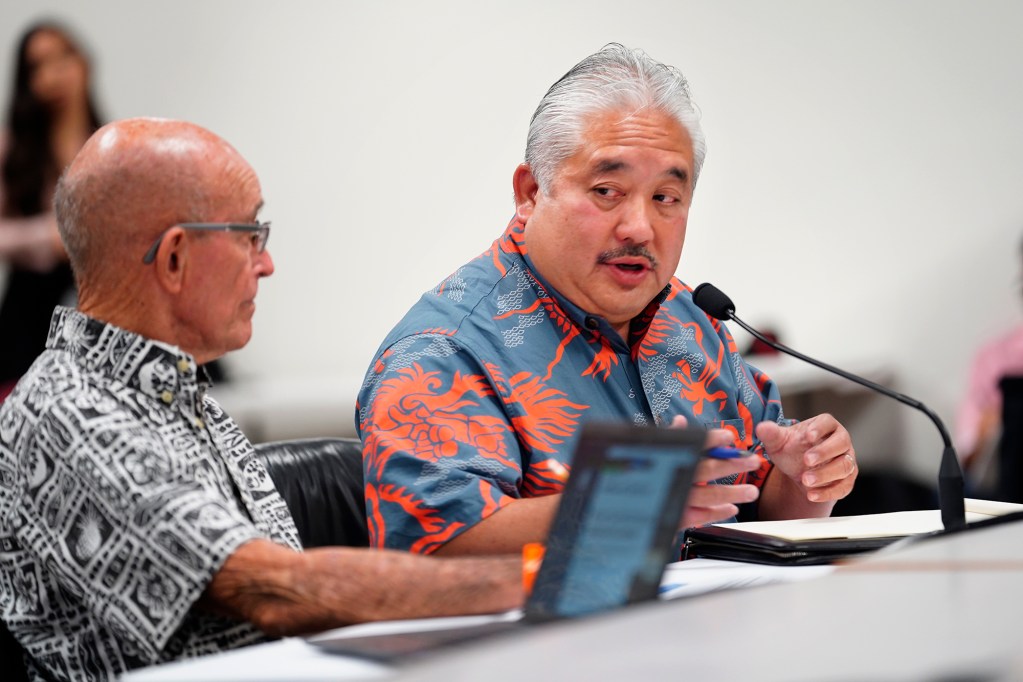
The reduced funding will make it harder for the department to complete its priority list of school construction projects, DOE public works administrator Jadine Urasaki said during a recent Board of Education meeting. The projects range from improvements to Kailua High School’s track field to expansions to Webling Elementary School’s administration building.
“$323 million doesn’t get us that far,” Urasaki said about the funds DOE received for the upcoming year.
By comparison, DOE requested roughly $1.5 billion in school construction funds for the 2023-25 budget, and lawmakers provided $747 million in the first year of that budget cycle.
Even with the available funding from the Legislature, DOE has limited ability to use the money for projects it wants. The final pages of the budget specify 39 projects lawmakers want the DOE to complete before moving on to its own list, although there’s some overlap between lawmakers’ requirements and the department’s priorities, Urasaki said.
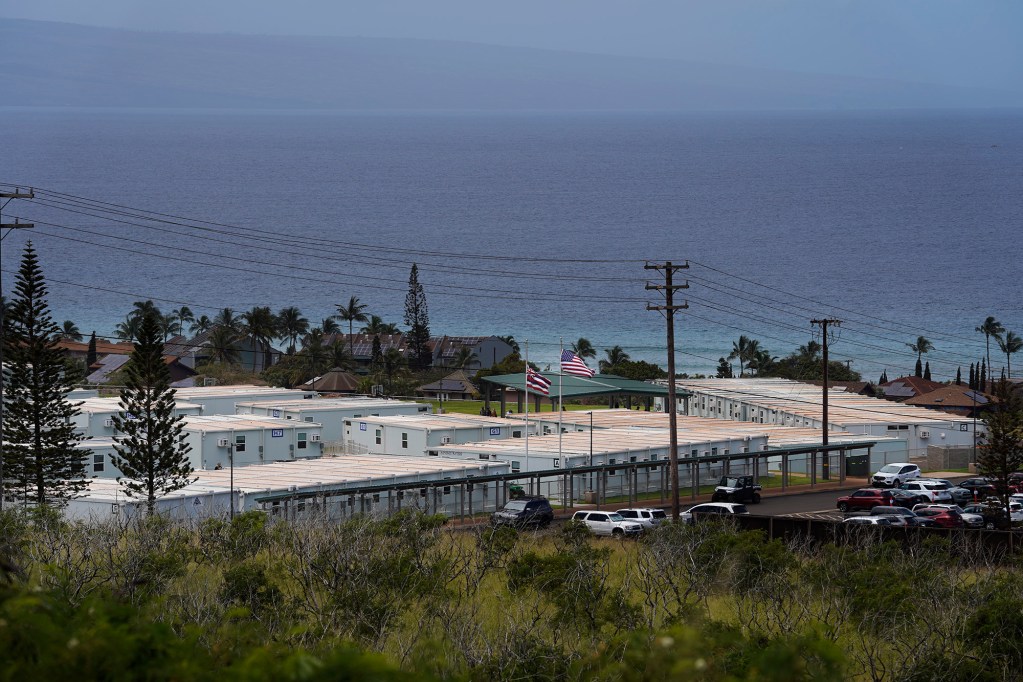
Two of DOE’s top projects — new elementary schools in East Kapolei and Lahaina — received no funding at all, even though West Oʻahu is struggling with overcrowding in its schools and West Maui needs a school to replace the one that burned down in 2023.
But the budget included funding for other projects that weren’t in DOE’s original request, including $72 million for the planning, design and construction of centralized kitchens across the state.
DOE does have more flexibility in using its preventative maintenance fund, which was reduced from $150 million to $60 million in Green’s veto. The funds can go toward the maintenance of campuses and smaller projects, like repainting buildings or carpeting classrooms, Kitagawa said.
Randy Moore, who oversaw DOE facilities from 2006 to 2012 and again in the second half of last year, said the DOE will still be able to run its schools with reduced funding. But putting off issues like decaying facilities will only make the problems more expensive to fix in the future, he said.
Rep. Amy Perruso said she understands her fellow lawmakers’ skepticism toward the DOE and their efforts to hold the department more accountable, but cutting funding isn’t the answer. Schools are already struggling to complete projects that help them comply with federal anti-discrimination laws, she said, and others are in desperate need of basic maintenance to keep students safe.
While well-intended, she said, lawmakers have become overly involved in the facilities process, keeping DOE from prioritizing schools most in need of upgrades and repairs.
Civil Beat’s education reporting is supported by a grant from Chamberlin Family Philanthropy.

