Green Tells Hawaiʻi Tea Farmers Not To Worry About New Labeling Law
The governor had put the legislation on his intent-to-veto list, but ended up signing the measure last week.
Gov. Josh Green’s decision on Friday to sign a labeling bill to protect Hawaiʻi-grown māmaki tea from counterfeiters drew immediate concern from farmers and tea sellers who had lobbied for him to veto the legislation.
But on Monday, Green said there was no need for them to worry: it would take a while to enforce the bill, which he expects can be amended during the next legislative session to clarify any ambiguity that could create unintended consequences.
And he has no plans to go after the local businesses that the bill was meant to protect.
“We’re not going to overdo it,” Green said. “We want to make sure the spirit of the law is enforced.”

A non-caffeinated tea endemic to Hawaiʻi, māmaki has been used for centuries as a Native Hawaiian medicinal herb. In recent years, it has gone from something Native Hawaiian healers foraged for to what lawmakers have identified as a fledgling cash crop.
The bill is meant to protect Hawaiʻi-grown māmaki from the sort of out-of-state producers that have plagued Hawaiʻi coffee growers for decades. The bill says packages containing only 100% māmaki grown in Hawaiʻi can use the word “māmaki.”
Teamakers also can’t use words like “Hawaiʻi” and “Hawaiian” or Hawaiian imagery or place names unless 100% of the tea or other dried leaves “were cultivated, harvested, and dried in the State.”
The bill made it through multiple hearings with enormous support, with the only “no” vote coming at the end of the session, by which time some producers and farmers had raised concerns about the way it was written.
Tea Producers Want Clearer Guidance
The problem was that, as written, the bill appeared to prohibit the use of any leaves — including mint, lavender and other herbs frequently blended with māmaki by teamakers — in products labeled as māmaki. Teamakers said this would destroy their business, and farmers were concerned that they would have fewer teamakers to sell their crops to if the makers couldn’t sell their blends.
After some māmaki growers and tea makers raised concerns, Green put the māmaki bill on his intent-to-veto list, signaling an inclination to kill the measure, pending further discussion. But on Friday, the governor signed the bill after all.

Malie Sarsona, co-founder of Waimea Herb Co. on the Big Island, said she felt whiplash from Green’s decision to sign the bill. She sells māmaki tea blended with herbs like lemongrass, chamomile and mint. She also operates a nursery growing māmaki plants that farmers use to cultivate the crop, which they sell back to Sarsona.
Sarsona said she was on Oʻahu last week talking to investors about contributing to a fund to help māmaki farmers package and market their tea themselves and had received about $200,000 in pledges. Then word came that Green had signed the bill.
“After it was signed, everyone pulled out — every single one,” she said.
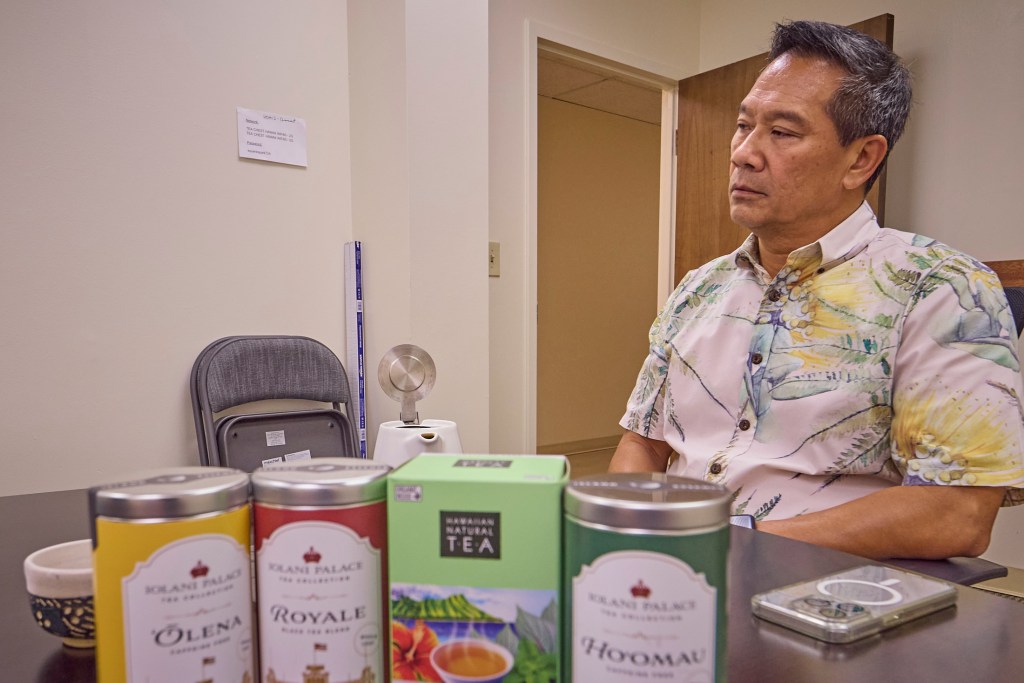
Byron Goo, owner of Tea Chest Hawaiʻi, was also surprised by Green’s decision.
“It was like a gut punch,” said Goo, who had rallied the māmaki industry to oppose the bill at the 11th hour.
He said he now has customers concerned about selling and serving Tea Chest Hawaiʻi māmaki products.
Sarsona said she was pleased that Green promised to enforce the bill’s spirit — to protect Hawaiʻi māmaki — and not hurt the industry. She suggested Green confer with māmaki farmers on bill amendments to introduce during next year’s legislative session.
“If he can find farmers to be part of that process, it would absolutely restore their faith in him,” she said.
Goo was also pleased, but said he hoped the governor’s administration would make clear in writing that the 100% Hawaiʻi-grown requirement applies only to the māmaki leaves.
“He needs to take a step create certainty,” Goo said.
“Hawai‘i Grown” is funded in part by grants from the Stupski Foundation, Ulupono Fund at the Hawai‘i Community Foundation and the Frost Family Foundation.