Hawaiʻi Tsunami History: How They’ve Shaped The Islands
Hawaiʻi got lucky Tuesday, but we haven’t always been let off the hook — and may not next time.
It’s been years since a tsunami warning last rattled Hawaiʻi. The islands got off easy this time, even though the Russian earthquake that set off the waves on Tuesday was one of the largest quakes ever recorded.
For years, Civil Beat has been writing about the ways these disasters have shaped our communities, even though they’re far and few between.
It’s only a matter of time until Hawaiʻi is hit hard by a tsunami, experts say. We may not be ready, but more on that later.
Tsunamis have had a huge impact on life in the Pacific, long before people figured out a way to predict the arrival of these waves.

Megatsunamis Are In Hawaiʻi’s DNA
In 2012, University of Hawaiʻi scientists unearthed evidence of 1,000-foot waves at Big Island’s South Point.
Megatsunamis are gigantic waves that can follow huge landslides, of which there have been at least 15 over the past 4 million years in the Hawaiian islands. For perspective, one chunk of rock that broke off Oʻahu was as big as Manhattan, according to the U.S. Geological Survey.
Multiple megatsunamis appear to have struck Hawaiʻi in the far distant past, between 13,000 and 250,000 years ago.
Tsunamis Have Caused Major Damage, Cost Lives

The earliest known account of a tsunami in the islands comes from a 16th-century Hawaiian chant about a huge wave that hit Molokaʻi, according to the National Weather Service. The first tsunami on the books was recorded in 1812.
The deadliest came in 1946, when 173 people lost their lives after a 7.4-magnitude earthquake was reported off the Aleutian Islands of Alaska, taking Hawaiʻi by surprise.
Damage in Hilo at the time was estimated at $25 million. The tsunami also caused significant damage on Maui, killing 14 people there.
This disaster prompted the U.S. to launch the Tsunami Warning System.
When Disaster Strikes, Communities Are Transformed
The damage caused by disasters such as tsunamis isn’t just measured in lives lost or buildings destroyed. These tragedies can shape our communities for years to come.
Such was the case for the family of Naka Nathaniel, whose family is from Hilo and experienced the 1960 tsunami. In a column for Civil Beat, he wrote about the lessons learned from disasters on Hawaiʻi:
“My ohana tells many stories about the tsunamis — about how my grandmother turned our familial home into a soup kitchen while my grandfather, a battalion chief for the Hilo fire department, worked his way through the devastation. Yet, the aftereffects and the impact of the disaster would cause a significant segment of their children’s generation to leave Hilo.
“Of my grandparents’ 20 grandchildren, only one lives near Hilo and only three are on Hawaii island. That’s the generational impact of these disasters.”
More stories like these from survivors of Hawaiʻi tsunamis in 1946 and 1960 have been chronicled thanks to the Center for Oral History at UH.
The collection includes stories of people climbing on roofs and cobbling together makeshift rafts, stranded families passing a single baby bottle between hungry babies and survivors trapped in waves, believing they would soon take their last breaths.
“I was just there with my mouth open saying, ‘Good god, what is that?'” survivor Albert Stanley said in a 1998 interview with the center.
Tsunamis Can Impact Our Ecosystem

Sometimes animals hitchhike, too.
Nearly 70 species — including jellyfish, crabs, sponges and mollusks —grabbed onto debris from a 2011 tsunami in Japan and held on for dear life, eventually making their way to the islands, according to a study in Science Magazine.
Yep — that’s an 8,000 mile journey atop plastic debris.
A Worse Tsunami May Come
Fortunately, Hawaiʻi was spared the worst this week.
But an enormous tsunami may not be too far off in our future, according to a study published in 2016. At the time, UH researchers predicted a 6% to 12% chance that a mega-earthquake could strike the Aleutian Islands in the next 50 years and generate a tsunami that could cause $40 billion in damage and impact 400,000 residents and tourists.
If a disaster like that were to strike, it could have a huge impact on our communities and infrastructure. Hawaiʻi is one of the most isolated places in the world and has little long-term storage for critical supplies, including food.
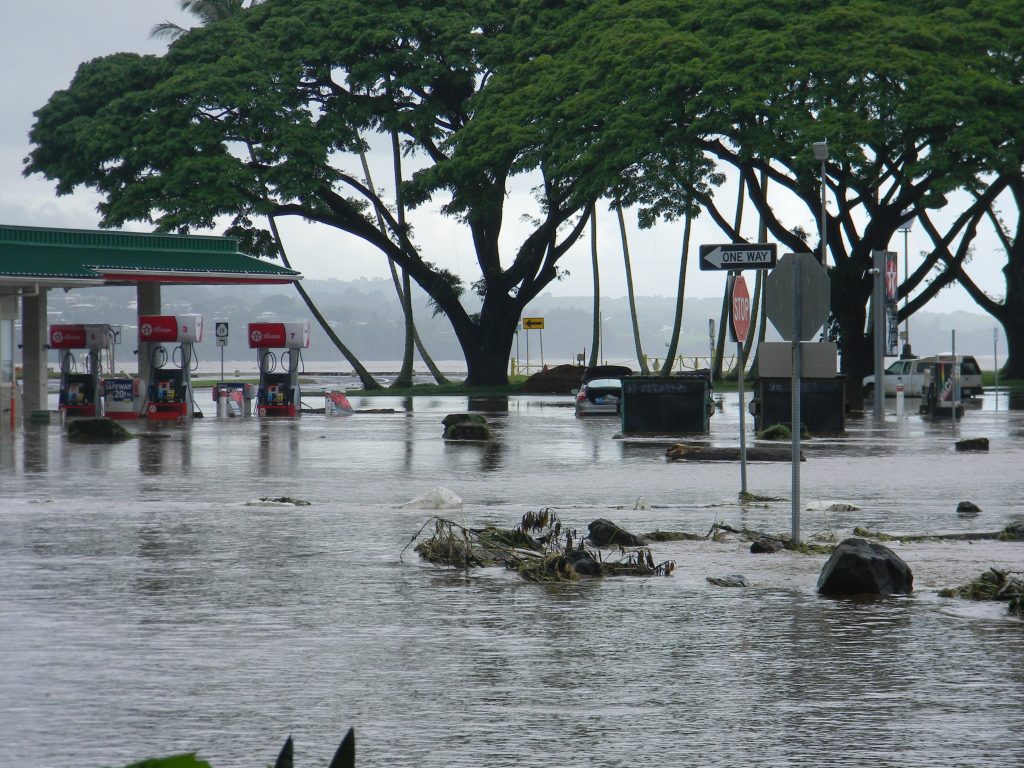
In 2018, reporter Marcel Honoré’s award-winning series, “Are We Ready?”, examined how vulnerable Hawaiʻi could be if a tsunami or hurricane were to strike soon.
Oʻahu — the most populous island — is particularly unprepared for the havoc a disaster could wreak on our harbors, supply chain, utilities infrastructure, roads and neighborhoods, he found in his reporting. And evacuation centers just aren’t equipped to handle the number of people who may flee, seeking help.
As the planet warms and sea levels rise, Hawaiʻi will only become more vulnerable to disaster.
Experts agree it’s only a matter of time until Oʻahu gets hit by a tsunami or hurricane. In this series, we examined the island’s vulnerabilities and what steps are being taken to make it more resilient.
>> Read our reporting on tsunami dangers to Hawaiʻi