

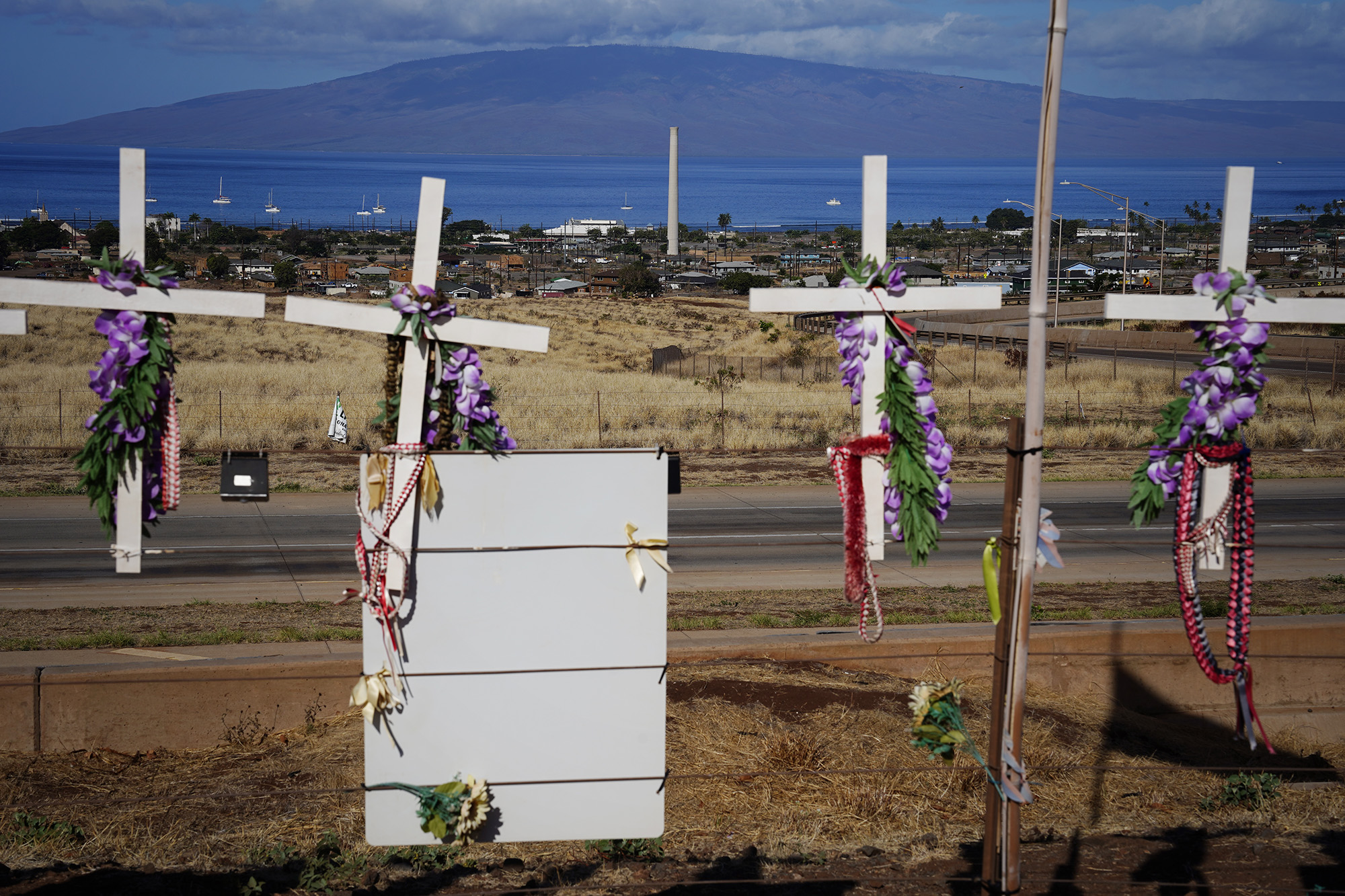
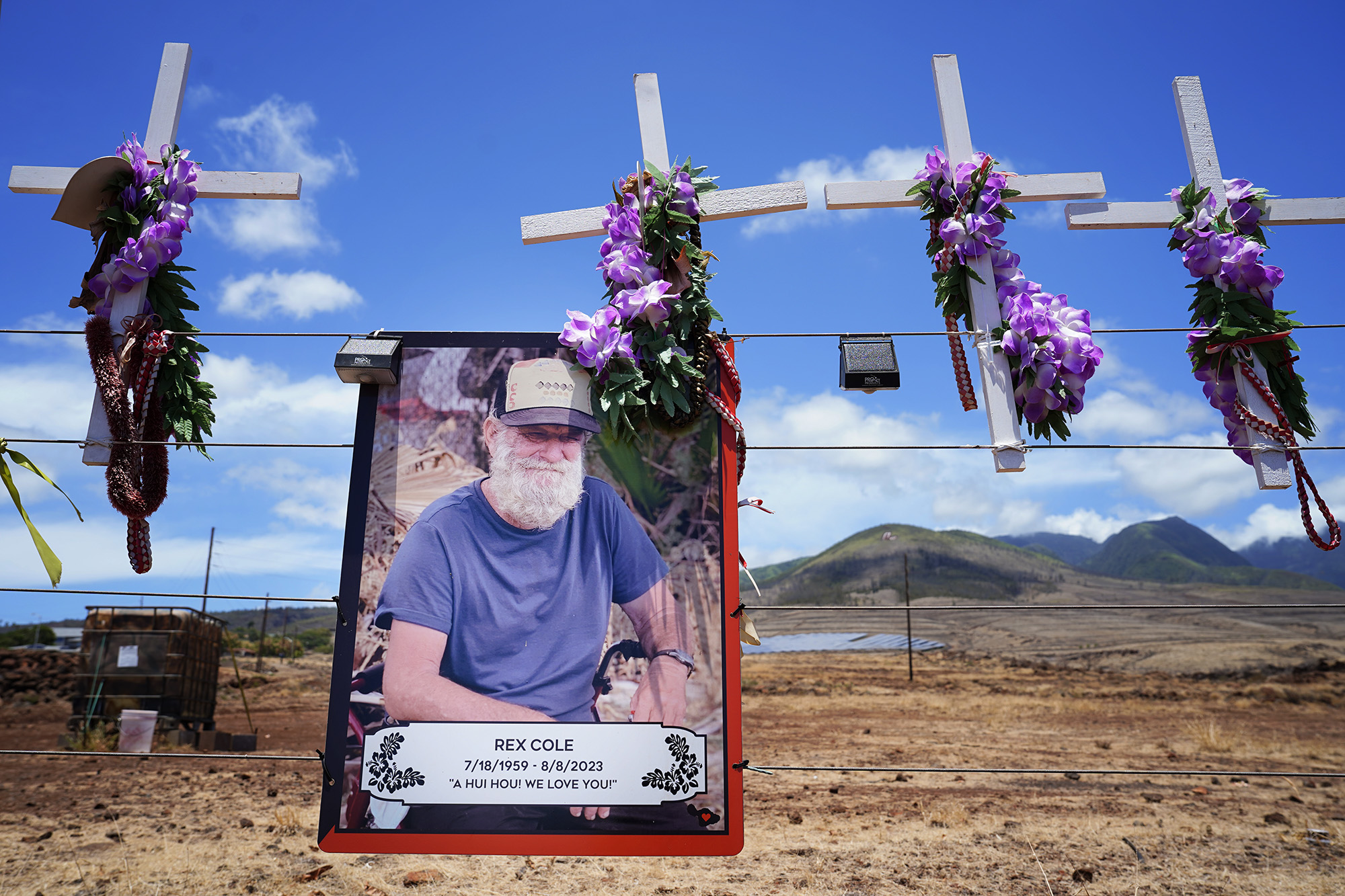
From where his memorial is mounted on a chainlink fence above the Lahaina Bypass, Rex Cole would have been able to see much of the seaside town where he spent his days, the town devastated by the 2023 wildfires that killed him and at least 101 others.
He would have been able to see the Lahaina Shores resort, next to the 505 Front Street complex of shops and restaurants and Kamehameha Iki Park at the south end of town. He and other homeless Lahaina residents liked to hang out in that area, the gray-bearded Cole a familiar presence in a T-shirt and shorts with his four-wheeled walker.
He would have been able to spot another landmark, too: The famed banyan tree in the center of town where he also spent a lot of time. From that point, he could easily have traced a short line across Front Street to James Campbell Park, home to a plumeria tree he often slept under.
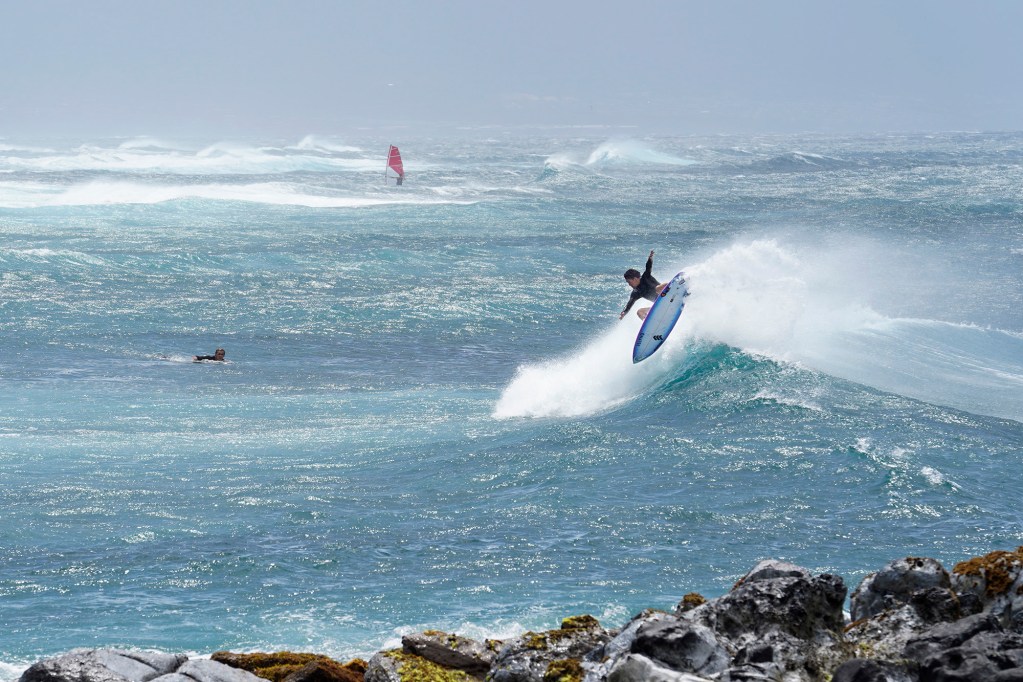
Cole would of course have also been able to take in the cresting waves that first drew him, an avid surfer, to Lahaina.
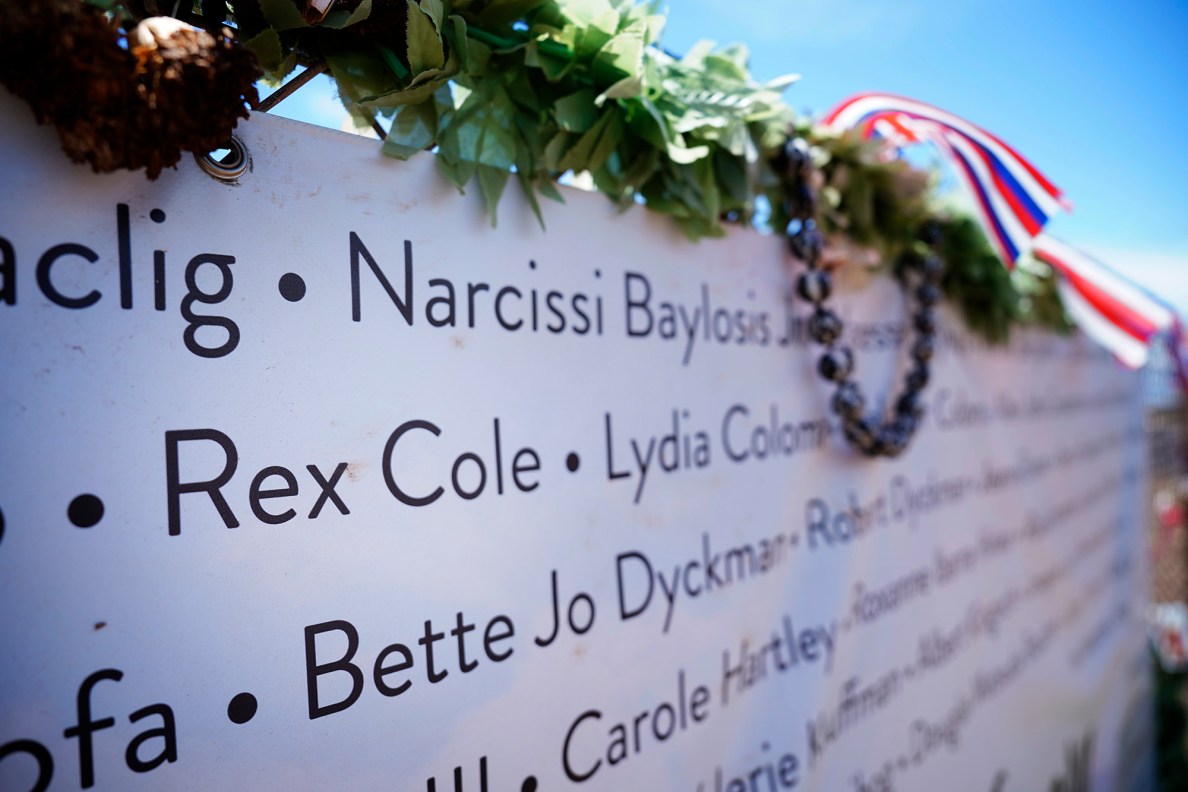
He was in his late 20s or early 30s, when he first arrived, and 64 when he died there – one of four who perished in the blaze who were believed to be homeless. And while his world, once he slipped into its margins, grew smaller in many ways, he continued to touch those who knew him through time.
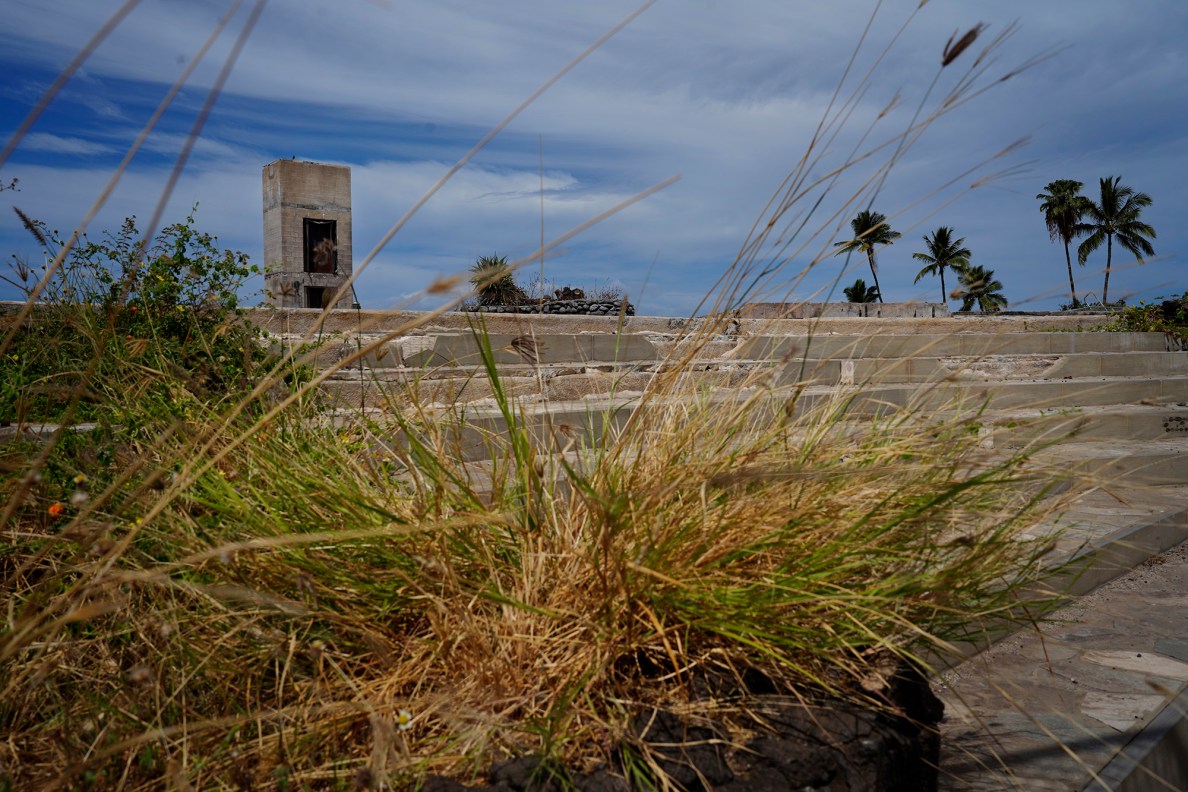
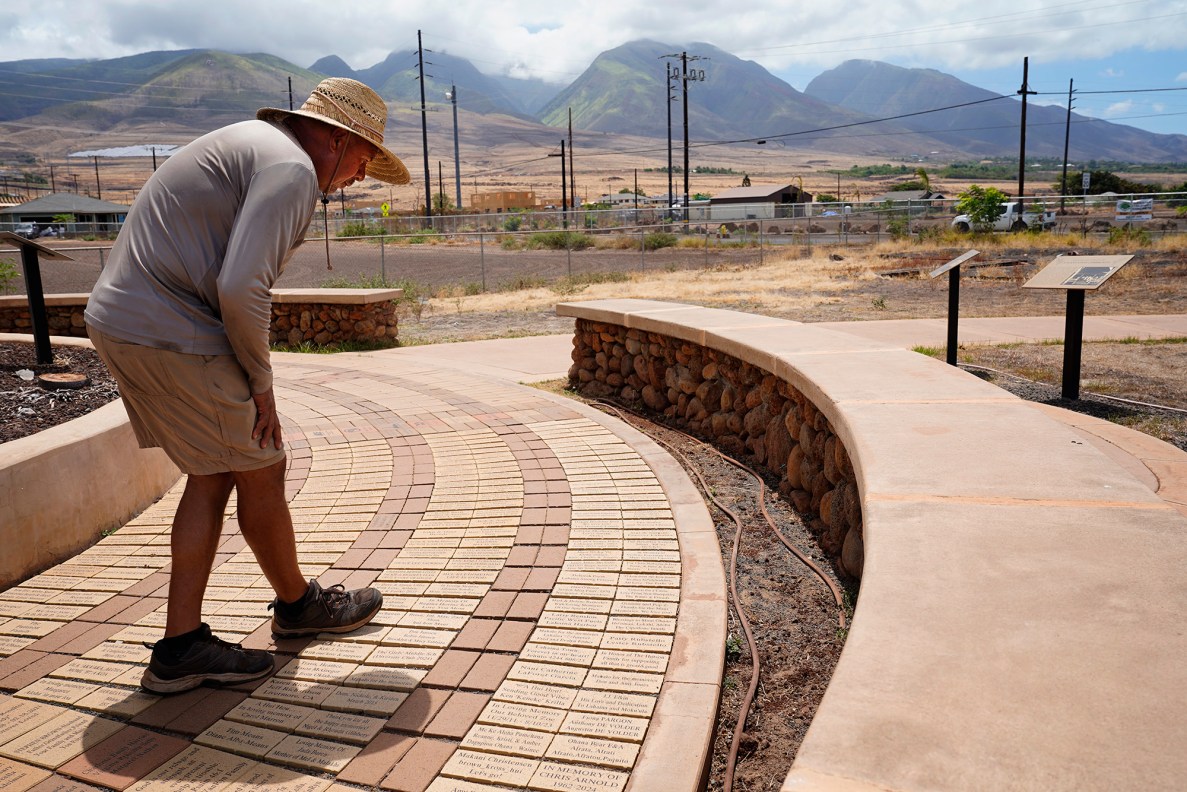
One indication of that can be found at the Pioneer Mill smokestack, which survived the fire and is also visible from the fire victims’ memorial above the highway. The base of the tower is circled by hundreds of bricks bearing messages from people who hold Lahaina dear, and the names of many of those killed there in the Aug. 8 conflagration.
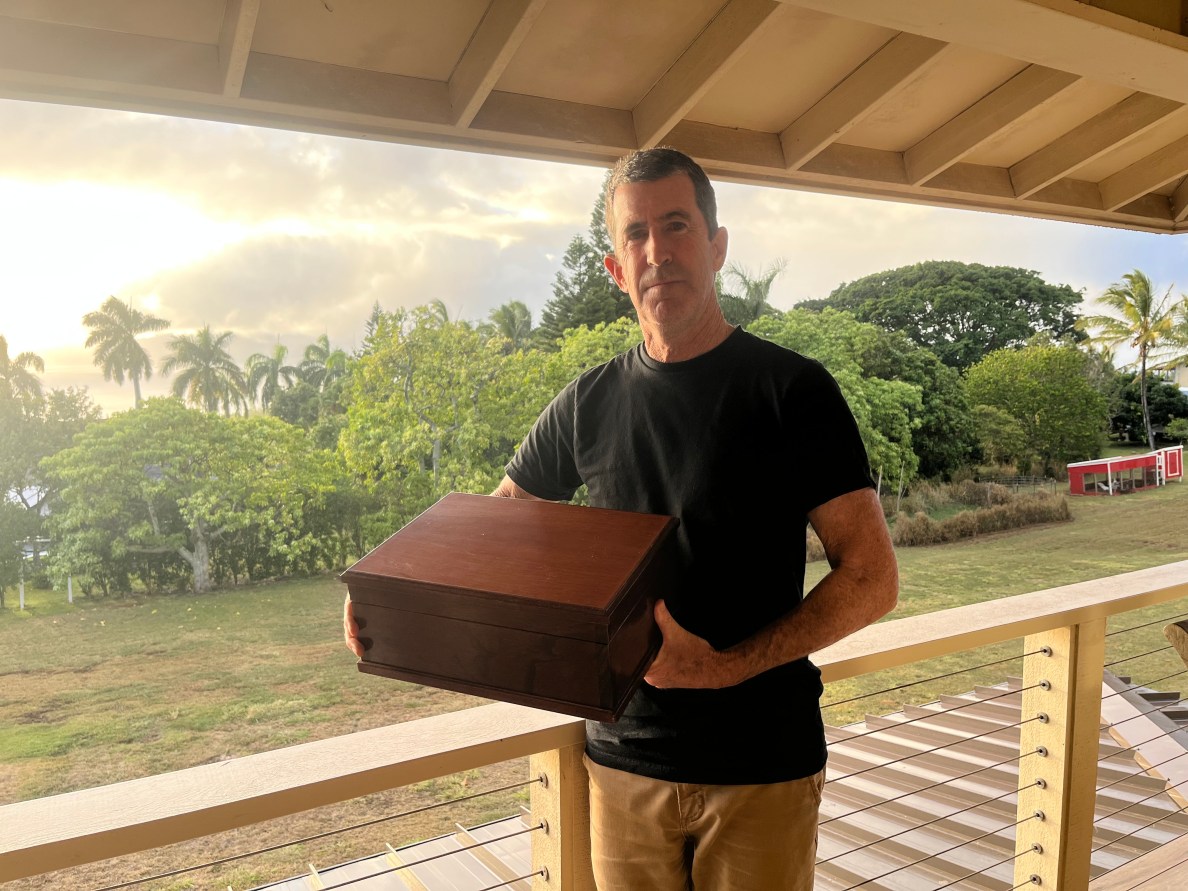
A brick in Cole’s memory was laid there Thursday. It was purchased by Paul Brown, who also claimed Cole’s body when nobody else had because he couldn’t bear to see it cremated without the company of people who cared about him. The brick read: “In Loving Remembrance: Rex Cole.”
Brown, who now manages a Lahaina condominium complex, first met Cole in the early 1990s. He was an assistant manager at a Mexican restaurant in those days, and Cole, then a carpenter, would often stop in after work.
“He was a typical construction worker coming in after pounding nails,” Brown said. “A really good guy.”
People who knew him, and there were many, described Cole in similar terms: “Sweet.” “Really cool.” “Humble.” He had a way about him, they said.
“He was always just the nicest guy in the world, always had a big old smile on his face, just low key,” said Chris Egan, who worked on construction crews with Cole starting in 1991. They were building Pineapple Hill then, a high-end gated community in Kapalua, about 10 miles north of Lahaina.
“Everybody loved him,” Egan said.
Sometimes after work the crew would gather at a house in town on Kahoma Street where some of them, including Cole, were living.
“We’d just hang out, you know. Drink a lot of beer, that’s for sure,” said Egan, who now owns a Maui art gallery.
Dozens of buildings down and around Kahoma Street are gone now, consumed by the fire like thousands of others. So is much of Cole’s story.
But Egan lost track of him long before that. It has been at least two decades since he last saw Cole, maybe longer.
“He just disappeared,” Egan said.
A First, And Final, Family Visit
The ocean had acted as a magnet for Cole well before he lit out for Lahaina. He dropped out of high school in Oklahoma at 17 to surf in California, said his sister, Mary McClaren.
He had lived there before, after his family moved from the Sooner State to Los Angeles so their father, Bill, could work as a television studio cameraman on “The Tonight Show” starring Johnny Carson. Their mother, Patricia, waited tables.
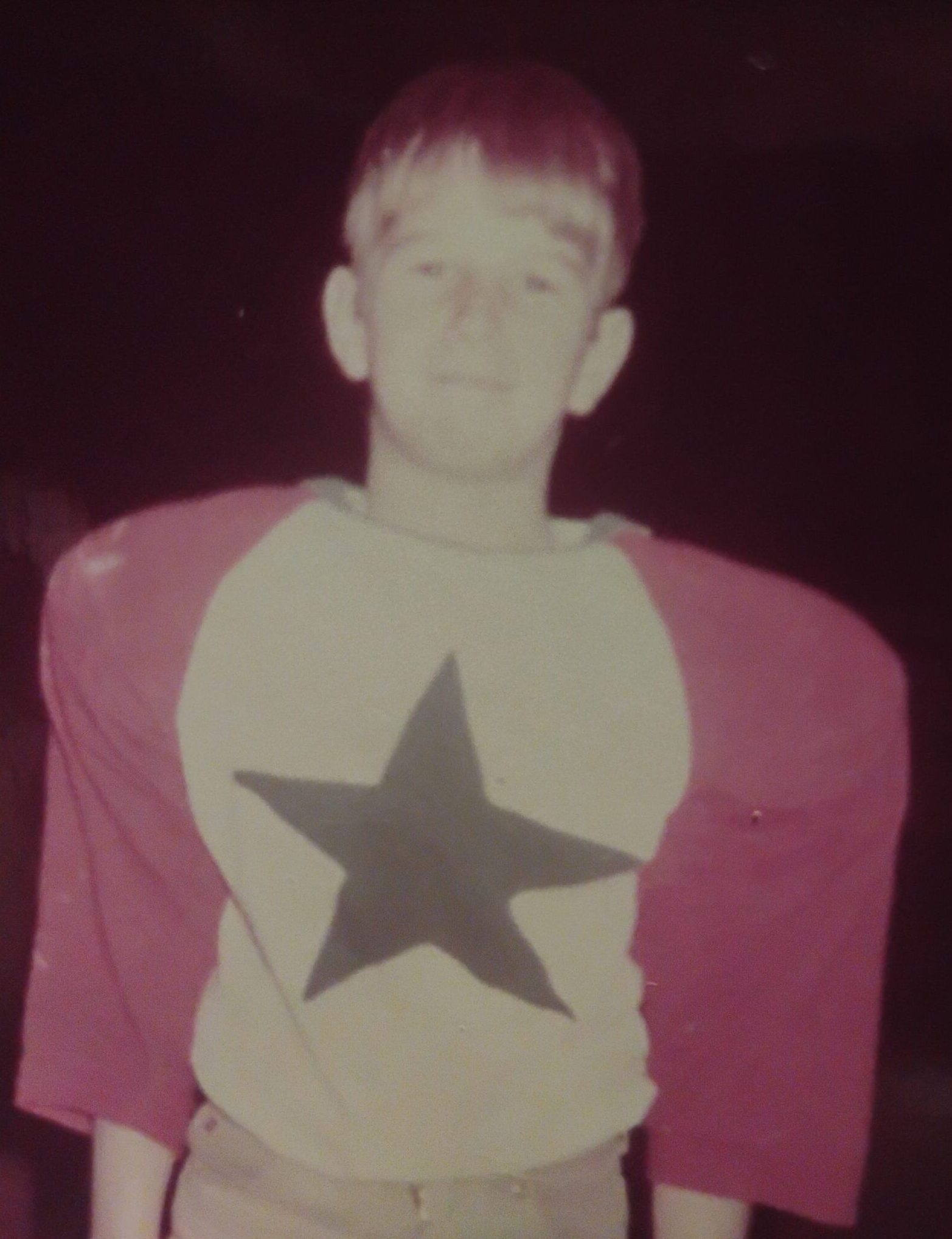
It was then that Cole, the oldest of three siblings, first learned to surf — and he loved it. McClaren said her mother would tell stories of sitting on the beach waiting for her son — and his younger brother, Bobby — while they rode the West Coast waves. He apparently participated in other sports, too; a photograph of him when he was about 10 shows him in a football jersey and pads, a suggestion of a smile under his bowl hair cut.
When the family returned to Oklahoma in 1975, Cole’s heart stayed with the Pacific Ocean. He built a skateboard ramp in the backyard, but it wasn’t enough. So it was no real surprise when he headed back to Los Angeles, or that at some point, although no one seems to know exactly when, the family heard that Maui’s surf breaks had pulled him even farther West.
Occasionally, he sent them snapshots from Hawaiʻi of himself with friends. Camping. Hanging out on a beach. He appears trim in the photographs, clean-shaven, given to wearing baseball caps over a full head of hair, as he did in his later years, too.
And in 2000, the travel agency McClaren worked for gave her two free airline tickets to Maui. So she and her mother visited her brother in Lahaina for the first time. They hadn’t all been together in about 25 years. He seemed firmly settled there, living with a girlfriend downtown.
They all camped for a few days on the other side of the island. They encountered sea urchins that made McClaren squirm. He laughed at her panic when a gecko’s tail came off in her hand.
By then, he couldn’t surf any longer because of a back injury, but he took them to his favorite breaks to watch other surfers.
“He still loved watching others be able to do it,” McClaren said.
The week’s end was emotional, especially for Cole and his mother, who by then was in her mid-60s.
“The hug goodbye at the airport was meaningful because they both knew that there was a good possibility they wouldn’t be seeing each other again,” McClaren said.
Indeed, her mother would die in 2022 without seeing her eldest son again. He would not be far behind her.
In Contact When Things Were On Upswing
It’s impossible, with the memories at hand and through the haziness of an indistinct past, to pinpoint exactly when and how things went sideways.
Brown had lost track of Cole after he left the restaurant business in 1993. Then, in the early 2000s, he encountered his former customer. He was clearly homeless, Brown said, hanging out near the Seamen’s Hospital Museum toward the north end of Lahaina.
“He related that he had lost his construction work because he had a back injury from his time in the Navy,” Brown said, “That worsened and he couldn’t work.”
After that, Brown made a habit of stopping to chat with Cole.
“Whenever I would ask, ‘Hey, is there anything we can do to help?’ He’d say, ‘No, I’ll be all right,’ with his big grin,” Brown said.
From what she heard back in Oklahoma, McClaren, however, thought homelessness overtook her brother much later, after 2010. He’d been living with a woman in Lahaina. That arrangement went sour.
“He ended up not living with her anymore,” she said. “And then he was homeless.”
Cole would call his mother from time to time. Mostly when he had “uplifting” news. Once when he found a job as a bartender. Then other times, when he found a good place to stay for a while, often with friends, of which he had many — suggesting, perhaps, that both accounts might be correct and he bounced off and on the streets for a period of years.
During that time, he sent his niece, McClaren’s daughter, several children’s books that a friend had written and he had illustrated. They were about a dog named Rex. “To Yasmine, From Uncle Rex,” Cole printed on the cover in easy-to-read handwriting.

Despite his unstable circumstances, her brother, at least in what he revealed to his family back home, sounded well.
“He was happy being homeless because at least, if you’re going to be homeless, that’s the place to do it,” McClaren said.
As is the case for most people who are homeless, the public record of Cole’s life is spare.
In September 2018, he was cited for smoking in a public park in Lahaina. The police officer noted that Cole had no local address — it was the first official record appearing to document that he was homeless.
Over the next five years he received about two dozen more citations for the similar types of offenses that people living on the streets often pick up, such as drinking in public or trespassing, and served a few days in jail here and there for failing to show up for court dates.
Along the way, Marianne Jones said, he helped her get through a tough and dangerous time.
Jones, a former social worker who fell into homelessness for several months after a living situation in Lahaina fell apart and a relationship turned abusive, met Cole under the Lahaina banyan tree in 2018. He became her streetwise mentor.

Use a buddy system to watch and protect each other’s stuff and at the same time, trust nobody. Hide your personal belongings. Don’t use drugs. Keep yourself — including your personal story — to yourself.
“He basically taught me how to survive being homeless,” said Jones, who now lives on Oʻahu.
Her new friend stood out in certain ways, she said.
He had a nice walker, and he was better dressed than most of the other folk who lived on Lahaina’s streets.
And while he drank alcohol a lot — as she was doing at the time — he heeded his own lesson and did not use drugs.
Cole’’s drinking habits seemed to fluctuate through the years.
“He had been an alcoholic,” his sister said, but had for the most part quit by the time she visited. Brown and homeless service workers who knew him said drinking was not a big part of his later life. “I don’t recall him ever being inebriated,” Brown said. But accounts don’t always fully align. Others who encountered him around town said he drank regularly.
In any event, Jones said, at the time she spent time with him in 2018, Cole appeared disinclined to change his circumstances.
“Rex wasn’t interested in being housed. He had applied for one shelter but he said it was too many rules,” Jones said. “You lose your freedom.”
‘He Just Couldn’t Keep Up’
In later years, encounters with shelters went awry for other reasons. Homeless services workers who knew him said the problem was complex.
Some said the shelter where he ended up for a short time did not properly serve Cole. But it’s also the case, said another, that his needs may have been too great.
He had become less able to take care of himself — to shower, for example, to do assigned chores or show up for appointments that had been scheduled for him.
“Instead of being provided with the guidance and resources necessary to navigate his circumstances, he was prematurely pushed out of a system (supposed) to help him,” said Katie Zimmerman, who got to know Cole when she was an outreach worker with Maui Rescue Mission.
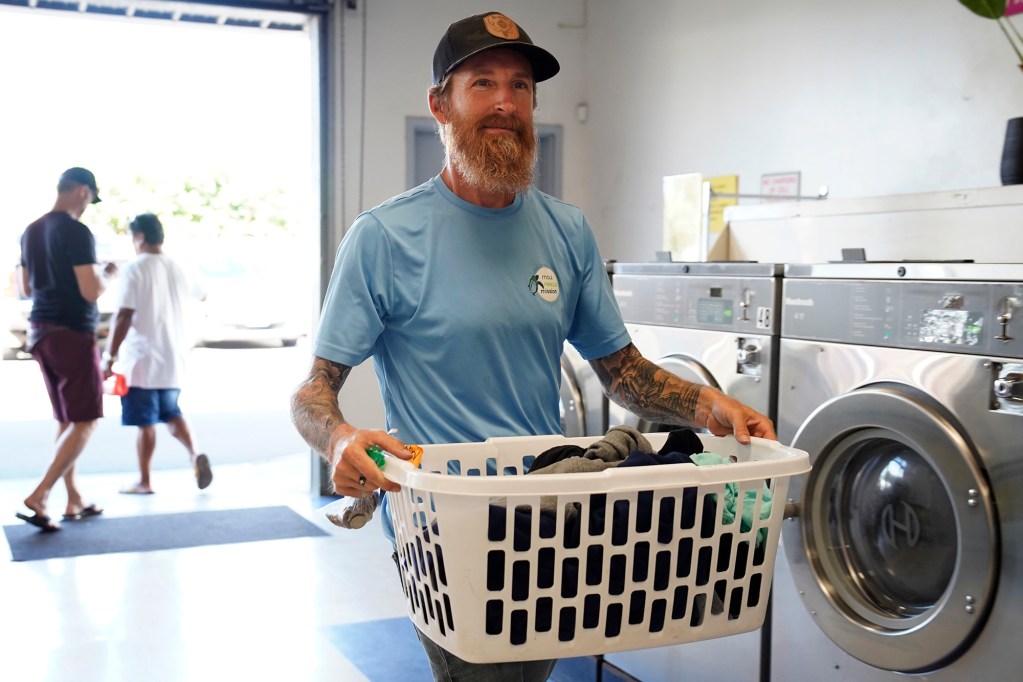
Mission staff first encountered Cole in late 2019, after they started bringing services to west Maui, setting up a trailer that offered mobile shower and laundry facilities in the Lahaina Baptist Church parking lot. Cole was an early client, said Scott Hansen, executive director of the Christian organization.
It was apparent his cognitive abilities were in decline, he said. That got in the way at the Wailuku shelter run by the Ka Hale A Ke Ola homeless services organization, where Hansen and Zimmerman said Cole stayed briefly.
Marcy Clawson, human resources administrator for Ka Hale A Ke Ola, said due to privacy rules she couldn’t say whether Cole had ever used the shelter.
“Unfortunately,” Hansen said, “they’re not set up to handle someone that needed as much help as he did. He just couldn’t keep up with it, so he ended up getting evicted. And it’s unfortunate because there was really no place for him to go to.”
While that occurred during the Covid pandemic, Hansen said he believes Cole might still be alive had he been able to get the attention he needed.
“If he were in a home, if he were somewhere getting the care he needed, you know, he’d probably still be with us,” he said. At the same time, said Hansen, “If the fire didn’t kill him, homelessness would have.”
‘Just Rex’
The Aug. 8 blaze, which had reignited at the site of a fire in northeast Lahaina that firefighters thought they had put out that morning, drove into town as the afternoon wore on. A massive shroud of choking black smoke blanketed the area.
The fire reached the banyan tree at 4:24 p.m., according to an official timeline of the disaster. Within hours, most of Lahaina had burned down, its historic district completely destroyed.
A month and a half later, two FBI agents showed up at McClaren’s door in Oklahoma City. Her brother had been confirmed as one of the fire’s victims, they told her. It had taken until Sept. 18 to identify him by his fingerprints.
Cole was one of two of Lahaina’s homeless residents killed by the fire whose remains were identified; the other was Lee Rogo.
Elmer Lee Stevens and Robert Owens were both believed to be homeless, too, and have not been seen since. This past January, at the request of his family, the Second Circuit Court on Maui declared Stevens deceased.
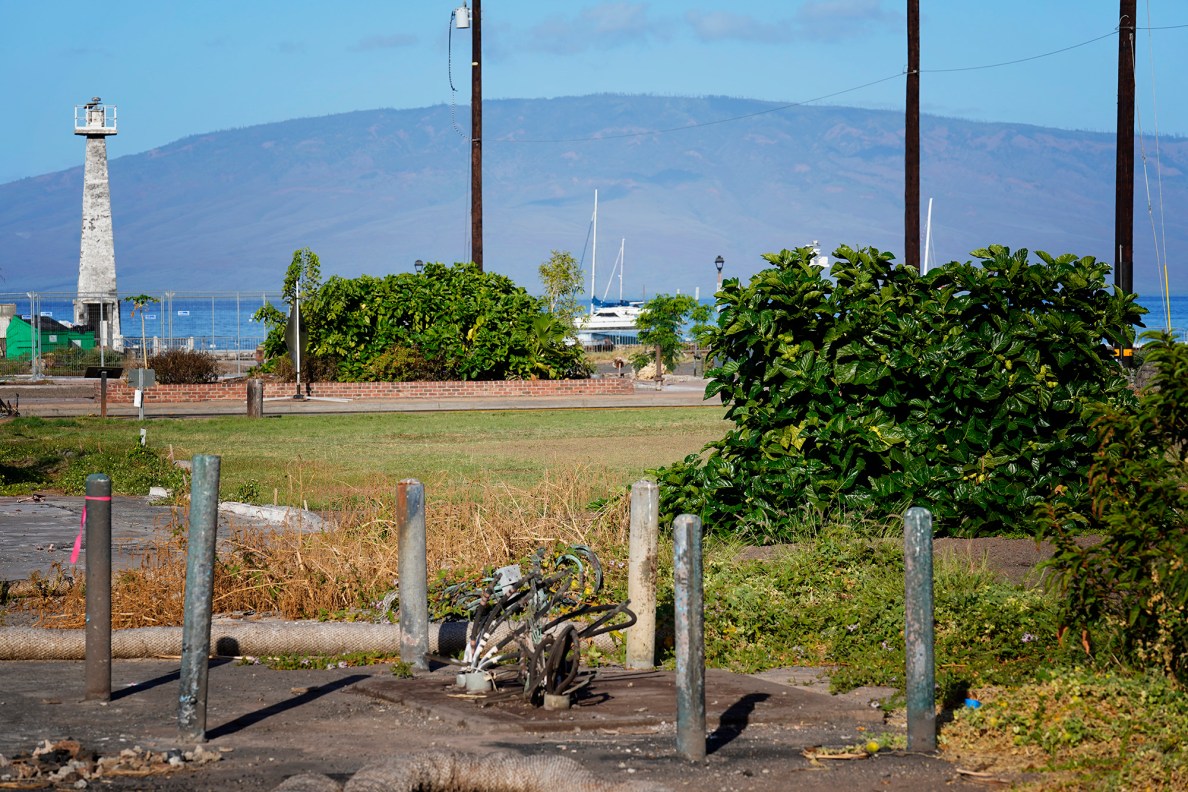
Cole’s remains were discovered at what was left of the Wharf Cinema Center, a complex of shops, restaurants and a theater behind which he often slept. It bordered James Campbell Park, the site of the plumeria tree he slept under on other nights.
As most do in death, he left unknowns behind. Maybe more than most.
His service record, for example, was unclear. Many who knew Cole said he told them he had been in the U.S. Navy and that his back problems stemmed from a service injury.
Brown said he surmised that Cole had separated from the Navy on unhappy terms because he told him he had had no veteran’s benefits.
Jones, whom Cole befriended in 2018 when she was homeless, said he told her he had served in the Vietnam War, but that math doesn’t work out since he would have been 15 when the war ended. And McClaren said she had no knowledge of her brother’s service, although there was a gap of at least 15 years during which she had little contact with him.
But those who knew him remember him for other reasons.
Like the “amazing barbecue turkey” he would make on Thanksgiving, said Jeremy Corbin, who counted Cole among his first friends when he moved to Maui in 1992 to take over Wiki Wiki Pizza, near Lahaina’s Māla Wharf.
Cole, whom Corbin later roomed with for a time, had been the restaurant’s handyman, and for a time a pizza chef, too. He lived offshore in sight of the restaurant, on a boat hull upon which a camper shell had somehow been mounted.
“He used to paddle there and hang out,” Corbin said. “I’m sure people will remember that. That was pretty fun.”
Corbin stayed in contact with Cole after he became homeless and a regular presence downtown. “He was just a really nice guy,” he said.
He had a catch phrase, said Zimmerman, formerly of Maui Rescue MIssion.
“Whenever we’d see him, he’d say, ‘Gee, thanks for stopping by,’” she said.
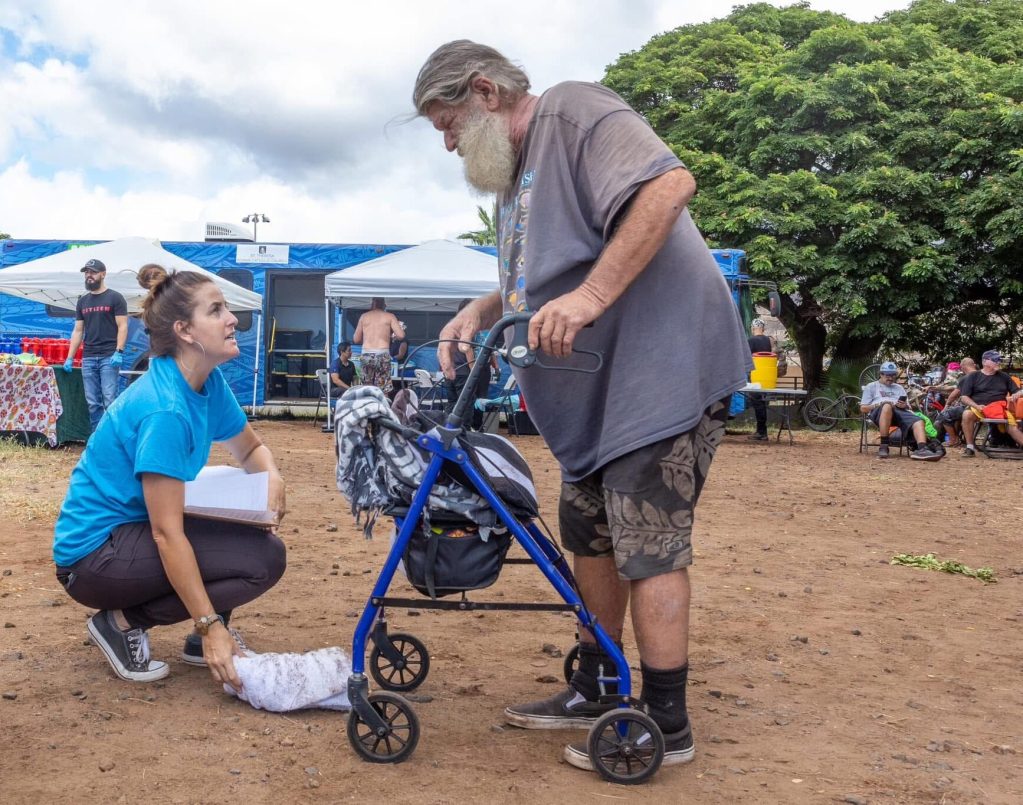
He also liked to recall the construction work he’d done, she said.
“If it was on his mind, he’d say, ‘I don’t know if you know this but I helped to build this house or that school. He was always very specific,” she said. “He was always just very proud of that work that he had done and the time that he had spent in West Maui.”
When Brown learned in April that nobody had claimed Cole’s remains and the Maui County coroner was going to request cremation, he made arrangements for a Wailuku funeral home to pick up and cremate Cole, paying for the service with a GoFundMe campaign that raised $1,755 and supplementing with his own funds.
Brown — who plans a memorial ceremony for Cole on Sept. 6, probably at Lahaina Harbor, with details to be posted on the GoFundMe page — said he and his wife had considered asking Cole to move onto their property, but ultimately decided that because it is difficult to access it wasn’t feasible for someone with limited mobility and no transportation.
On a sun-splashed Wednesday in late July, the historic downtown was a mosaic of foundation walls, concrete slabs, patches of grass — all arranged amid empty streets like footprints of what was, the place Cole called home for so many years. There was the banyan tree, a miraculous fire survivor, still recovering. There was the burned old courthouse. Power poles. Palm trees. The intact lighthouse looking over it all.

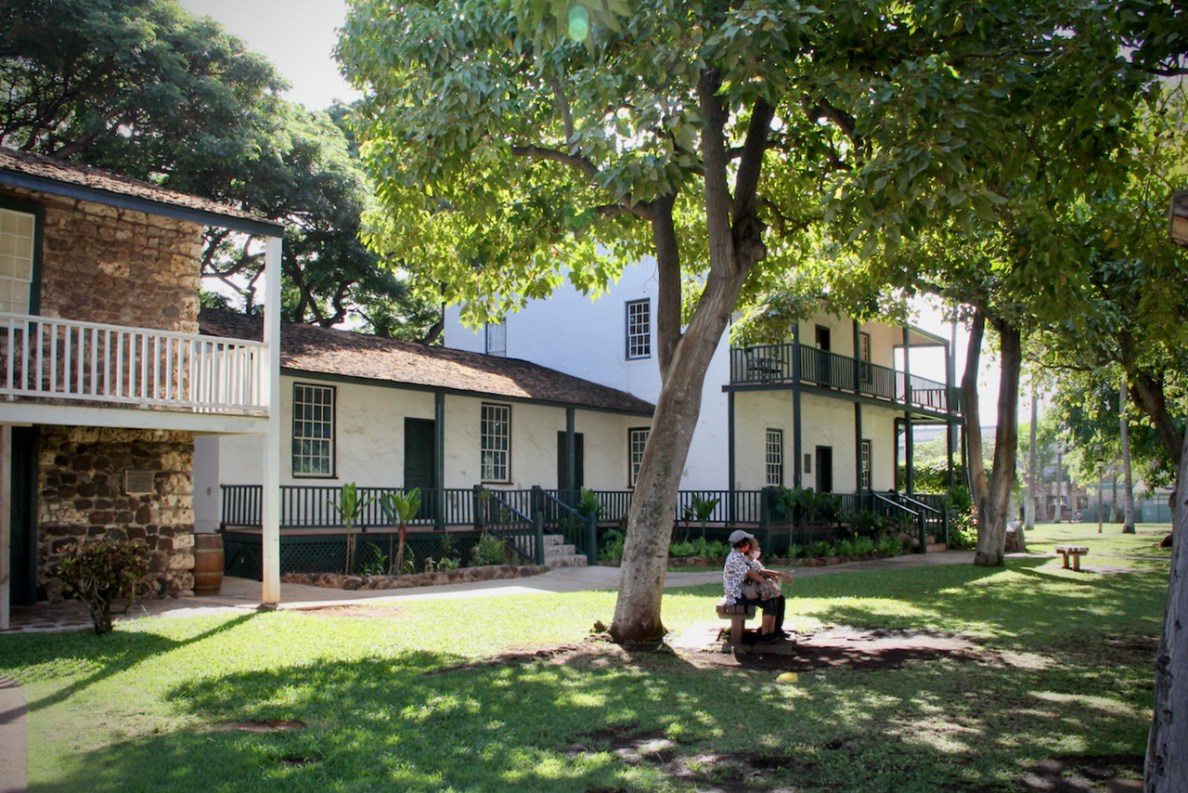
Lahaina Restoration Foundation chief engineer Jesse Neizman took a break from clearing combustible materials from the grounds of the nearby Baldwin Home Museum, which is next to James Campbell Park where Cole’s favored plumeria tree once bloomed.
He called over a colleague, Spencer Perry, who also knew Cole.
Cole was a really decent guy, they agreed as they chatted perhaps 100 yards from where he had died. Easygoing, always friendly, not one to make waves.
“He never got a nickname from us,” Neizman said. “If you did something boneheaded, you got a nickname. He never got a nickname. He was just Rex.”
Civil Beat’s coverage of Maui County is supported in part by a grant from the Nuestro Futuro Foundation.
Civil Beat’s reporting on economic inequality is supported by the Hawaiʻi Community Foundation as part of its work to build equity for all through the CHANGE Framework; and by the Cooke Foundation.
