

Molokaʻi Residents Fight To Keep Coconut Rhinoceros Beetle Off Their Island
As the invasive pest shows up on all the other Main Hawaiian Islands, residents of Molokaʻi say the state is not doing enough to ensure they don’t meet the same fate.
With the recent discovery of the coconut rhinoceros beetle on Lānaʻi, residents of Molokaʻi are begging state agricultural officials to take urgent steps to keep the tree-killing insect from reaching their shores.
At a recent Board of Agriculture and Biosecurity meeting, Lori Buchanan — a well-known Molokaʻi community advocate — pleaded with board members to prevent hosts such as mulch and green waste from being transported from infested areas such as Oʻahu.
“Being the person in charge of protecting Moloka’i and knowing that I’ve done everything I can …” said Buchanan, who also is a member of the Molokaʻi/Maui Invasive Species Committee. “I’m here today asking for help.”
Buchanan told the board that the committee had reached out to companies importing the biomaterials to the island, offering to inspect shipments for the beetles for free. She said that the companies did not take them up on their offer.
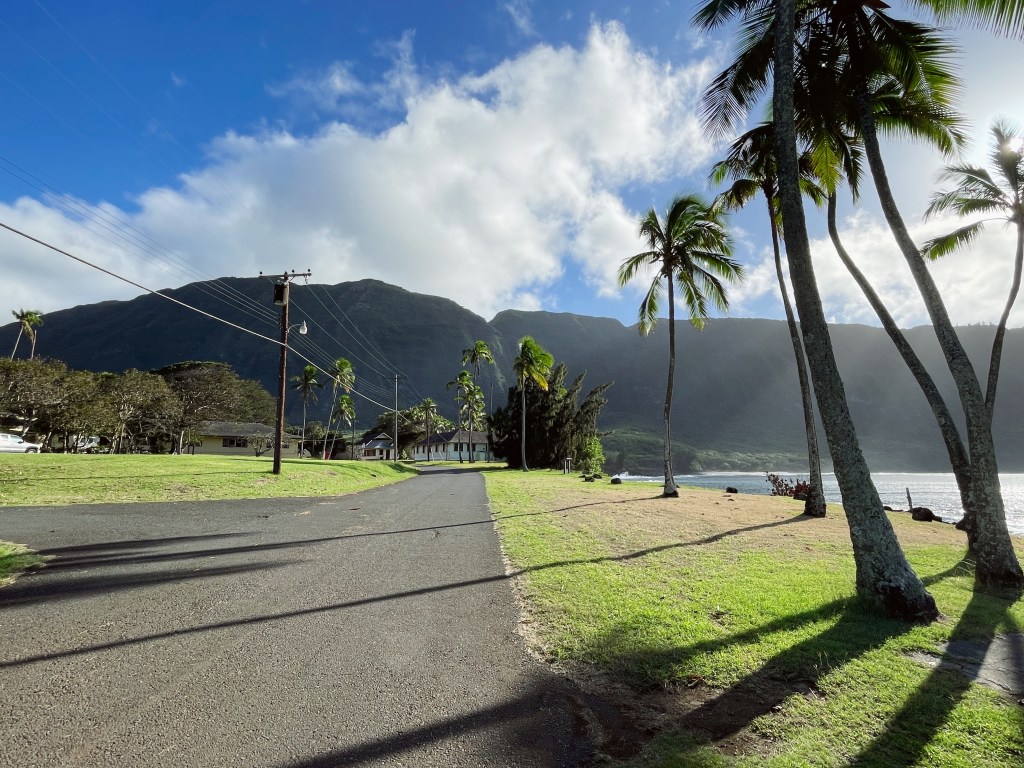
With a major hotel renovation happening on the island, she urged the state to take decisive action quickly.
In response to the impending threat, on Tuesday coconut farmers and Hawaiian cultural practitioners Kunani and Ipo Nihipali will travel to Honolulu to speak to the state board and ask that biomaterial imports be temporarily halted, a request they made in a petition submitted at the end of July.
The coconut rhinoceros beetle has been plaguing coconut trees on Oʻahu since 2013 and so far the Hawaiʻi Department of Agriculture has not been able to stop it.
The infestation has spread not just to other islands but to other plants such as kalo, papaya, sugarcane, banana and pineapple, according to the U.S. Forest Service. Those plants are vital to the food security of rural Molokaʻi’s approximately 7,000 residents.
The beetle could also impact the island’s cultural legacy, which is strongly rooted in agriculture. Any infestation would imperil Hawaii’s oldest royal coconut groves, planted by King Kamehameha V.
“The bottom line is niu is the tree of life for Polynesians, Hawaiians in particular,” Kunani Nihipali said, using the Hawaiian word for the coconut palms. “It carries us from life to death. It’s a part of every part of life.”
Invasion Spreads Across Islands
Little progress has been made in combating the scarab beetle since it arrived in Hawaiʻi 12 years ago. Native to Southeast Asia, it is controlled in its home habitat by predators like rats or killed by disease. In Hawaiʻi, it has virtually no natural predators.
“We are not winning,” said Christy Martin, program manager of the Coordinating Group on Alien Pest Species, a project of the University of Hawai‘i’s Pacific Cooperative Studies Unit.
In recent years, the beetle has gained a solid foothold on Kaua’i and in Kona on the Big Island. With the detection of beetle larvae on Maui in 2022 and in potted plants on Lānaʻi earlier this summer, residents of nearby rural Moloka’i are on high alert.
When the first infested plants made it to Lana’i in May, inspectors found nothing and approved them for shipment, according to Jonathan Ho, the state’s plant quarantine branch manager. But on delivery, land management company Pūlama Lāna‘i found larvae in one of the plants and quarantined the shipment.
In June, the company identified an adult beetle in another shipment of potted plants, according to a statement put out earlier this month by the Department of Agriculture and Biosecurity.

Those discoveries have left Molokaʻi residents like the Nihipalis with little trust in the inspection system. In written testimony filed with their petition, the Nihipalis cite the failure of visual inspections and other precautionary measures to prevent the spread of invasive beetles to Kauaʻi and the island of Hawaiʻi.
Their petition asks for an interim rule that, if accepted in its current form, would prevent the transfer of “Plants, Soil, Gravel, and other CRB Host Material” to Moloka’i for up to one year.
Ho said he supports further restrictions but thinks the ones suggested in the petition are excessive. They would lead to “nothing going to Molokaʻi regardless of whether it’s infested or not,” Ho said. “This is kind of opposite of what we’ve normally done.”
The beetles, Ho said, likely did not arrive on Oʻahu via plants but by hitchhiking on a plane. As long as boats and planes are making their way to Molokaʻi, he said, a risk of infestation remains.
Since the beginning of the outbreak, many feel the state has not adequately used its authority to stop the spread of biomaterial throughout the islands. Those working to curb the infestation say they believe the department is more concerned with companies’ ability to make money than with managing invasive species.
“Traditionally the Department of Agriculture has done everything possible not to regulate agricultural businesses,” Hawaiʻi State Sen. Jarrett Keohokalole told Civil Beat, “even if that means the proliferation of invasives.”
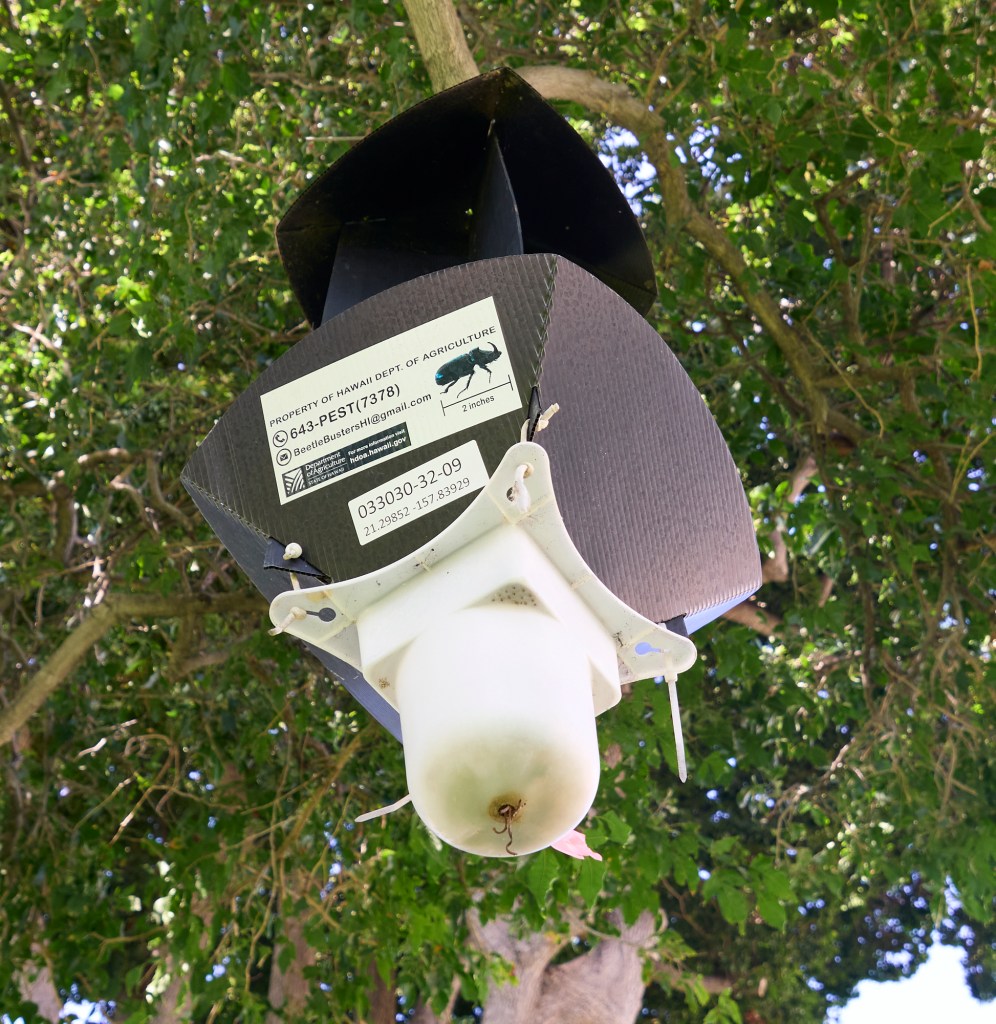
Ho says that is inaccurate.
“That idea that … we’re like kowtowing to industry, is not true,” he said. Ho noted that when the state found out that commercial materials such as mulch and green waste were spreading the bugs, they put a temporary hold on transport from Oʻahu to other islands until treatments could be identified.
The department has used all the tools at its disposal, Ho said, but those tools are likely not enough to eradicate the beetle infestation on O’ahu. As long as they exist there, neighboring islands remain at risk.
As a possible long-term solution, Ho said the state is looking into “bio control,” in which a virus specific to scarab beetles is introduced. The approach has been successful elsewhere in the Pacific, although it is not guaranteed: In 2009 the coconut rhinoceros beetle species that had infested Guam proved resistant to the virus.
Additionally, the virus would likely impact all types of scarab beetles, so it is best used in places without native beetles. It may be an option on some islands but not on Kauaʻi due to a rare flightless stag beetle endemic to that island.
For now, the department is relying on proven methods of chemical and heat treatments for mulch piles and green waste, injecting at-risk trees, and inspecting and limiting shipments from high-risk areas.
‘Freedom Of Our Land’
For those who cultivate coconuts on Molokaʻi, it is not an issue of simply losing crops. Coconut palms and their fruit play a greater cultural role than an economic one — a role with which some Hawaiian traditional practitioners are just starting to reconnect.
The Nihipali farm is both a coconut palm nursery and a seed bank added four years ago with the help of the Niu Now! movement. According to Indrajit Gunesekara, director of the Community Coconut Program, Niu Now! and the Nihipalis planted 30 palms of 10 different varieties. The seed bank has seeds for eight additional varieties of palms.
Gunesekara said he was not sure it will be possible to keep coconut rhinoceros beetles from reaching the island but that Moloka’i residents “still have a chance if we act cleverly and diligently.”
The primary mitigation method the state uses to control the pests — injecting trees with poison — is a major point of contention for coconut growers.
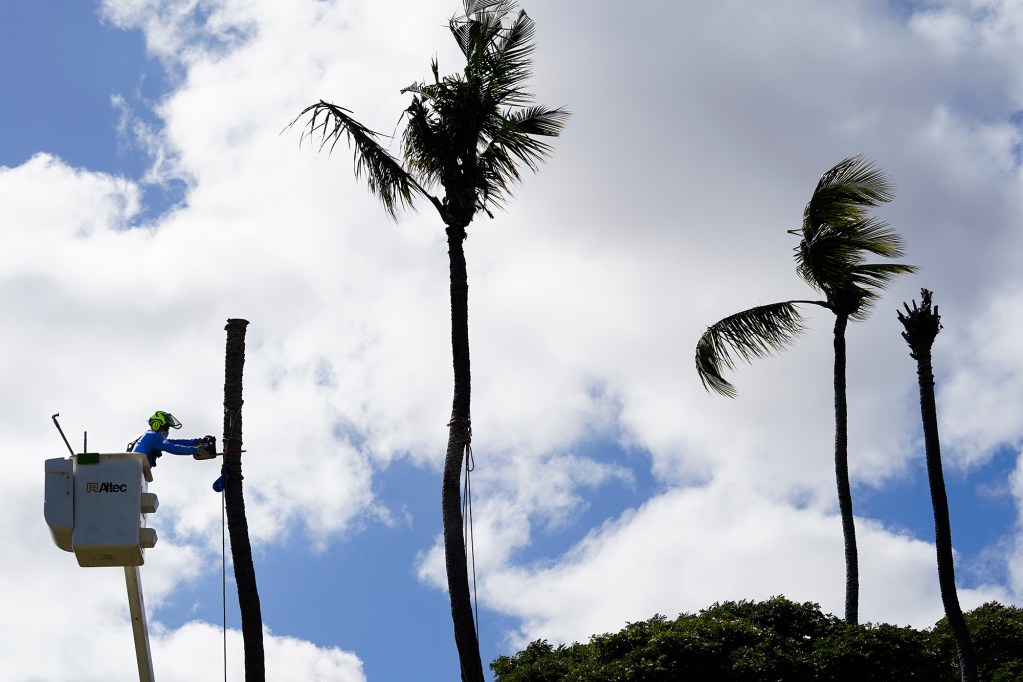
On Oʻahu, most of the coconut palms are decorative varieties to avoid the chance of a coconut falling and injuring someone. Since the trees are not producing food, there has not been much pushback on the chemical treatments.
For trees that do bear coconuts, the chemicals would make the fruit inedible for at least two years. Kunani Nihipali said that they will not be the lab rats to determine whether the fruit is truly safe to eat after that time.
“We will not be tested on,” he said.
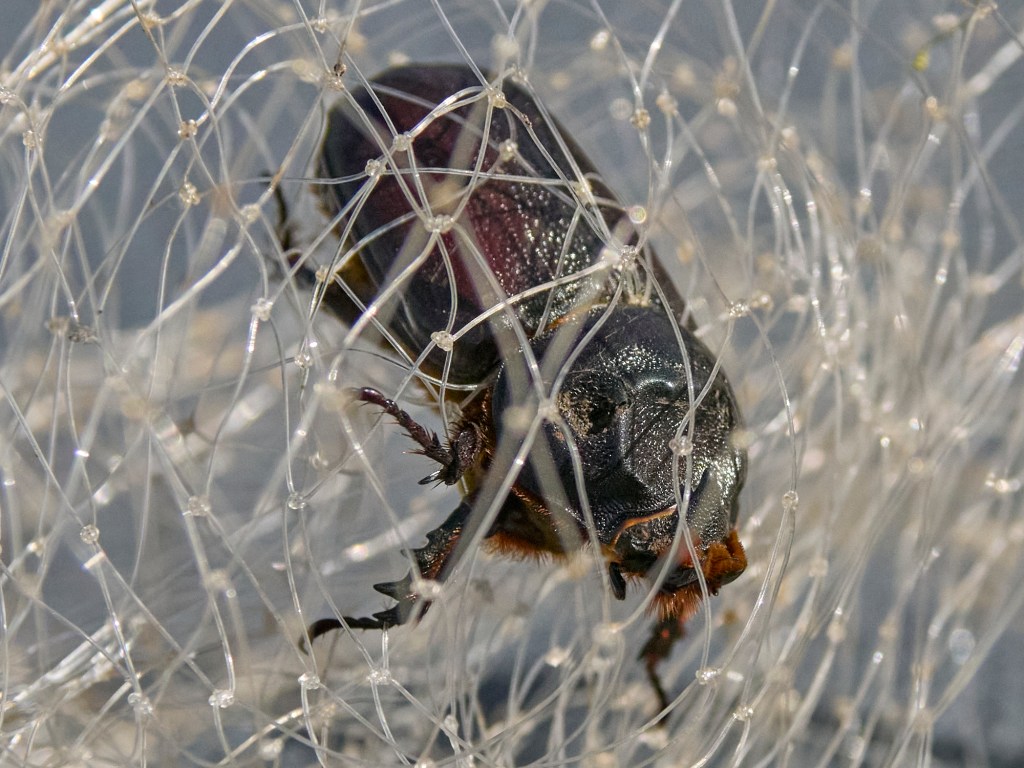
The folks involved in Niu Now! have found wrapping half-inch netting around the base of palms to catch the beetles a less invasive method of mitigation, although Gunesekara said that is not 100% effective. Instead, their main response on the affected islands has been to plant as many new trees as possible to replace the destroyed ones.
As far as the potential ban on potential beetle host material for Molokaʻi, Keith Weiser — the deputy incident commander for the Hawaiʻi State CRB Response Team — said he thinks that could be an effective tool for smaller islands as long as the community is on board.
In the long term, Kunani Nihipali said that he would like to see part of the $10 million in funding the Legislature allocated to the Department of Agriculture and Biosecurity used to place a full-time inspector on Molokaʻi. He would also like a dog trained to detect invasive pests on the island.
As Kunani Nihipali prepares for Tuesday, he is considering bringing coconut along to share with the board so they can taste the magic of the niu.
“Mau ka pono o ka niu, mau ke ‘ea o ka ‘āina,” he said, “When niu is planted, we have our freedom of our land.”
“Hawai‘i Grown” is funded in part by grants from the Stupski Foundation, Ulupono Fund at the Hawai‘i Community Foundation and the Frost Family Foundation. Civil Beat’s coverage of environmental issues on Maui is supported by grants from the Center for Disaster Philanthropy and the Hawai‘i Wildfires Recovery Fund and the Doris Duke Foundation.

