Immigrant Lahaina Fire Survivors Terrified By ICE Presence
The federal immigration enforcement agency was in West Maui reportedly searching for a non-resident.
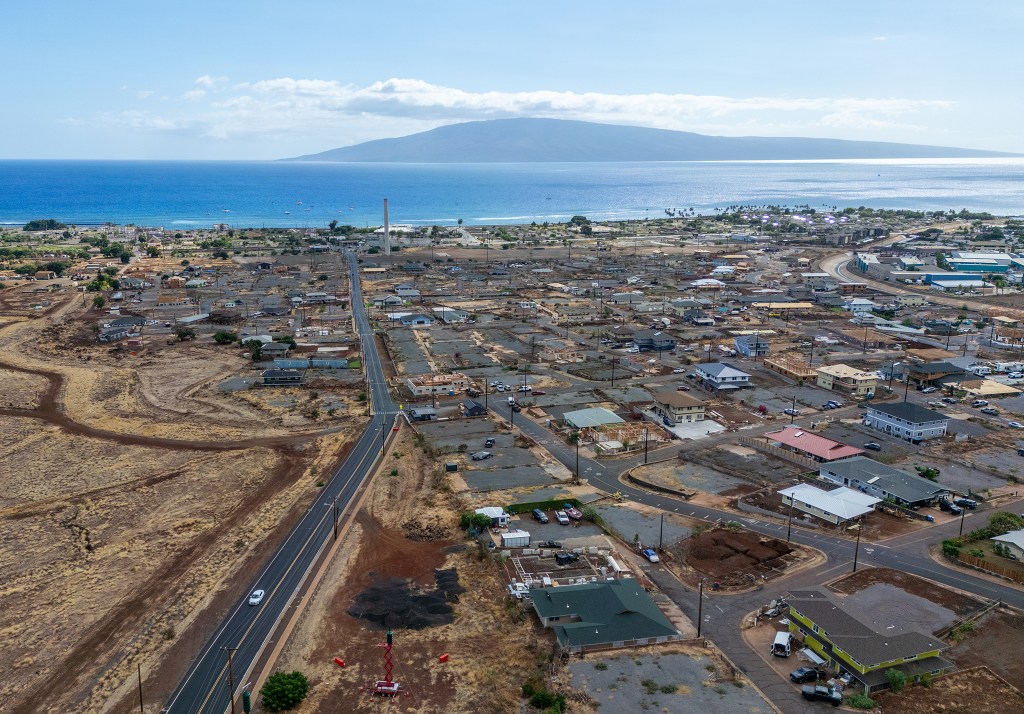
Members of Maui’s large immigrant population were on edge this week after U.S. Immigration and Customs Enforcement officers were seen knocking on doors in Lahaina, including at the largest temporary housing development for survivors of the deadly 2023 wildfires.
ICE officers approached residents on Monday, Tuesday and Wednesday, according to nonprofit leaders, government officials and others in the community.
Kevin Block, a longtime immigration lawyer based in Wailuku, said several of his clients who had been impacted by the fire were now afraid to leave their houses. Others were debating whether to send their children to school for fear ICE agents might pull them from class to ask about family members’ immigration status.

A Department of Homeland Security directive issued in 2021 instructed ICE not to target disaster-relief areas like Lahaina. It grouped them with areas including churches, courthouses and hospitals that should be protected from some enforcement actions.
That directive was repealed shortly after President Donald Trump took office in January, and ICE officials were instead instructed to make “case-by-case determinations regarding whether, where and when to conduct an immigration enforcement action in or near a protected area.”
ICE officers were seen knocking on doors this week in the neighborhood near Princess Nāhiʻenaʻena Elementary School and at the state’s interim housing community for fire survivors, Ka La‘i Ola, in addition to other locations in west and central Maui, Block and Lahaina residents said.
Joseph Campos, deputy director of the Department of Human Services, which is leading the state’s efforts at Ka La‘i Ola, said Wednesday that he was aware of the ICE visit.
“They came to look for a non-resident who may have been visiting a resident,” he said. “They presented a judicial warrant.”
Ka La‘i Ola maintains a policy of not releasing information about its residents to anyone unless there is a signed and verified judicial warrant or higher documentation presented, he said.
ICE notified the Maui Police Department that they were present on the island, according to a statement Tuesday from Gregg Okamoto, assistant chief of the department’s support services division.
“But we are not given details and are not involved with their operations,” he said.
The Department of Homeland Security, including ICE, does not “comment on pending or ongoing enforcement operations,” according to a statement issued by the agency. For operational security reasons, it also “does not disclose the locations or activities of its personnel.”
Consisting of 450 modular homes spaced out across 57 acres of state-owned land overlooking downtown Lahaina, Ka La‘i Ola was built for residents displaced by the Lahaina fire who don’t meet income or background qualifications for Federal Emergency Management Agency housing. It is home to nearly 900 people and has the capacity to house up to 600 more, according to its website.
Gov. Josh Green and Maui Mayor Richard Bissen joined community leaders and families Wednesday morning to mark the project’s completion. The site is expected to be handed over to the Department of Hawaiian Home Lands by 2029 for Native Hawaiian beneficiaries.
Community advocates informed county officials earlier this week that locals were concerned about ICE activity at Ka La‘i Ola, according to a statement provided Wednesday evening by Maui County spokeswoman Laksmi Abraham.
“As a temporary housing site for wildfire survivors and a place of peaceful recovery, Ka La‘i Ola and all disaster recovery sites must remain safe spaces where survivors can seek shelter and support without fear or intimidation,” Bissen said in the statement. “Our community has faced extraordinary challenges, and these recovery sites are meant to serve as havens of stability and healing for all who need them.”
More than 2,200 structures were destroyed by the Lahaina wildfire, and approximately 12,000 people were displaced. As of Wednesday, roughly 60 homes had been rebuilt, according to the county’s recovery website.
‘Still Terrified’
Some residents are only recently returning to live in Lahaina after bouncing among emergency shelters and other accommodations during the past two years.
“They literally just moved in and are starting to feel safe and not traumatized anymore,” Block said. “And now ICE is driving around in the neighborhood and knocking on people’s doors. Even if they’re not looking for my clients, they’re still terrified.”
Some immigrants in the community have been missing work or avoiding returning to their homes because they were worried that ICE might be able to track them down, said Veronica Mendoza, the co-founder and executive director of the local immigrant advocacy group Roots Reborn.
She and other advocates helped immigrant wildfire survivors get approved to move into Ka La‘i Ola. She expressed gratitude for the housing, but said members of the immigrant community do not feel safe there right now.
“They literally just moved in and are starting to feel safe and not traumatized anymore.”
Kevin Block, Maui immigration attorney
Block, the immigration attorney, said the Department of Homeland Security’s shift in stance to allow enforcement actions near disaster-relief areas damages the community’s well-being.
“Because if people who need help aren’t going to the hospital, and if people who need to go to school aren’t going to school, people who want to participate in their spiritual life aren’t going to church because those places are no longer safe,” he said, “then all of us are losing our freedom and our rights.”
At least one Lahaina wildfire survivor was previously taken into custody by ICE, according to a Honolulu Star-Advertiser story, and a GoFundMe fundraiser was set up to support his family. Sergio Haro lived with his family in Lahaina, and he owned a local janitorial service, the newspaper reported.
Civil Beat’s coverage of Maui County is supported in part by a grant from the Nuestro Futuro Foundation. Civil Beat’s reporting on economic inequality is supported by the Hawaiʻi Community Foundation as part of its work to build equity for all through the CHANGE Framework; and by the Cooke Foundation.