

Poor Protection Of Molokaʻi From Invasive Beetles Called An Emergency
The loss of plants to invasive species would threaten the island’s food security and calls for more serious action.
In a unanimous vote, a state advisory committee on invasive species on Wednesday found existing rules to protect Molokaʻi from coconut rhinoceros beetles so insufficient it has created a situation dangerous enough to constitute an emergency.
A petition written by Kunani and Ipo Nihipali, Hawaiian cultural practitioners and Molokaʻi residents, calls for temporarily banning the import of gardening and landscaping materials to the island, following two detections of the destructive beetles on Lānaʻi. With Wednesday’s vote, that proposal will come before the Board of Agriculture and Biosecurity.
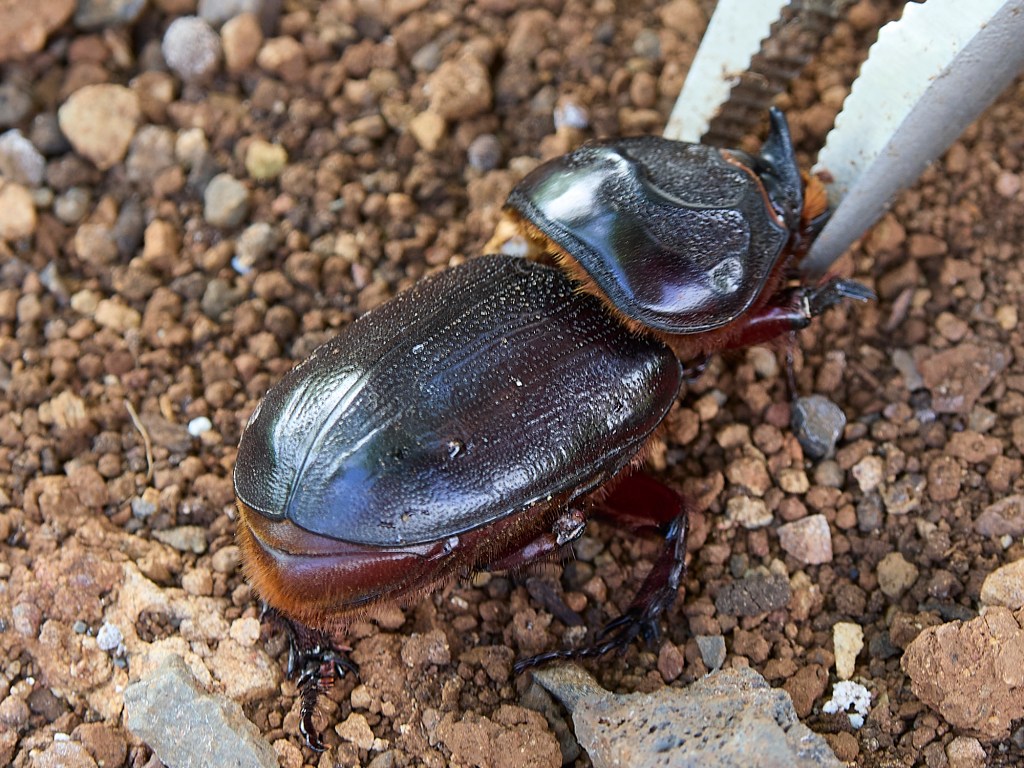
Molokaʻi is the last of the Main Hawaiian islands to be apparently free not only of the beetles but of the invasive little fire ants and coqui frogs that plague other islands. Introduction of the invasive species to the island could threaten the very resources Molokaʻi relies on for survival since coconuts and other agriculture are part of both its traditional and subsistence economies.
Blocking the introduction of materials from sites that are not designated as infested would be unprecedented, according to Jonathan Ho, the Plant Quarantine Branch manager for the Department of Agriculture and Biosecurity.
Ho submitted a revised version of the interim rule proposed by the Nihipalis that would greatly decrease the limits proposed by the original version. However, the advisory panel supported the rule going before the board in its original form, which could be discussed there as soon as next Tuesday.
Kunani Nihipali said that they are optimistic following the advisory board’s decision, “but we have to follow it through.”
Beetle Battles On All Islands
Part of the way current rules fall short is that they list only Oʻahu as the infested zone. Since those rules were created to prevent further spread, the beetles also have been found on Kauaʻi and parts of western Hawaiʻi island.
The rules only limit the transport of palms, too, even though it has since been found that the larvae can be transported by other types of tropical plants. While coconut rhinoceros beetles prefer coconut palms, which they kill by boring into the crown of the tree, the beetle will hit a long list of other plants when the infestation gets bad enough or there are no coconut palms, according to Keith Weiser of the CRB Response Team at the University of Hawaiʻi.
Secondary hosts include banana and papaya trees, and pineapple plants, all important food crops throughout the Hawaiian islands.

For Molokaʻi, an agricultural community that receives any outside resources by barge, the loss of plants to invasive species threatens the island’s food security. Its coconut groves, or uluniu, also hold great historic and cultural importance.
“I cannot overstate the seriousness of this issue,” Walter Ritte, an activist and Moloka’i resident, told the advisory board on Wednesday.
The greatest argument Ho brought against the total prohibition of biomaterial to the island is the potential need for things such as mulch following a potential emergency like the Lahaina fires, where it was used to help control erosion. Those who came to testify weren’t having it.
Lori Buchannan, who had begged the Board of Agriculture and Biosecurity just weeks earlier to help protect Molokaʻi, said that the island’s businesses are ready to fill that gap. Through her outreach on the issue, she said that local businesses were not only ready to supply the material should it be needed, but excited for the opportunity.
Kunani Nihipali said that Molokaʻi is capable of stepping up to the challenge, if it could just get the resources it needs, like inspection facilities, from the state.
Coconut rhinoceros beetles first appeared on Oʻahu in 2013 and, as it stands now, Hawaiʻi’s most populous island is considered infested with little hope of eradication. The same goes for Kauaʻi, while the state focuses on trying to eradicate beetles from West Hawaiʻi island, according to Ho. Weiser has said that the CRB Response team is now focused on containing the infestation by doing treatments around airports and marine ports.
“You failed; 12 years you failed,” Nihipali said, “Give us the resources and give us a chance to do what we need to do.”
“Hawai‘i Grown” is funded in part by grants from the Stupski Foundation, Ulupono Fund at the Hawai‘i Community Foundation and the Frost Family Foundation and Civil Beat’s coverage of climate change and the environment is supported by The Healy Foundation, the Marisla Fund of the Hawai‘i Community Foundation.

