

Red Hill Victims Claim Navy Destroyed Evidence In Fuel Contamination Crisis
Families who drank tainted water on Oʻahu were not informed that the Navy was sitting on the key proof, their lawyers allege. Now it is too late.
The U.S. Navy had samples of the fuel that contaminated Pearl Harbor’s drinking water in 2021 but withheld that information from the impacted families who could’ve used the evidence in lawsuits against the federal government, plaintiffs’ attorneys allege.
Now, it’s too late. The samples from the Navy’s Red Hill storage complex have since been contaminated and are expired, according to attorneys for two victims who filed a motion for sanctions this week.
“Through USA’s reckless and intentional failure to properly collect and preserve this material,” the filing states, “the evidence was destroyed.”
The 2021 fuel spill at the Navy’s World War II-era Red Hill facility in Honolulu unleashed thousands of gallons of fuel into Pearl Harbor’s drinking water supply, which served approximately 93,000 people. Thousands reported health impacts ranging from gastrointestinal issues to neurological challenges that have upended their lives, caused trauma and kicked off years of medical bills.
The lack of disclosure robbed Red Hill water crisis victims of the opportunity to test the samples and use the results to bolster their legal claims, the legal team wrote.
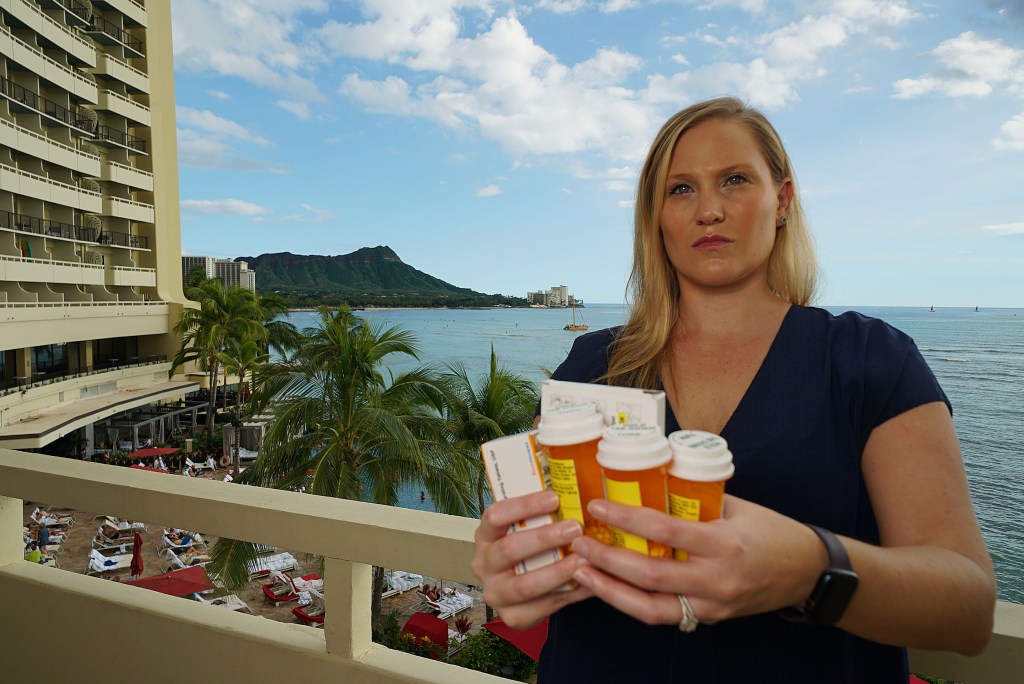
Meredith Wilson suffered from dizziness and disorientation after consuming the water from Red Hill in 2021. Now living in the St. Louis, Missouri area, Wilson is still recovering emotionally. The crisis turned her life upside down, she said, and even changed her personality. A singer, Wilson used to be upbeat and extroverted but now describes herself as hypervigilant and cynical.
“It’s altered my life 100%,” she said.
The Navy’s failure to disclose the fuel samples contributes to those feelings.
“That is just so unfair that it was kept from us for so long,” she said.
A trial last year resulted in monetary awards that were much smaller than claimants had hoped for, considering many suffered severe health problems that persist to this day. In Judge Leslie Kobayashi’s ruling, she noted the lack of specific information about the jet fuel chemicals, and said the quantities that reached people’s homes, were “not capable of being reliably calculated” and were “not proven.”
Financial payouts in that case, therefore, were limited to short-term claims for acute injuries like headaches. Proof of the contents of the Navy’s fuel would have been the key evidence needed to prove serious, longterm harm, lawyers wrote.
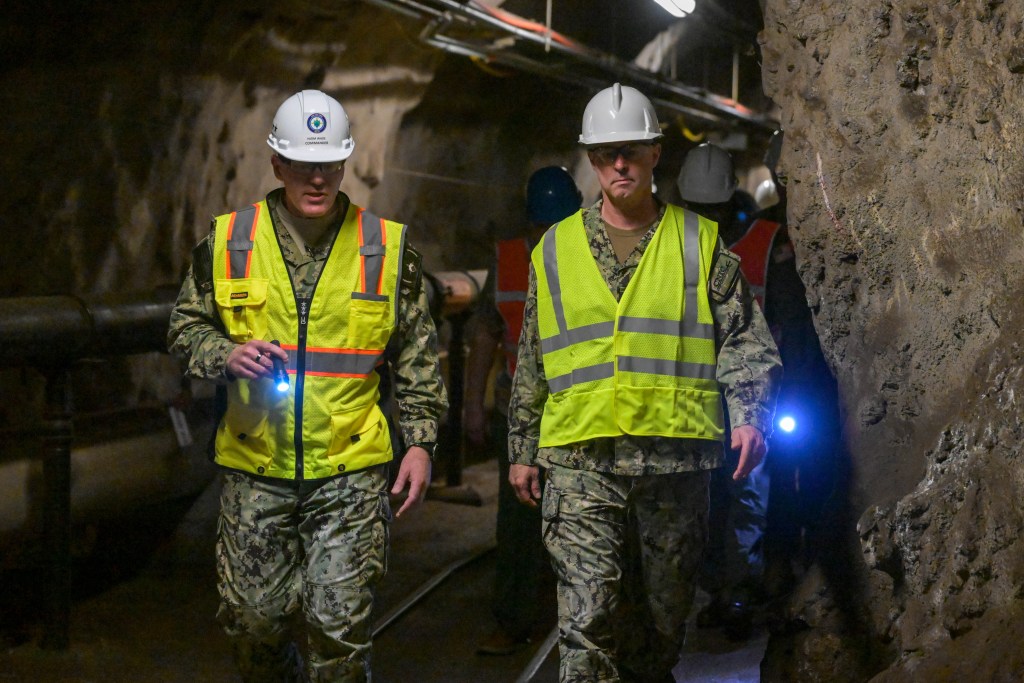
That case, which will impact the monetary awards for thousands of claimants, is over.
The current case, brought by victims Wilson and Ariana Wyatt, is scheduled for trial next summer.
Their attorneys are seeking a hearing on what’s called evidence spoliation and for the judge to infer that the contaminants from the Red Hill spill caused plaintiffs’ injuries. They are also seeking monetary sanctions, including attorneys fees and costs associated with investigating the lack of disclosure.
“In a lawsuit, you have to disclose relevant material,” plaintiffs’ attorney Chris Nidel said. “You’re under an obligation to do that, and if you don’t, it’s unethical and sanctionable.”
Civil Beat reached out to the Department of Justice and the Navy for comment this week, but did not receive a response.
Navy Official Called It ‘The Best Sample’
After the November 2021 fuel leak, some fuel-water mixture remained in the pipeline for some time and was later drained into barrels for disposal instead of into clean sample bottles, the filing states.
The plaintiffs’ legal team only found out about the samples because Wilson came across a letter online from the U.S. Environmental Protection Agency referring to the samples and told her lawyers.

Records her legal team later obtained showed federal employees knew the samples existed and that they would have been useful to claimants. On Feb. 6, 2024, Steven Chow, deputy director of operations for the repair directorate for the Joint Task Force-Red Hill, emailed others on the sampling team about it. Chow is now deputy director for facilities for Navy Closure Task Force-Red Hill.
“It appears to be the best sample of the fuel that contaminated the JBPHH water system in 2021,” he wrote, referring to Joint Base Pearl Harbor-Hickam.
The Environmental Protection Agency told the Navy in early 2024 to collect the fuel from the pipeline and preserve it, the plaintiffs’ motion states. But Guy Frearson, an employee of AECOM, the Navy’s lead technical contractor and a defendant in the current lawsuit, told the team “we will not be collecting sample [sic] directly from the (aqueous film forming foam) retention line as requested in the EPA correspondence.”
Instead, the fuel was drained into drums that were not certified clean, meaning the fuel may no longer no be representative of the fuel that leaked in 2021. Making matters worse, so much time has passed that the samples can’t be relied upon anymore anyway.
“Due to USA’s failures, Plaintiffs only discovered the material after it expired,” the filing states.
The Navy did take samples from the drums for a limited analysis, the court filing says, but it did not seek to identify the chemicals present.
Wilson said the failure to disclose the samples fits a pattern she’s observed from the Navy.
“The lack of information is information to me,” she said. “It shows me they didn’t want us to have access to the samples.”
Correction: This story has been updated to reflect Stephen Chow previous job title.
Civil Beat’s coverage of climate change and the environment is supported by The Healy Foundation, the Marisla Fund of the Hawai‘i Community Foundation and the Frost Family Foundation.

