

Convicted Officials May Be Innocent, Hawaiʻi Chief Justice Suggests
Three former Honolulu officials may have an opening to get their criminal records thrown out, one legal expert says.
The high-profile federal prosecution of three former Honolulu officials on conspiracy charges, which ended in admissions of guilt this year, was based on a faulty premise, according to a court opinion penned by the acting chief justice of the Hawaiʻi Supreme Court.
The opinion raises the prospect that the alleged co-conspirators may be innocent.
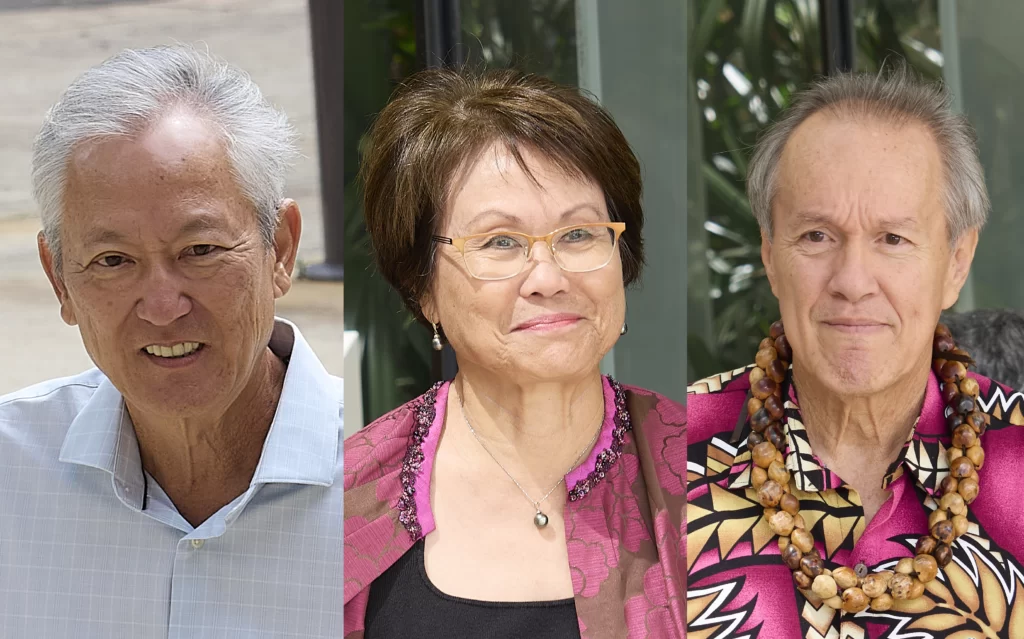
Honolulu’s former top city attorney Donna Leong, managing director Roy Amemiya and Honolulu Police Commission Chair Max Sword – all political appointees of former Mayor Kirk Caldwell – were charged with felonies for arranging a $250,000 retirement payout for then-police chief Louis Kealoha, who was on the brink of being indicted on corruption charges.
Leong and Sword pleaded guilty to misdemeanor charges earlier this year, and Amemiya signed a deferred prosecution agreement in which he admitted to participating in a conspiracy but avoided a conviction.
Key to the prosecution, led by San Diego-based prosecutor Michael Wheat, was the idea that the officials needed permission from the Honolulu City Council to make the deal. By evading a council vote, the agreement escaped public scrutiny before it was signed, and the defendants were said to have deprived citizens of their due process rights.
That premise is now being called into question.
In a court opinion published Tuesday, the day before she became acting chief justice, Sabrina McKenna suggests the load-bearing theory of the criminal case is wrong.
“City law did not require City Council approval of Kealoha’s retirement agreement in the first place,” McKenna wrote.
McKenna’s pronouncement is unusual in that it came about through a related but separate legal matter. The question before the court was about whether to restrict Leong’s law license. The parties did not ask the court for an opinion on the City Council question, and the majority opinion made no mention of that topic.
However, McKenna and Associate Justice Todd Eddins took it upon themselves to address the council issue in a concurring opinion. Federal public defender Ali Silvert, who helped crack open the Kealoha corruption case, said that strayed from standard practice.
“It was not an issue before the court at all and should not have been addressed,” Silvert said.
But now with a favorable opinion from two Supreme Court justices in hand, Leong, Sword and Amemiya could attempt to use it to clear their criminal records, Silvert said.
“It now opens the door to Amemiya, Sword and Leong possibly going back to federal court and withdrawing their guilty pleas on the basis of actual innocence,” Silvert said.
Civil Beat reached out to defense counsel for Leong, Sword and Amemiya, the U.S. Attorney’s office in San Diego and Wheat, who has since retired, but did not receive responses.
Kealoha’s retirement deal stipulated that Kealoha would return the money if he was convicted of a crime within a few years. However, Kealoha was convicted in 2019, alongside his wife Katherine Kealoha, for using the power of the police department to frame an innocent man for a crime he didn’t commit. To this day, Kealoha has not paid the money back.
However, the three alleged co-conspirators were ordered to pay restitution to the city totaling $250,000: Leong and Sword were each ordered to pay $100,000, and Amemiya was assessed $50,000.
Officials Acted ‘For The Good Of The City’
Defense attorneys had attempted to persuade U.S. District Court Judge Leslie Kobayashi that City Council approval was not required for Kealoha’s retirement deal in their efforts to dismiss the case, but they were unsuccessful.
However, the same arguments seem to have convinced McKenna, who only took over the acting chief justice role on Wednesday.
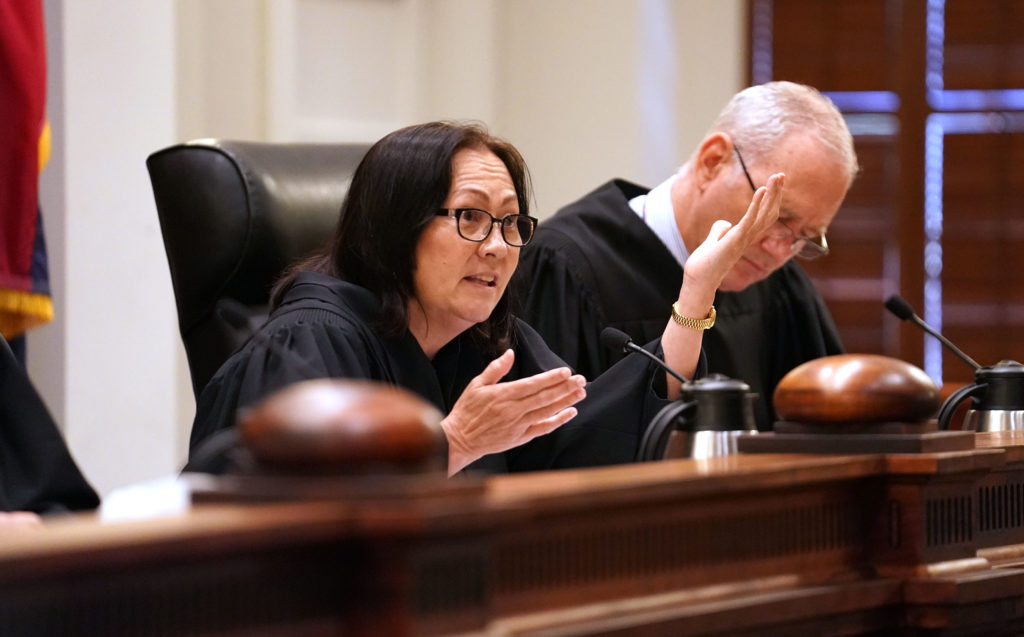
City Council review is required for claims, like lawsuits, McKenna wrote in her opinion, but in this case, Kealoha had not brought any legal claims.
“Rather, Leong and others apparently took it upon themselves to engage in a process to get Kealoha to retire for the good of the City,” McKenna wrote.
Other city attorneys besides Leong had “steadfastly and correctly” argued that council approval was not needed, McKenna noted.
A city investigation by an outside law firm, Farella Braun & Martel, found that Leong and the city’s legal office followed “long-established procedures for City severance agreements,” McKenna noted. And other city officials, including former ethics commission director Chuck Totto and former rail director Dan Grabauskas, had received severance agreements without council approval.
“Thus, City officials and attorneys were of the strong belief that City Council approval was not required for the Chief Kealoha retirement agreement,” McKenna wrote. “Their opinion was correct.”
Leong Can Keep Her Law License
McKenna’s opinion was delivered in a case about Leong’s license to practice law.
Almost immediately after Leong pleaded guilty in March, the Hawaiʻi Office of Disciplinary Counsel – which investigates misconduct by lawyers and recommends discipline – recommended that Leong be “restrained” from the practice of law.
The agency asserted Leong had been convicted of a crime of dishonesty or false statement. That criteria, according to Supreme Court rules, can trigger a temporary suspension of a law license until a deeper review can be done, Chief Disciplinary Counsel Raymond Kong told Civil Beat.
His office stated in a court filing that putting a pause on Leong’s license would be “appropriate to protect the public.”
Leong’s attorneys pushed back on that, saying the alleged co-conspirators in the case were “open and forthcoming” with the City Council to the extent possible but withheld specifics of Kealoha’s deal because it was a personnel matter.
“She has never admitted, and her plea agreement and guilty plea do not establish, that she had any intent to deceive, cheat or lie or commit any crime involving dishonesty or false statement,” Leongʻs attorney, James Kawachika, wrote.
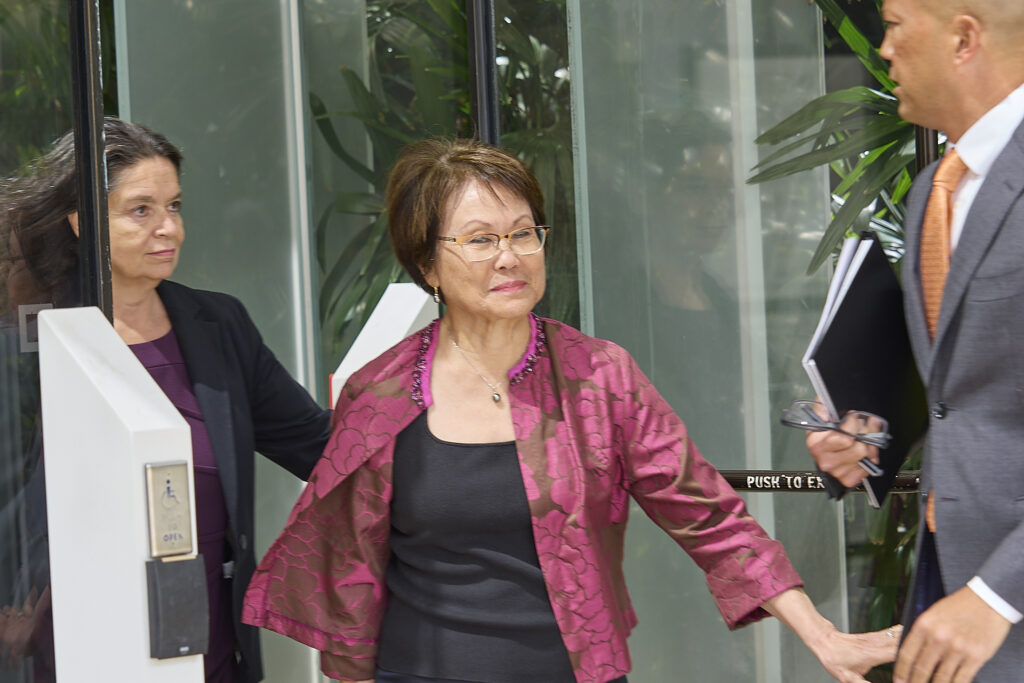
In a majority opinion on Tuesday, the Supreme Court rejected the ODC’s recommendation.
“Absent any statement indicating that Respondent deceived or intended to deceive the City Council or the public or engaged in any untruthfulness,” the court found, “the factual basis underlying Respondent’s guilty plea does not support a finding that the crime in this particular case involved dishonesty or false statements.”
Leong does not currently represent clients or practice law, and her law license has been on voluntary inactive status for years. The court’s ruling gives her the opportunity to practice again if she chooses.
CORRECTION: A previous headline on this story incorrectly characterized the outcome of Roy Amemiya’s court case.

