

Ex-Kauaʻi Cop Accused In Airport Death Lacked Security Guard License
The case underscores concerns about oversight of the 1,100 private security personnel at the state’s airports.
A fired Kauaʻi police detective later hired to provide security at the Līhuʻe airport did not have a state security guard license when he and two others were accused in the death of a 53-year-old man they had restrained.
The guard’s employer, Allied Universal Security Services, says the certification was not required because he was operating as a law enforcement officer, a category of private employee it says is exempt from the state’s licensing requirement.
However, the contract between Allied Universal and the state Department of Transportation “requires all individual guards, and all agents, operatives, and assistants employed by a guard agency,” to be registered with the state Board of Private Detectives and Guards.
The uncertainty over certification and the details of the alleged incident revive concerns about the oversight of the 1,100 private security personnel at the state’s airports and the powers they can be granted under a contract with the DOT.
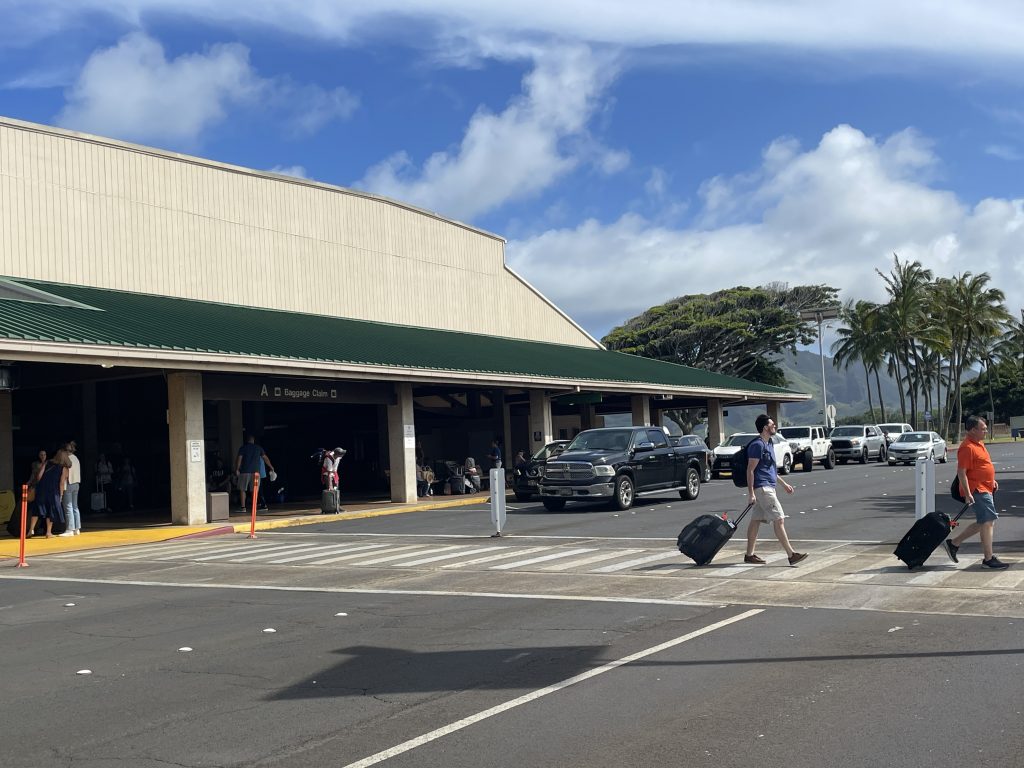
The California-based company, which took over the $35 million-per-year security contract for all the state’s airports in 2021, is named with its employee Barry DeBlake in a wrongful death civil lawsuit filed on behalf of the family of the man who died.
After a 24-year career, DeBlake was dismissed from his $128,000 per year job last year for misconduct, including harassment and engaging in unwanted physical contact with a subordinate officer. DeBlake ‘s law enforcement authority was rescinded at that time, Kauaʻi police spokesperson Tiana Victorino said in an email.
DeBlake also had been arrested and placed on administrative leave in 2020 in a domestic abuse case involving a family member at his Līhuʻe home, but prosecutors declined to file charges, according to court papers.
The civil lawsuit filed in August says Harley Morris died of injuries he received Feb. 26 after being confronted by DeBlake, another Allied Universal guard and an airport employee in the ticketing lobby of the airport, then moved to another area where the assault is alleged to have taken place. The other two weren’t named.
The injuries Morris suffered, according to the lawsuit, included head lacerations, multiple wounds associated with head trauma and a black eye.
No criminal charges have been filed. Morris’ death is being investigated by the state Department of Law Enforcement, which is responsible for incidents at the state’s airports. The department did not respond to requests for an update on the status of the investigation.
Police-Like Powers
The head of the Hawaiʻi Government Employees Association, which represents state sheriffs and deputies, said the case strengthens the union’s longtime argument that the state shouldn’t outsource law enforcement activities.
“You know it’s tempting to say, ‘I told you so,'” HGEA Executive Director Randy Perreira said Tuesday in an interview. “Unfortunately, this is an example of what can go wrong when you don’t have a properly certified and/or properly trained individual.”
Following his discharge, DeBlake had applied for a guard license from the Board of Private Guards and Detectives on May 30, 2024, but never completed the process, Justin Jo, executive officer of DCCA’s licensing division, said Friday in an email.
DeBlake’s application was terminated this year under a one-year expiration policy.
Several private security companies in Hawaiʻi, including Loomis and Pacific Courier, paid fines after the state Regulated Industries Complaints Office found they had hired security staff who weren’t properly certified, according to DCCA’s database.
Allied’s predecessor, Securitas paid $10,000 to the complaints office in 2014 under a settlement agreement after an unlicensed mainland company subcontracted Securitas to provide guard services in Hawaiʻi. Securitas did not admit any liability.
In 2023, Allied Universal paid the state of Tennessee $185,000 in fines after a state investigation found the company had employed more than 300 security guards “over a six-month period between 2022 and 2023 without proper registrations or pending applications,” WKRN reported.
Extended Contract
Allied Universal took over the DOT security contract for all the state’s airports from the international firm Securitas on June 30, 2021.
The contract was extended through the end of May 2026 in the last legislative session, according to the DOT’s legislative budget briefing.
Since 2013, individuals acting as guards in the state of Hawaiʻi are required to be licensed by the state Board of Private Guards and Detectives, but DeBlake was not, Civil Beat has confirmed.
All security guards employed by Allied Universal are required to be licensed by DCCA under Hawaiʻi Chapter 463-10.5., Department of Transportation spokesman Russell Pang said in an email.
The wording of the Request For Proposal between DOT and Allied Universal, dated September 2020, includes a section on the certification requirement. “All individual guards, and all agents, operatives, and assistants employed by a guard agency, private business entity, or government agency who act in a guard capacity shall apply to register with the Board of Private Detectives and Guards. All Contractor staff serving in any structured Post (clerical staff not required) must maintain a license.”
Pang confirmed that DeBlake was employed as a law enforcement officer under the state DOT contract and subject to the same certification requirements. He referred a question about whether DeBlake was still employed to Allied Universal, which did not respond.
The Honolulu attorney representing DeBlake and Allied Universal Security Services in the suit, Ann Aratani, did not return messages seeking comment. Allied Universal’s media office said in an email that it does not comment on pending litigation but all of its licensing requirements are subject to state and local laws and regulations.
However, in its response to the lawsuit, Allied Universal Security Services said DeBlake was working as a law enforcement officer and therefore didn’t require the certification.
Expanded Enforcement Role
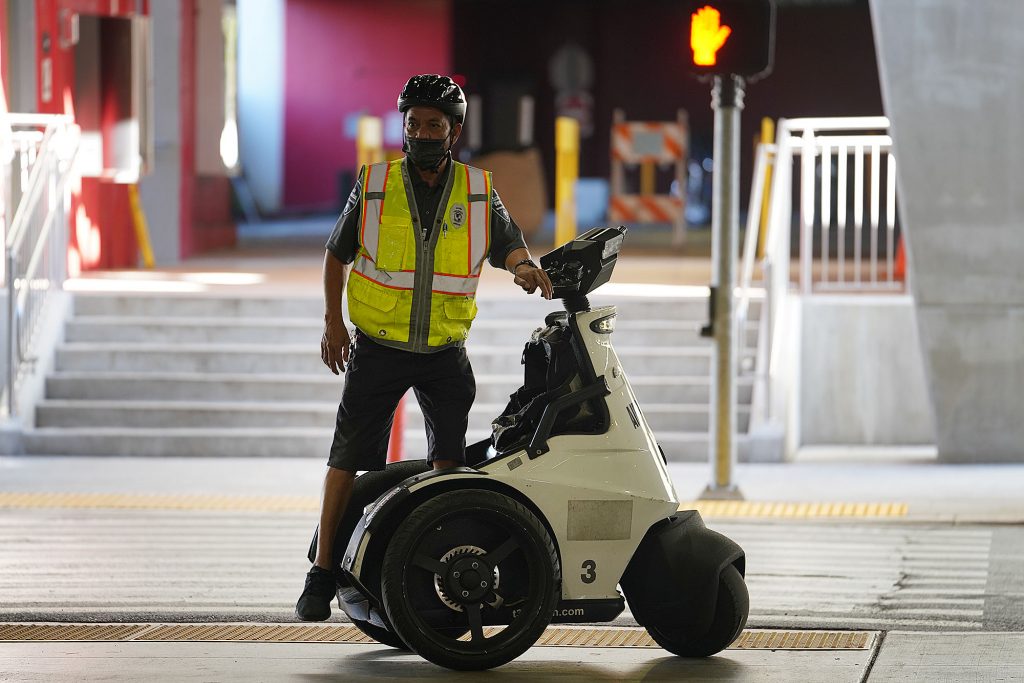
Private security guards are widely used to supplement the presence of sworn federal, state and local law enforcement in Hawaiʻi airports and under state regulations can wield police-like powers on airport property.
Both the previous contract with Securitas and the current one with Allied Universal grant private security personnel categorized as law enforcement officers the power to arrest people, as well as the authority to carry weapons and badges on airport properties, as provided by law.
Those powers were in the spotlight during a 2017 incident in which an armed Securitas guard shot and killed a dog that had escaped from the cargo area of Daniel K. Inouye International Airport.
The number of hired security guards patrolling airports in Hawaiʻi has nearly tripled from an estimated 340 in 2016 to about 1,110.
That increase began soon after DOT terminated its agreement with the then-Public Safety Department for the use of deputy sheriffs for security at the Honolulu airport.
HGEA sued to stop that move, Perreira said, but lost because the courts found that the DOT director had the power to outsource security.
The union’s CEO said HGEA wasn’t advocating to get rid of private security contractors but won assurances that highly trained deputy sheriffs would be the ones to take the lead as first responders, particularly at the Honolulu airport.
On the neighbor islands, that first response was usually provided by local police, and while there are some deputy sheriffs available, private security will always be present due to staffing shortages, Perreira said.
Perreira declined to comment on the specifics in this case but said the oversight of private contractors was a major issue, even ones who may have previously had law enforcement training.
“Our deputies are subject to a standard of conduct policy where there is accountability and they have to act accordingly within the guidelines and the policy requirements,” he said. “Frankly, I think the state should look to put more such accountability measures into the contracts that they have with these private vendors.”
CORRECTION: The payment made by Securitas to the Regulated Industries Complaints Office was mischaracterized in an earlier version of this story and has been corrected.
Civil Beat reporters Madeleine Valera and Britanny Lyte contributed to this report.

