

Half Of UH Students Struggle To Get Food
For students at the University of Hawaiʻi, skipping a meal or going hungry isn’t uncommon, according to new data.
More than half of students at the University of Hawaiʻi face at least one form of severe food insecurity, with many skipping meals because they cannot afford food, according to a new assessment of basic needs in the statewide system’s 10 campuses.
Four out of 10 UH students went without food due to lack of money at least once in the past 12 months, reflecting a broader trend. Students are struggling to get by, with ramifications for both their well-being and educational success, according to the study by Konstantinos Zougris and Albie Miles of UH West O‘ahu.
Student food insecurity is just one of the findings in the assessment, released Tuesday, which surveyed more than 2,700 students — just over 6% — on everything from food and housing security to health and safety needs. The assessment, conducted from February to March, found UH has fostered a strong sense of belonging but off-campus life is mired in financial stresses, leading to one in four having unstable living arrangements and uncertainty over health care.
Those results have led researchers to recommend the university reform financial aid and advocate for political reform to strengthen the students’ safety net, as the university continues established work to improve student livelihoods.
“I was not surprised by the numbers at all,” Miles, an associate professor, said of student food security. “They were slightly higher than what I anticipated.”
The student numbers are consistent with state and national trends, Miles said. The most recent national data on students’ basic needs, from Tempe University’s Hope Center, found 41% of students in the 2023-24 school year were food insecure, defined as having unreliable access to sufficient, affordable and nutritious food.
The study said that, overall, 6 out of 10 UH students “suffer from at least one type of severe food insecurity.”
At UH Mānoa, 44% report severe food insecurity, more than double what a similar assessment found in 2009. The Mānoa campus had among the highest rates of food insecurity compared to the UH system’s average, alongside Windward, Kapiʻolani and Hawaiʻi community colleges.
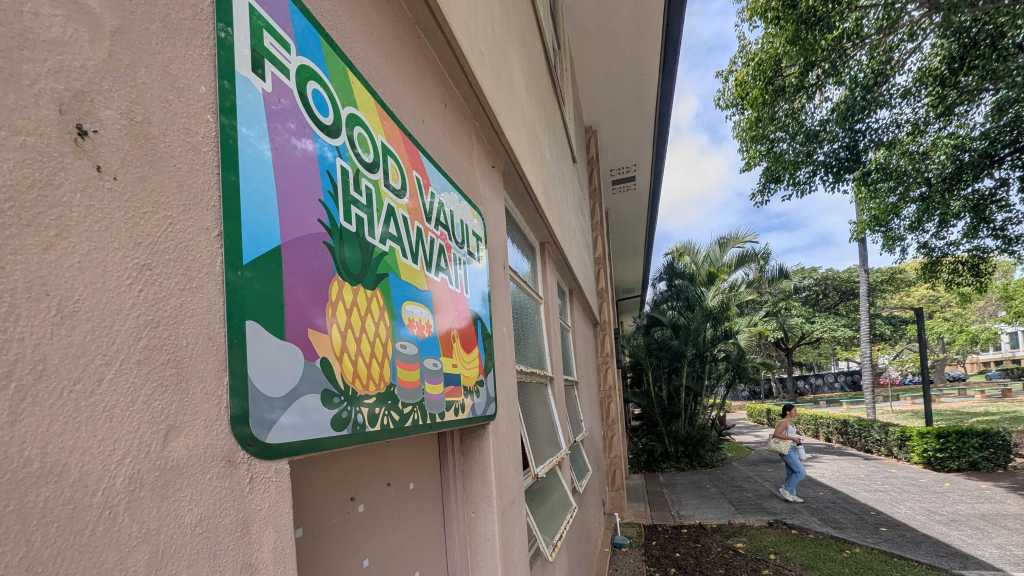
UH Mānoa’s Food Vault distributed just over 101,000 pounds of food and toiletries to students between fall 2024 and spring 2025, which included almost 84,000 meals.
The Food Vault has seen increasing demand since the UH Mānoa student government started the initiative in 2018. Last year, it was used by 1,290 students, just over 6% of the campus’ student population.
It’s been difficult to determine if rising demand should be attributed to increased need or growing awareness of the service, Student Involvement and Leadership Development Director Bonnyjean Manini said.
Manini, who oversees the Food Vault, said she believes demand will eventually plateau as the pantry grows to meet students’ needs for toiletries and food. The Food Vault also hosts a monthly food distribution event on campus, in conjunction with Hawaiʻi Food Bank.
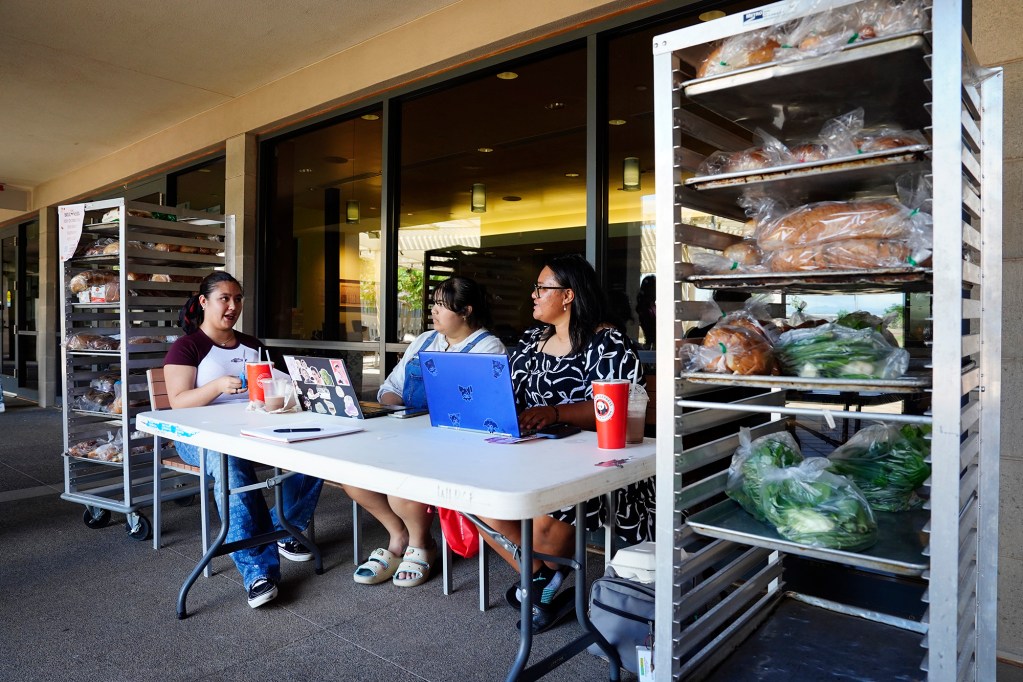
UH West Oʻahu follows a similar system. It distributes shelf-stable foods and local produce and bread, which are among the pantry’s most in-demand products, sophomore and pantry staffer Chelstine Tavares said.

“The economy is rough, there’s inflation and it’s difficult to handle work and studies,” 19-year-old Tavares said.
Rep. Amy Perruso, a former social studies teacher, said the systemwide assessment is in line with what she heard from students during her time as House Higher Education Committee chair in 2023 and 2024.
Students struggle to get to campus and make ends meet — nearly one in 10 UH students experience homelessness, according to the assessment. While students are stepping in to help by setting up pantries on campuses, advocates like Perruso say the responsibility shouldn’t fall to the students.
“We’re the adults,” Perruso said. “We should make sure the students can get hot meals and have the things they need. The students’ job is to learn.”
Financial Aid Reform Needed
University leadership has recognized the growing need for more support services for students, having developed a master plan for 2024-2027 to address priorities including food and housing security. The plan includes developing food hubs on all 10 UH campuses by spring 2027 to ensure students have sufficient food.
It’s not just food security concerning the almost 50,000 students in the UH system though, as about 20% say they have no safe place to stay or sleep. One in five students say they face high levels of housing insecurity, especially at Windward, Maui and Kapiʻolani Community Colleges.
Miles and Zougris, the assessment authors, have recommended UH officials, legislators and policymakers consider 10 steps to ensure better student well-being, including comprehensive reform of financial aid for students.
They said the state is a leader in supporting higher education, but the financial aid models should be altered to better reflect the current realities of students’ expenses while increasing students’ awareness of what federal resources are available to them.
Many students, Miles said, do not know what is available. A U.S. Government Accountability Office report in 2020 found almost 60% of students who potentially qualified for food stamps didn’t receive benefits.
There may be less help available in coming years. President Donald Trump’s “One Big Beautiful Bill” cut funding for the Supplemental Nutrition Assistance Program, formerly known as food stamps, by about 20% — $187 billion — through 2034.
Meanwhile, the U.S. Department of Agriculture, which administers food stamps, announced it would discontinue its annual national food security reports. The last report found 47.4 million people lived in food insecure households.
For students in Hawaiʻi, the authors recommended ensuring more equitable access to essential transportation services and technology and to destigmatize conversations about students’ ability to meet their own basic needs.
The authors also recommended building upon UH’s food hubs and virtual Basic Needs Café that assists students in finding food, housing and financial help while establishing brick-and-mortar basic needs hubs on each campus to help students access food, clothing and hygiene products, among other things.
Having such hubs, Miles said, would help destigmatize the idea of asking for help among students, which remains taboo in the UH community.
Read the full report below.
“Hawai‘i Grown” is funded in part by grants from the Stupski Foundation, Ulupono Fund at the Hawai‘i Community Foundation and the Frost Family Foundation. Civil Beat’s reporting on economic inequality is supported by the Hawaiʻi Community Foundation as part of its work to build equity for all through the CHANGE Framework; and by the Cooke Foundation. Civil Beat’s education reporting is supported by a grant from Chamberlin Family Philanthropy.

