

Elderly Honolulu Architect Convicted For Attempted $20 Bribe
An offer of supposed lunch money could land the nonagenarian in prison.
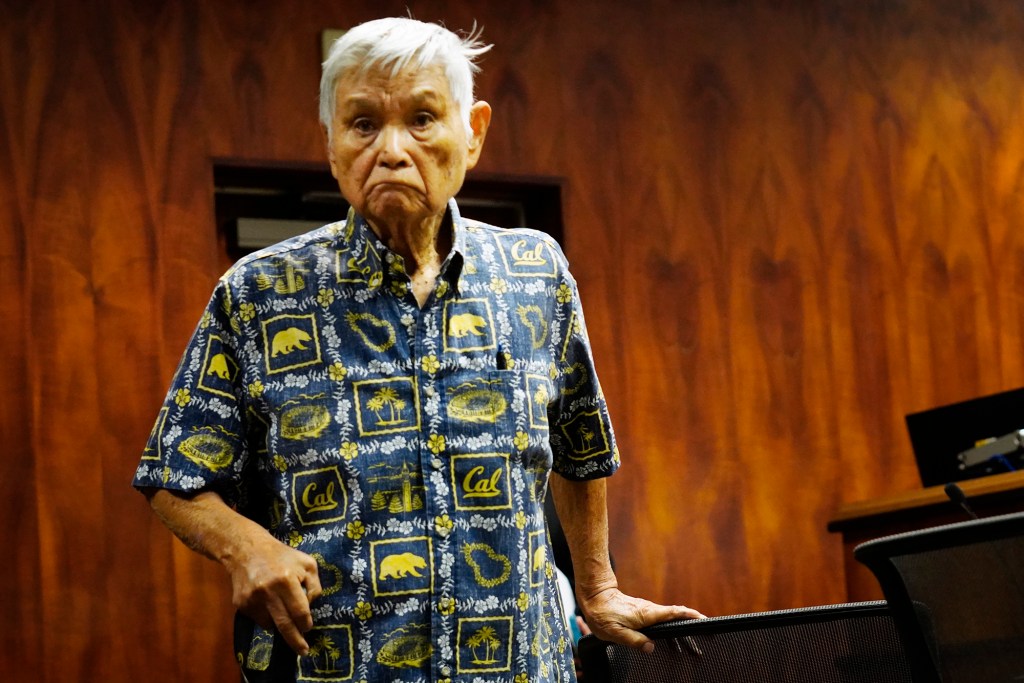
A 92-year-old architect who tried to slip a Honolulu permit worker a $20 bill has been convicted of bribery of a public servant and now faces potential prison time.
Kiyoshi Toi was caught on surveillance video trying to pass the money to the city employee through a handshake in 2022. The permit worker, Alexander Laurente, declined the money and reported the interaction to authorities.
Toi, who grew up in Japan, said he was expressing gratitude in alignment with his cultural traditions. He offered that particular amount of money because it was about the cost of an oxtail soup he enjoys at a local restaurant.
But State Court Judge Kevin Souza didn’t buy it.
“This was not just a simple case of gratitude,” he said.
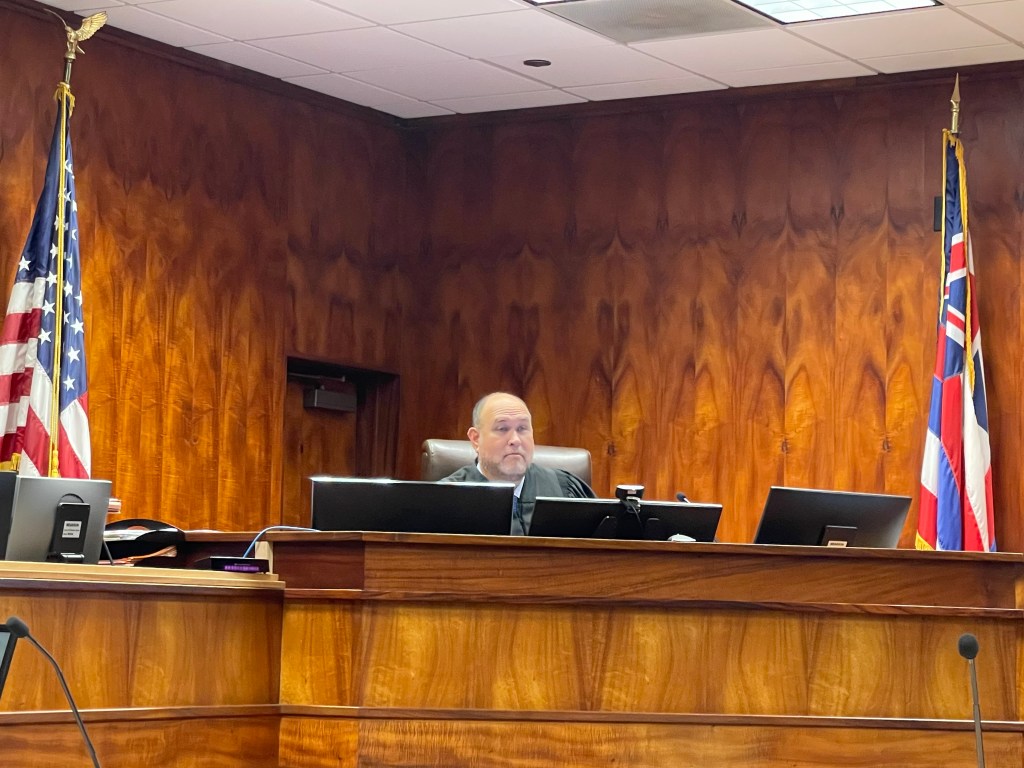
In an extensive oral ruling on Thursday, Souza said an architect of 60 years should have known that offering money to someone with discretion over his permit would imply strings attached.
The message, the judge said, was: “Take my money and approve my permit.”
“The amount of money here does not matter,” he said. “Kiyoshi Toi, at 92 years old, having practiced as long as he has, was experienced enough to understand that even lunch money could buy him favorable consideration.”
The felony conviction carries a potential punishment of up to 10 years in prison. Toi is scheduled to be sentenced in February.
A ‘Hush-Hush Exchange Of Money’
Souza made the ruling after a trial that lasted just over a day.
The basic facts of the attempted monetary handoff were not in dispute. The ruling was focused instead on whether Toi intended to influence Laurente’s discretion over his permit.
In Toi’s defense, his attorney Leighton Lee pointed to a concept called shushin, a set of Japanese moral teachings that emphasize expressions of gratitude. Toi had learned this as a child and carried it with him throughout his life, Lee said.
“If this were a real bribe,” he told the court, “it would actually be insulting to the person receiving the bribe.”
Deputy Prosecuting Attorney Lydia Fuatagavi argued Toi had gone to DPP for a “hush-hush exchange of money” and that the cultural defense was “a convenient excuse.” The permit had already been held up for more than a year, she said. In her telling, Toi had nothing to be grateful for.
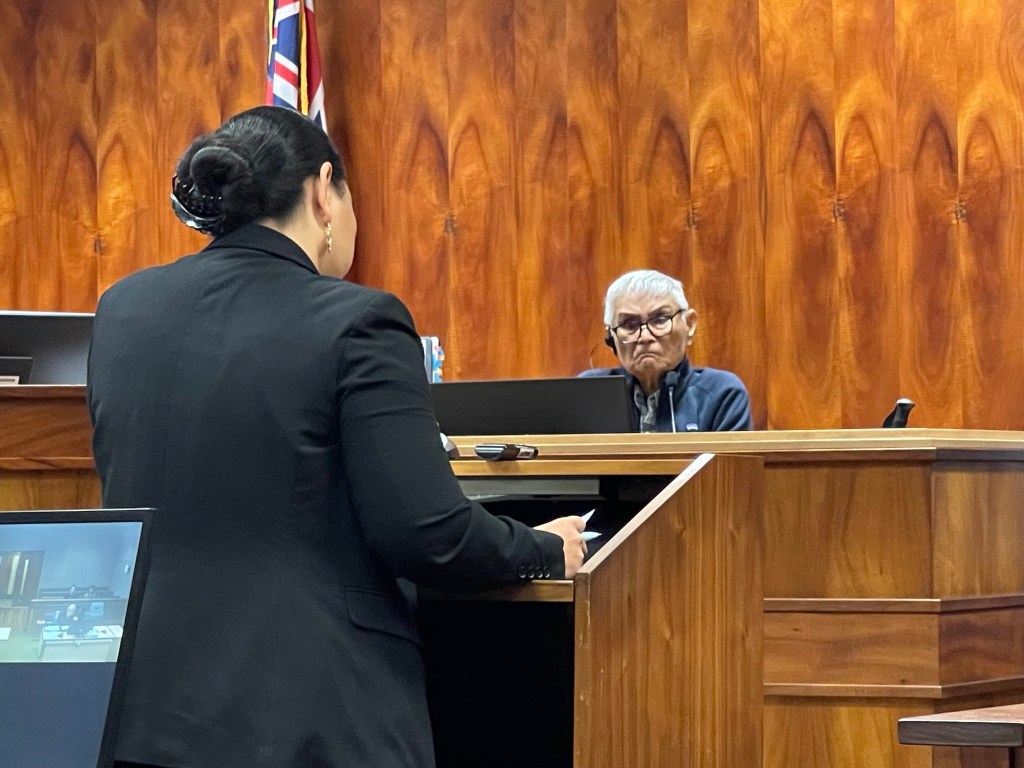
In his ruling, the judge pointed to several bits of evidence that made the handoff look shady.
Toi had replaced the job’s original permit processor late in the game. He showed up without an appointment and decided to meet with Laurente outside DPP’s air-conditioned office, even though it was a hot day. Toi never told Laurente that the money was an expression of his gratitude, the judge noted.
In his ruling, Souza noted several parts of Toi’s testimony that were inconsistent with that of other witnesses, and some parts where Toi seemed to contradict himself. The judge also took issue with some of the defense’s arguments.
According to Lee, there was no need to unduly influence Laurente because the permit process was in its final stages and essentially done. That was at odds with witness testimony suggesting the plans were stuck at DPP, and the scale of the drawings and its so-called “floor area ratio” was still being sorted out, the judge said.
Lee had argued that Toi showed up at DPP to express his gratitude to Laurente. But that’s not what Toi had told David Marino, the homeowner who was seeking the permit. According to Marino, Toi told him after the criminal investigation began that he had gone to DPP seeking clarification about DPP’s comments on the building plans.
Another strike against Toi: The architect had mentioned to Marino that he had not yet been paid by the job’s contractor, the judge noted. This would seem to suggest that Toi was eager for the job to be done so he could get paid.
During his testimony, Toi mentioned he liked the oxtail soup at the “Like Like restaurant.” The judge took that to mean Like Like Drive Inn, which closed in 2020 – before the meeting with Laurente. The judge felt the closure undercut Toi’s story.
After the verdict was delivered, Toi told Civil Beat he was disappointed in the verdict. He said he never had an intention to bribe anyone. As for the restaurant, he said, he had been referring to a different establishment but couldn’t recall the name of it.
Toi’s wife told Civil Beat he suffered a stroke last year and has trouble communicating and remembering details, which may have played a role in his performance in court. Indeed, there were many times throughout his questioning that he did not hear the question correctly or at all and had to seek clarification.
“Somehow what I said got twisted,” Toi said.
Toi said he stopped by DPP that day to give a gratuity, something he’d done before, such as for Christmas.
“Everybody did,” he said.
Toi was charged in the wake of a larger bribery scandal that landed five former DPP workers and an architect in federal prison. Most of the DPP workers charged had accepted much larger sums than $20, with the largest having taken more than $100,000. Those defendants were charged in 2021, a year before the events in Toi’s case.
Lee told Civil Beat that perhaps the federal case made local prosecutors more sensitive to the issue of bribery.
“Sometimes you get on the wrong end of a public issue,” Lee said, “and you just get steamrolled.”
Watch a video of the exchange shown in court on Wednesday:

