

Honolulu Fired Building Permit Worker Who Cut Through Delays For A Few People
The city accused a plans examiner of preferential treatment. The employee said she was trying to help permit applicants.
At a time when most Honolulu building permit plans were collecting dust, some applicants got to skip the line.
From 2019 to 2022, building plans examiner Kim Kehrwieder helped certain applicants on dozens, if not hundreds, of occasions, plucking them out of the queue and sparing them costly, monthslong delays, a city investigation found.
While other applications were sitting for an average of six months before a clerk would even pick them up, the city found Kehrwieder prescreened certain building plans in as little as 24 hours after they were submitted, allowing them to move ahead to the code review process.
Some of Kehrwieder’s customers saw her as a Godsend. The city saw possible corruption.
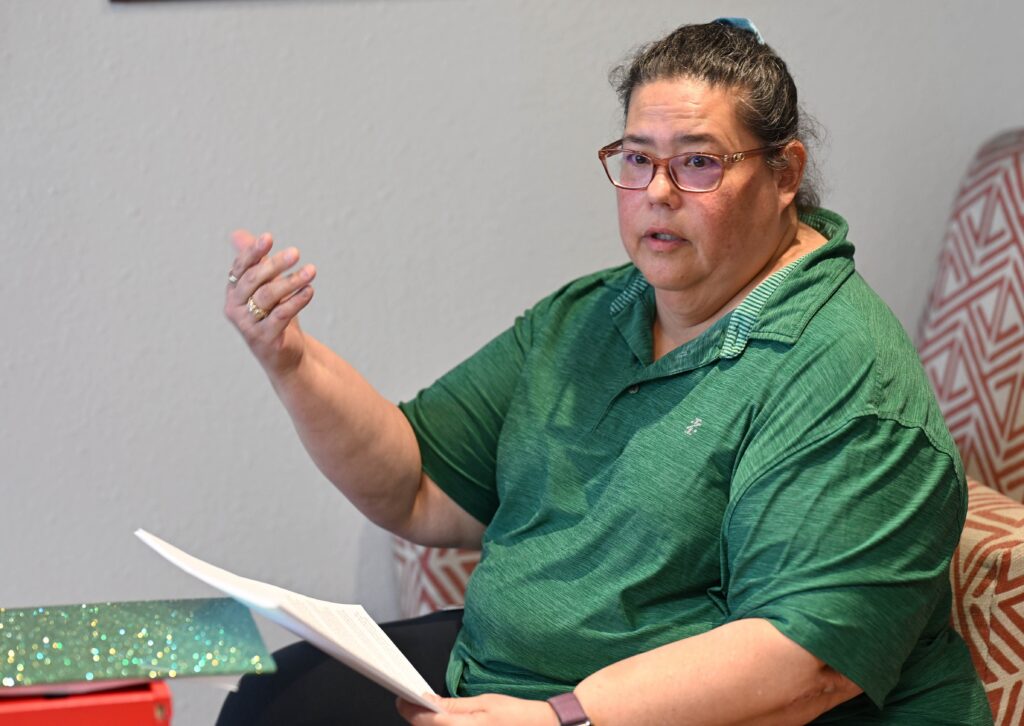
Amid complaints from Kehrwieder’s colleagues, the city launched an investigation that found she had expedited more than 250 applications for two applicants in particular: Permit Processors Hawaiʻi and Palekana Permits. Both companies help property owners navigate the permitting journey.
DPP concluded this was preferential treatment and fired Kehrwieder last year.
Kehrwieder said she was just trying to ease a backlog in an understaffed department whose applicants would sometimes break down in tears from frustration. She said there was no special treatment and that she helped anyone who asked, without receiving any benefit in return.
“We were hired to do customer service,” she told Civil Beat, “and that is what I tried to do to the best of my abilities.”
The details of her case, which are being made public for the first time, were contained in an investigative report Civil Beat obtained through a public records request.
Valerie Ogawa, who runs Permit Processors Hawaiʻi, said Kehrwieder was a rarity at DPP because she actually seemed to want to help applicants. Ogawa appreciated her.
“I’m going to go to the person who helps me because no one else would help,” she said.
Ogawa noted the irony of the city firing a worker for moving permits along too quickly.
“Everybody else should’ve gotten fired except her,” she said. “If they had 5 Kims, shit would get done.”
‘I Never Paid Her’
Honolulu building permit applicants have long complained that the speed of an application is all about who you know.
In 2021, five Honolulu Department of Planning and Permitting employees and a local architect were charged in a bribery scheme that landed all of them in prison. The employees pleaded guilty to giving special treatment to those who paid them.
However, Kehrwieder told the city during an investigative interview that she was never offered, and never accepted, money from permit applicants. The applicants, too, told a city investigator and Civil Beat that no money or gifts were ever given.
“We never offered any kind of gratuity,” Dennis Enomoto, a principal with Palekana Permits, told Civil Beat. “No donuts, no manapua. You cannot do that anymore.”
Ogawa agreed.
“I never bought her anything,” she said. “I never paid her. It’s just a matter of getting things done on my end for my clients.”
Both Enomoto and Ogawa said they had no reason to believe Kehrwieder was giving them special treatment — which they said they never asked for — and they assumed Kehrwieder was helping others as well.
According to Department of Planning and Permitting Director Dawn Takeuchi Apuna, it may have been true in the past that permit processing times were based on personal relationships, but she said that is no longer the case. She called the 2021 federal bribery indictments a “wake-up call,” and noted the department subsequently launched several investigations into potential unethical behavior.
Kehrwieder was the only who was fired. Others who approved questionable monster home developments were found to have lacked proper training in the building code. In another case, an elderly architect allegedly tried to slip a DPP worker some cash. The employee reported it to law enforcement, and the architect is awaiting trial.
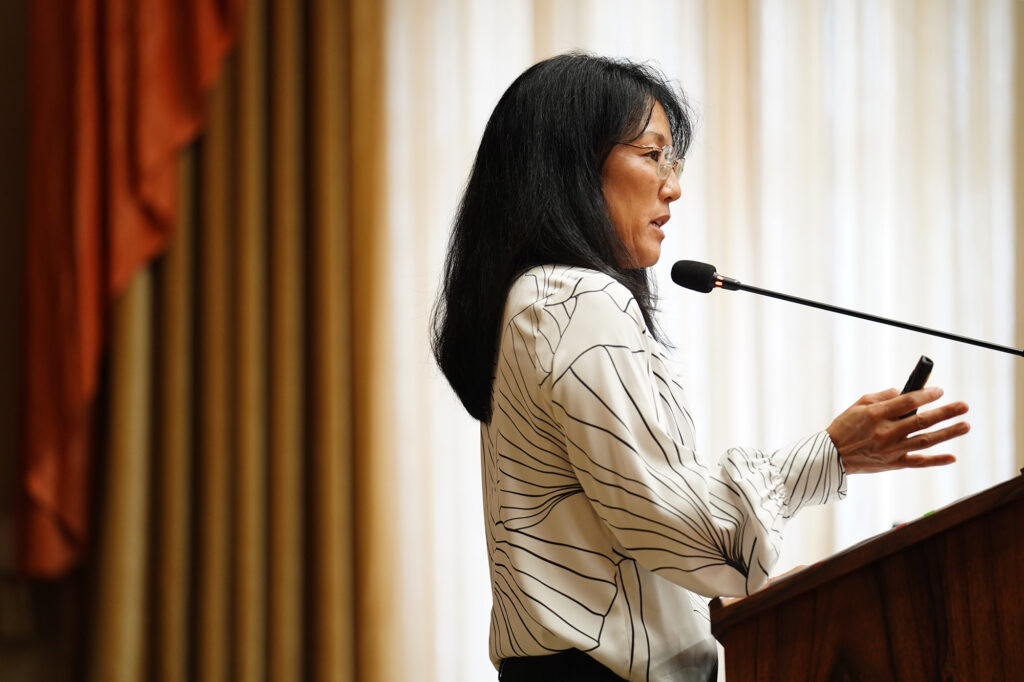
Since the bribery scandal broke, the director said staff have operated under a “clear policy of fair and equal treatment.”
“The investigation into this individual was initiated and based on information provided by her coworkers, who performed the same tasks, and well recognized that she was going against policy and inappropriately and unfairly favoring certain customers over others,” Takeuchi Apuna said. “We believe she was the exception to the rule.”
If permit applicants suspect favoritism, she said they should report it to DPP, the Honolulu Ethics Commission or other authorities.
First In, First Out
As a building plans examiner, Kehrwieder’s job was to prescreen new permit applications to ensure they were complete and in the correct format before a more experienced examiner could review it for code compliance.
Applications were supposed to be entered into a central log and processed in the order they were received. Exceptions were only allowed with a supervisor’s approval, which was supposed to be documented, according to the city’s report.
In many cases, Kehrwieder allowed certain applicants to circumvent the “first in, first out” rule, according to the city’s investigation, and did so without a supervisor’s OK.
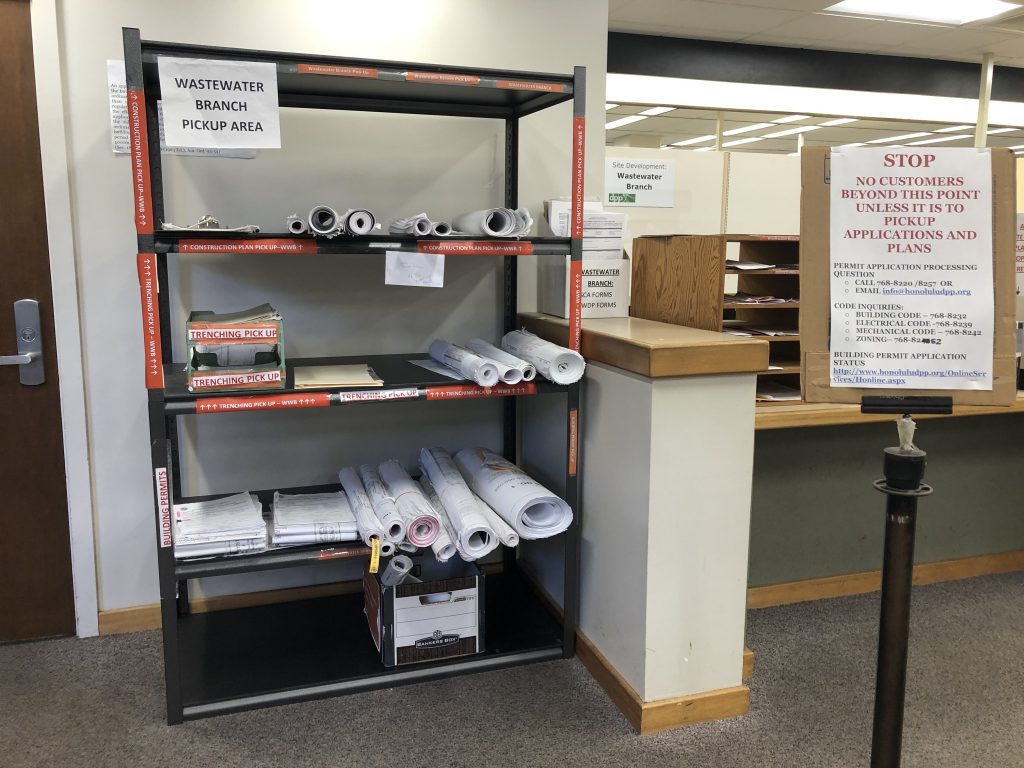
Kehrwieder said that DPP lacked standardized operating procedures and training, so groups of employees were following different rules. She said she did get a supervisor’s permission but only verbally, and she understood that to be sufficient.
According to the city’s report, instead of working from the logsheet and pulling plans from the office Dropbox, Kehrwieder appeared to be accepting applications directly from certain applicants, sometimes at her home.
During the Covid-19 pandemic, employees were allowed to work remotely and take building plans home with them. Kehrwieder said she had Palekana bring its building plans to her home so she wouldn’t have to carry the heavy paper rolls back and forth to the office. They only needed to be “restamped,” she said — a minor administrative task that took a few minutes but could save them months of waiting.
In at least one instance, coworkers watched Kehrwieder leave the city permit center then return with multiple sets of building plans she took straight to her desk, the report said. Kehrwieder told Civil Beat she recalled leaving the office to grab plans from a disabled applicant who used a wheelchair and struggled to enter the office.
Certain applicants, including Permit Processors Hawaii and Palekana Permits, visited the office to drop off their plans and permit fee payments with Kehrwieder specifically, according to the report, bypassing the intake clerks who would normally process them.
“Everything I did was because it made sense to make things a little more efficient,” Kehrwieder said.
Kehrwieder acknowledged DPP’s “first in, first out” policy but noted the department had implemented blanket exceptions for certain categories including secondary living spaces known known as accessory dwelling units, solar panels and affordable housing projects.
Kehrwieder said she only expedited plans that met that criteria.
“I treated everybody fairly,” she said. “I took my civic duty very seriously.”
DPP spokesman Davis Pitner agreed that there are specific classifications that staff are instructed to expedite faster than others. However, he said, “Ms. Kehrwieder exceeded those project classifications.”
The city’s report says Kehrwieder processed five permits for Permit Processors Hawaiʻi on an emergency basis that were not properly logged into DPP’s system and lacked any accompanying construction plans. Pitner called this a “big no-no.”
According to Kehrwieder, Permit Processors did a lot of emergency spalling repair jobs that needed approval because, for instance, “cement pieces were falling on people.” The repairs were sometimes completed and ready for an inspector’s visit before DPP had even issued a building permit application number, the usual step before a review occurs.
Kehrwieder said she tried to remedy that in accordance with the training she had received.
“As far as emergency work, I was told if you get the OK from the inspector, you can process it,” she said.
“To me, it didn’t make sense to make the client wait another six months if it was something that could be fixed in five minutes. Not everybody agreed with me.”
Kim Kehrwieder, fired Honolulu building plans examiner
In general, Kehrwieder said she tried to be helpful. She recalled getting calls from people whose plans had been rejected over minor issues, like a missing table of contents, who risked getting kicked back to the end of the line.
“To me, it didn’t make sense to make the client wait another six months if it was something that could be fixed in five minutes,” she said. “Not everybody agreed with me.”
On top of the favoritism allegations, the city’s report said Kehrwieder also exhibited a bias toward simpler projects. For six months to a year, Kehrwieder made it a habit to pick applications out of order to cherry-pick the easy ones, leaving more complex jobs for her colleagues, the investigation found. Kehrwieder allegedly trained other clerks to do the same.
Kehrwieder told the city during her interview that she only did that at the beginning of her tenure, when she was still learning the ropes.
The report also found Kehrwieder to have perpetuated a hostile work environment by being harshly critical of other clerks she was training.
“From the description of how she loudly corrected coworkers she targeted, her intent was to embarrass and demean them so others could hear,” the report states.

In this ongoing series about Honolulu’s notoriously troubled permitting department, we seek to explain the failures, inequities and inefficiencies in O‘ahu’s permitting process and explore solutions that would make the system work better for everyone.
Kehrwieder acknowledged she was going through personal hardships and stress at the time. In her telling, she had no support from supervisors as she tried to train new hires who seemed to have little work ethic, and her criticism was perceived as bullying.
“I admit after my frustration, my tone might not have been the best,” she said, “but I, in no way, bullied people.”
‘Close Personal Relationship’
Kehrwieder’s supervisor suspected something was amiss and reported concerns to Takeuchi Apuna in November 2022.
The supervisor, whose name was blacked out of the city’s investigative report, told DPP leadership that Kehrwieder was disregarding departmental procedures and pulling certain projects out of the queue.
“Projects often belong to a client with a close personal relationship to the Subject,” the report states, without providing details.
Kehrwieder told Civil Beat she had a rapport with the applicants she worked with. The relationships were friendly, she said, but business-focused.
The city report also accused Kehrwieder of having unprofessional phone calls with applicants, the complainant said, which would veer into personal topics and could last hours. Coworkers within earshot were “frustrated that the Subject was on the phone talking stories and not focused on work,” the report states.
Kehrwieder said that she wasn’t on the phone longer than anyone else and that she was mostly speaking with applicants. When they needed to vent, she said, she listened. There were times when she had to take personal calls, she acknowledged, like when her grandfather was dying and later when she had to manage his estate during business hours. But she said she never neglected her work.
According to the city’s report, even when Kehrwieder was assigned to do building code reviews, she let those plans sit for months while she continued to help Permit Processors Hawaiʻi skip the prescreening line. Kehrwieder adamantly denied that.
Overall, Kehrwieder said she really enjoyed her work at DPP, at least early on. She used her own money to purchase wireless keyboards and carts to move paper plans around the office. And she made it a personal challenge to see how many prescreens she could do in a day, she said, once finishing nearly 30 when the quota was eight. Some of her colleagues did far less, she said.
DPP did not comment directly on Kehrwieder’s workload but Pitner called 30 prescreens in a day “highly questionable.”
After the bribery scandal, Kehrwieder said many in the department did the bare minimum for fear of being accused of wrongdoing.
“I really don’t feel like I did favoritism,” she told Civil Beat. “You ask me for help, I’ll help you. That’s what we’re there for.”
Ogawa said she believes Kehrwieder was pushed out of the department because of personal animus among her colleagues.
“I feel really bad for Kim,” she said. “I felt as though she was helping a lot of people, not just me. She was so nice. She was the only one that was helping people so we all liked her because of that.”

