

Queen Emma Land Co. Wants Former Tenant To Tear Down Historic Building
The controversy over the downtown Honolulu building pits one of Hawaiʻi’s oldest real estate services companies against an aliʻi trust established by Queen Emma to benefit her hospital.
When Title Guaranty of Hawaiʻi’s lease on its downtown headquarters building expired in January, the company packed up its belongings and personnel and moved next door.
There was just one problem: The title company left its building behind, contrary to a provision in its lease.
Now, the dispute between Title Guaranty and its former landlord, Queen Emma Land Co., has wound up in state court. Queen Emma wants a judge to order Title Guaranty to remove its former headquarters.
Title Guaranty’s response to Queen Emma: Get pono — and real.
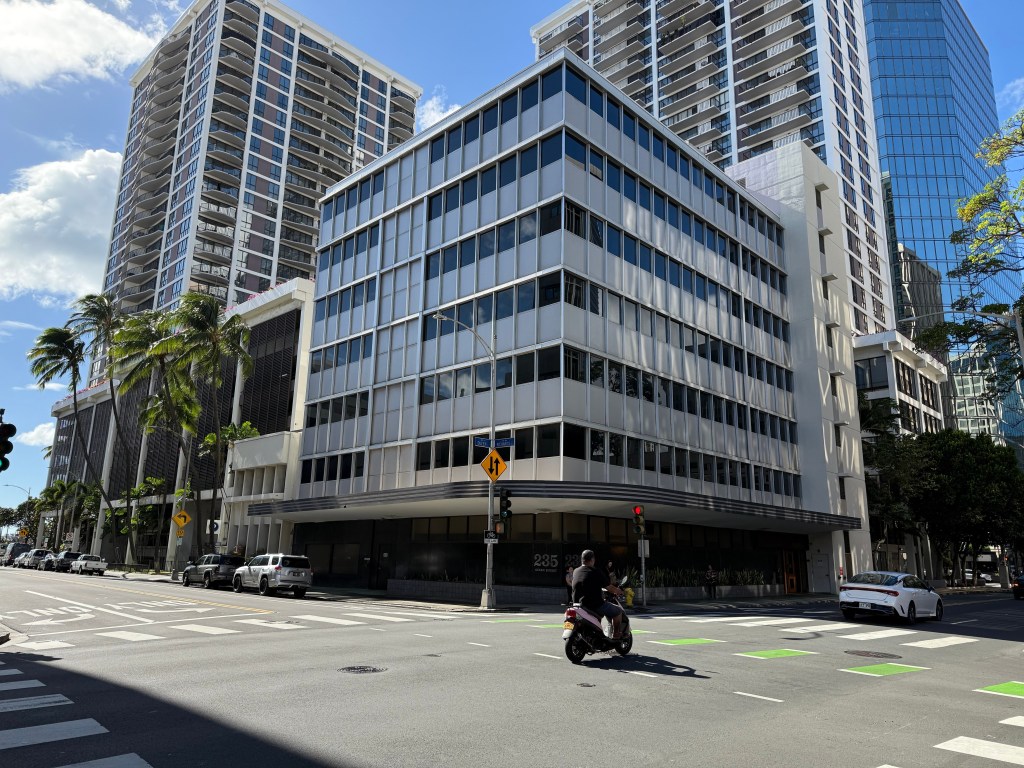
Title Guaranty executives declined an interview request. But the company issued a statement quoting several people who support Title Guaranty’s decision to leave the boxy, seven-story building behind despite Queen Emma’s request to have the building be taken down.
“Demolishing the historic building is not pono nor responsible,” Title Guaranty’s president and chief operating officer, Mike Pietsch, said in the statement.
“Reusing and repurposing this building is far better for our community than demolishing it and adding to an already overflowing landfill,” he added.
The statement cites support from the nonprofit Historic Hawaiʻi Foundation and quotes an architectural historian calling the structure “a prime example of mid-century modern architecture and one of the few remaining in Honolulu’s downtown business district.”
In an interview, downtown developer Christine Camp said it makes better economic sense to retrofit the building for housing than to tear it down and start over. Repurposing the building would eliminate the need for parking spaces and the park dedication that a new building would require, Camp said. It would also sidestep the need for approval from the Hawaiʻi State Historic Preservation Division, which Camp said can cause delays.
Finally, Title Guaranty disputes Queen Emma’s interpretation of the lease. Despite the lease’s plain language calling for removal at Queen Emma’s request, Title Guaranty says requiring demolition is inconsistent with an implied covenant of good faith and fair dealing that generally applies to contracts.
Queen Emma declined to comment on the suit or say what it plans to do with the parcel.
Dispute Puts Historic Hawaiʻi Land Companies At Odds
The controversy pits one of Hawaiʻi’s oldest real estate services companies, which was founded in 1896, against an aliʻi trust established by Queen Emma to benefit the namesake hospital she established with her husband, Kamehameha IV, in 1859. It’s unfolding against the backdrop of a changing downtown Honolulu, where underused office buildings are being converted into much-needed housing as demand for office space tanks.
According to the lawsuit, the history of the former headquarters building dates back to 1959. That’s when a trustee of the Estate of Queen Emma Kaleleonālani and an entity called Queen Street Corp. entered a 65-year lease for the property at the corner of Queen and Richards streets. The original lease term ended on Dec. 31, 2023 but was later extended to the end of 2024.
The lease requires Queen Street Corp. to return the property and improvements in good shape, or, at the Queen Emma estate’s option, for the lessee to remove the improvements and “surrender the land clean, clear and level and suitable for rebuilding.”
A year after signing the lease, Queen Street Corp. developed the parcel and made an addition in 1966. In 1981, Queen Street Corp. assigned the lease to Title Guaranty and the Ashford & Wriston law firm, which used the building for its offices. Title Guaranty took over the lease entirely in 1992, the complaint says.
On its website, Title Guaranty describes itself as Hawaiʻi’s “largest, most experienced title company … owned and operated by a kamaʻāina family since 1896” with more than 300 employees in its statewide branches.
“We know Hawaii and its unique real estate environment,” Title Guaranty’s site says.
Fidelity National Financial Inc. acquired a majority stake in Title Guaranty in 2017, leaving the kamaʻāina Pietsch family with an undisclosed minority interest.
Now the big player in Hawaiʻi real estate is beefing with one of the state’s most prominent landowners.
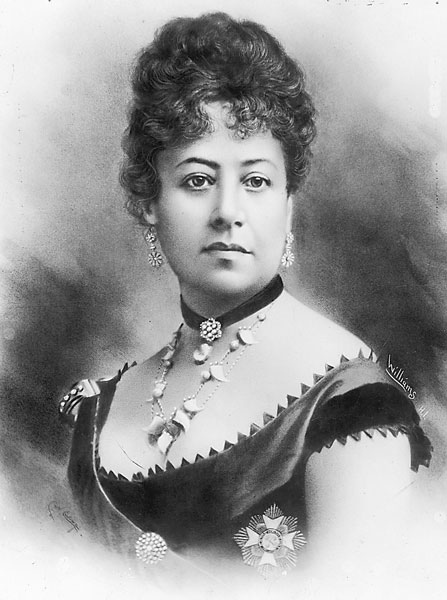
Just as Princess Bernice Pauahi Bishop left her vast landholdings in trust to benefit Kamehameha Schools, Queen Emma left her lands to benefit what was then called The Queen’s Hospital. The hospital, later renamed The Queen’s Medical Center, is now Hawaiʻi’s largest nonprofit healthcare provider and largest private employer, with more than 9,400 workers.
The nonprofit Queen Emma Land Co. was eventually established to manage the income-generating land Queen Emma left in trust to benefit the hospital. The nonprofit had $966 million in assets as of 2022, according to its most recent available tax report. It provided $38.2 million in grants to The Queen’s Health Systems that year, the filing indicates.
‘The Land Is Worth More With The Existing Building’
Representing Queen Emma in its suit is Crystal Rose. A Honolulu power player who has served on the boards of Hawaiian Airlines and Central Pacific Bank, Rose is currently chair of the board of trustees for Kamehameha Schools, the state’s largest private landowner.
Rose’s 13-page complaint boils the controversy down to a simple argument: The lease called for Title Guaranty to remove its old headquarters at its own cost when it left the property if Queen Emma requested. Queen Emma gave Title Guaranty ample notice that it wanted the building removed and Title Guaranty didn’t comply.
Title Guaranty says Queen Emma’s interpretation doesn’t make sense in part because “the land is worth more with the existing building than without it.”
What Queen Emma plans to do with the property isn’t clear. The parcel, located near a planned Honolulu rail station, is zoned for business-mixed use, or BMX-4. That opens the door for numerous uses beyond offices, including restaurants, retail, condos and even a hotel.
With those options, a new office building would be a bad bet.
Office vacancies in Honolulu rose above 13% in the second quarter of 2025, Mike Hamasu, Colliers Hawaiʻi’s office market guru, said in a recent report.
That would have been worse if a number of office buildings hadn’t been taken off the market to convert to condos. That’s totaled about 1.3 million square feet of office space taken out of commission, the equivalent of three large towers, Hamasu reported.
Experts blame the trend on people working from home, which has made Honolulu’s once-bustling central business district a ghost town during the day.
The vacant Title Guaranty building has added to the ghost-town vibe. The gray-and-black, Lego-like structure is boxed in on two sides by the twin high-rises of Harbor Square, where Title Guaranty is now located. The address marker on the old building’s side is scrawled with grafitti.
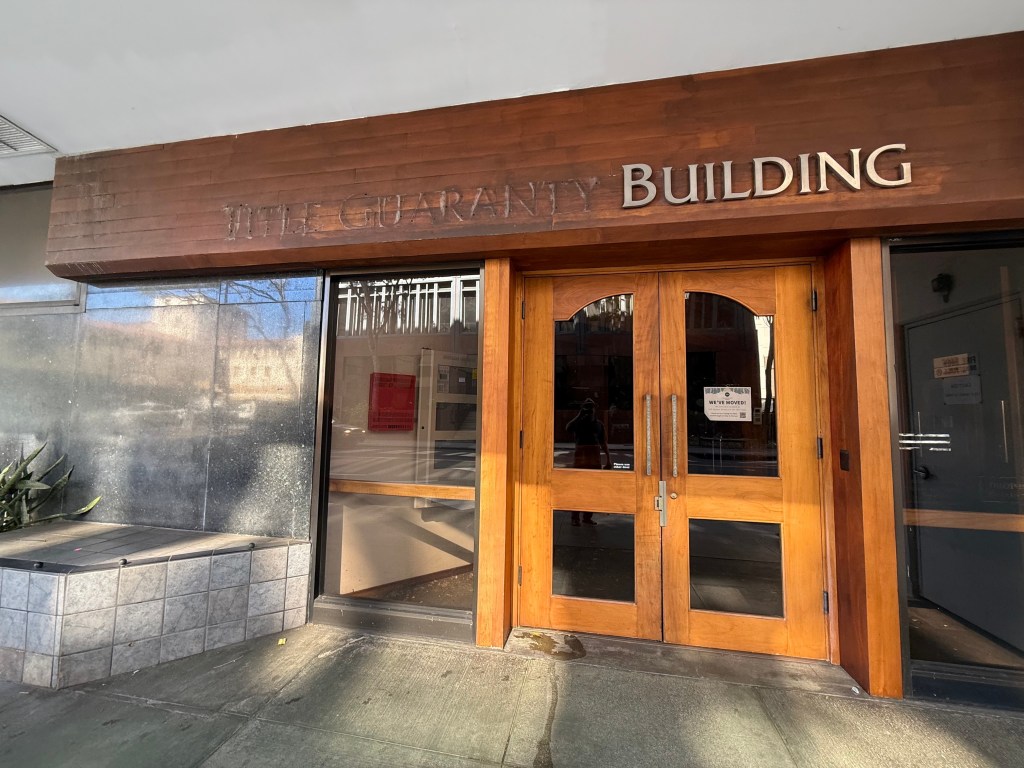
Gone from the building’s koa wood façade are capital letters that once said, “TITLE GUARANTEE BUILDING.” Now it just says, “BUILDING.”
A piece of paper in the window says, “WE’VE MOVED!”
“Hawaiʻi’s Changing Economy” is supported by a grant from the Hawaiʻi Community Foundation as part of its work to build equity for all through the CHANGE Framework.

