Young Brothers Wins 25% Rate Hike But Faces Stricter Oversight
The increase is expected to generate an extra $26 million in revenue, which the interisland barge service says will still leave it operating at a loss next year.
The cost of shipping food and other goods between the Hawaiian Islands is about to rocket up more than 25%, sparking dismay among some residents, farmers and business owners.
On Monday, the Hawaiʻi Public Utilities Commission unanimously approved a rate increase for Young Brothers, the state’s sole neighbor island barge service. As a result, costs on Jan. 1 will climb 25.75% to move essential goods across the state, from vegetables and livestock to vehicles and construction equipment.
The latest hike, which follows a 46% increase that state regulators approved five years ago, could bring some small businesses to a breaking point. As Aloun Farms President Alec Sou put it, the cost of moving food between the islands has become “discouraging to justify continuing to press forward.” It even has one major Kauaʻi producer contemplating buying a barge to ship melons, onions and sweet corn to Oʻahu markets.
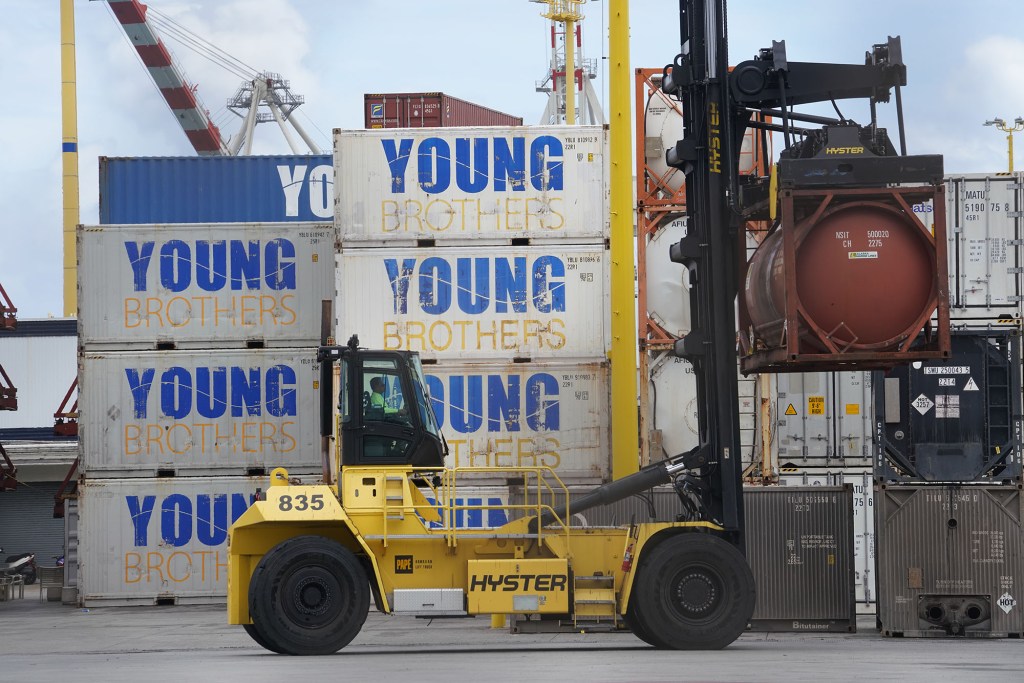
The rate increase replaces the temporary 18.1% increase authorized in July as a stopgap measure to keep the company afloat while regulators considered the company’s request for a permanent rate hike.
The new rate is expected to generate $26 million in revenue, a boost that Young Brothers plans to use to buy new barges and tugboats while offsetting rising operating expenses coupled with faltering demand for its service since the Covid-19 pandemic.
In its decision, the PUC expressed “serious concerns” with Young Brothers management, noting the company has repeatedly asked regulators to authorize emergency rate hikes to offset its deteriorating financial condition. To break this cycle, the company going forward will need to shoulder more stringent regulatory oversight.
The latest rate increase comes with a series of oversight conditions, including required monthly and quarterly performance reports to regulators, a labor cost review and public engagement on its business strategies to reduce costs and improve service.
The PUC will appoint an independent monitor to oversee Young Brothers’ financial and operational performance and confirm compliance with its business plan. The company is prohibited from filing new general rate increase requests for at least two years.
The three-member PUC’s chair, Leo Asuncion, announced plans last week to step down Monday. His early resignation came amid a series of staff departures, criticism by state senators and turmoil in the agency. His signature was on the official decision and order for the Young Brothers rate hike Monday along with the other two commissioners, Naomi Kuwaye and Colin Yost.
Gov. Josh Green has not yet named a replacement for Asuncion, whose six-year term was set to end in June. The governor appoints the members to the PUC, and the state Senate confirms them.
Young Brothers has given more than $150,000 to Democratic candidates for elected office in Hawai‘i over the past 10 years, including one of its most recent donations, $2,000 to Green in May.
‘We Want To See Better Quality Service’

Michael Angelo, the state’s Consumer Advocate, said the PUC took important steps to tighten regulatory oversight on a critical service but that the rate increase should have been lower.
“We want to make sure that industries like agriculture are able to thrive in the state and this is just going to mean a higher increase in cost,” Angelo said. “We want to see better quality service as part of that, and that’s something that wasn’t addressed in this rate case.”
Hawai‘i’s food system is particularly reliant on the shipper’s services to put local food on family dining tables.
Most of the vegetables harvested by Aloun Farms on Kaua‘i, for example, must be shipped to the much larger Honolulu market. Despite added interisland transportation costs, cheaper and more abundant farm land on the Garden Isle has led the company to invest heavily in Kauaʻi agriculture.
But Young Brothers’ rising rates are causing Aloun Farms’ president to seriously consider curtailing his company’s Garden Isle investment.
“There’s even thoughts of what would it cost to put together, with several small businesses, our own barge to run our own product?” Sou said. “It really makes everyone reflect on how do we move forward — or do we just tuck back into our own little corner of every island and not pursue any broader development or unity and growth between islands?”
Since Young Brothers’ last permanent rate adjustment in 2020, the company said its operating costs have increased by about 44% while cargo volume has dropped off by about 14%. As a result, the company says it has operated at a net loss since August 2024.
The rate increase is expected to help the company absorb more than $24 million in anticipated losses for 2025, which adds to last year’s losses of roughly $14 million. Yet, even with the newly adjusted rate, the company expects about $6 million in losses in 2026.
Young Brothers executives were not available to be interviewed for this story. Interim President Rank Almaraz said in a statement that the rate hike is a first step toward addressing financial strain caused by years of rising costs.
“There is still significant work ahead,” Almaraz said, “and we remain committed to further improving our operations and working with state leaders and our regulator to build long-term stability for Young Brothers and Hawaiʻi’s supply chain.”

Hawaiʻi’s Consumer Advocate said the PUC should have gone farther to investigate how the freight company manages its finances and its relationship to Saltchuk Resources, its Seattle-based parent company, to ensure their dealings are in the public’s interest. Saltchuk Resources acquired Young Brothers in 1999.
“What we would like to see is a broader financial picture of the entire business, including its unregulated business, because they both impact each other — they use the same assets and the same labor,” Angelo said.
He said the commission should also have done more to guarantee an improved quality of service for customers, who will soon be subject to significantly higher costs for interisland freight.
“Hawaiʻi’s Changing Economy” is supported by a grant from the Hawaiʻi Community Foundation as part of its work to build equity for all through the CHANGE Framework.