

Who Are Hawaiʻi’s Biggest Tax Delinquents? Search Here
A government database tracks who owes what in state taxes. Spoiler alert: Some owe millions.
Hardly anyone likes to pay their taxes. It’s just a fact of life most of us accept.
But some taxpayers have fallen behind or skipped payments and owe thousands — and in some cases millions — to the state. The Hawaiʻi Department of Taxation keeps track of those accounts in a database of delinquent taxpayers, which Civil Beat obtained through a public records request.
Explore the list below, narrowed to those who owe $50,000 and up.
The spreadsheet represents a moment in time and was current as of Dec. 10, 2025. The numbers change as interest and penalties accrue and as people pay off their debts. The data does not include the year the debt started or details about its circumstances, which the department said are confidential by law.
Individuals end up on the delinquency list after they’ve been notified multiple times of their debt and their case has been sent to the tax department’s collections branch, according to branch chief Dongyan Wen.
At that point, the state tries to work with the account holder to get them in the black, which can include instituting a payment plan or, in some cases, settling for a lesser amount.
“Our main focus is really to help the taxpayer,” Wen told Civil Beat. “Maybe they fell behind due to unforeseen circumstances, financial hardship. But we’re here to help. The main thing is that they need to be cooperative or responsive to our notice.”
Some of the taxpayers in the data may already be paying off their debts with payment plans, but the state cannot say which ones, again due to confidentiality rules.

High-Profile Names On The List
The data includes some names locals may recognize.
Republican state Rep. David A. Alcos III, the assistant minority leader, owes more than $1.5 million, according to the data.
That represents a combination of individual income taxes, general excise and use taxes — which are levied on imported goods — and withholding taxes. Employers are required to deduct withholding taxes from employee wages and remit them directly to the government.
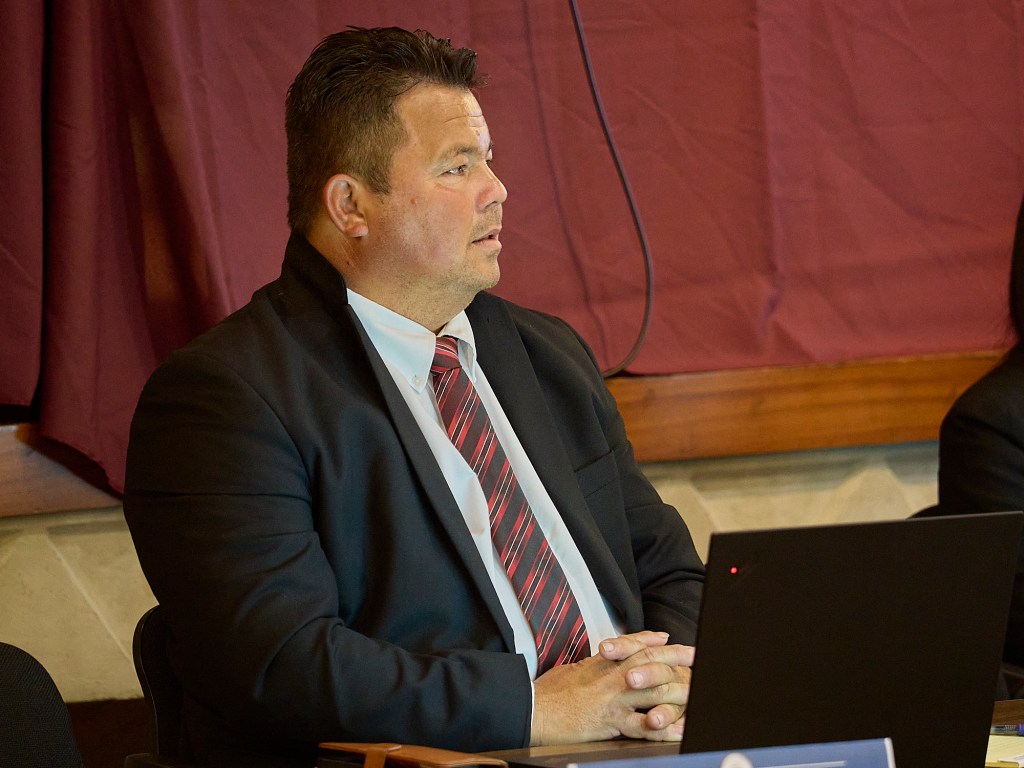
Last year, Civil Beat reported the state and federal government had filed over $3.2 million in liens against Alcos for unpaid taxes. Alcos said at the time that the debt is connected to work that his company, D.A. Builders, did on the International Marketplace project but was never paid for.
The Hawaiʻi State Ethics Commission fined Alcos $12,500 last year after it discovered he had failed to disclose his debts on his financial disclosure form.
Alcos did not respond to requests for comment for this story.
Kauaʻi Rep. Luke Evslin is also on the delinquency list, owing more than $57,000 in general excise and use taxes.
Evslin owns a 19% stake in Kamanu Composites, a Kailua-based canoe manufacturer in business since 2007. In response to the Covid-19 pandemic in 2020, the company pivoted to making plastic face shields.
“Navigating global supply chain challenges, we made large out-of-state purchases of materials and equipment from suppliers that we didn’t normally use,” Evslin said in an email to Civil Beat. “Our accountant flagged in October 2022 that those purchases triggered Hawaiʻi use tax reporting and payment requirements we hadn’t accounted for. We promptly filed an amended 2020 return. The balance of that 2020 tax is the entirety of what we owe.”
Hawaii Legislators
Explore detailed legislator profiles, voting records and what happens in hearings on Digital Democracy. Visit Digital Democracy
Evslin said the company is making payments and working with the tax department to resolve the balance. Besides this one instance, Evslin said the company has consistently paid its taxes on time. He said he and his business partner were devastated when they learned of the balance.
“Kamanu Composites is a small, local outrigger canoe manufacturing business employing 10 local people,” he said. “Manufacturing canoes in Hawai’i has never been profitable, but we keep it going because we are paddlers ourselves, committed to building canoes in Hawaiʻi and maintaining local jobs and skills, even when it’s financially difficult. We are committed to our community, to being good citizens, and to resolving this tax balance.”
Unlike Alcos, Evslin is not required to disclose the tax debt on his state financial disclosure form because it is a business debt, not a personal one, Hawaiʻi State Ethics Commission Executive Director Robert Harris said.

Ex-CEO Dennis Mitsunaga, who founded a high-profile engineering firm known for securing government contracts, owes more than $3 million alongside his former company’s former accountant and its subsidiary, MM International, according to the data. The debts represent unpaid general excise and use taxes.
Mitsunaga was acquitted last year after a high-profile federal corruption trial in which he was accused of involvement in a pay-for-prosecution scheme. In a statement shared via his daughter, Lois Mitsunaga, the former CEO denied he has any tax debt.
“I do not have any past-due taxes and request that I be removed from your story,” he said.
Mitsunaga did not respond to a request to elaborate.
Former TV personality Duane Chapman, known as Dog the Bounty Hunter, owes more than $85,000 in individual income taxes alongside his late wife Alice “Beth” Chapman, the data shows. Civil Beat left a message for Duane Chapman but did not receive a response.
Collecting The Debt
Hawaiʻi’s tax department has several collection mechanisms, including wage garnishment, liens on homes or vehicles and even foreclosure. The state can also intercept federal tax refunds that are otherwise owed to state tax debtors.
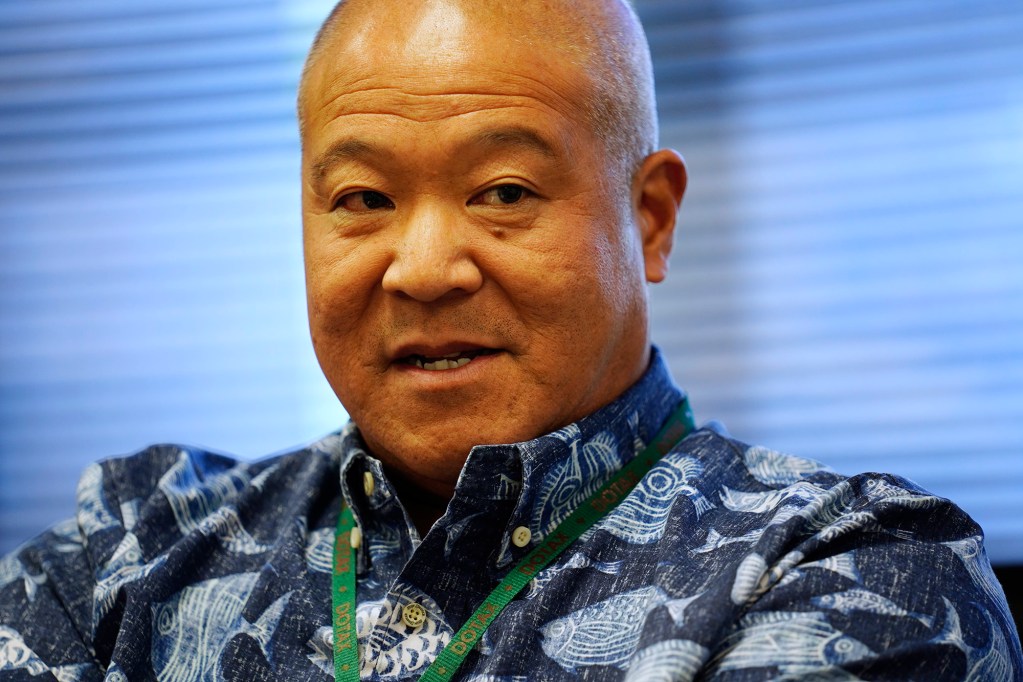
But some of the debt in the state’s database may be uncollectible. Hawaiʻi has a 15-year statute of limitations on tax debt, and some of the entries are for tax bills that are years — and possibly even decades — old, Hawaiʻi tax director Gary Suganuma told Civil Beat. The database itself doesn’t specify dates.
“There are definitely people on the list and companies on the list that we will probably not be able to collect anything from,” Suganuma said.
Some delinquent taxpayers are defunct businesses or dead people from which the tax department will likely never see a dime.
For instance, Kamaʻāina Termite Kona, an LLC registered to the deceased organized crime leader Mike Miske, owes $54,257.41 in general excise and use taxes, according to the data. Separately, Miske himself owes $30,926.16 in withholding taxes.
The tax department can remove uncollectible entries from the list and write off the debt, Suganuma said, but that takes time and resources that need to be focused on debt more likely to be collected.
The biggest delinquent account is an entity listed as “Shareholders Mythics Emergent Group,” which owes more than $20 million in individual income taxes. There is no entity by that name in state business records. There is a Virginia-based software retailer called Mythics Emergent Group, but it did not respond to Civil Beat’s request for comment.
The vast majority of delinquent taxpayers — about 33,000 of the total 45,000 — owe less than $10,000. The smallest outstanding account is someone who owes $5 in transient accommodations taxes.
The total value of the uncollected taxes totals hundreds of millions, Suganuma said. The tax department was unable to provide a precise number. In some cases, an amount owed is listed in the data multiple times under the names of the multiple people responsible for paying it.
Taxpayers are allowed to appeal their tax assessments, but interest and penalties continue to accrue throughout that process.
“Data Dive” is supported in part by the Will J. Reid Foundation.
Correction: An earlier version of this story misstated where Kamanu Composites is based.

