

Should A State Worker Be Able To Lease Public Property Without Bids?
An agency executive director can now enter five-year leases for state-owned property in Kakaʻako at below-market rates without board approval or public notice.
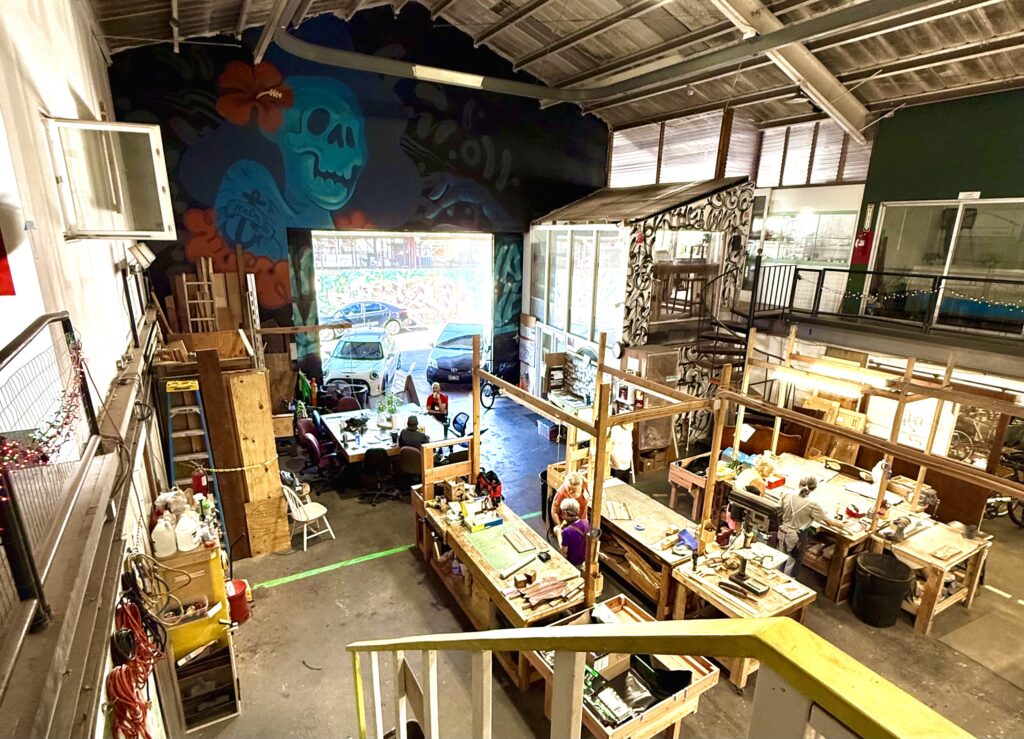
Plans to redevelop the Kakaʻako building that houses Robert Speer’s nonprofit woodworking and bike shop seemed likely to add the Honolulu Kūpuna Shed to the casualties of the neighborhood’s creeping gentrification.
Fortunately for the Kūpuna Shed, it has not only a proven record of building a community around woodworking and bicycle repair. It also has supporters in high places: most notably Craig Nakamoto, the executive director of the Hawaiʻi Community Development Authority, which manages development of Kakaʻako and offered to help the shed find a new location.
“We’ve been under the wing of Craig and HCDA,” Speer said. “They’ve been very supportive of us.”
The HCDA board strengthened Nakamoto’s power to help small outfits like the shed earlier this month. A controversial new policy gives the executive director the authority to lease out some 9 acres of state-owned buildings and properties around Kakaʻako to small businesses and nonprofits at below-market rates.
Although the new policy lets the executive director use the standard request for proposal process, similar to a public bid, to lease properties, the executive director also can strike deals without competitive requests for proposals or public solicitations. Whichever way he goes, he doesn’t need board approval.
The policy also allows the executive director to address, at least short term, unmet community needs that HCDA and the Legislature have failed to address against a backdrop of supercharged gentrification.
Supporters of the new rule say it’s a way to help ensure small businesses and nonprofits aren’t pushed out of Kakaʻako, once a light industrial area that’s seen a steady exodus of small businesses, artists and makers as the land under former warehouse spaces sprouts towers of multimillion-dollar condos and luxe ground-floor boutiques and restaurants.
The five-year leases can provide refuge for small businesses while the state works to develop the parcels it owns into affordable housing and other uses. But skeptics question the wisdom of giving broad power to an unelected state worker overseeing a process that can operate with relatively little transparency.
Camron Hurt, director of the nonpartisan government watchdog group Common Cause Hawaiʻi, said it makes better sense to have a procurement process in which a government agency gets at least three bids or proposals before selecting a tenant.
“Having an ED who can make decisions regarding the financial and property portfolio of the organization for up to five years without any oversight or check is extremely concerning and bewildering,” he said.
Nakamoto did not respond to a request for comment but HCDA board chair Sterling Higa defended the policy.
“Government must not only avoid impropriety, but also the appearance of impropriety,” he said. “At the same time, civil servants should be empowered to do their work without micromanagement. This policy balances those two imperatives.”
HCDA Has Fostered Gentrification
HCDA’s policy change comes as Kakaʻako’s transformation into a neighborhood of luxury condos with ground-floor retail and restaurants is reaching a tipping point.
When lawmakers established the agency to oversee redevelopment of Kakaʻako in 1976, they pointed to what they deemed a blighted, dilapidated and economically depressed area that could be revitalized to address “unmet community development needs.”
Those included “a lack of suitable affordable housing” and “insufficient commercial and industrial facilities for rent.”
Fifty years later, the area has been transformed by private developers working under HCDA’s governance. In the past decade, Howard Hughes Holdings alone has invested almost $8 billion to create its tony, mixed-use Ward Village, full of trendy restaurants and shops along with 10 condo towers built or underway.
Another half dozen condo projects have been built on Kamehameha Schools land on the ʻEwa end of Kakaʻako, with four more planned.
One black planned for redevelopment underscores the trade-offs of the redevelopment. A block-long structure on Auahi Street that Kamehameha Schools plans to redevelop now houses a long-time metal worker and an art gallery including artist workshops, along with the Kūpuna Shed. The shed occupies the former home of art impresario Jasper Wong’s POW! WOW!, the street art project whose massive outdoor murals adorn buildings throughout Kakaʻako like psychedelic comic books.
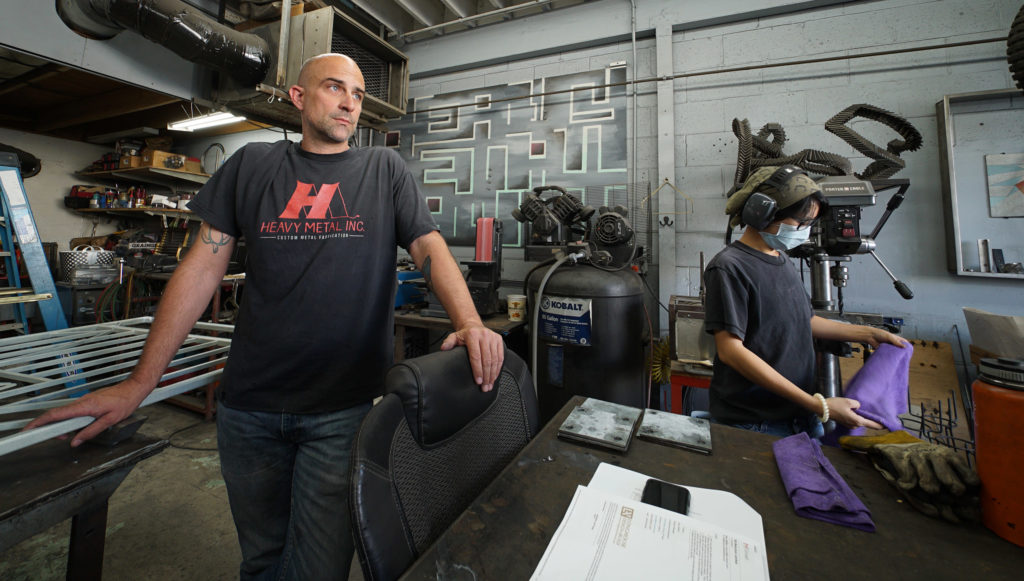
The growing scarcity of spaces for artisans, fledgling businesses and organizations like the Kūpuna Shed shows how the agency — and legislators who created it — have failed in one regard. HCDA’s enabling statute requires it to plan “a mixed-use district whereby industrial, commercial, residential, and public uses may coexist compatibly within the same area.”
It also requires HCDA to develop a “cultural public market,” featuring Native Hawaiian culture, including things like theater, museum and exhibition space. But the agency’s main focus in recent years has been developing fancy condos.
To guarantee the sale of at least some condos for working-class people in the neighborhood, HCDA has adopted “reserved housing” administrative rules to make developers reserve some new condos to sell at below market rates. But no such laws or rules exist to preserve affordable commercial or light industrial spaces.
The result: When Kamehameha Schools redevelops the block, the Kūpuna Shed must go.
Diana Bethel, a semi-retired Japanese translator and prison reform advocate, said losing the Kūpuna Shed would be a blow for the community, where ʻukulele makers, koa bowl shapers and furniture makers share their skills with each other — and sometimes just talk story.
“It seems like if the city values culture and the arts — because that’s what makes a city vibrant — they should prioritize it,” she said.
New Policy Is ‘Kakaʻako-centric’
HCDA’s new policy enables Nakamoto to prioritize uses besides residential, offering temporary, ad hoc solutions to the problem that’s emerged under HCDA’s watch. During a Dec. 3 board meeting, HCDA asset manager Lindsey Doi explained that HCDA has acquired many properties in the past year. The most attractive are in Kakaʻako, she said.
The agency now owns 9 acres in the area, and the policy adopted during the meeting would give the executive director authority to enter five-year leases without board approval. The new policy outlines the process for the agency to solicit proposals for properties following more standard procurement processes, including providing public notices and opening the door for competition.
The policy also lets the executive director sign leases with projects proposed behind the scenes by a private party without public notice, as long as the projects advance HCDA’s mission to “revitalize the community.”
Such unsolicited proposals are to be reviewed by three HCDA staff members. The executive director can enter leases at below the market rate when the project advances “public facilities or community benefits.” In such cases, the board’s only role is voting to approve the executive director entering into “exclusive negotiations.”

Hawaiʻi Rep. Kim Coco Iwamoto, who represents Kakaʻako, said she supports the policy. The five-year cap on leases indicates that there’s not going to be any infrastructure built for the tenant, she said. And it makes sense for HCDA to lease out its properties while the agency firms up its plans to build affordable housing on the sites.
“It’s really about using existing space and allowing the executive director to either extend the lease or to move in another tenant who will not be doing huge investments in the building,” she said.
Asked whether the new rule gives too much power to one state worker, who might be subject to political influence, Iwamoto said the employee would still have to follow state ethics laws and avoid self-dealing.
“I think the safeguards are already in place for any state employee,” she said.
Proposal To Displace Gym Draws Ire
Even before HCDA formalized the executive director’s power to execute deals behind the scenes, a proposal to move the Kūpuna Shed into a parcel at the expense of an existing tenant raised concerns.
A block of Waimanu Street between Kapiʻolani Boulevard and Queen Street hearkens back to old Kakaʻako. Businesses include Bocconcino, an Italian deli that makes mozzarella cheese and serves it on pizzas and panini to diners on communal tables in a garage-turned-dining space. Across the street, in a blocky white building, is The Rice Factory, which sells imported Japanese rice to retail customers and supplies it to neighboring Hana Koa Brewing Co. for its Tokyo-style rice lager.
In an open-air, hut-like building next to the brewery, F45 Training runs multiple, boot-camp style group training sessions every day.
During a town hall meeting in August, HCDA’s Nakamoto drew sharp questions when discussing a proposal to move the Kūpuna Shed into the F45 space, which HCDA now owns, after F45’s lease expires next year.
Nakamoto acknowledged that he had gotten numerous calls and emails from some of F45’s 700 members who had heard about the proposed deal. But Nakamoto said HCDA would consider more than the number of users of a facility when deciding how to lease out the F45 site.
“There’s another calling for that spot” as a gathering place for men and women of all ages, Nakamoto said.
Asked pointedly how the Kūpuna Shed came to be considered for the location, Nakamoto said an organization member had simply approached him about finding a new home in Kakaʻako for the Kupuna Shed. Asked if Nakamoto would do the same for anyone who approached him with an unsolicited proposal to use a state-owned property in Kakaʻako, Nakamoto said he would consider it.
It’s not clear what will happen next to F45. The fitness gym’s manager, Ari White, didn’t respond to requests for comment.
The Kūpuna Shed’s vice president, Jim Maskrey, said the shed’s lease has been extended until the end of 2026 because of development delays. In the meantime, he said, the organization has no plans to move to the F45 space, or anywhere else.
“It’s wait and see,” he said.
It also remains to be seen how many other people will come to Nakamoto with their own unsolicited proposals for other HCDA sites.
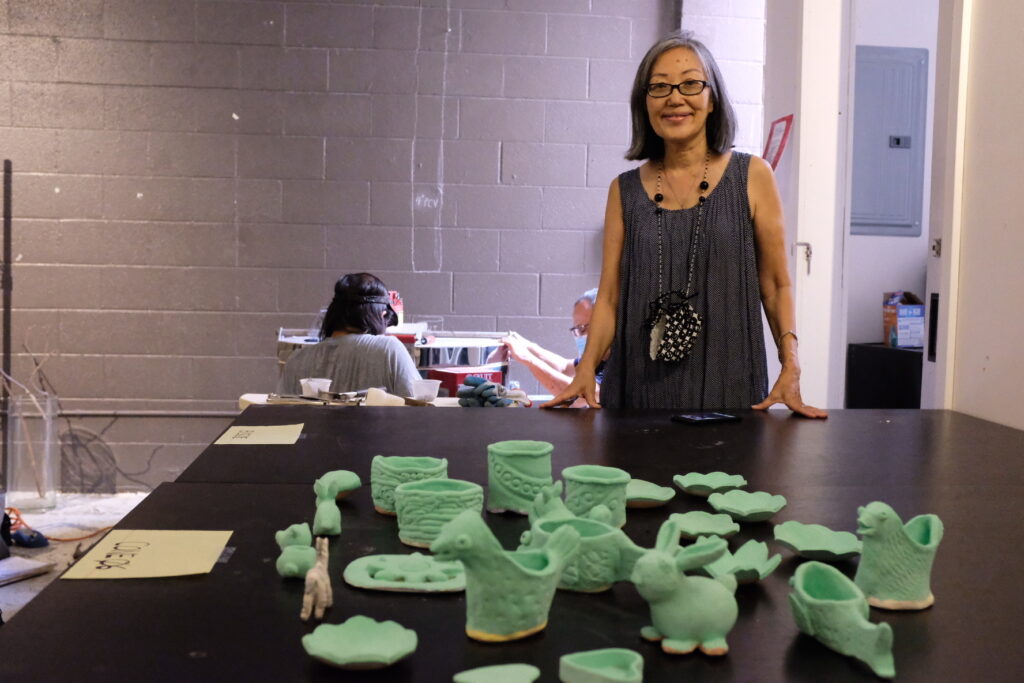
Among those who would like to see more information about these properties is Maura Fujihira. An interior designer, Fujihira has been supporting local artists, designers and other creatives in Kakaʻako since 2007, when she founded fishcake near Ward Avenue and Halekauwila Street. The original home of Honolulu’s first co-working space, Box Jelly, fishcake hosts a furniture and art gallery, art classes, a kitchen where budding chefs can operate rotating pop-ups and a ceramics studio in Box Jelly’s original space.
There’s no official map listing HCDA’s Kakaʻako properties, said Francine Murray, the authority’s community outreach officer. The parcels and buildings, she said, are spread out in places like Kaka’ako Makai, around Kewalo Basin Harbor and near the historic Ala Moana Pump Station.
“Why don’t they open it up for us to be able to say, ‘I want to go here, I want to go there?'”
Maura Fujihira, fishcake
Fujihira sees the neighborhood’s gentrification as inevitable. Howard Hughes has been a good landlord for fishcake, she says, and she has no plans to move. She says she’s been encouraged by talk of making the area around fishcake into a version of Venice Beach’s Abbott Kinney Boulevard, but “less chi-chi,” as she puts it.
Fujihira likes the idea of HCDA cutting red tape to help dislocated Kakaʻako tenants find new homes quickly. But she’s skeptical of the move to put considerable power into the hands of the executive director.
“It seems very Trumpian,” she said. “It’s not a bad thing in itself, but it still needs oversight.”
That, she said, includes HCDA providing easy-to-access listings of its Kakaʻako properties so the public can come to Nakamoto with proposals.
“Why don’t they open it up for us to be able to say, ‘I want to go here, I want to go there?’” Fujihira said. “That’d be fun. All of us can go, ‘Yay! I want this building. Can I have this one?’”
CORRECTION: This story has been updated to correctly describe Kamehameha Schools’ plans to redevelop the space where the Kupuna Shed is located.

