

Waiʻanae Group Wants A New Homeless Shelter. Can They Overcome Objections?
Disagreements include whether more services will help current Westside homeless or if they will just become a magnet for more.
With a view across Farrington Highway to Lanterns Beach, the property offers nearby space to grow food and proximity to a health care center and a homeless services nonprofit. To Lena Spain-Suzuki, that makes it an ideal site to house some of the many hundreds of homeless people living on Oʻahu’s Waiʻanae Coast.
“Waiʻanae is broken,” said Spain-Suzuki, a member of the Waiʻanae Moku Kūpuna Council. “The city and state do not care about Waiʻanae.”
Others, though, say the Westside already has more than its share of homeless, many driven there by official efforts to clear out Honolulu’s urban core. Politicians who represent the area have joined that camp, maintaining that adding services in the area will only attract more people looking for help.
“The public sentiment of a lot of folks in the community is that they don’t like these projects because they feel like it just becomes magnets for more homeless, for homelessness,” said Nānākuli state Rep. Darius Kila.
Plans to create housing for the homeless, halfway houses for those recently released from prison or jail or even just subsidized housing often come from government or developers and meet with strong opposition from neighbors. The difference in Waiʻanae, at least according to those who back the idea, is it’s local people stepping up to take care of their own.
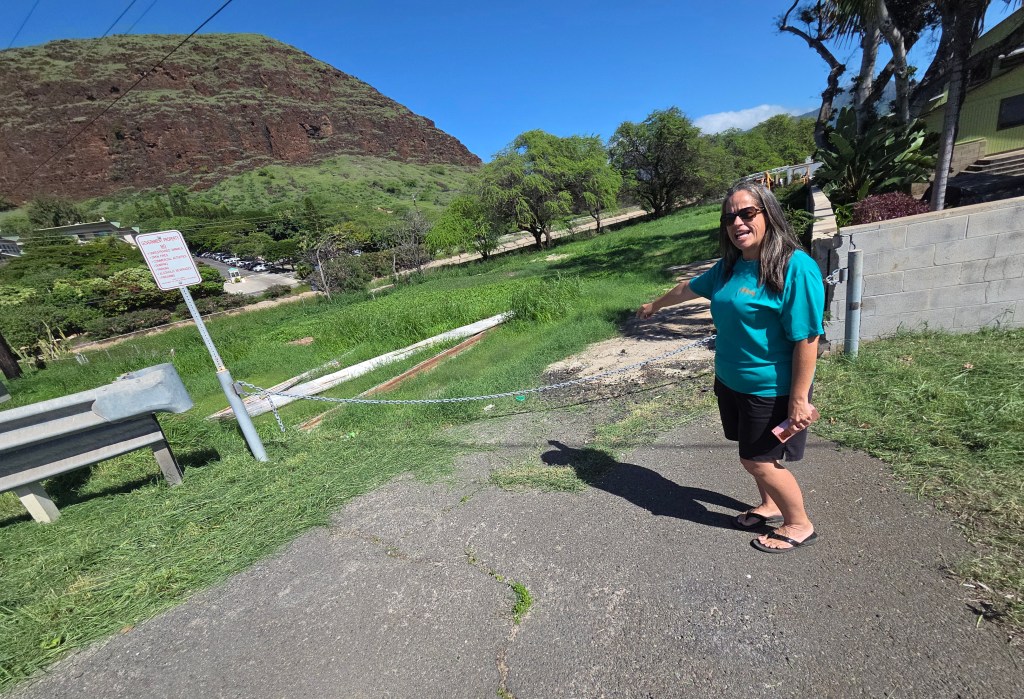
The Waiʻanae Moku Kūpuna Council formed in 2021 to seek local solutions to Westside issues that its members felt state and local authorities were neglecting or mishandling. Widespread homelessness was one.
Three years later, said Spain-Suzuki, the state’s homelessness coordinator, John Mizuno, contacted the group asking them to suggest Westside places suitable for developing a kūpuna kauhale — a cluster of small homes to serve elderly homeless.
Kauhale form the centerpiece of Gov. Josh Green’s efforts to address homelessness. His administration has opened about 24 statewide, often working with nonprofit service providers and local governments to meet needs ranging from housing homeless veterans to serving people in need of medical care and Maui fire victims.
The council identified the state-owned Farrington Highway property and Mizuno lauded their efforts.
“On the Westside, the Waiʻanae Coast, there’s distrust with government,” Mizuno told Hawaiʻi News Now in July 2024. “I don’t blame them and so you really want a kauhale initiative on the Westside to be led by the Waiʻanae people. To me, that’s the only way we are going to get successful buy-in.”
Within seven months, though, Mizuno was no longer in charge and progress ground to a halt.
“It was really easy for us to get the ball rolling, and everybody’s really excited and a lot of donations, a lot of donated time,” said Lynette Cruz, another Kūpuna Council member. “Then all of a sudden we got bushwhacked.”
‘It Is Our Kuleana’
Objections to the plan came from the Nānākuli-Ma’ili Neighborhood Board, which said too many homeless services had already been located on the Waiʻanae Coast.
Honolulu Council member Andria Tupola and Kila also raised concerns that Mizuno was ignoring neighborhood objections about flooding risks and a lack of infrastructure on the site.
In an August 2024 letter to the governor, Tupola said both of them were firmly opposed to a kauhale on the property, and that neighbors felt the same.
“We stand shoulder to shoulder on this issue,” she wrote. “We support communal living projects in areas where there is leadership, infrastructure, a clear plan, and support from the immediate neighbors.”

But Kūpuna Council members and supporters say they took neighbors’ concerns into account when suggesting the location and that their outreach efforts show that the people they want to help are friends and family members from the Waiʻanae Coast.
The need is even more pressing, they say, because so many of those living homeless on the Westside are Native Hawaiian. According to the 2024 Point in Time census of homelessness on Oʻahu, 45% of the 783 homeless people along the Waiʻanae Coast are Native Hawaiian. Spain-Suzuki said her outreach shows the number is even higher — 56%.
“All the last names are from Waiʻanae,” she said, “so Waiʻanae should be first in having these types of solutions to rehabilitate our people – it is our kuleana to rehabilitate our people.”
What will happen next is complicated by change at the top. Mizuno stepped down from his post last February after criticizing the operating costs of some kauhale in a Civil Beat story. He became a special advisor to the governor on homelessness.
His successor, Jun Yang, told Civil Beat that while “the state is aware that certain members of the community have identified the parcel as a possible place for homeless services, nothing has been set in motion by the state.”
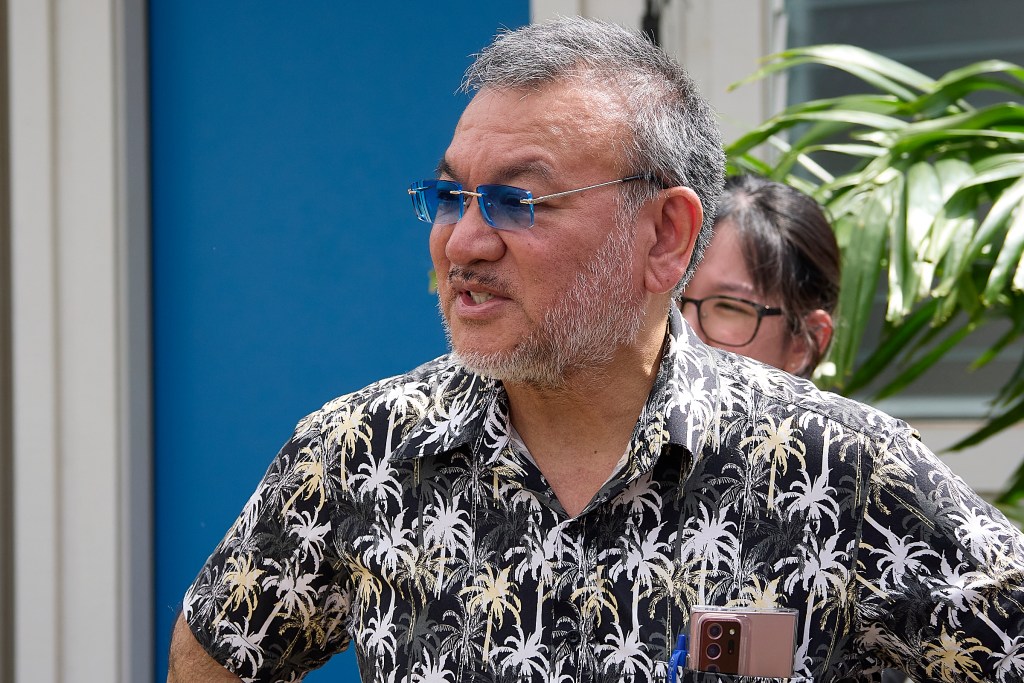
Mizuno’s former deputy director, Eric Ford, says Mizuno had wanted to develop the kauhale there and that the site was still suitable.
Unlike a plot of land mauka of it that Ford said was originally considered, the Farrington Highway property is not in a flood zone, he said, and has access to water, sewer and electric services.
“That property is prime,” said Ford, who now works for a Kapolei-based development company, Prometheus Construction, with which the Kūpuna Council has spoken about the project. Ford said the construction company’s owner wants to give back to the community and believes in the project enough that he would be willing to build it at cost or even as a philanthropic contribution.
Inspiration Found In Waimānalo
Much of the Kūpuna Council’s vision for what a kauhale could be and how to launch one was inspired by Hui Mahi’ai ʻĀina in Waimānalo, which houses more than 100 formerly homeless people.
Blanche McMillan built the kauhale on her family’s land during the pandemic. In fact, she did so before she had the government permissions and support that she later won after the project proved successful.
Many residents now hold down jobs and all are required to take part in cooking for each other, caring for the property and tending its garden.
“What caught us was the idea of a community determining what they want and what they need for their own well-being,” Cruz said. “I loved it. We all did.”

The council asked McMillan for her support and advice.
Earlier this month, she gave a presentation to the Waiʻanae Coast Neighborhood Board, sharing a draft proposal of what a kauhale on the Farrington Highway property might look like and cost. It laid out a project costing $2.3 million that would house 25 people. But McMillan said it wouldn’t need to rely on government funding to be developed.
“When we doing the right thing with God, he keeps us on the right line,” she said at the meeting, speaking about attracting support and funding.
“What caught us was the idea of a community determining what they want and what they need for their own well-being. I loved it. We all did.”
Lynette Cruz, Waiʻanae Moku Kūpuna Council
Cruz told Civil Beat she believes that the group could raise its own funds to develop the kauhale. She said there is a lesson in Puʻuhonua O Waiʻanae, the large village of houseless people at the Waiʻanae Small Boat Harbor, whose leaders raised about $1.5 million to purchase a nearby property on which they are currently building and moving to homes.
“They didn’t want to work with the state or the city; they went and found the money,” Cruz said. “So that tells me that there are people outside of Hawaiʻi who would step in to support these kinds of projects where communities take control of their community.”
Mark Hee, president and an owner of Hawaiian Building Supply, who had drawn up the proposal for McMillan, also spoke at the board meeting.
“If you ever been to Aunty Blanche’s place, she didn’t listen to the government. She just did it and she did a wonderful job,” said Hee, whose company has supplied sleeping units to other kauhale.
Some of those who attended the meeting were unreservedly in favor. Keline Kahau, a Waiʻanae resident, urged the community to unite behind the proposal.
“Aunty Blanche is coming to help our kūpuna in our neighborhood,” she said. “We shouldn’t divide us because we get Nānākuli, Māʻili, Waiʻanae, Mākaha, No, I’m sorry, we just the Westside. We need to come together and mālama this.”
Germaine Meyers, a member of the Nānākuli-Māʻili Neighborhood Board, noted her board hadn’t yet reviewed the proposal.
Last week, Waiʻanae Coast Neighborhood Board chairperson Teri Savaiinaea said that it is up to the Nānākuli-Māʻili Neighborhood Board to take an official stand but she personally supports the plan.
“Respectfully, I want them to be able to have Aunty Blanche go there and present and see where they fall, because I’m going to tell you, we need it for our kūpuna,” she said. “There’s too many on the beach that are homeless.”
Savaiinaea added,” If they’re just like, ‘Nope, not in our backyard,’ then you know what, let’s find someplace in our backyard.”
Could Another Location Work Better?
The Farrington Highway location is the number one option, Spain-Suzuki said. The group has gathered signatures in support, including from the church that borders the site and nearby business owners.
“I think we have more support than opposition,” she said.
Still, there are differences of opinion even on the Kūpuna Council about whether the Farrington Highway site is the right site.
Council member James Cowles, who also serves on the Nānākuli-Māʻili Neighborhood Board, said a kauhale at that location would hinder the cleaning of a canal that runs next to the property. The property, he said, also is too small for what is envisioned.
Cowles said he does want a kūpuna kauhale on the Westside, though. “They’ve just got to find the right place that can withstand it,” he said.
Tupola said the Kūpuna Council never responded to a December 2024 letter she wrote to Cruz outlining her concerns about the proposed kauhale. But she said she remains open to exploring the possibilities of other properties in the area.
The council has looked into that, Cruz said.
“There’s a lot of land on the Westside that belongs to private individuals or families,” she said. “And so those are alternatives for us depending on whether or not we can get them on board.”
Civil Beat’s reporting on economic inequality is supported by the Hawaiʻi Community Foundation as part of its work to build equity for all through the CHANGE Framework; and by the Cooke Foundation.

