Hilo’s Beloved Banyan Drive Is In Ruins. Could A New Agency Save It?
Lawmakers want a hotel built at Hilo’s airport to meet the housing needs of the Merrie Monarch festival while longer-term efforts to revitalize the once-thriving tourist district continue.
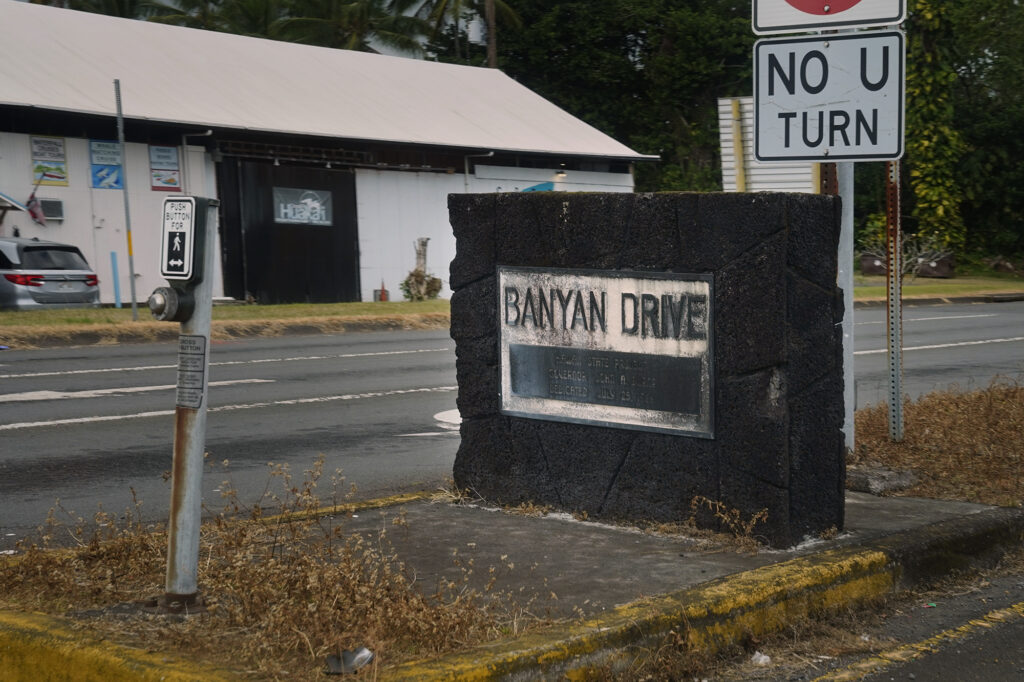
Banyan Drive in Hilo was once teeming with life. The picturesque Waiākea peninsula, lined with sprawling fig trees, hosted tourists and locals alike. But for over a decade it’s been in disrepair — the trees are rotting and falling, buildings are derelict and threatened by a rising sea.
State lawmakers who represent the area have been advocating for funds to revitalize it for over a decade but progress has been slow and concerns are growing that without a tourist district in Hilo, the island could lose the annual Merrie Monarch festival. For some small businesses, the event is the only thing keeping them afloat.
Legislators are making Banyan Drive a priority this year, introducing five bills to address the area’s problems. At the same time, they are trying to push forward a proposal to keep Hilo’s tourist economy afloat while redevelopment of Banyan Drive inches forward: Build a hotel at the airport.
“Honolulu has been waiting for years to get the Merrie Monarch festival,” state Sen. Lorraine Inouye said at a 2025 meeting of the county’s Banyan Drive Redevelopment Agency. Honolulu has the rooms to accommodate something much bigger than what exists in Hilo, she warned.
An airport hotel could relieve some of the economic pressure to redevelop the area quickly, State Rep. Sue Keohokapu-Lee Loy told Civil Beat.
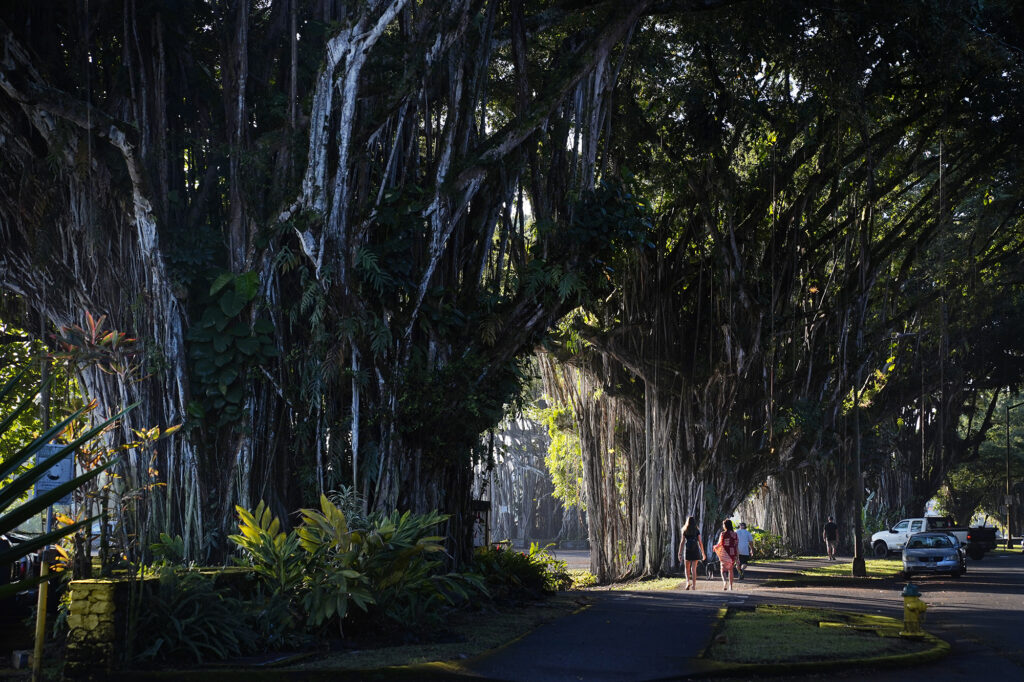
The state has a lot of sway when it comes to the future of Banyan Drive. For a start, the land most hotels sit on is owned by the state and managed by the Department of Land and Natural Resources. But DLNR’s mission is in direct contrast to economic development, legislators say. That tension has made conversations about redevelopment difficult and slowed progress.
The approach past legislators have used, Keohokapu-Lee Loy said, hasn’t worked. She wants to try a new community-centered approach that will “braid everyone’s missions and goals” to make conversations around redevelopment more productive.
Her predecessors, she said, have focused on one-off pieces of legislation as a strategy “that hasn’t really allowed for community engagement.”
‘It’s Falling Apart’
Banyan Drive used to be well-known for its bars and clubs, but residents told Civil Beat they’d think twice about walking around the area at night now. The peninsula has seen multiple cases of arson, car theft and drug crimes. A person died in a fire inside a tree on Banyan Drive in 2023. It’s also become populated by the homeless.
Longtime resident Diane Des-Champs said the area has been cleaned up a bit in recent years. But it’s nothing like what she remembers.
“It’s sad,” she said. “The hotel my brother and I stayed in looks pretty depleted. The nightclub we used to go to, it’s falling apart.”
After years of neglect and the deterioration of buildings, the county created its own agency to push redevelopment forward in 2016. It found the state had “provided little to no incentive for the lessees of the properties in the area to make major investments in improvements to the infrastructure.” Leaving the area to become blighted had created a liability for the community, the bill that created the agency stated.
The Banyan Drive Redevelopment Agency created a conceptual plan for the area and was in dialogue with the state on maintenance and development. However, the agency does not have any full-time staff and its board has rarely met since 2019.
“How much work can you do with no staff, no budget and no regulatory power?” said James McCully, who chairs the agency’s all-volunteer board. “What you can do is be an advocate … and you can be a means for the community to express their concerns or interests to the legislators directly.”
The agency held meetings with DLNR and state legislators on what to do with leases and decaying buildings like Uncle Billy’s Hotel in the first few years after it was created, but little happened.
The building that housed Uncle Billy’s, a four-story hotel in the middle of the loop, sat empty for six years after the business closed. The state finally demolished it after county pressure and multiple emergency proclamations from Gov. Josh Green in 2023.
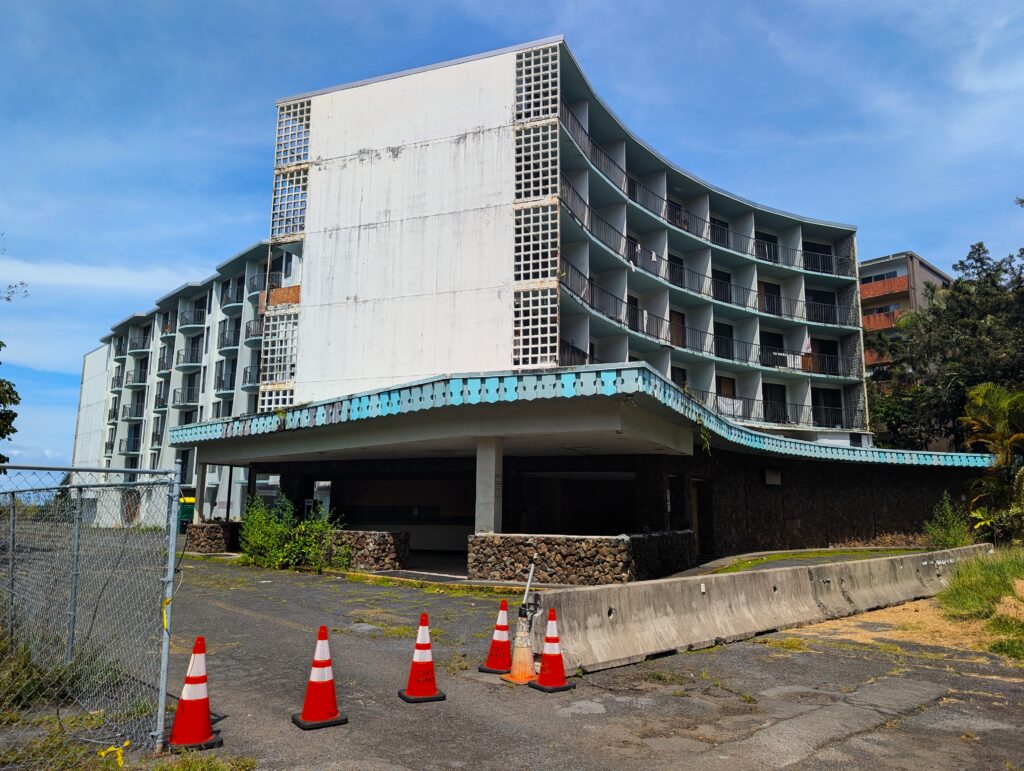
The Country Club Condominiums, a former hotel and apartment building, has been the subject of far more calls to the police and fire department than Uncle Billy’s was. But attempts from legislators and the state to renovate or demolish the building have so far failed.
The state awarded a lease for the Country Club Condominiums and issued permits to developers who had planned to spend $20 million renovating the building in 2023. But that project and several others to deal with the building never moved forward due to a lack of funds and delays by the Board of Land and Natural Resources.
Fears that the condos would end up vacant and deteriorating like Uncle Billy’s came true and the building was boarded up earlier this year. DLNR’s law enforcement division has been providing security since it was permanently closed.
Inouye introduced a bill for the state to pay to knock the condos down last year, but the measure failed. She reintroduced a similar bill this session but is prepared for it to be deferred because of its $15 million price tag.
That bill is one of several legislative proposals introduced this session to tackle Banyan Drive. Inouye also introduced a bill to acquire the Naniloa Golf Course, which lawmakers currently envision at the center of redevelopment. There are also two bills to create a new agency to oversee development on the peninsula.
Some legislators hope that with the right agency in charge, lawmakers can create a long-term plan that will appease everyone.
“The way (redevelopment) was being done in the past, it’s not working, so we just got to try a different way,” Keohokapu-Lee Loy said.
Who Should Lead The Way?
Hawaiʻi island lawmakers, including the mayor, agree that DLNR should not be in charge of redevelopment.
The Hawaiʻi Community Development Agency is currently studying the feasibility of redeveloping the area and generating a long-term plan for it. The agency received $1 million from the state to complete a feasibility study and hire a consultant to create a master plan for the peninsula.
But Keohokapu-Lee Loy isn’t convinced HCDA should be leading redevelopment on its own. DLNR and HCDA faced backlash from the community when they hosted an open house as they worked on a site assessment and strategic market outlook study in 2023. The agencies presented examples for what the peninsula could be, but community members said it lacked awareness of community and cultural needs.
Keohokapu-Lee Loy said the redevelopment process needs local stakeholders who understand the island and the community, as well as the conservation issues DLNR is concerned with.
With a community development district, revitalizing the peninsula will be much smoother, she said. Her attempt last legislative session to create the district failed. This year, she’s co-sponsoring a bill with State Rep. Chris Todd that she hopes will have more luck.
House Bill 2616 would create a Banyan Drive-Makaokū Community Development district and special fund under the authority of HCDA. The bill calls for the development district to include two representatives from Hilo, a lineal descendant of the area, a cultural specialist and a director of planning from the county. It also requests $2 million to perform an environmental assessment of the peninsula and additional funding to hire a full-time employee.
The bill “really starts to lend itself to community visioning, starting with ʻāina. I think when we start there, we cannot go wrong,” Keohokapu-Lee Loy said.
DLNR submitted testimony in support of the measure on Tuesday, citing its potential to address significant costs associated with the redevelopment of the area.
DLNR objected to a similar bill introduced by Keohokapu-Lee Loy last year because it called for the title on the lands to be transferred HCDA. The current bill removes that language.
This “home rule” agency would work in parallel with the county, whose officials have been eager to take part, Keohokapu-Lee Loy says.
McCully, of the stalled Banyan Drive Redevelopment Agency, said the existing entity could play an advisory role with HCDA and act as a vehicle for communicating with the county and state.
Hawaiʻi Mayor Kimo Alameda wants the conceptual plan already created by the redevelopment agency to be taken into consideration and for the county to have a say in what Banyan Drive will become.
He made Banyan Drive one of his top priorities when he came into office in 2025 and says he’s doing what he can to keep momentum going — though he said the county is currently limited because it’s state-owned land.
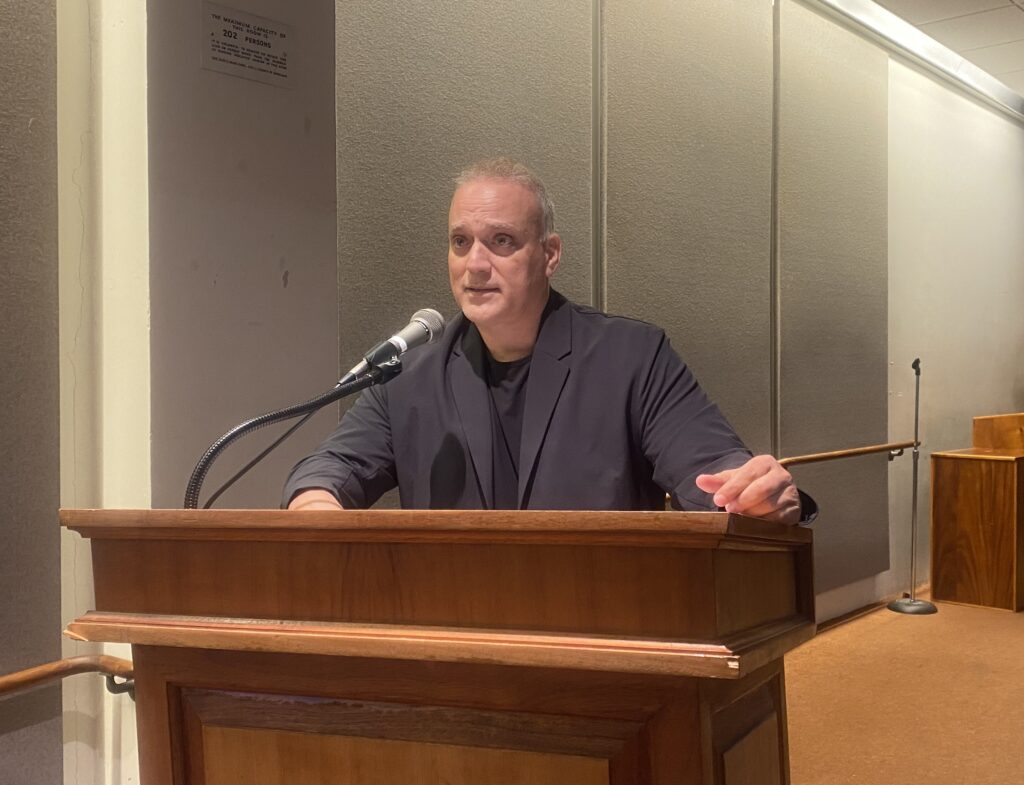
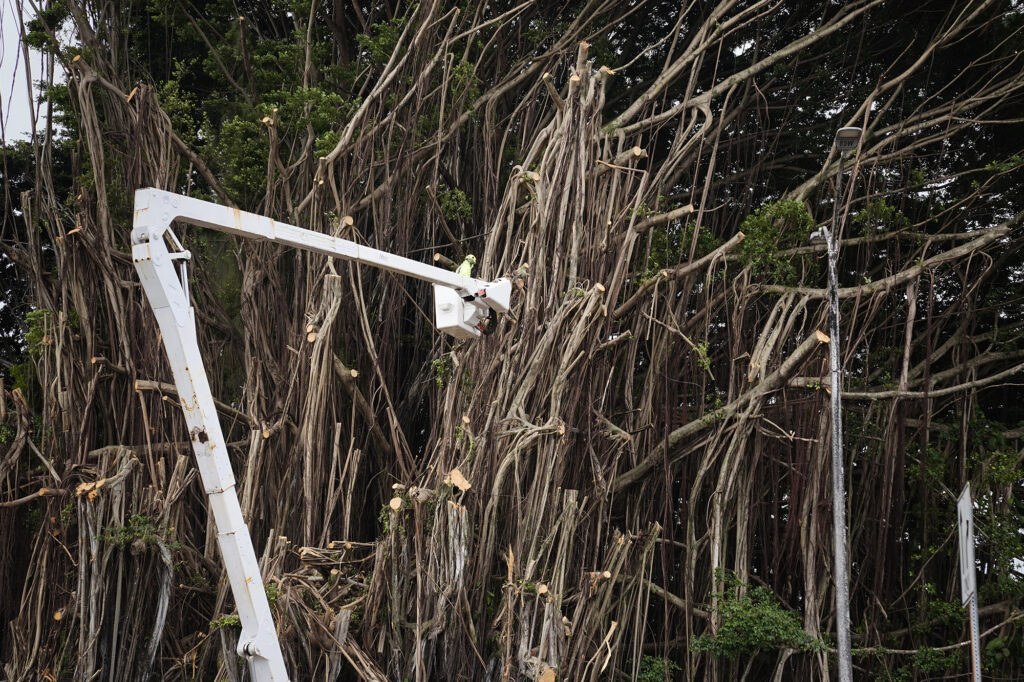
Alameda wants to sign an agreement with the state to allow the county to maintain and build walking paths at the site where Uncle Billy’s once stood. He also hired an arborist to assess the neglected banyan trees and is taking down ones deemed too far gone as well as clearing branches and shrubs to allow light to flow through the peninsula to make the area feel safe.
“I love that area. I’m gonna work really hard to revitalize it,” Alameda said.“If I’m not the person for the next term, at least we’ve gotten the momentum for that person to take the baton and finish it off.”
Site control is critical, Keohokapu-Lee Loy says, and ensuring the area is safe should be the next step. Redevelopment needs to be slow, though, to make sure it’s done right. Which is where the airport hotel comes in. Building transient accommodations at the airport could relieve economic pressure and buy more time for deep community input.
Short-term rentals have absorbed lodging needs in the past decade as Banyan Drive declined, taking much-needed housing away from local families, Keohokapu-Lee Loy said. Hula hālaus in town for Merrie Monarch often stay in county gyms and pile into family homes.
Inouye said a bill passed several years ago allows for hotels to be built on state-owned land at the Hilo and Kona airports. She and Keohokapu-Lee Loy want the Department of Transportation to send out an official solicitation for developers in March and have a contract by the end of the year.
They want to see a mid-size hotel on a state plot not far from the terminal. It’s already adjacent to sewer and water lines and is outside special management and evacuation zones. This would make construction quicker, Keohokapu-Lee Loy said. While there are some limiting factors, she’s hopeful that a hotel could open in the next two years.
“This is the time to pivot,” Keohokapu-Lee Loy said, “and look at opportunities where we can complement the desire of more economy in Hilo.”
CORRECTION: A previous version of this story misidentified the location of a 2025 banyan tree accident that killed two people.
“Hawaiʻi’s Changing Economy” is supported by a grant from the Hawaiʻi Community Foundation as part of its work to build equity for all through the CHANGE Framework.