Honolulu’s First Ocean Safety Chief Faces Big Decisions
Newly sworn-in Ocean Safety Chief Kurt Lager sat down with Civil Beat to discuss his plans for keeping Oʻahu beachgoers safer.
Now that Honolulu city lifeguards have their own standalone department — a long-awaited recognition of their importance to Oʻahu’s public safety — Chief Kurt Lager has big decisions to make about where to lead them.
Lager grew up in San Diego about a 10-minute drive from the beach. He was on his high school surf team and a junior lifeguard for the city of Del Mar, eventually parlaying that into a seasonal job that he continued working while earning a business degree from California State University San Marcos.
After graduation, he followed his then-girlfriend when she moved back to Hawaiʻi, joining Honolulu’s Ocean Safety team in 2005.
“We’re way more proactive now,” he said, looking back at how the department has changed since he joined more than 20 years ago. “I think we were a little more reactive when I first started.”
Lifeguards these days regularly approach beachgoers when the waves are big to make sure they have fins and are comfortable and experienced in rough water, he said, sometimes even paddling out around sunset to let swimmers know their shifts are ending soon.
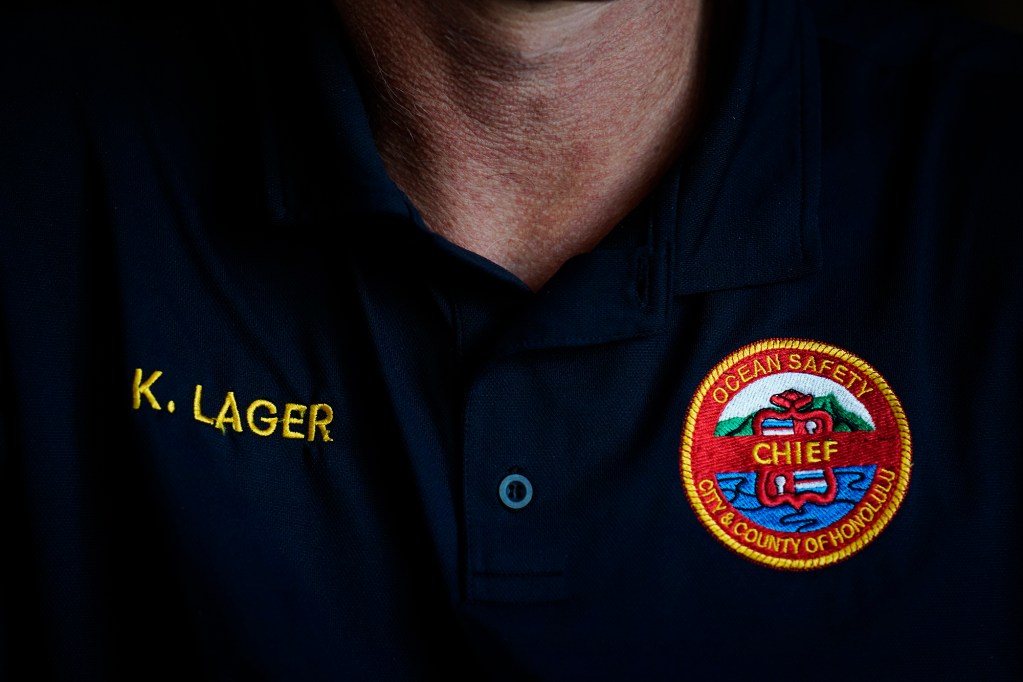
Lager, who has been the interim Ocean Safety chief for almost two years, was sworn in to the position this past December for a five-year term after the city’s new volunteer Ocean Safety Commission chose him to lead the department over his predecessor John Titchen and Ron Bregman, a retired lieutenant with the department.
He takes over a department where the dividing line between life and death is measured in minutes. Drowning is the leading cause of death for children in Hawaiʻi, and Hawaiʻi has the nation’s second-highest drowning rate, after Alaska.
With millions of beachgoers each year and social media luring people to the various nooks and crannies along Oʻahu’s shores, Lager’s challenge is to figure out how to spread his department’s finite lifesaving resources along a seemingly endless coastline of infinite hazards.
Retaining Honolulu Lifeguards For The Long Haul
Generally, Honolulu doesn’t struggle to hire new lifeguards. But ensuring they stay for the long haul can be tough, Lager said. Pay starts at $25.06 per hour and career advancement options are limited.
“We lose people because of all various different reasons,” Lager said. Some examples: because they leave for positions with the fire department or EMS, because they want to focus on school, because they need to take care of family or because wages aren’t high enough.
Since 2019, about 140 employees have left, according to acting Assistant Chief Adam Lerner, and about 180 have been hired.
Lager wants to talk to the city’s budget and human resources teams about elevating his department’s pay scale, though that could be a tough sell this year since the mayor’s office expects the next city budget to be flat.
“I’m trying to be responsible with our budget,” Lager said. “But public safety – you can’t compromise public safety at the same time.”
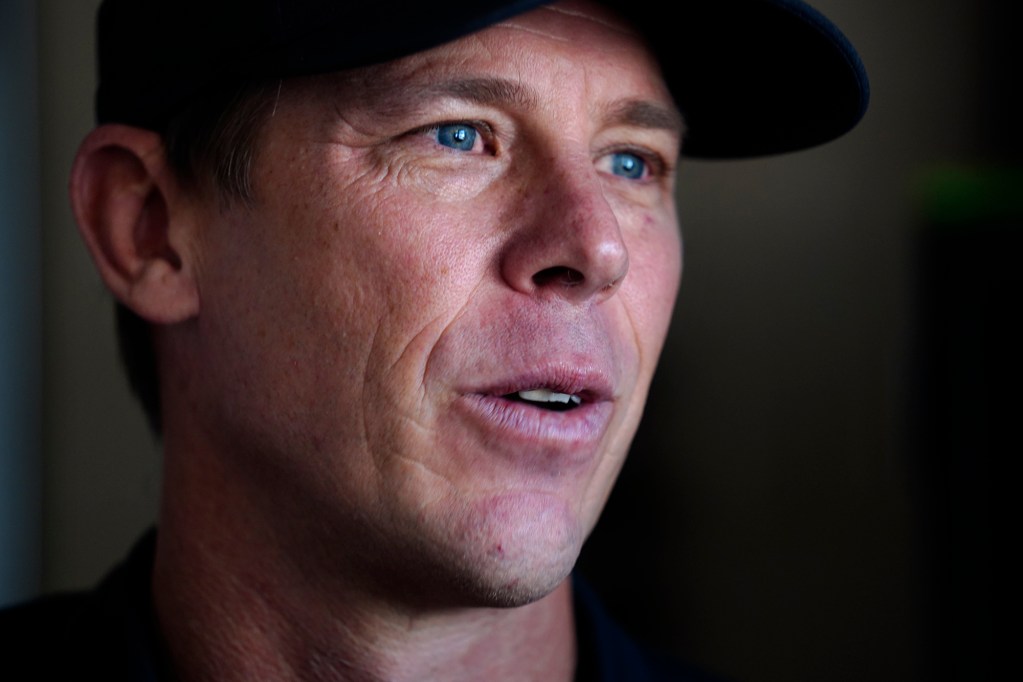
He also wants to provide more mid-level management options within the department. Since he joined the department in 2005, the number of lifeguards has more than doubled in some geographic districts, he said, rising overall from about 30 or 40 lifeguards to about 70.
“It’s a lot more people for a single captain to manage and look after,” he said.
By providing more leadership opportunities to climb the ranks as he did as a young lifeguard with ambitious ideas for improving the department, he hopes employees feel encouraged to stay and make their careers with Ocean Safety.
Deciding Which Beaches Need Safety Measures
Hotspots of beach activity aren’t static. The city has to remain vigilant about where to direct resources, since a beach that’s consistently empty now might teem with people only a few years in the future. Or overnight, after an Instagram post.
In 2023, Ocean Safety put up its first new lifeguard tower in over a decade at the popular snorkeling spot Kahe Point Beach Park, also known as Electric Beach. Its prime snorkeling offers beautiful views of sea creatures but requires a swim of a few hundred feet out into open water, and back against the undertow — a recipe for rescues.
While Kahe Point wasn’t a big destination when Lager first joined Ocean Safety 20 years ago, social media and word of mouth have led the department to establish a more permanent presence there.
“You see people going to places where they haven’t been before,” Lager said. “The younger generation are — they’re finding areas where they can go hide, or have fun.”
Lager plans to put up a lifeguard tower next at Sharks Cove, where he currently has two employees hang out in a truck to help educate prospective snorkelers, since each year some of them learn the hard way that winter is the North Shore’s season of giant, dangerous waves.
It’s not easy to figure out where hotspots such as Kahe Point, Sharks Cove and even China Walls in Portlock might crop up next, much less gather the resources to establish a presence there. Still, Lager said, there are things Ocean Safety can do.
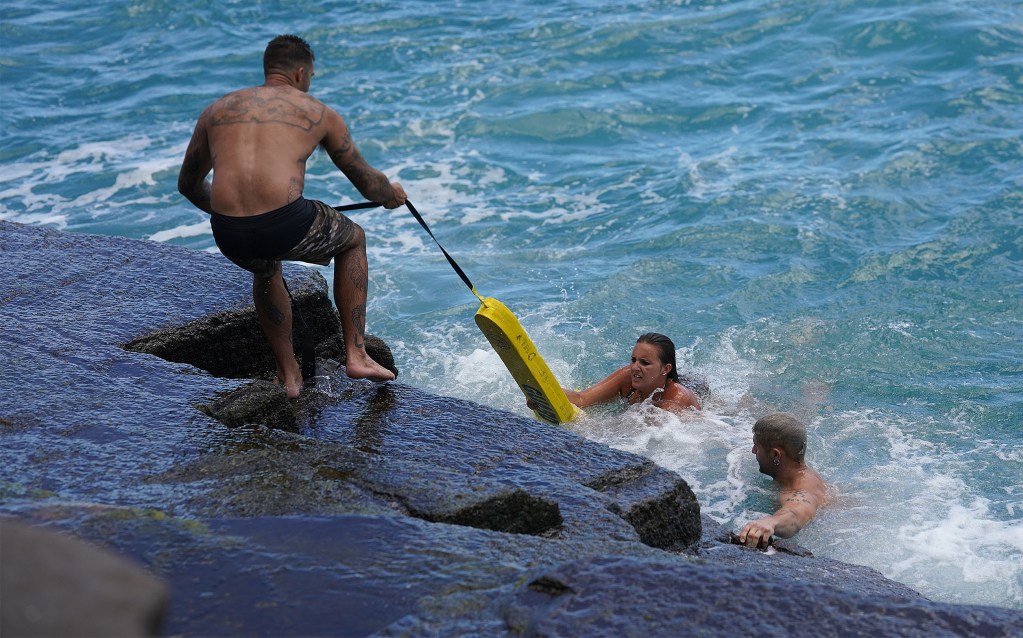
China Walls and nearby Spitting Caves have off-duty rescue tubes that anyone can use to help people safely make their way out of the ocean, and “we’re going to expand that on Oʻahu significantly,” he said. He said he’s working with the nonprofit Rescue Tube Foundation and hopes to at least triple the number of tubes, currently limited to about 30 in the area between East Honolulu and Kailua.
“We’re actually participating in a survey right now where our lifeguards are going out with phones and geolocating all the spots where they think an off-duty rescue tube is warranted,” Lager said, “and justifying why.”
Drones And Tablets For New Generation Of Lifeguards
As “a little bit of a tech geek,” Lager is keen to integrate drones into Ocean Safety’s work. While it’s still too soon to plan for bigger drones that could drop off buoys for people, he said smaller drones that provide video overviews of areas could be helpful for gathering information about hazards such as shark sightings and currents or to find people during search and rescue operations.
He also wants to trade the pen-and-paper logsheets that lifeguards currently use for tablets to make communication quicker and easier between administrative employees and frontline workers in the towers.
He’s under no illusions that the transition will be seamless.
“Managing change is always really difficult,” he said. “So I think that’s one of our challenges as we move over to new tablets, as we try to expand into different programs or potentially expand hours or increase coverage somewhere.”
But Lager also thinks big unorthodox changes — such as adding drones to their toolkit — are easier to advocate for now that Ocean Safety is its own department.
“Being able at this level to go and talk to the council members in advance and say, ‘Here’s what we’re working on, here’s what we’re trying to do, do we have your support?’” Lager said. “It’s been noticeably different.”