

Honolulu Homeowners Turn To Goats, Sheep To Mow Yard Ahead Of Fire Season
Flocks of livestock are not a typical city sight. But with wildfire season looming, they’re becoming an increasingly attractive prevention measure.
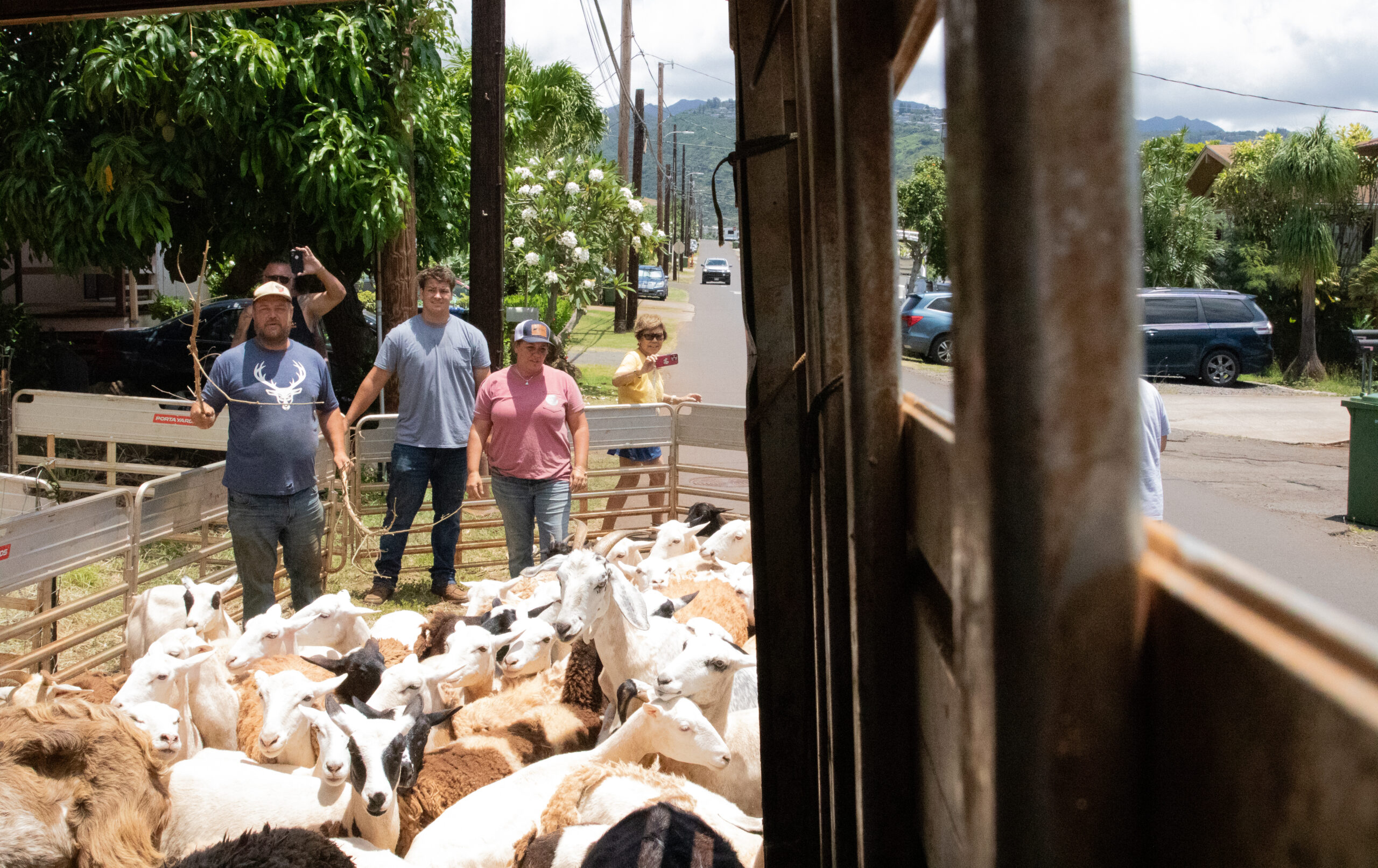
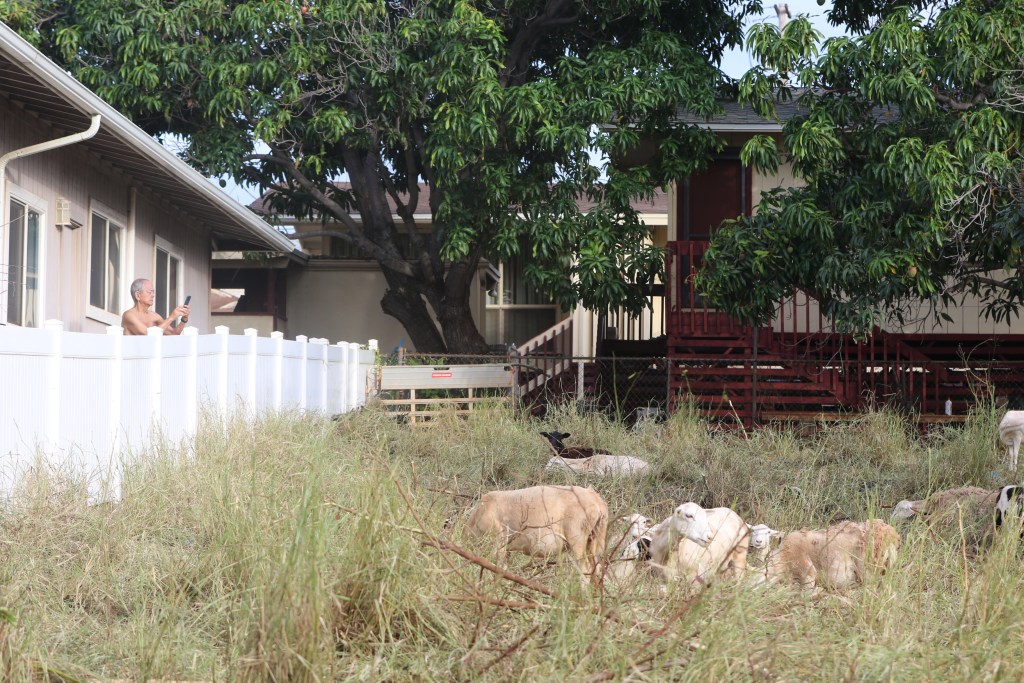
A traveling gang of goats and sheep have completed their three-night stint in the suburban sprawl of Kaimukī.
They came, they grazed and they conquered: It took less than 72 hours for the flock to mow down well over 2,000 square yards of overgrowth on a 21st Avenue property, eating all kinds of vegetation – even haole koa – and leaving only tufts of grass and a few pieces of trash.
But it isn’t a portable petting zoo. It’s community wildfire management in action, the freshly mown grass spelling peace of mind as the state faces an especially wildfire-prone weather forecast. For Oʻahu Grazers, which manages the ungulates, the residential feeding is an early foray into a relatively new realm: community wildfire management.
Interest is growing.
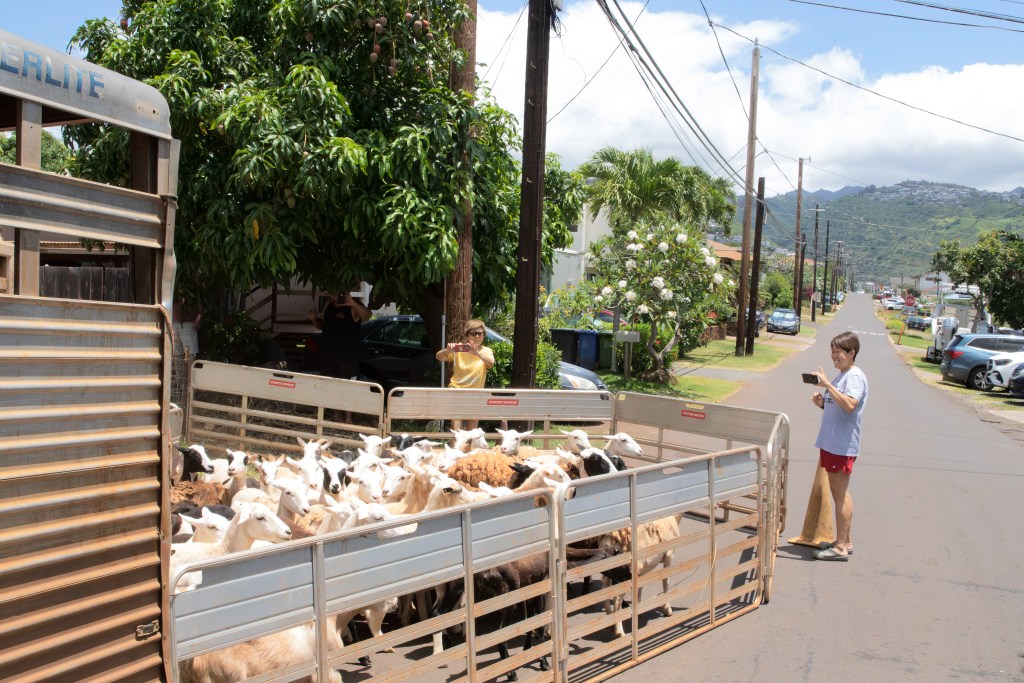
“It’s a big hit with the neighbors because they’ve never seen goats in Kaimukī or Honolulu,” said Cy Harris, whose family owns the mown land. Having livestock graze the 10,000-square-foot parcel has been a years-long goal for Harris, who believes machinery and weed whackers could never compete with the animals’ efficiency.
“I used to clean this lot,” he said. “I know exactly what it takes.”
They’re not nearly as loud as machines either, Harris said, letting out just an occasional bleat.

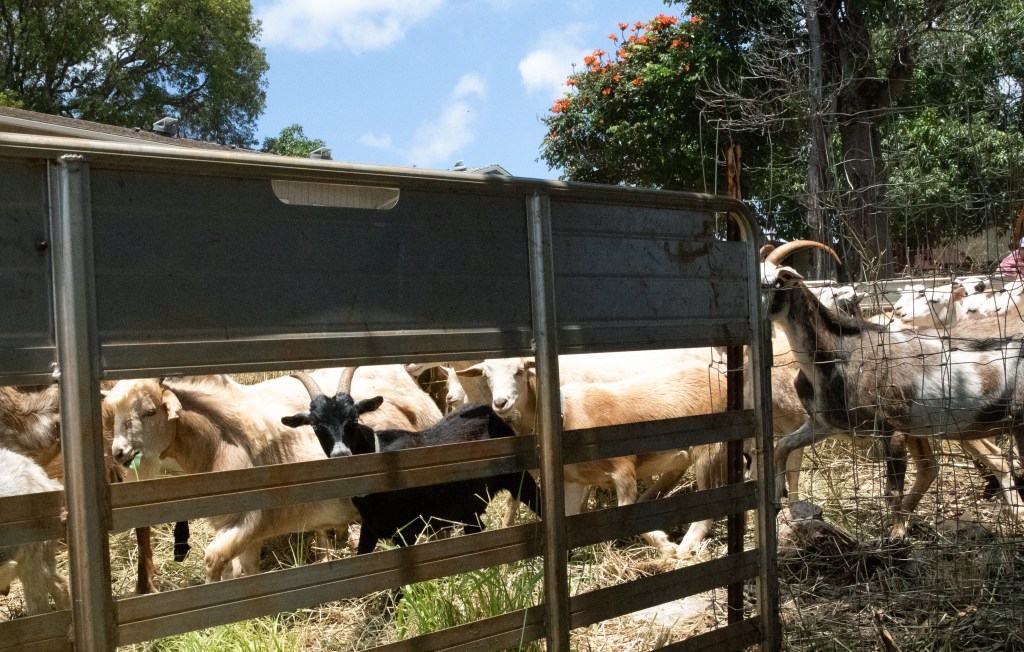
Oʻahu Grazers owners Dan and Raia Olsen know their animals’ capabilities too, mixing goats and sheep to mow as much vegetation as possible. For this particular parcel, 28 voracious goats ate the woodier and tougher plants; the 58 sheep, somewhat fussier eaters, munched the grass.
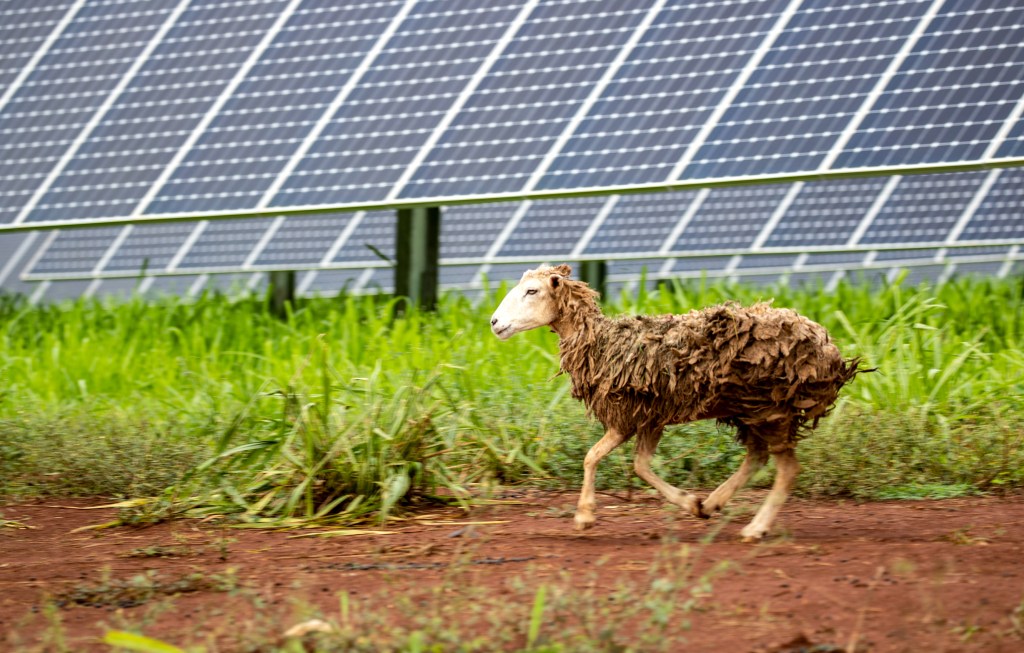
The Olsens have worked in the livestock industry for decades, but have mostly run sheep-grazing operations at five solar farms on O‘ahu.
The Kaimukī flock represents a small portion of their animals but even with total of 1,200 sheep, 200 cattle, 60 chickens and their 28 goats, they are starting to struggle to keep up with demand on Oʻahu and the neighbor islands.
That’s in part driven by people — and the state — looking to animals to help manage wildfire risk in the coming months as greenery dries and poses a risk of igniting.
“It’s going to be scary,” Raia Olsen said.
Domestic Animals, Wildfire
The animals were released onto the Kaimukī lot straight after another job, at Waiʻalae Iki Neighborhood Park, where they nibbled and trimmed vegetation for the local chapter of Firewise USA.
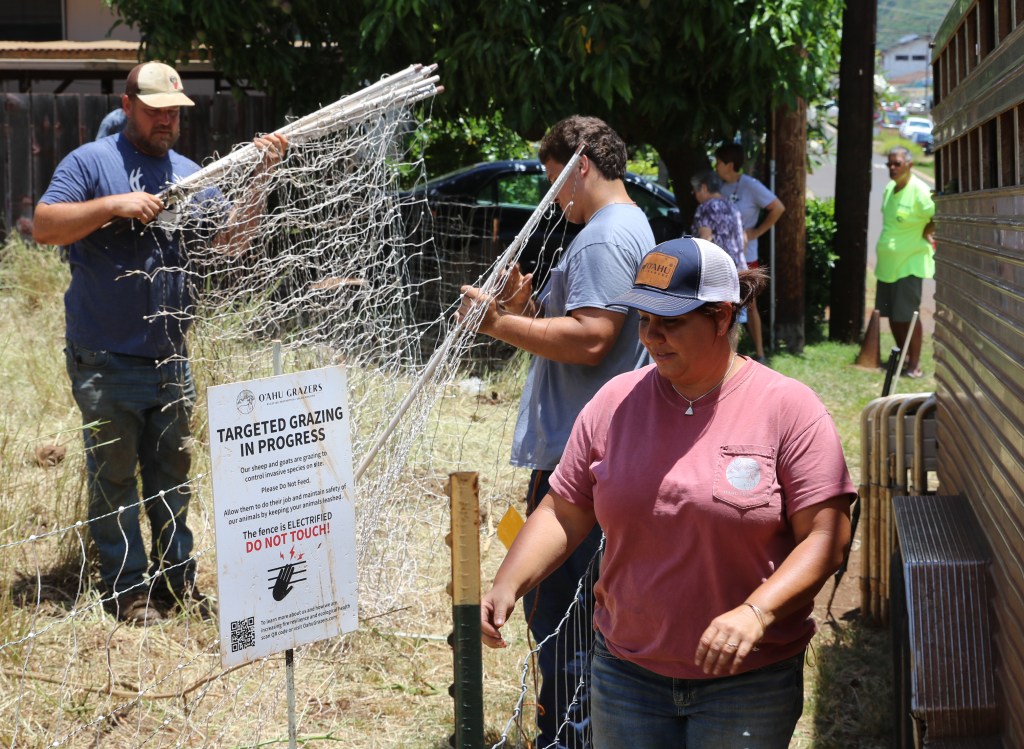
The park, like the Kaimukī property, was cordoned off with conventional and electric fencing to keep the ungulates focused on the problematic vegetation. Then the animals were left to do their job.


Prescription grazing is a relatively new practice in Hawaiʻi, especially on Oʻahu, despite the state’s more than 200-year history with livestock and ever-growing wildfire problems. Grazing can be a more cost effective and efficient way to manage vegetation, especially on steep slopes and other areas that machinery and humans cannot easily reach. That is why it is widely deployed on the U.S. mainland, where wildfire has been a more obvious and persistent issue.
Here, wildfire’s footprint, proportional to landmass, is among the largest in the country and the likelihood of fire is higher than 84% of U.S. That is true in East Oʻahu, too, where more than 300 wildfires covered more than 1,500 acres between 2009 and 2019.
Landscaping machinery has been the default option, at least until recently. In the wake of the 2023 Maui fires, which illustrated how problematic tracts of fallow and overgrown agricultural land can be, prescribed grazing was highlighted as one tactic to help Hawaiʻi cope.
Grazing features in the East Honolulu Community Wildfire Protection Plan, though weed whackers have continued to be the preferred vegetation management tool, at least until interest started rising for the services of outfits like Oʻahu Grazers.
“People in urban areas across the world love that they have goats and that natural, agricultural feeling right in urban environments. And it’s for fire mitigation,” said Elizabeth Pickett, co-executive director of Hawaiʻi Wildfire Management Organization.
On the Big Island, grazing has been used to help clamp down on invasive grasses in Pu’u Wa’awa’a as well as Ka‘ala Farm and Cultural Learning Center on the Leeward Coast. Kaua‘i Island Utility Cooperative has used sheep to keep the invasive guinea grass at bay on a nearly 200-acre solar farm. But none seem quite as urban as Kaimukī.
No matter where the work is done, it has multiple benefits, requiring less fuel and manpower while providing the benefits that animals bring, creating healthier soils and eventually providing meat to the community.
There’s virtually no cleanup either, as the animals either leave with the vegetation in their bellies or leave it behind, as fertilizer.
“This is protecting our lands, our waters, our people and growing food,” Pickett said.
Demand And Other Challenges
Carting and caring for the bleating weed eaters is not without its complications, however, especially as Oʻahu Grazers develops its operation and contends with statewide demand.
As the Olsens branch out, they’re receiving queries from all of the islands. That includes the Department of Transportation and other state agencies, which may benefit from grazing harder-to-reach spots around the island, such as in the hills and under power lines.
Sen. Tim Richards, who has more than 400 sheep on his Big Island ranch, says bringing sheep into the borderlands of agriculture and urban areas alleviates the wildfire problem while educating city residents on agriculture and what it takes to increase local food production.
“There’s no dark side to that,” Richards said.
The meat side of Oʻahu Grazers’ business has yet to flourish, despite heavy interest in that too, including from chefs. That’s largely due to a dearth of federally certified slaughterhouses on Oʻahu.
Small livestock operators have been waiting for years for a long-promised, state-funded facility to introduce meat from smaller animals, such as goats, pigs and sheep into the market. So for now, Raia Olsen said, they will have to ship their animals to either Molokaʻi or the Big Island for slaughter.
Their only other concern is agricultural crime. Their livestock has been shot with arrows, mauled by dogs, even stolen. That’s why they have guard dogs.
In Kaimukī, residents regularly sent them photos and videos. They chronicled the livestock’s work over the course of three days, especially relishing the unexpected birth of a goat on the property.
The animals spent almost a day longer than what was needed, Raia Olsen said, just to make sure they got every last scrap of food. They typically go for the tastiest vegetation first, or “the ice cream,” as she calls it.
“Then they come back for the salad, the peas,” she said. “They’ve got to clean the plate.”
“Hawai‘i Grown” is funded in part by grants from the Stupski Foundation, Ulupono Fund at the Hawai‘i Community Foundation and the Frost Family Foundation. Civil Beat’s coverage of climate change and the environment is supported by The Healy Foundation, the Marisla Fund of the Hawai‘i Community Foundation and the Frost Family Foundation.
