People Usually Get Away With Harming Hawai‘i’s Seals Despite Tourist Case
A Seattle visitor was arrested a week after lobbing a rock at an endangered seal on Maui. But cases involving people killing the seals are rarely prosecuted.
The response was swift.
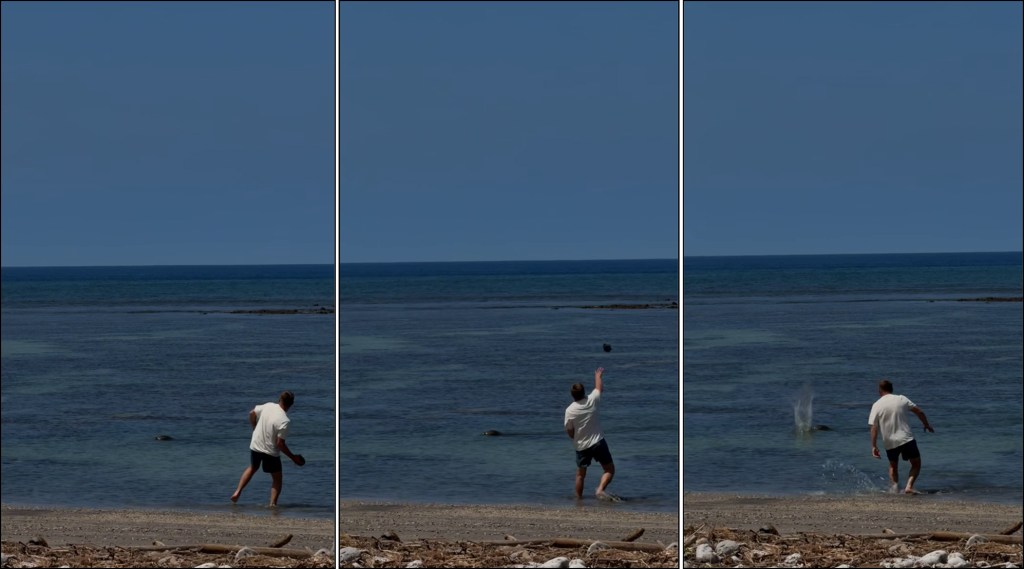
A week after a bystander’s cellphone video appeared to show a tourist heaving a coconut-sized rock at a Hawaiian monk seal swimming in calm waters off Lahaina, barely missing its head, federal authorities charged the Seattle resident with harassing the endangered animal.
On Wednesday, they arrested the person believed to be in the video: Igor Mykhaylovych Lytvynchuk, 38. He’s expected to appear in court in Honolulu on May 27.
Those decisive moves followed near-universal outrage as images of the startled male monk seal and a defiant Lytvynchuk went viral in Hawaiʻi and beyond, prompting calls for action.
Outside of high-profile incidents such as that, authorities struggle to prosecute those who harass or even intentionally kill Hawaiʻi’s monk seals — one of the world’s most endangered species and a culturally important animal in the islands.
Protecting the mammals from human harm, advocates say, remains a complex and uphill battle.
Most incidents don’t get caught on camera. Federal enforcement is stretched awfully thin across the Pacific region. Misinformation about the seals competing with fishermen for food, seal advocates say, continues to spread through local communities and spur attacks.
And state lawmakers just replaced $7.5 million worth of green fee funding to expand community-led visitor education programs that could have helped the situation with their own pet projects, most of which barely relate to environmental protection.
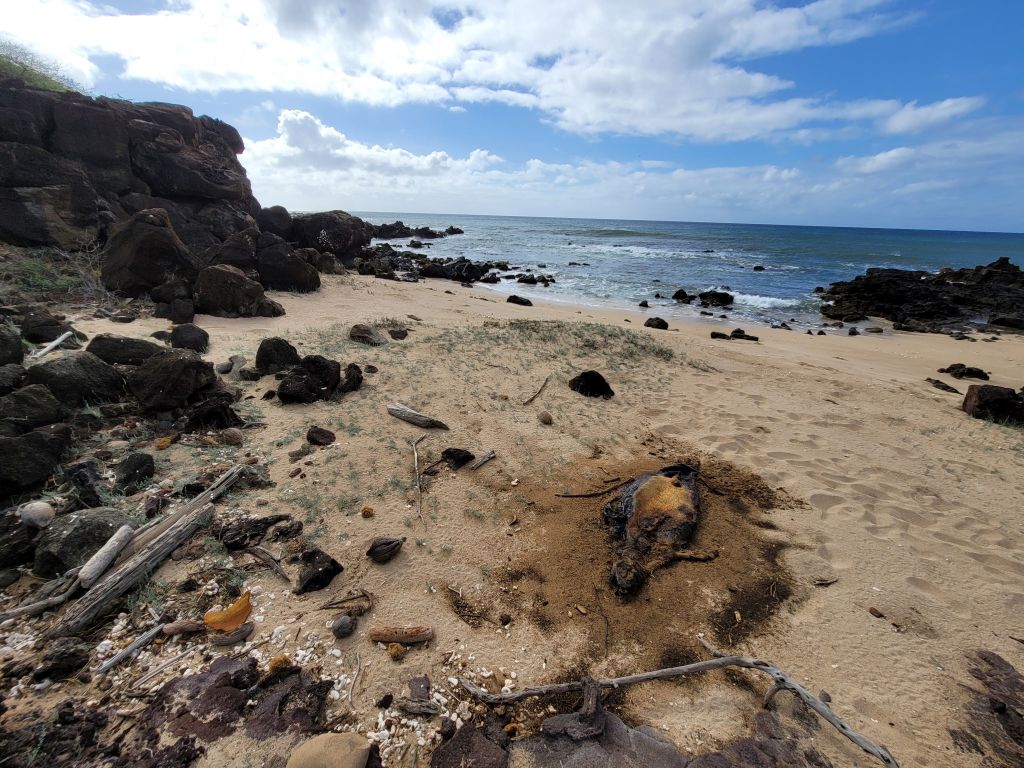
Amid all those challenges, decomposed seal carcasses are still regularly found in the sand, snagged on reefs and floating in nearshore waters in ways that cause wildlife responders to suspect the animals were intentionally killed.
“This is one of the most critically endangered mammals on the planet and you’re seeing it dissolve in front of you. It’s heartbreaking,” said Todd Yamashita, who regularly encounters those scenes as Molokaʻi’s lead coordinator for the nonprofit Hawaiʻi Marine Animal Response.
”Every dead seal has a story to tell,” he said, “if you get to it in time.”
Yamashita and other seal advocates say more public outreach is needed, both to educate tourists ahead of any seal encounters and to combat the misinformation.
The day after the Lahaina monk seal was attacked, lifeguards on Oʻahu found a seal floating lifeless offshore in Nānākuli. A photo of the animal posted to Facebook by one of those lifeguards, Danny Kim, shows what appear to be white markings scraped across the seal’s dorsal end.
In his post, Kim said he believed a boat hit the animal. Officials with the National Oceanic and Atmospheric Administration announced last week they plan to do a post-mortem exam to try and determine what happened. The seal wasn’t tagged, but NOAA staff later identified it as RH32, or Kaʻale, a 10-year-old male from that part of the island.
Christopher Latronic, a spokesperson for the Honolulu Ocean Safety Department, said Wednesday that the lifeguard speculated upon discovering the untagged seal that it might be one of two seals they regularly see in the area. “They have not seen any seals since,” he said.
More Problems On Molokaʻi
Some 1,600 Hawaiian monk seals are now estimated to live in the wild, roughly 100 more than federal officials pegged the population to be several years ago.
The slight gains come after hunting decimated the seal’s population in the mid-19th century, according to NOAA. Habitat loss, hookings and entanglements in fishing gear and lack of food have slowed the species’ recovery, the federal agency says.
Some 400 monk seals live in the Main Hawaiian Islands, often hauling out to rest and even give birth on popular beaches. Kaimana Beach, on the edge of Waikīkī, has become a popular birthing spot in recent years. The rest live in the uninhabited Northwestern Hawaiian Islands, which are protected under a federal marine monument.
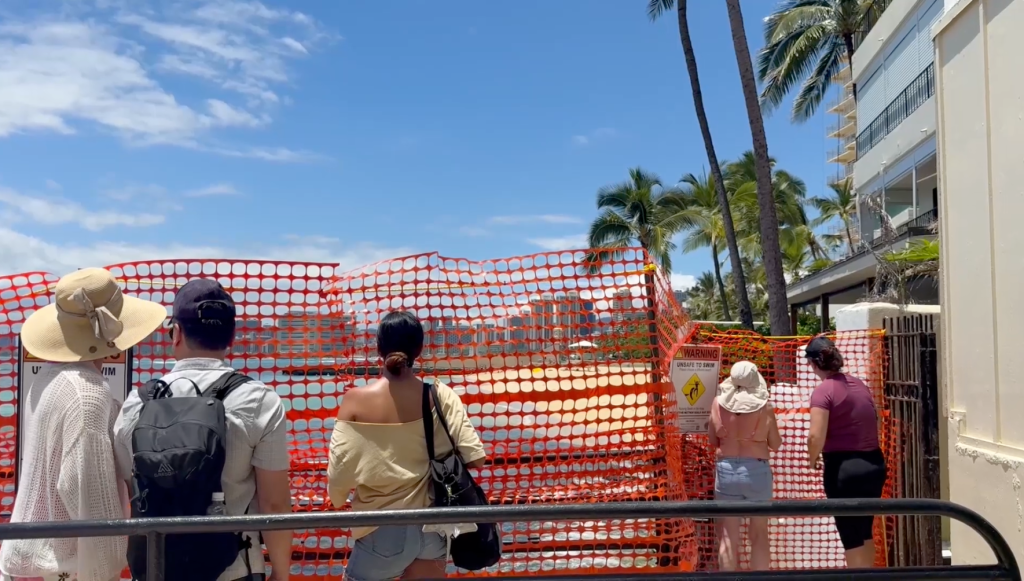
Volunteers installed temporary fencing and warning signs at Kaimana after the monk seal Kaiwi gave birth to a pup May 3, two days before the attack in Lahaina. Mom and pup are expected to stay at Kaimana for several weeks until the pup weans, with state wildlife officers and volunteers keeping watch.
On Maui, Mayor Richard Bissen vowed to personally see that Lytvynchuk, who was vacationing there, would be prosecuted to the fullest extent of the law. If convicted, Lytvynchuk faces up to one year in prison for each charge plus fines of up to $50,000 under the Endangered Species Act and up to $20,000 under the Marine Mammal Protection Act.
Initially, authorities believed the seal nearly hit was a female named Lani but later determined it was a different, male seal, Bissen said in an Instagram post Thursday.
Across the 8-mile channel from Maui on Molokaʻi, Yamashita said he’s responded to around 10 suspicious seal deaths since 2023. That’s despite a concerted community effort in recent years, he said, to patrol certain beaches and break the island’s recent history of attacks.

Yamashita blamed Molokaʻi’s spate of attacks on a deliberate misinformation campaign by a vocal minority of locals egged on by outside fishing interests. The group, he added, claims the seals compete with local fishers for food and don’t belong on the island.
“There was real embarrassment among the broader community that this was happening, and so there’s been a real effort to educate,” Yamashita said Wednesday.

Dead monk seals stopped appearing on Molokaʻi’s southwestern shore after community members ramped up efforts to monitor those beaches earlier this decade. But then, he said, carcasses started appearing in new places – mostly along Molokaʻi’s northwestern shoreline, such as Mo‘omomi Beach and other parts that are harder for the public to access.
It’s important, the Molokaʻi native said, that his community realize the spate of monk seal deaths never really stopped there, even after all the embarrassing publicity from several years back.
“You don’t see a completely healthy seal snagged on the reef because it’s dead, right?” Yamashita said. “You don’t see them laying on the beach dead. That is not typical.”
NOAA has not confirmed any additional monk seal intentional killings since RQ76, or Mālama, at ʻŌhikilolo near Mākua Beach on Oʻahu in 2023, said Rachel Hager, a spokesperson for NOAA’s fisheries office.
Bissen, who also oversees Molokaʻi as mayor of Maui County, declined this week to say whether there’s anything he could do to protect monk seals there. Bissen’s focus is on the Lahaina monk seal attack, his communications team wrote via email, and its legal implications.
Enforcement Challenges
Out of at least 16 incidents of confirmed, intentional monk seal killings by humans in the past 17 years that remain unsolved, federal officials have only managed to prosecute one case. That incident, on Kauaʻi, dates back to 2009.
Hager said the agency needs clear evidence it can act on in order to successfully prosecute those who harass or kill the seals. Asked about NOAA’s budget and staffing levels, Hager said the agency does not comment on personnel issues.
Martina Sagapolu, assistant director of the NOAA Office of Law Enforcement’s Pacific Islands Division, said in 2024 that there were fewer than 12 people to cover enforcement of the entire U.S. Pacific region, including Hawai‘i, Guam and other U.S. territories.

The Pacific represents the smallest of the OLE’s five divisions but has to cover the largest area, according to Sagapolu, representing some 1.7 million square miles.
The state, however, recently added three Aquatic Resources Division positions on Molokaʻi, funded through the University of Hawaiʻi, to support the community’s efforts to monitor wildlife there including monk seals.
“We’re seeing a handoff,” Yamashita said, from federal authorities to state and local officers taking a bigger role help protect the seals.
Among the $7.5 million in green fee tourism outreach funding cut by the Legislature was a $700,000 proposal to work with the tourism industry on better visitor outreach and more “culturally grounded messaging that promotes safe wildlife interactions,” according to a statement from the Department of Land and Natural Resources on Thursday.
Those dollars also would have funded a pilot marine protected species reporting app, the agency said, for the community to help report a host of threats related to Hawaiʻi’s wildlife, including monk seals. The project was recommended by Gov. Josh Green’s volunteer Green Fee Advisory Council, but the Senate removed its funding last month.
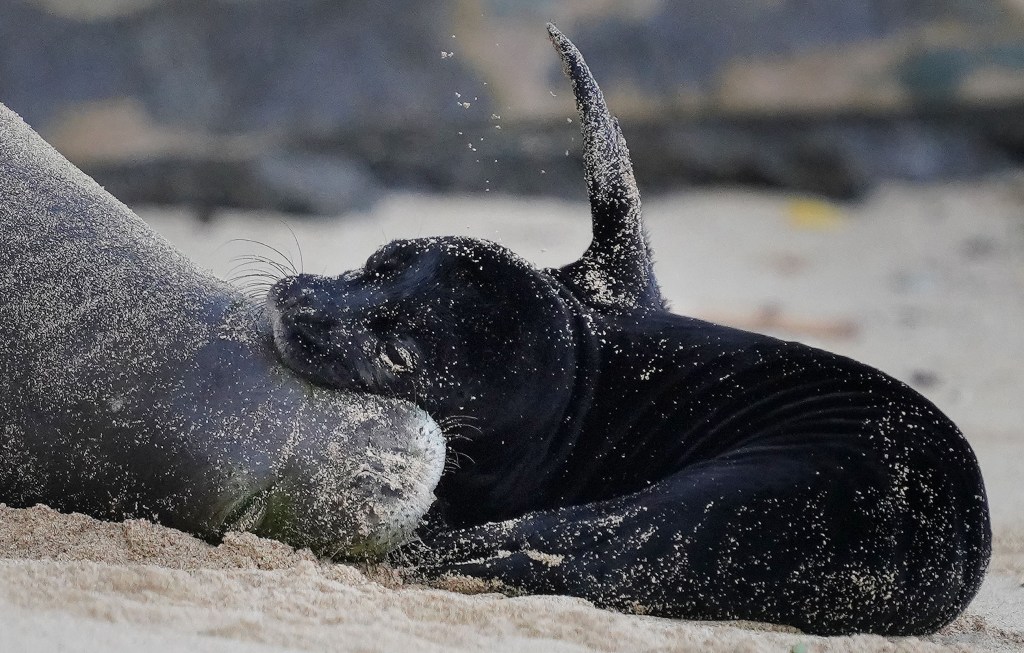
On Molokaʻi, Yamashita said, most community members care deeply for the monk seals. Volunteers work with Hawaiian charter school students to thoughtfully name the seals and foster a deeper connection with the native animals.
“What’s its family history? Who does the seal come from? And what was the environment like when it was born, or where it was born? And we take all of these things and we haku – we weave them into a name,” Yamashita said.
“It gives these kids ownership,” he said. “It tells them that this is your resource. It’s important enough that you’re the one who names it, and your kuleana from this point is to acknowledge the importance of the seals.”
Civil Beat’s coverage of climate change and the environment is supported by The Healy Foundation, the Marisla Fund of the Hawai‘i Community Foundation and the Frost Family Foundation.