

Sewage 3 Feet Underground? Hanalei Pushes For $19 Million Sewer System
North Shore residents evaluated cesspool alternatives as part of a federal grant allowing a Kaua‘i nonprofit to study the area’s groundwater and engage residents.
The water table sits just 3 feet below the surface of the ground in some parts of Hanalei on Kaua‘i’s North Shore. That’s a problem when the coastal town has roughly 115 cesspools dug down about three times that deep, causing untreated sewage to enter the groundwater and then make its way to the surrounding streams and the island’s iconic bay.
In addition to sometimes making people sick, the bacteria, nutrients and other chemicals in the wastewater have been linked to algae overgrowth and coral disease, threatening the marine environment.
Hanalei has been looking for a solution to its wastewater challenges on and off for decades. Its latest effort culminated in a yearlong wastewater planning study led by a local nonprofit, The Hanalei Initiative. It recommends the community pursue a liquid-only, pressure sewer system that will cost $19.26 million over 30 years. That determination was based on the system’s cost, environmental benefits, long-term resilience and ability to minimize disturbing soils in areas with Native Hawaiian ancestral remains, or iwi kūpuna.
“You talk to everybody in the summertime, when the waves go flat and the water kind of sits in the bay more, and the frequency of earaches and things like that go up significantly,” said recently retired North Shore firefighter Dane Smith, a project manager for The Hanalei Initiative.

Native Hawaiians often buried their loved ones in sand dunes, their yards or other areas their families would guard. Between 1993 and 2024, iwi kūpuna at 24 parcels in Hanalei were impacted by development work, according to The Hanalei Initiative. In some cases, remains were found 1 foot below the surface.
Joel Guy, executive director of The Hanalei Initiative, said any cesspool solution the town pursues must incorporate cultural stewardship.
“You’ve got to take care of the place first,” he said.
The North Shore town is one of several communities around the islands looking for alternatives to the state’s 83,000 cesspools, all of which need to be converted to modern septic tanks or connected to sewer by 2050. The neighbor islands bear the brunt of them.
Search For A Cesspool Alternative
Located in the northern district, or moku, of Halele‘a, lush Hanalei has sustained generations of Native Hawaiians with fertile soils, expansive taro patches, or lo‘i kalo, and abundant fishing grounds. But as the town was built, its low-lying elevation, shallow groundwater and fast-draining, sandy soils have made it difficult to deal with wastewater.
The four Hanalei sites that Surfrider Kaua‘i monitors for water quality have a mix of bacteria counts. Bacteria levels tend to be lower out in the bay, but the test site at the mouth of the Hanalei River consistently has high levels of enterococcus, which indicate fecal pollution.
Cesspools dispose of but do not treat wastewater. In Hanalei, these systems are listed as the highest priority for conversion. The town also has about 180 septic systems, which rely on leach fields that offer minimal treatment by gradually filtering wastewater through the soil.

The Hanalei Initiative installed monitoring wells at six locations to study the town’s groundwater over a year. It found that groundwater sits anywhere from roughly 3 feet to 10.5 feet below the surface in those locations — fluctuating throughout the year — and that groundwater levels often rise into cesspool pits and saturate leach fields during wet periods, causing effluent to seep into the environment. Sea level rise is expected to compound that problem.
Matt Rosener, a hydrologist and water resource engineer with The Hanalei Initiative, said for Hanalei and for a lot of coastal plains around Hawai‘i, the water table will rise at least as high the sea level does.
Funded by a $218,000 U.S. Department of Agriculture Technical Assistance and Training grant, The Hanalei Initiative evaluated four options: keep the cesspools, convert them to septic systems, convert both cesspools and septic systems to aerobic treatment units, or connect to a pressure sewer system.
Aerobic treatment units use aerobic bacteria to break down organic matter, often used for properties close to streams and rivers or where there’s shallow groundwater. A pressure sewer system is fully sealed and pressurized so it’s less impacted by groundwater intrusion or sea level rise.
The Hanalei Initiative recommended a liquid-only sewer system, which would remove solids at each property using a septic tank and pump only liquid wastewater to a centralized treatment plant. These systems are designed to connect to existing septic tanks and aerobic treatment units, so properties that have already upgraded their cesspools can often reuse their existing tanks.
The sewer system would remove 100% of pathogens and about 70% of nitrogen from effluent. Aerobic treatment units would remove 90% of pathogens but, depending on the soil depth, only about 50% of nitrogen. Septic systems would remove 40% of pathogens but only 25% of nitrogen.
Sewer would also require less soil disturbance. Converting a single cesspool to a liquid-only sewer system would require excavating 81 square feet, compared with 375 square feet to install a septic tank and leach field for a three-bedroom house.
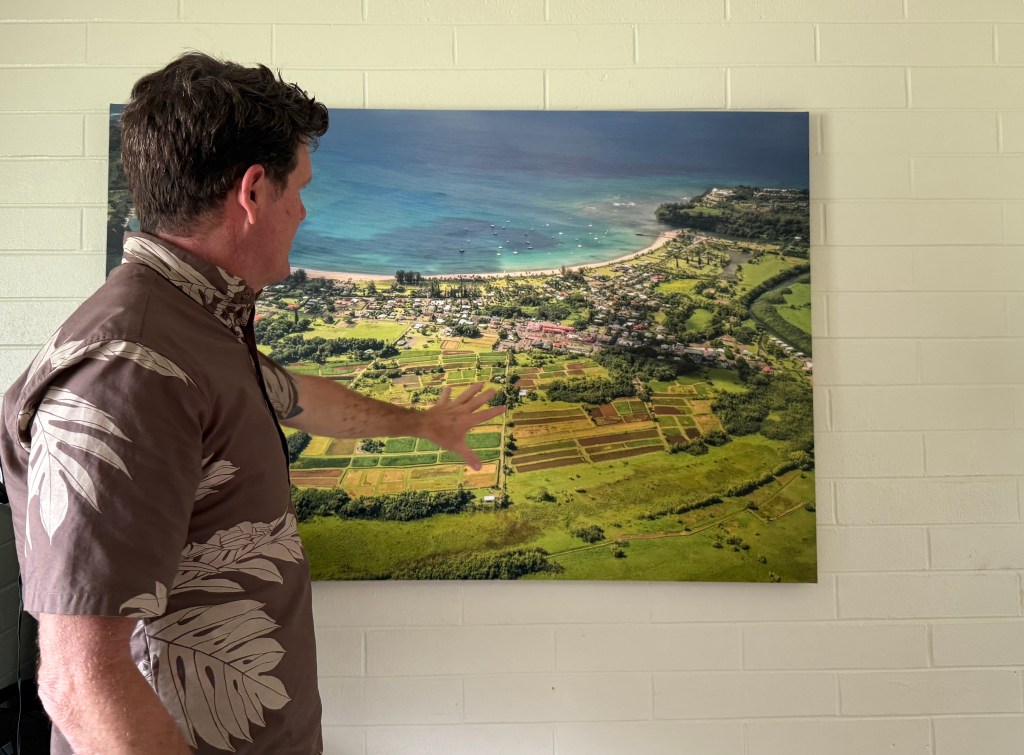
“In terms of your potential to uncover bones, you know, it’s often times in the drain field areas, because it’s kind of like digging up the whole yard for some of these Hanalei properties,” Rosener said.
The system would consist of small diameter pipes — roughly 1.5 to 4 inches — that can be buried shallow, such as a foot or two below ground.
‘Our Lands Are Layered With Iwi Kūpuna’
The Hanalei Initiative’s efforts build on those of the Hanalei Watershed Hui, which in the early 2000s began exploring wastewater treatment options. The hui’s work led to cesspool replacements along the Hanalei River and Waipā Stream.
But there wasn’t much interest in converting cesspools in 2017 when the group had a grant to cover half the cost for 75 cesspools between the Hanalei River and Wai‘oli Stream. Maka‘ala Ka‘aumoana, executive director of the Hanalei Watershed Hui, said the nonprofit ended up having to return the money because only three property owners were interested. Some told her they’d wait for the government to take care of their cesspool problems.
“I personally went door to door and could not convince people to install,” she said.
Now years later, Guy said there’s much more of an appetite to find solutions. Over 100 people from over 30 organizations were involved in the current project, which included four community meetings to gather input and share findings.
“If you get to that decision-making without the community involved, you’re up against a real challenge to implement, no matter how beneficial the solution,” Guy said.
Among community members’ concerns were impacts on iwi kūpuna. Native Hawaiian ancestral remains have been encountered in Hanalei during new home construction, septic installations, leach field excavations, grading and other activities. State law requires that burial site disturbances be reported to police and the State Historic Preservation Division.
“Any wastewater solution on the North Shore — or anywhere in Hawai‘i — must begin with one non-negotiable truth: Our lands are layered with iwi kūpuna,” said Megan Wong, a North Shore resident.
Wong shared some of her knowledge about iwi kūpuna stewardship with The Hanalei Initiative and attended some of their community meetings. She is part of Nā Hala o Naue, a group that does cultural monitoring and has been encouraging North Shore property owners to proactively conduct archaeological inventory surveys.
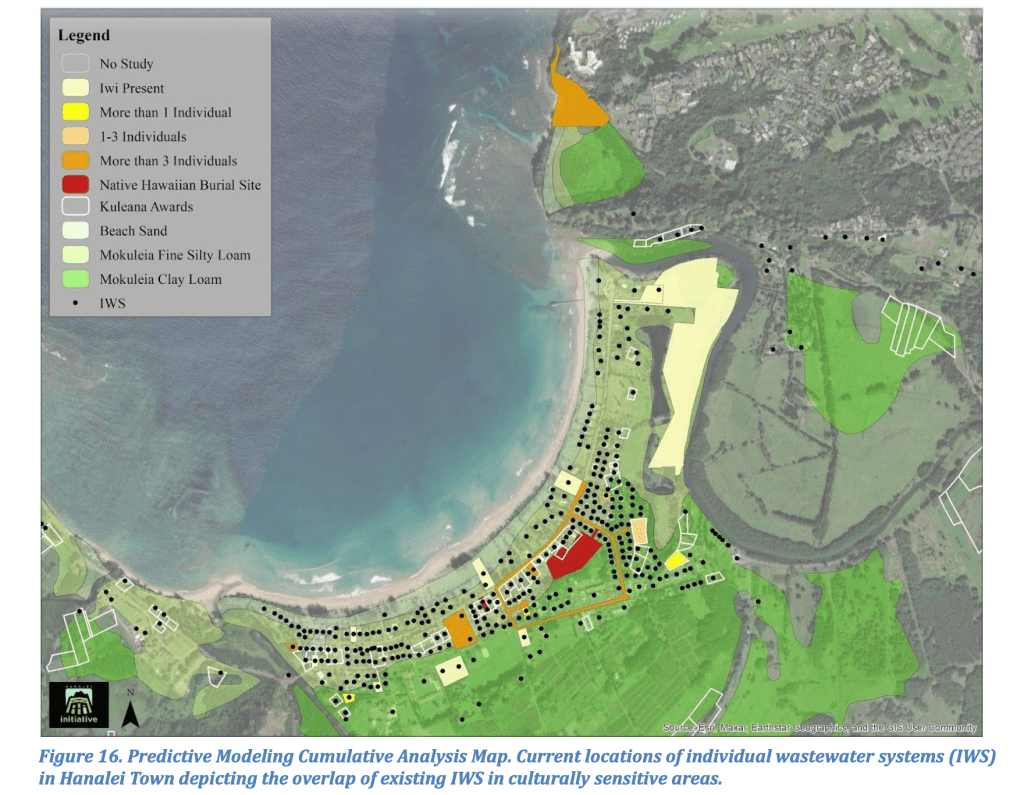
The Hanalei Initiative’s project meetings included education on burial protection laws, past archaeological findings in Hanalei, how existing cesspools and septic tanks overlap with those culturally sensitive areas, and the importance of minimizing ground disturbance and conducting proper archaeological studies.
Wong, who supports The Hanalei Initiative’s project, said that protecting the environment and iwi kūpuna should never be in conflict. She thinks the project has an opportunity to set a new standard that truly prioritizes iwi kūpuna from the beginning of planning, not as an afterthought once construction begins.
Guy said it was rewarding to bring the community together and have challenging discussions before more iwi kūpuna are found.
“When you have those tough discussions and there aren’t bones coming out of the ground, it’s so much stronger than waiting till you discover bones,” he said.
Climate Change Resiliency
Areas with iwi kūpuna, such as Hanalei, need flexibility that traditional wastewater systems don’t offer, said Stuart Coleman, executive director of Wastewater Alternatives and Innovations, a nonprofit that helps residents and communities transition away from cesspools. Under liquid-only systems, pipes can be installed using directional boring — in which installers have cameras to help them avoid rocks, tree roots and iwi.
He added that these systems are also a good fit for coastal areas because they’re better prepared for climate change and sea level rise.

Hanalei is not the only community to look at sewer. Rosener, who also works in Washington State, said several coastal communities on the mainland are doing so because their septic systems are failing as sea levels rise. Locally, Hawai‘i island’s Miloli‘i and Puakō are also looking at liquid-only sewer systems.
In Miloli‘i, Coleman’s nonprofit completed a preliminary engineering report and fiscal impact study for the system. The community is figuring out its next steps.
In Puakō, the local nonprofit Puakō for Reefs is working on selecting its sewer route and creating a Community Facilities District to help pay for the system, which would be run by the county and connect to the private Mauna Lani treatment plant. Wastewater from cesspools and inadequate septic tanks has caused coral cover on Puakō Reef to fall from 70% to 7% over the last 50 years, studies show.
More: Can This West Hawaiʻi Coral Reef Be Saved From Sewage Runoff?
As of Feb. 25, Puakō for Reefs and Hawai‘i County have signed a memorandum of understanding to collaborate on the early planning, coordination and evaluation of a community-driven wastewater solution, said Tom Callis, a spokesperson for Hawai‘i County.
“We don’t have all the answers yet, but we have a pledge to collaborate and find solutions together,” Hawai‘i County Mayor Kimo Alameda said in a written statement. “We’re exploring a four party model that appears promising: combining philanthropy, county support, property owner contributions, and private wastewater companies. This blended approach could help cover capital and operating costs while making wastewater treatment affordable and sustainable for small shoreline communities.”
On Kaua‘i’s South Shore, the Kōloa/Po‘ipū community is starting to discuss what to do about its roughly 670 cesspools. Those cesspools are a major impediment to residents expanding their homes for family members, said Laurie Makane‘ole of the Kōloa Community Association.
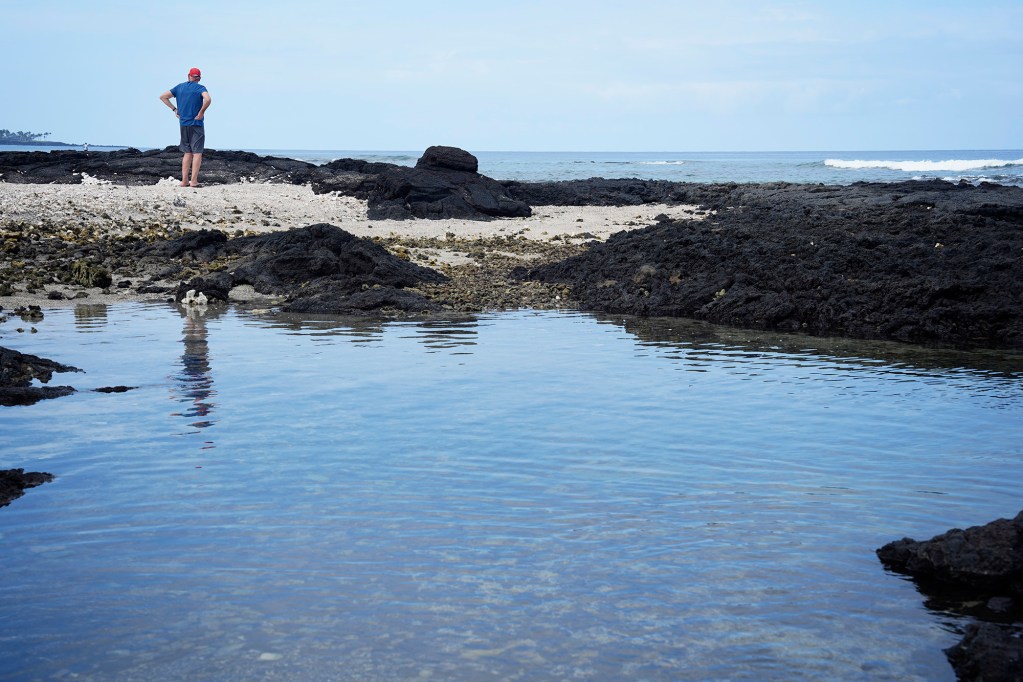
The area is challenged by lava rock, which makes cesspool conversions difficult and costly. The association’s goal is to gather information so that they can share with the community what its options are.
Hanna Lilley, Hawai‘i regional manager for the Surfrider Foundation, said in an email that Hawai‘i needs a decentralized wastewater approach to accommodate the unique situations and challenges of each area. Surfrider has joined WAI’s initiative to bring together stakeholders from the wastewater industry, government, academia and community to build the technical, managerial and financial frameworks needed to operate and sustain decentralized systems at scale. This will allow for community-led and culturally grounded decision-making to guide how systems are sited, designed and implemented.
Back on the North Shore, The Hanalei Initiative is partnering with the U.S. Environmental Protection Agency to fund a preliminary engineering study, which would narrow down the system’s design, costs and other details, such as whether the system would connect to the existing private Princeville wastewater treatment plant or to a new one that would be built in Hanalei.
The nonprofit recognizes that the installation and maintenance costs for the sewer system will be a challenge for many residents, though one positive is that cooperative or community-based financing models can be used. Hanalei is home to both the uber-wealthy and generational farmers and families who struggle to avoid being priced out. Its study estimates that the average cost to connect an individual wastewater system with five bedrooms or less to liquid-only sewer will be nearly $74,000 over 30 years.
“For the homeowner to bear those costs seems like a challenge we’re never going to overcome,” Guy said. “There’s families that don’t have that money.”
Kaua‘i County’s Housing Agency hopes to launch a second phase of its Cesspool Conversion Grant Program with a $1 million loan from the state Department of Health. During the program’s first year, the county received 340 applications and awarded $20,000 each to 100 homeowners, covering about half of the cost to convert a cesspool to a septic system. The county said its goal is to reopen applications early in the next fiscal year, which starts July 1.
The county oversees about 50 miles of gravity sewer in Līhu‘e, Hanamā‘ulu, ‘Ele‘ele, Waimea, and along Kūhiō Highway in Wailua and Kapa‘a. Troy Tanigawa, county engineer with the Department of Public Works, said the county has tried to expand its sewer system in the past. Decades ago, the Wailua House Lots community was asked if it wanted to connect to the Kapa‘a system, but they said no.
Soon, the department will be studying what it would cost and look like to connect the Kawaihau neighborhood to sewer. Kawaihau sits at a higher elevation than the county’s Wailua wastewater treatment plant, which would allow wastewater to flow downhill.
Tanigawa added that a couple of staffers from the department reviewed The Hanalei Initiative’s study and that he supports Hanalei’s efforts to find a cesspool alternative. The closest county-owned treatment facility is roughly 25 miles away in Wailua and doesn’t accept wastewater from outside entities.
“If the community wants to look at better ways to manage wastewater over there, I’m all for it,” he said.
Reporter Taylor Nāhulukeaokalani Cozloff contributed to this story.
Civil Beat’s reporting on Kauaʻi is supported in part by a grant from the G. N. Wilcox Trust; coverage of climate change and the environment is supported by The Healy Foundation, the Marisla Fund of the Hawai‘i Community Foundation and the Frost Family Foundation; reporting on fresh water issues is funded in part by the Ulupono Fund at the Hawai‘i Community Foundation.

