

Kaua‘i Wants To Expand Its Only Landfill — Again
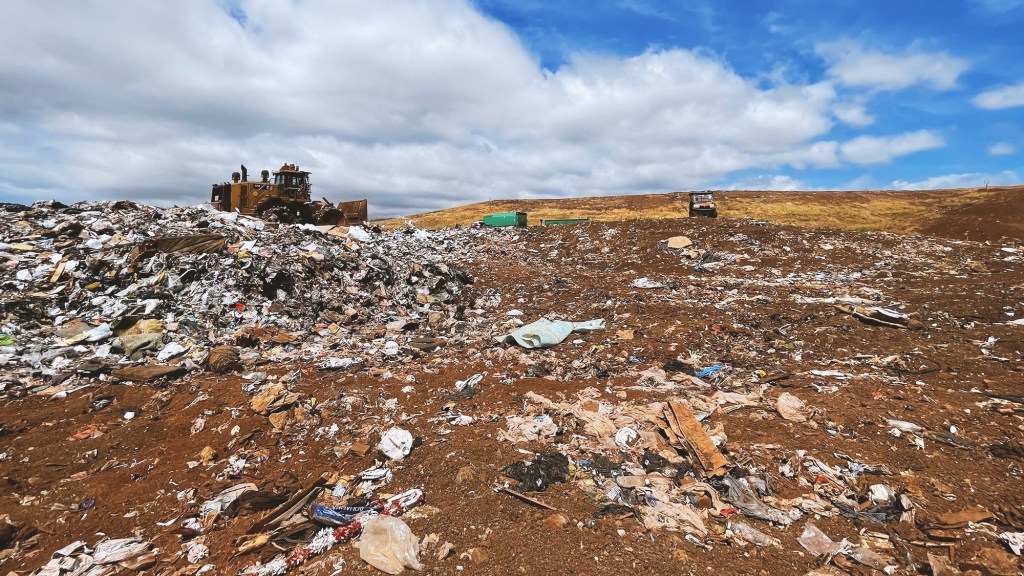
The island’s sole permitted landfill in Kekaha will fill up in just four years.
With a new landfill still a decade away from opening, the Garden Isle is running out of room for its trash. So, to buy time, the county hopes to expand its 73-year-old Kekaha landfill — at a cost of up to $43 million.
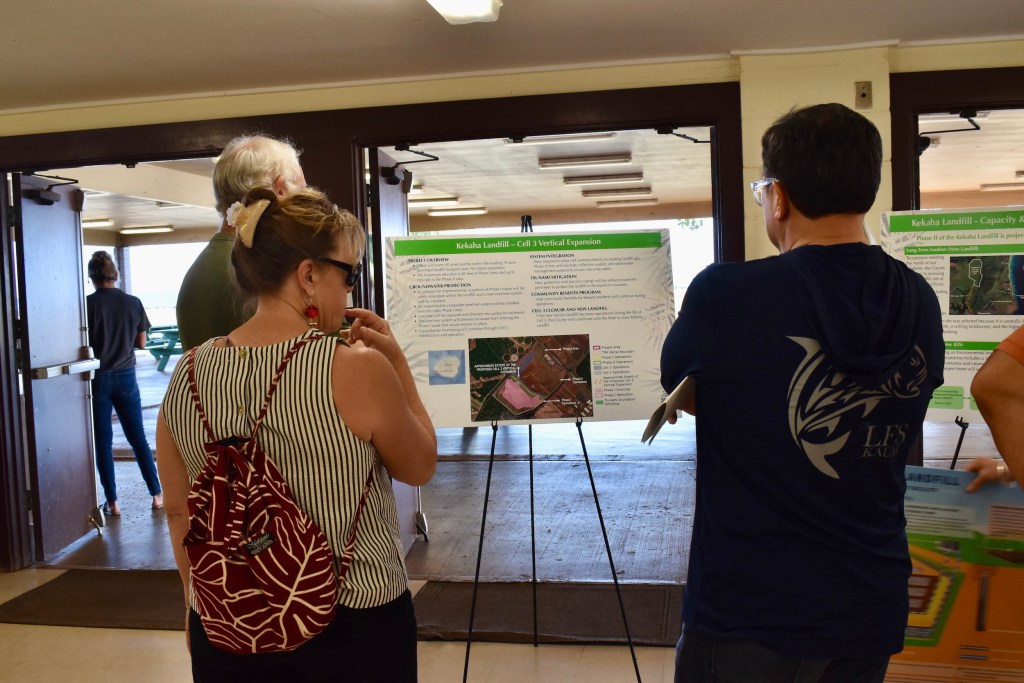
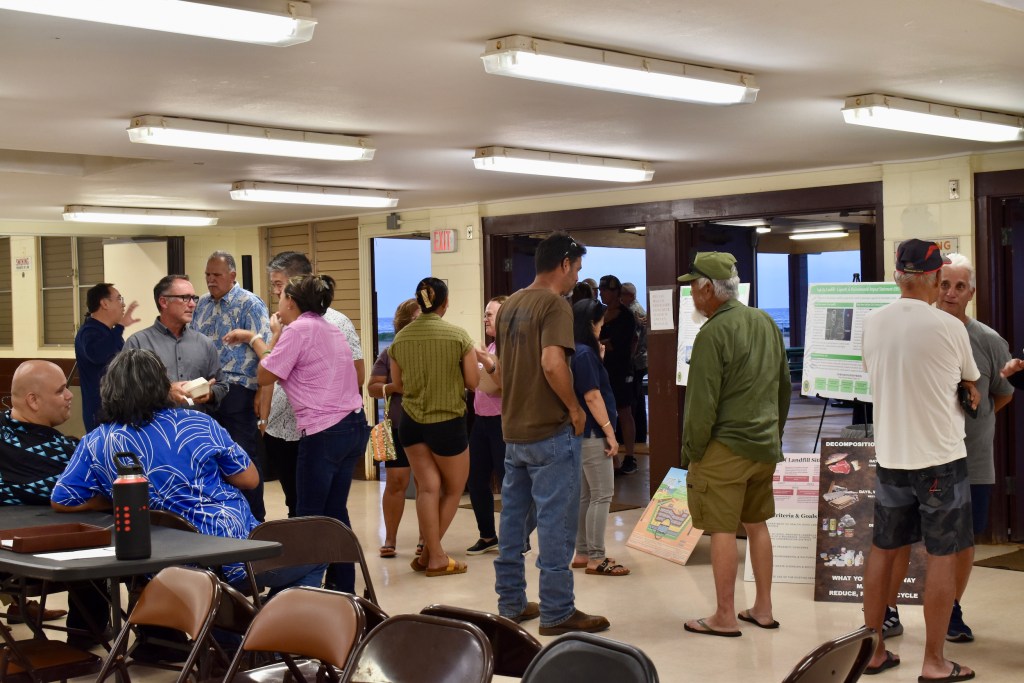
An open house about the project drew roughly 90 community members to the Kekaha Neighborhood Center last week. There, County Solid Waste employees were stationed at a handful of poster board stations depicting the expansion project, the landfill’s current operations, community benefits for Kekaha, and the island’s household recycling and trash diversion rates.
Community members energetically talked story with one another as they perused the stations, though many had been expecting a presentation and public Q&A, rather than poster boards and cards to write their questions and comments.
Kaua‘i is not alone in trying to figure out what to do with its trash. The City and County of Honolulu is also discussing how to extend the life of its Waimānalo landfill, which is set to close in 2028. And earlier this year, state legislators considered a proposal to create a working group to examine solid waste reduction policies and programs.
The proposed project would be the seventh expansion of the existing Kauaʻi landfill since it opened in 1953, giving it 12 more years of life.
The landfill receives 500,000 pounds of trash every day. Even though Kaua‘i diverts about 45% of its waste, Solid Waste Division Chief Allison Fraley told Civil Beat that the expansion is needed for whatever can’t be reused, recycled or recovered.
“It’s not something we want to do, but it just has to be done in order to have safe disposal for the entire island,” she said.
In the meantime, a new landfill on Mā‘alo Road in Hanamā‘ulu is undergoing planning and environmental reviews after more than 20 years of seeking and evaluating different sites.
“A central site would be better instead of trucks going all the way to the west side all the time,” Fraley said. “We’re excited about breaking ground on a new landfill while also doing this project. We’re just working hard to do both at the same time.”
Read More: The Kauai Landfill ‘Conundrum’ Could Quickly Become A ‘Public Health Hazard’
‘We Need More Funding’
Wednesday’s meeting drew a plethora of election candidates. Five council members — three of whom are running for mayor — plus a fourth mayoral candidate, five council candidates and one state house candidate were present.
Some Kekaha residents who attended were focused on the community benefit fund created in 2008 to reinvest in the community where the landfill is located. The fund receives $3.65 per ton of garbage and has distributed $3.8 million across 131 projects. One of its most impactful projects was $780,000 to install solar systems on 181 houses.
Read More: How This Kauai Community Is Benefiting From Hosting The Island’s Landfill
“As the landfill expands, so do we in the community and we need more funding,” said Kekaha resident Harold Vidinha, who serves on the citizens advisory committee for the benefits fund.
E Ola Mau Na Leo Kekaha has used its benefits funding for financial assistance to Kekaha high school graduates. Katie Hardwick, the nonprofit’s secretary and a Kekaha resident, said E Ola Mau recently received a two-year grant so that roughly 20 recipients will each receive $7,000 over two years.
“It’s important for us to have the host community benefit,” she said.
On May 14, the County Council considered an amendment to the proposed fiscal year 2027 budget to move about $237,000 from the Capital Improvement Projects Contingency Fund for a one-time bonus to the Kekaha community benefit fund. Combined with the existing money in the fund, that would have brought the fund’s total to roughly $1 million.
The council discussed concerns about there not being a specific project the additional money would be needed for, as well as implications with removing money from the contingency fund. Ultimately, the proposed amendment didn’t pass.
Increasing Landfill Capacity
The landfill consists of two fill areas. Phase I has a peak elevation of 50 feet above mean sea level, and Phase II has a maximum permitted elevation of 171.5 feet. The expansion project would increase those maximum elevations by 70% and 14% respectively.
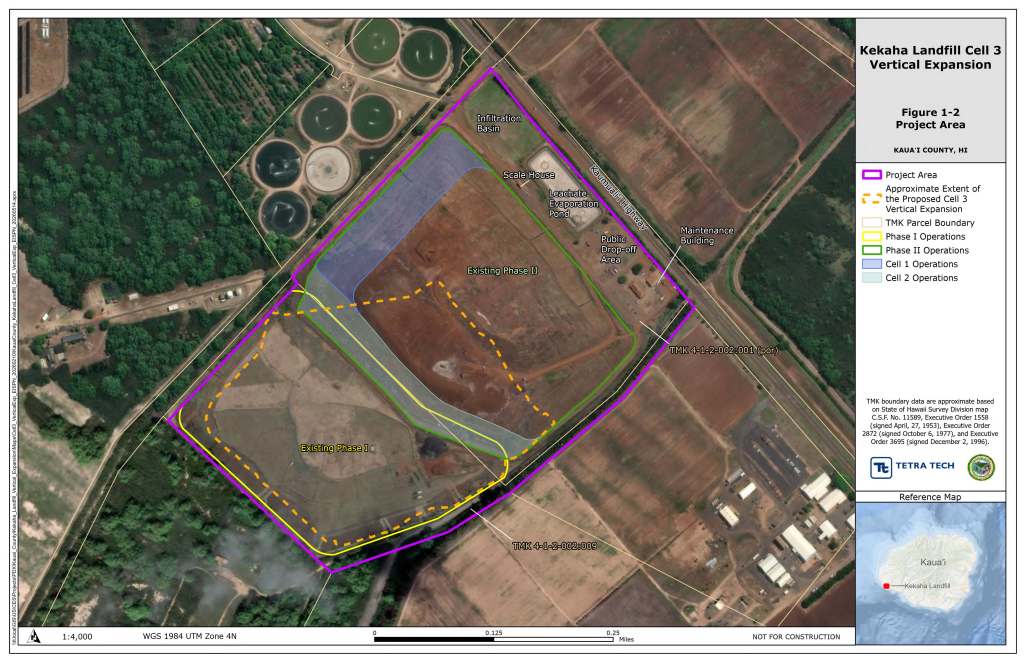
That will add another 1.5 million cubic yards of vertical disposal space. Fraley estimates it could cost at least $24 million but that could rise to as much as $43 million. The county will use municipal bonds to pay for the project.
An impermeable overliner and leachate collection and removal system would be installed within the Phase I area, which has no liner underneath it to prevent groundwater contamination because one was not required when it was constructed. Leachate is contaminated liquid from the landfill.
The overliner installation will require moving 253,000 cubic yards of waste within Phase I, most of which would be reburied within the landfill.
The Kekaha landfill is in a tsunami inundation zone, so tsunami armoring material would be installed around the perimeter of the landfill. The landfill’s gas collection system would also be modified to accommodate the vertical expansion.
Calvin Kajiwara, a Kekaha resident who worked for both the county Public Works Department and Division of Solid Waste from 2012 to 2024, has concerns. He doubts the expansion will last as long as the county says because the island produces so much trash. He also worries that the old cars and metal buried beneath the landfill’s first fill area could contaminate the surrounding soil and water.
Kajiwara suggested the county should fully excavate that area, remove the contaminated material and then line it. Fraley said the county looked at that option but found the costs too unknown and that it would be harder to get a permit for. It would also require pulling up so much buried trash that it would be difficult to find a place to put it.
“We looked at records from when they closed Phase I, we talked to people, and it’s unknown what’s in there and what those costs would be to remediate everything,” Fraley said.
She added that the landfill’s tonnage hasn’t changed as dramatically as community members may think. Over the last decade, the year-to-year change has varied between 1% and 7%. It even decreased during a few years.
Upcoming Community Meeting
Location: Kekaha Neighborhood Center
More information about the Cell 3 Vertical Expansion project here.
The county will be accepting public comments on the expansion project’s Environmental Impact Statement Publication Notice throughout June and early July and will hold another community meeting on June 24. Fraley said she heard attendees’ comments about last week’s open house format and that the June meeting will include a presentation.
“We’re excited about the community participating in the process,” she said, “and we look forward to working with them moving forward.”
Civil Beat’s reporting on Kauaʻi is supported in part by a grant from the G. N. Wilcox Trust and its coverage of climate change and the environment is supported by The Healy Foundation, the Marisla Fund of the Hawai‘i Community Foundation and the Frost Family Foundation.

