Hawaiʻi Bribery Scandal: Defendants Plead Not Guilty
Lt. Gov. Sylvia Luke, ex-state Rep. Ryan Yamane and two other state officials appeared before a judge.
Four current and former Hawaiʻi officials who were indicted last week in a major public corruption scandal pleaded not guilty on Thursday morning.
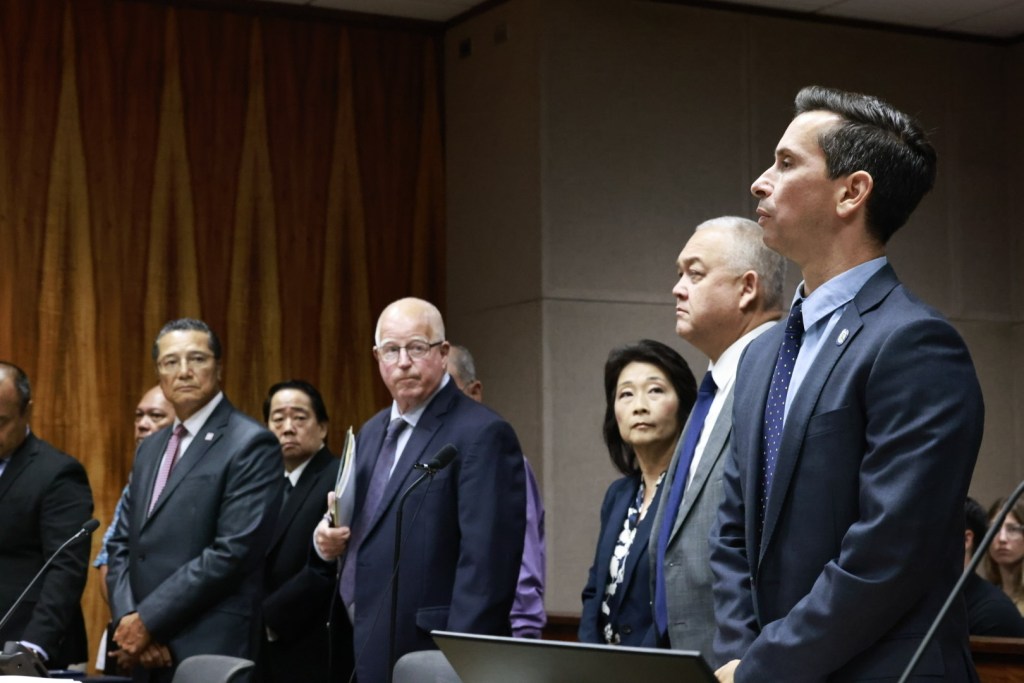
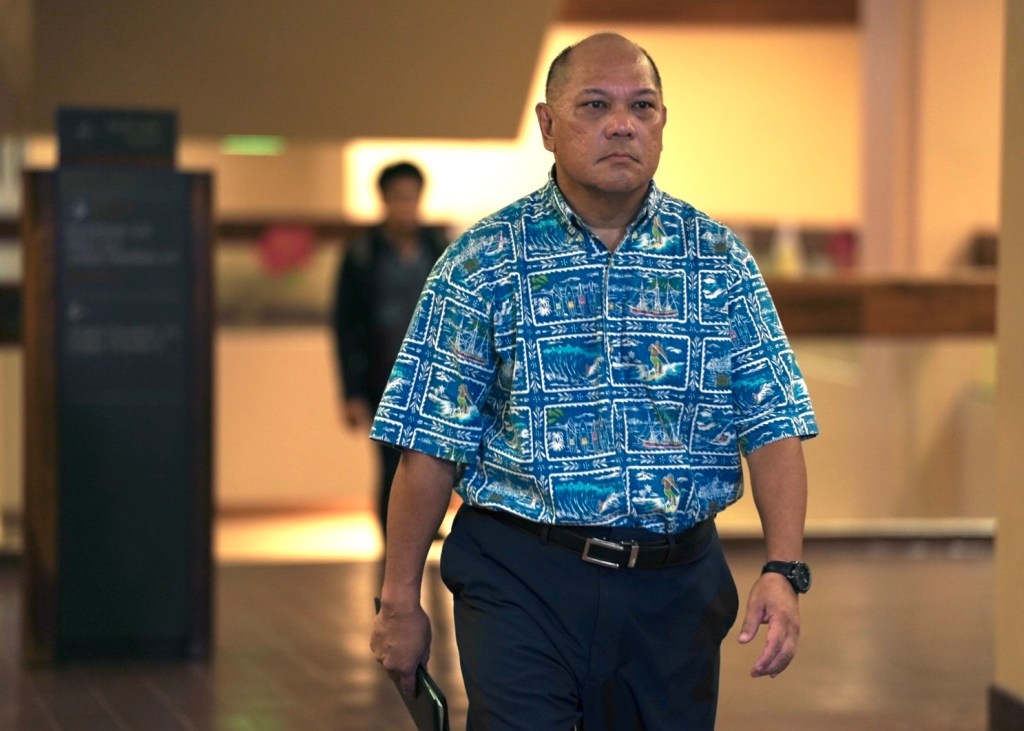
Appearing in court for the first time since an indictment last week were Lt. Gov. Sylvia Luke; former state Rep. Ryan Yamane; Ford Fuchigami, airport administrator of the Department of Transportation and former member of the state Senate’s budget staff; and Leo Asuncion, a state planning official, former chair of the Public Utilities Commission and Luke’s former campaign treasurer.
The defendants all looked solemnly ahead as they stood beside their attorneys, who entered their pleas for them in a courtroom full of reporters, political observers and criminal defendants in other unrelated matters awaiting their arraignments. The bribery defendants did not speak. Judge Ronald Johnson accepted the not-guilty pleas and set a trial date for Sept. 28.
The indictment lays out an alleged conspiracy. Luke is charged with bribery for actions she took as a state representative to arrange state money for a Covid-19 testing effort run by Tobi Solidum, a businessman who promised to get her $35,000 or more in campaign donations.
Solidum is also accused of bribing Fuchigami and Yamane with cash and checks in an effort to influence legislative bills. At the time, Fuchigami was a budget analyst for Sen. Donovan Dela Cruz’s Ways and Means Committee, the Senate’s money committee.
Don’t miss an update as Civil Beat continues to cover this story:
Luke and Asuncion are further charged with filing false campaign finance reports that failed to disclose $10,000 Luke received from Solidum and his stepdaughter.
Solidum, a lobbyist and businessman, was also indicted last Friday on conspiracy to commit bribery and three counts of bribery upon a public servant, but he did not appear in court Thursday. Prosecutors believe he is in the Philippines. The Attorney General’s Office has not indicated whether it plans to have him extradited.
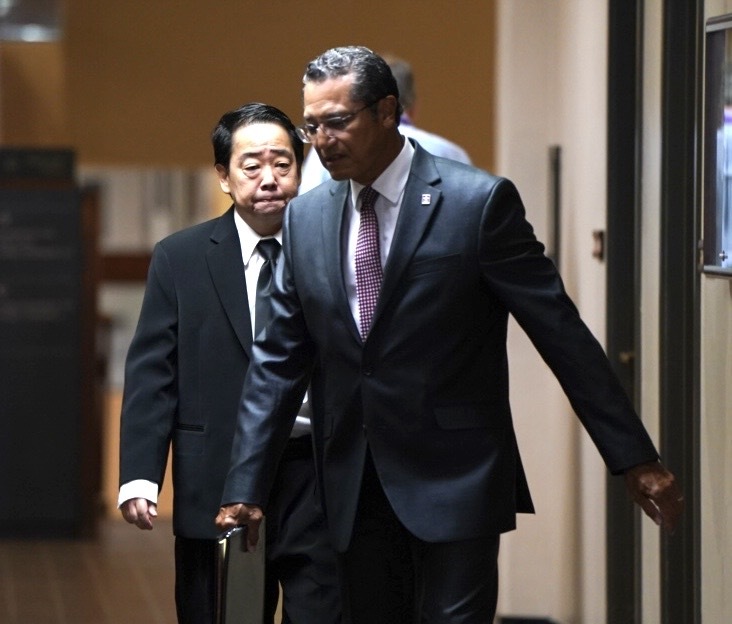
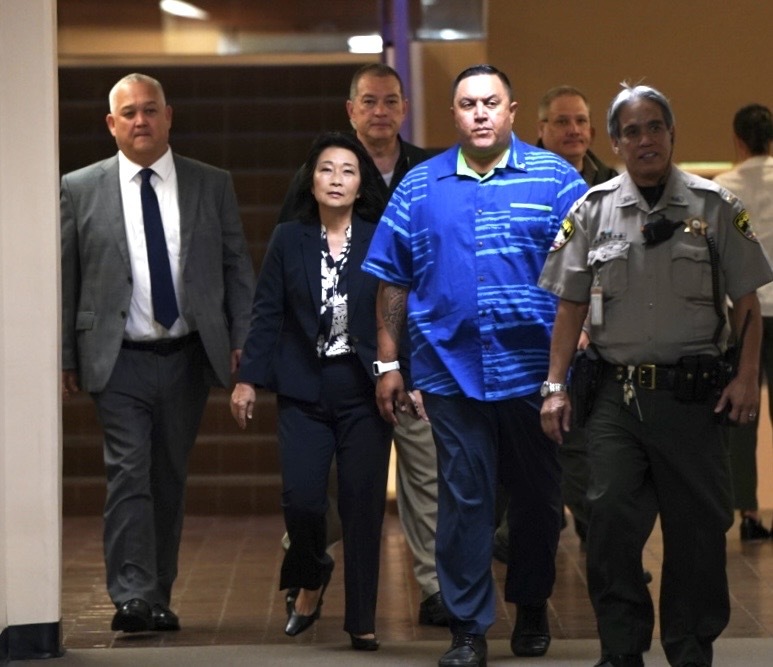
Luke was represented by attorney Rick Sing, Yamane was represented by Bill Harrison, Fuchigami by attorney Eric Seitz, and Asuncion is being represented by Deputy Public Defender Edward Aquino.
The indictments came after a six-month investigation by the Hawaiʻi Attorney General’s Special Investigation and Prosecution Division into an “influential” lawmaker who is alleged to have accepted $35,000 from a federal bribery suspect in 2022.
The indictment makes no mention of $35,000 being handed over, but suggests Solidum promised Luke $35,000 — part of a total of $70,000 he said would come later — during a Jan. 20, 2022 dinner at Morton’s The Steakhouse at Ala Moana. Solidum at the time was working as a consultant for the National Kidney Foundation of Hawaiʻi and seeking government funds for Covid-19 testing contracts.
The Foundation ultimately charged Honolulu and state taxpayers for Covid tests at rates that experts told Civil Beat were “outrageous” while Solidum raked in millions of dollars, according to court records. The foundation, now under new leadership, says it is conducting an ongoing internal review.
Trial Timing Debated
Harrison asked the judge for permission to allow Yamane to leave the state on a pre-planned trip to the mainland to take his son to college in August. Johnson approved the request.
The defendants and their lawyers swiftly left the courtroom after the arraignment, which lasted just over 10 minutes. Attorneys did not comment outside the courtroom, except for Seitz, who said he believes the charges in this case are politically motivated.
“When I was involved in all the big conspiracy cases, or most of them, in the late ’60s and ’70s, the government never got convictions in any of those cases because they’re virtually impossible to prove,” he said. “Why this attorney general thinks that she can do something that many, many more experienced prosecutors have not been able to successfully do, I just don’t know.”
Last week, Seitz represented Cathy Ross, who appeared as a witness during Friday’s grand jury proceeding. Ross is a former deputy health director whose division oversaw an office that handled procurement and contracts.
Seitz said prosecutors in the bribery case are seeking to disqualify him from representing Fuchigami because he previously represented Ross but he said he doesn’t see a conflict and obtained waivers from both clients.
Ross “knows nothing about the very limited allegations against Fuchigami in this case, so no, there’s no conflict,” he said. “If they try to disqualify me, it will be largely based upon animosity that I have with the current attorney general. I hope she’ll be gone before this case ever goes to trial, but we’ll see what happens.”
Toni Schwartz, spokeswoman for the Attorney General’s Office, said in a statement the department couldn’t comment on the ongoing litigation.
“As this is now a pending criminal case, the Department of the Attorney General’s focus will be on the legal proceedings before the court,” the statement says. “We are not in a position to comment on the potential application of any disposition. Any motions filed in this case will be addressed through the judicial process.”
Seitz also said he was shocked the judge scheduled a trial as soon as September and believes it will get delayed. He said he would be surprised if the case goes to trial before next summer.
Camron Hurt, director of Common Cause Hawaiʻi, who was also in the courtroom Thursday morning, said he thinks the judge’s quick scheduling of the trial signals an understanding that this case is of top concern for the public, especially in an election year.
Although Hurt called the indictment lackluster and said it leaves many questions unanswered — such as what happened to the $35,000 — he said it clearly highlights issues entrenched in state politics that need to be fixed.
This legislative session, Common Cause plans to advocate for the formation of a good governance commission that would regularly meet to evaluate what reforms can be implemented to make government more effective, Hurt said. He also supports a measure that would ban government contractors and their immediate family members from donating to political candidates. Some lawmakers have called for a special session to push the bill through quickly.
The bribery scandal also has reignited calls for more campaign finance reforms, including setting up a system to publicly finance elections. An earlier proposal for such a reform died in the House this year over budgetary concerns.
“We do have a lot of things we need to start cleaning up in this state,” Hurt said. “I think if we do that, then this could really be the genesis of a governmental renaissance.”