

As Federal Government Stirs Illegal Voting Fears, Two Cases Arise In Hawaiʻi
Two noncitizens told the Maui County Clerk that they had voted. She relayed that information to the FBI.
As the Trump administration sounds the alarm about illegal voting, announcing it has discovered more than 250,000 noncitizens registered to vote in four states and is pursuing others nationwide, the issue in Hawaiʻi has boiled down to two.
Two Maui residents, that is, both of whom stand accused of voting in 2022 and 2024. Both women — immigrants from the Philippines — have been referred to the FBI by the Maui County Clerk.
The cases were widely broadcast by federal officials, who have charged Remedios Alasaas and Bernadette Acaso with unlawfully voting as an alien, a misdemeanor.
When noncitizens vote they “defraud the democratic process” and “undermine the integrity and credibility of our elections,” Hawaiʻi U.S. Attorney Ken Sorenson said in a June press release issued after Alasaas, a 66-year-old Kahului resident, was charged. Hers was the first such case in Hawaiʻi in at least four decades.
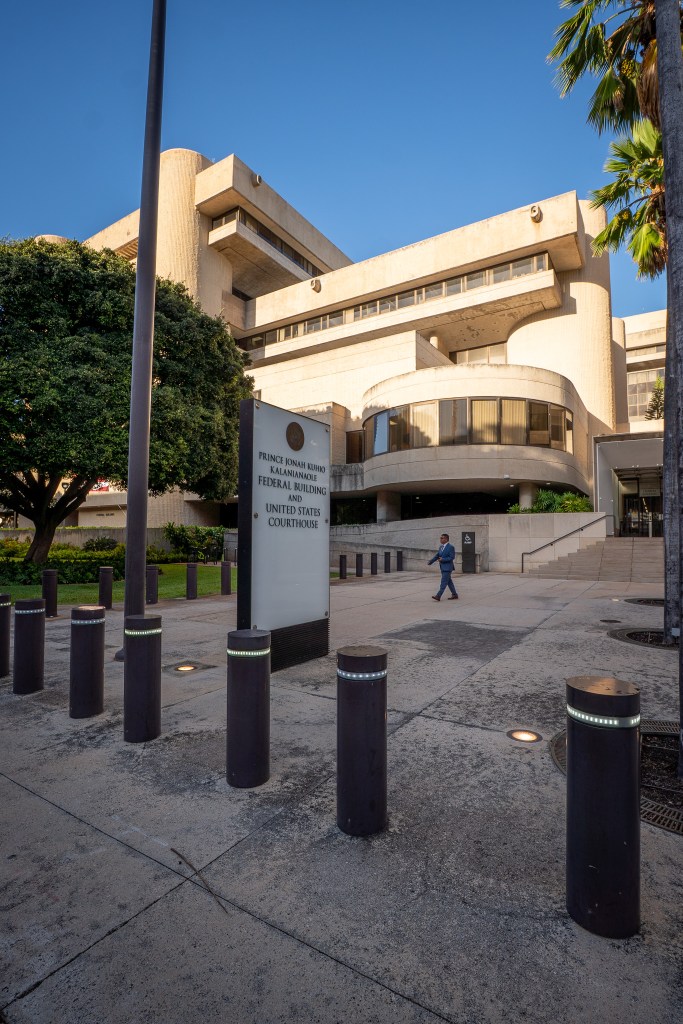
Alasaas pleaded not guilty and is set to go to trial in December. Acaso, a 19-year-old who authorities said lives in Kahului and Honolulu, was charged in late July and is due to be arraigned Monday.
The stakes are high: Both women face up to a year in jail and fines up to $100,000, prosecutors said. Separately, they could also face deportation.
Only U.S. citizens — including those who have been naturalized — can vote in federal and state elections, regardless of whether their country of origin was a U.S. territory, as the Philippines was until 1946.
Despite a massive campaign by the Trump administration to uncover voting by noncitizens, and assert that it has swayed elections, few cases have been uncovered.
A ProPublica analysis of Justice Department data found that between January 2025 and May 2026, “fewer than 150 alleged noncitizen voters were referred for prosecution and just 41 were charged with voting illegally or other election-related crimes.” The federal investigations have largely targeted Democrat-heavy states including California, Pennsylvania and New Jersey.
The two Hawaiʻi cases appear unrelated to those efforts. Both cases came to Maui County Clerk Moana Lutey’s attention, she said, when the women “reported to us that they were not U.S. citizens.”
Lutey said such instances of noncitizen voting appear to “be extremely rare” and she has made no other similar referrals to federal authorities, adding she is not systematically reviewing voter records for other cases.
She is obligated to refer them to the FBI when they do come to her attention, she said.
“Violations of election laws are reported to law enforcement to protect the integrity of the election process, the integrity of our office and to maintain the public’s trust,” Lutey said in an email.
Maui County Council members did not respond to questions about whether they had any concerns about Lutey’s referrals to the FBI, which took place against the backdrop not only of efforts to stir up fears about illegal voting but also an aggressive anti-immigrant crackdown.
Council members Tamara Paltin, Yuki Lei Sugimura, who is running for Maui mayor, and Alice Lee, the outgoing chair, said they had not been aware of the referrals until Civil Beat asked about them.
Lee said they might warrant a council discussion, but not until the elections are fully wrapped up so that they would not become a campaign issue. Seven council members are on the general election ballot, including Sugimura, and Lutey oversees the county’s elections.
“I don’t think it’s appropriate for us to look at it right now,” Lee said. The council “should not be perceived to be interfering with the work of the County Clerk at this point. But maybe after the elections.”
‘Pressured To Vote’
Both Alasaas and Acaso knew they were not citizens when they voted, officials said.
Alasaas had entered the United States on an immigrant visa in about 2014 and registered to vote shortly after that, the Department of Justice press release said. She voted in the 2022 general election and a primary election in August 2024. The press release did not specify whether those elections were in Hawaiʻi, or identify Alasaas’ current immigration status.
More details are known about Acaso because more court records are available in her case, although it was filed more recently.
According to an affidavit in support of the criminal complaint against her, Acaso has been a legal U.S. resident and living in Hawaiʻi since September 2018. The FBI received information this January from Lutey’s office that Acaso had voted by mail in the 2024 general election.
According to the affidavit, during a voluntary interview in June, Acaso told FBI agents that she voted by mail in the 2024 general election while living in Maui. She said she “felt pressured to vote” for a particular candidate by her uncle, who she was scared of because it was through his petition that she and her family had been able to immigrate to the United States.
However, “no one forced her to put a ballot in the mailbox,” Acaso told agents, and “she acted of her own free will,” according to the affidavit. She also said she believed that as a legal resident she could vote.
It’s noteworthy, said one observer, that both Alasaas and Acaso were charged with misdemeanors, not the felonies that could have been used had they known they were doing something illegal when they voted.
“The fact that these individuals were charged with misdemeanors tells me that DOJ either couldn’t prove that either person knew they weren’t supposed to vote, or DOJ didn’t want to bother proving that,” said Jason Levitt, a constitutional law professor at Loyola Law School who worked on voting rights and protections as deputy assistant attorney general in the Civil Rights Division of the Justice Department from 2015 to 2017.
There is no data for how often county clerks have been making referrals similar to Lutey’s, Levitt said, and whether there have been more since President Donald Trump took office again last year.
It’s not out of the ordinary that someone in Lutey’s position would have referred an illegal voting case to the FBI, said Levitt, who was a senior policy advisor for democracy and voting rights in the Biden administration. He added that the fact that Alasaas and Acaso apparently reported themselves made the referrals appear a bit more unusual.
“Elections officials are a pretty conscientious bunch and they regularly refer to state officials or to federal officials instances where they see what they perceive as active misconduct,” Levitt said. “It doesn’t mean they’re making conclusions on whether something’s been a crime.”
However, he said, “They’re not particularly inclined, I think, to refer things that look like mistakes or errors or misunderstandings.”
Noncitizen voting, especially intentional cases, are “extremely rare,” Levitt said, “but one of the ways that election officials keep that rare is by referring real cases to law enforcement.”
County clerks in Hawaiʻi and Honolulu counties said they had not made any such referrals. Kauaʻi County Clerk Jade Fountain-Tanigawa did not respond to a request for comment.
Hawaiʻi County Clerk Jon Henricks said if his office came across evidence that a noncitizen had voted he would respond as Lutey did.
“We would immediately contact the agent at the FBI in Hawaiʻi who has been assigned to handle these matters,” he said.
As in Maui and Hawaiʻi counties, Honolulu Elections Administrator Rex Quidilla said his office does not review records for noncitizen voting, and by law must accept information voters give when they register as true.
If an agency like the FBI requests information about a particular voter, the county clerk’s office would provide it, Quidilla said, although it wouldn’t necessarily know the reasons for the request. That also happens infrequently.
“It’s sporadic,” he said. “It doesn’t happen regularly, but it does occur.”

