Denby Fawcett: No Pidgin Allowed In Hawaiʻi's Once-Elite Public Schools
A new book explores the decades-long educational system that separated students based on how well they could speak English.
August 19, 2026 · 10 min read

About the Author

Much has been written about discrimination in pre-statehood Hawaiʻi including the prohibition of people of Asian descent from joining clubs such as the Elks, the Outrigger and the Pacific Club or from buying or renting homes in certain then “restricted” neighborhoods.
But until now, no book has taken such a deep dive into how and why the Territory of Hawaiʻi created a separate system of elite public schools that was predominantly haole, a system that separated children based on their English language proficiency.
Christine Yano’s “Speak American: The Politics of Race, Language and Education in Territorial Hawaiʻi” is the first book-length study devoted to Hawaiʻi’s English standard schools — why they were allowed and how they worked.

Ideas showcases stories, opinion and analysis about Hawaiʻi, from the state’s sharpest thinkers, to stretch our collective thinking about a problem or an issue. Email news@civilbeat.org to submit an idea or an essay.
Yano is a professor emerita of anthropology at the University of Hawaiʻi Mānoa. Her book also underscores the pride of the non-haole students who successfully passed the test to enter the academically demanding institutions. She interviewed graduates of the schools who today look back on their experience as an extraordinary educational opportunity that improved their lives.
The English standard school system operated from 1924 until 1960, when Roosevelt High School graduated its last standard school class. Only children who could pass oral tests to determine if they spoke standard English were admitted to the schools.
Of course, that meant children of plantation era parents who spoke Asian languages or Pidgin were largely excluded. They went instead to regular district public school, perceived to be less challenging. Non-haole children who got into the select schools could be ostracized by their neighborhood friends as snooty.
Retired Circuit Court Judge Marie Milks, who went to Roosevelt, said some of her playmates in Nuʻuanu called her “a haole lover.”
“That was true. I loved my teachers. I loved my school and many of my haole friends,” she said.
Yano uses full names only of English standard school graduates who are public figures. Other English standard school alumni are quoted without citing their names.
For this column, I name the friends I asked what it was like to attend their standard English schools.
Kāhala resident Margaret Yamane, who is 96, attended Kaunoa, the English standard elementary school in the Spreckelsville area of Maui.
“Everything was the best at Kaunoa,” she said. “They gave us a lot of grammar and reading. It was like Punahou but a public school. There were a few token Asians, two Hawaiians, a couple of Portuguese, all the rest were haoles.
“My brothers jokingly called Kaunoa ‘cow manure’ school, but everybody else referred to it as ‘a haole school.’ My fellow students were kamaʻāina, including the Baldwins and the Camerons. For their birthday parties, their family drivers would take us to their large estates where there were maids to serve us and their horses to ride. It was ritzy.”
Yamane said she was dismayed to find out recently that the haole students at Kaunoa were admitted to the school without having to take any kind of a test like she did.
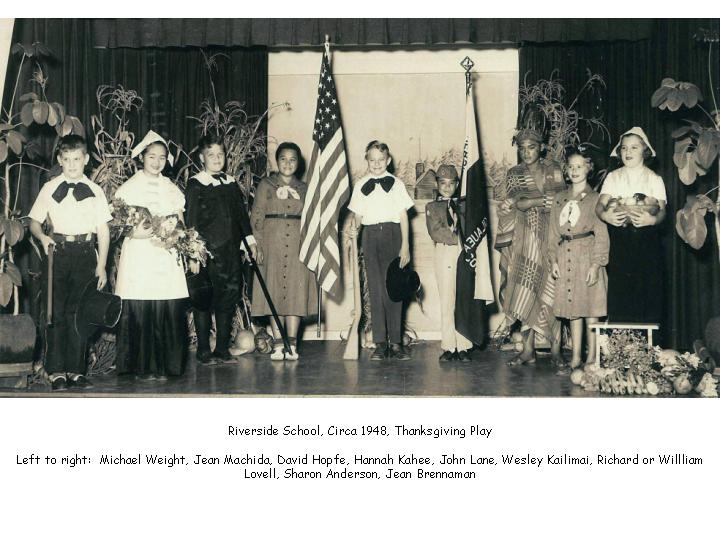
Gwen Murai, 86, attended Riverside, the English standard elementary school in Hilo. She joked with me about the pre-admission screening of non-white children: “The person giving the test, might ask you to say the word ‘pink’ and if you said “peeenk’ you were out.”
But for some aspiring students, the entrance test was no joke. The late Franklin Odo remembered the humiliation of failing to pass when he was 5.
Odo told Yano he grew up speaking Pidgin. His parents hoped admission to an English standard school would improve his speech and give him a step up in life. His mother took him to Aliʻiolani School in Kaimukī to be tested for kindergarten.
“It was something of a shock, therefore to notice, even at that young age, just how disappointed my mother was when the interviewer notified us I was not acceptable for English Standard schooling,” he wrote in an email message to author Yano.
Admission denial could hinge on something as small as an inability to pronounce the “th” sound, saying “tree” instead of “three” or “dis” and “dat” instead of the words “this” and “that.”
A student’s academic future could be determined by one single measure: English language proficiency. Nothing else.
“This was segregation — keeping ‘others’ out — officially based in language but effectively based in the assumption of race, class, culture and privilege,” wrote Yano.
Odo went on to become the first graduate of Kaimukī High School, a regular public school, to attend Princeton. He later received graduate degrees from Princeton and Harvard.
He became a nationally recognized Asian American scholar — teaching at elite institutions such as Columbia and Amherst College and was the founding director of the Asian Pacific American program at the Smithsonian in Washington, D.C.
Yet seven decades later, he still remembered the sting of his mother’s disappointment when he was excluded from an English standard elementary school.
The Territory of Hawai’i started English standard schools in 1924 after a group of haole parents successfully petitioned on behalf of 400 children for a separate system of public schools.
They said the educational progress of their children would decline if they had to learn in regular public schools alongside classmates still unable to speak textbook English. Many of the haole petitioners were newcomers to the islands.
“They couldn’t say they wanted a school for whites only so they said language was the reason,” Yano said.
The obvious downside of standard English schools was that instead of devoting more resources to bringing all of Hawai’iʻs public school pupils up to speed in speaking English, the Territory allocated additional taxpayer money to schools for students who already spoke it.
Prominent residents of the Territory, including Honolulu Advertiser publisher Lorrin Thurston, defended the system on educational rather than racial grounds.
In a 1922 editorial, Thurston contended the separate schools were not about “the race or the station in society of the children involved.”
He argued that if teachers had to devote their classroom time to teaching English to non-speakers they would be left with less hours to teach the English-speaking children the arithmetic and history they needed to learn.
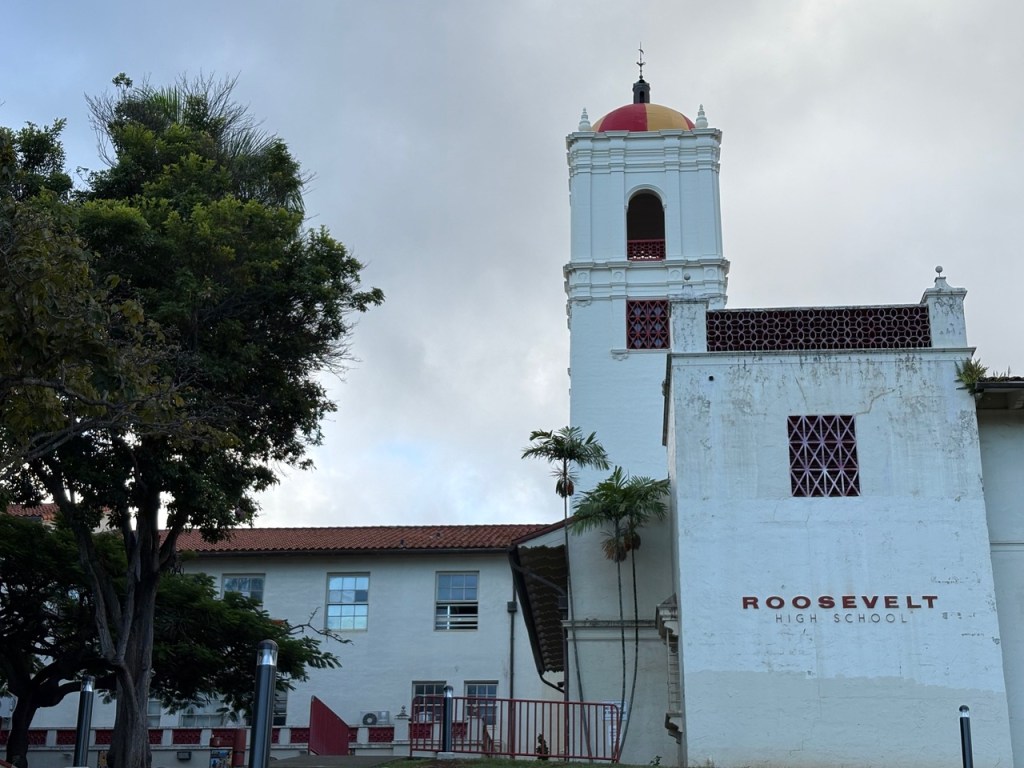
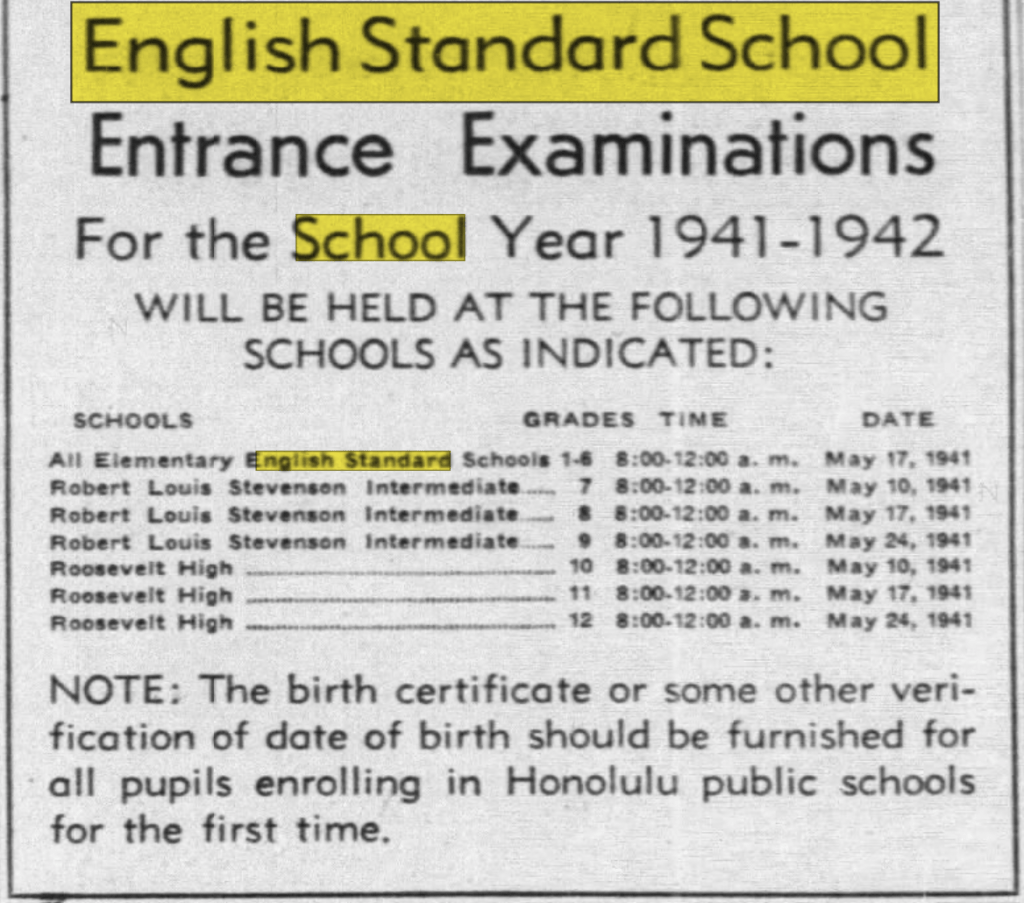
English standard schools on Oʻahu included Jefferson, Lincoln, Kapālama and Ali’iolani elementary schools, Stevenson Intermediate School and Roosevelt High School.
Each of the neighbor islands had its own English standard elementary school but no intermediate or high schools. O’ahu’s Roosevelt was the only English standard public high school in the Territory.
Yano is a third-generation Japanese American who grew up in Mānoa in the 1960s. She remembers hearing about the English standard schools from her parents, both of whom graduated from McKinley, which was not an English standard school.
Yano says her mother greatly admired a family friend who attended Roosevelt “because this was the elite high school of the entire territory-turned-state where one gained access through a competitive testing system that began all the way back in elementary school,” she wrote.
The perception was Roosevelt graduates were smarter, a cut above others, able to move in higher social circles.
“Many Roosevelt graduates acted that way including my mother’s friend. And with good reason. The education they received was outstanding,” Yano said.
Roosevelt was called “the poor manʻs Punahou.”
But that did not bother Roosevelt alumnus Willis Yap. “In 1960 we had more National Merit Scholarship finalists than Punahou. And our tuition was free,” he told me in a phone call.
Graduates of his Roosevelt class remain close, meeting regularly, most recently to plan a joint celebration of their 85th birthdays.
“Many of us are dying now. It is important to look back at our days at Roosevelt.” Yap told me. “We take great pride in being the last graduating class in the standard English school system. There will never be another Hawaiʻi public school like Roosevelt was then.”
Yap’s older sister, Valerie Yap Baldovi, looks back on Roosevelt with similar affection and pride. She said her love for learning — boosted by the rigorous curriculum at the school — led her to go into teaching at public schools herself.
“I am glad I went to English standard schools starting when I was 8 at Kapālama Elementary. I made friends who liked to read. We delved into the classics. I am not sure that would have happened if I went to regular public schools,” she said.
Roosevelt alumni include the late Hawaiʻi Supreme Court Chief Justice William S. Richardson, actor James Shigeta, developer Charles Pietsch, businessman Lex Brodie and former First Hawaiian Bank president and CEO John Bellinger.
Although the English standard school system officially ended in 1960, the elite school system began to unravel as far back as 1940 when parents at Maʻemaʻe Elementary School launched a rebellion after school authorities abruptly changed their children’s regular public school into an English standard school.
The authorities made the change to accommodate U.S. Navy families moving into the school’s Nuʻuanu neighborhood during Hawaiʻi’s pre-World War II military buildup.
Students already enrolled in Maʻemaʻe were forced to take an English proficiency test. Only 50 of the 220 pupils passed. Parents were informed their children would have to transfer to other schools outside their neighborhood.
The mothers and fathers rallied, hiring lawyers, threatening to keep their kids out of school, demonstrating at the Territorial Legislature.
Their petition expressed the crux of the problem:
“It is the duty … in these schools to train the young children in the manner of speaking and writing the English language correctly.”
Maʻemaʻe remained a regular school but its English instruction was changed to be more rigorous for all its students.
In 1949, the Territorial Legislature passed Act 227 to order the Department of Public Instruction to raise all public schools to the academic level of the English standard schools and begin the transition to a single school system.
“It was the beginning of the end of the English standard system,” wrote UH American studies professor emerita Judith Hughes.
The schools were gradually phased out across the islands. The final step came in 1960 when Rooseveltʻs last English standard graduating class left and the school became a regular public high school.
What is striking is that a system that had humiliated young children like Franklin Odo while it academically elevated hundreds of others ended with a whimper not a bang.
Hughes wrote that probably the main reason for the lack of outrage over the demise was “the people who supported the system had become a political minority.”
 Sign up for our FREE morning newsletter and face each day more informed.
Read this next:
Local reporting when you need it most
Support timely, accurate, independent journalism.
Honolulu Civil Beat is a nonprofit organization, and your donation helps us produce local reporting that serves all of Hawaii.
ContributeAbout the Author