‘Does He Ever Sleep?’: New Honolulu Police Chief Hits The Ground Running
The new police chief has promised to be transparent and accessible. So far, observers say he’s living up to his word.
As the smoke settled from the Fourth of July fireworks and Waikīkī’s streets teemed with people, Honolulu police Chief David Lazar patrolled Kalākaua Avenue with a group of officers from District 6.
It was one of the first public outings for the chief, who had been sworn in just two days earlier, and the energy was high.
“There’s no place I’d rather be right now,” he said, as he prepared to return to the Waikīkī substation just before 10 p.m.
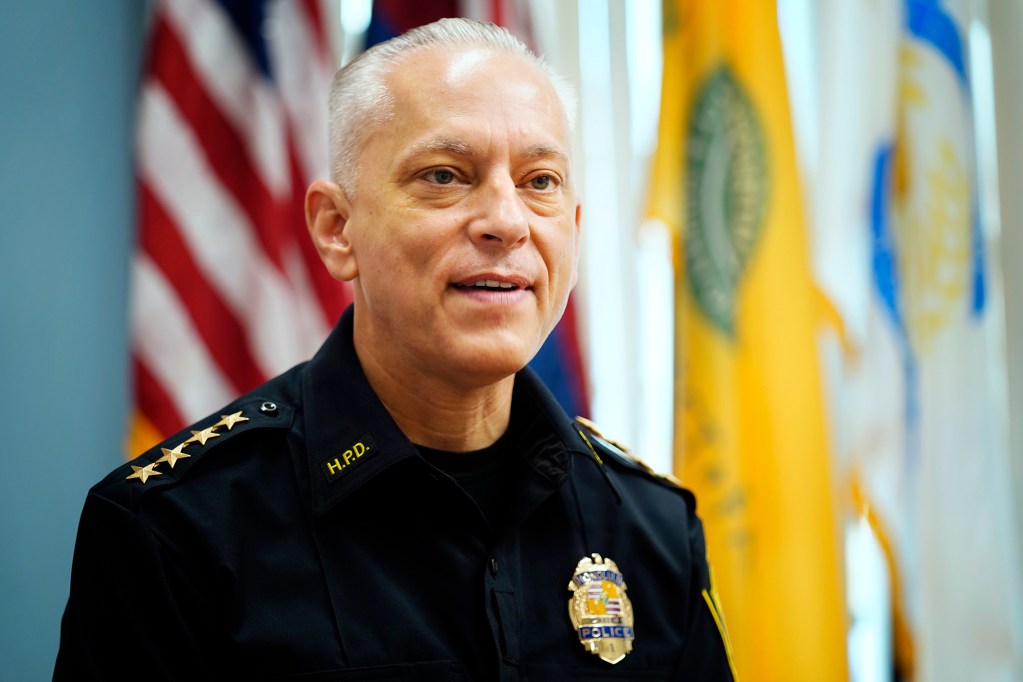
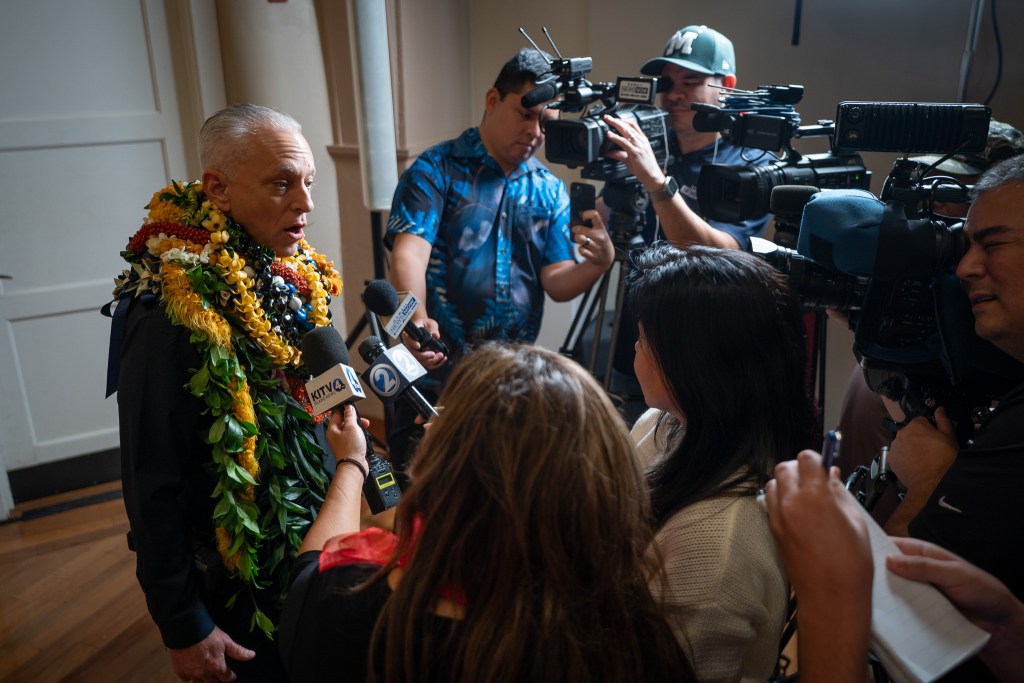
Ever since, Lazar has been in the community constantly, attending events, walking and riding along with officers in various districts and meeting with community leaders as part of what he calls his “listen and learn tour.” The Honolulu Police Department’s Instagram page is full of pictures showing the new chief walking the beat with officers on the Westside, attending a law enforcement surf classic at Queen’s Beach in Waikīkī and posing with families to celebrate Lā Hoʻihoʻi Ea, Hawaiian independence.
“My biggest question is, does he ever sleep?” said Chris Magnus, a member of the Honolulu Police Commission. “Seriously, I’ve really never seen a new police leader who has put as much time and effort into building relationships, engaging with department members, the union, community leaders, just residents on different sections of the island.”
For Lazar, being accessible, transparent and building up community relations were some of top priorities from the outset. It was an important commitment from a leader who is HPD’s first chief from the mainland in more than 90 years.
The retired assistant chief from San Francisco was selected by the Police Commission in May from a pool of three finalists. He beat out local favorite Department of Law Enforcement Director Mike Lambert, who was endorsed by Mayor Rick Blangiardi and favored by a majority of officers in an internal police union survey. Union members had been expressing throughout the search process that they wanted their next chief to come from within the department, and Lambert had served 21 years with HPD.
But while some officers expressed initial disappointment that their pick wasn’t chosen, others told Civil Beat they are open minded and cautiously optimistic about Lazar’s performance.
For his part, Lazar has been focused on earning the trust of the rank and file, the civilian employees and the community.
“It means listening and learning from all of you,” he said during his swearing-in ceremony last month as he stood on stage at Mission Memorial Auditorium draped in lei. “We must have a relationship built on trust and mutual respect before we can build on our plans around public safety. Trust building starts today, one person at a time, one organization at a time.”
San Fransisco Roots
Lazar grew up surrounded by police officers.
His mother, who worked as a dispatcher for the San Francisco Police Department, encouraged him to participate in activities sponsored by her department, like a backpacking trip led by officers to Yosemite National Park.
As an only child raised by a single mother, many of the officers became his role models, he said during a recent interview at the HPD headquarters.
“I’m a product of mentorship by police,” he said. “They were a father figure that I didn’t have in the home, and it inspired me, and it really led me to this profession, and I knew early on that this is what I wanted to do.”
After he turned 18, Lazar got a job as a dispatcher with the department and he became a sworn officer at 21 — the youngest in the department at the time.
He spent his career working in various divisions and holding leadership roles, including serving as deputy chief of the investigations bureau and his final three years as assistant chief. He helped establish the department’s Real-Time Investigation Center, which serves as a hub for technology, like drones, automated license plate readers and surveillance cameras, and set up and led the department’s first community engagement division.
“I really truly believe that all that experience was meant to bring me here,” he said, “to share it with those that work here, and I have to tell you that I’m really impressed with the people that work here.”
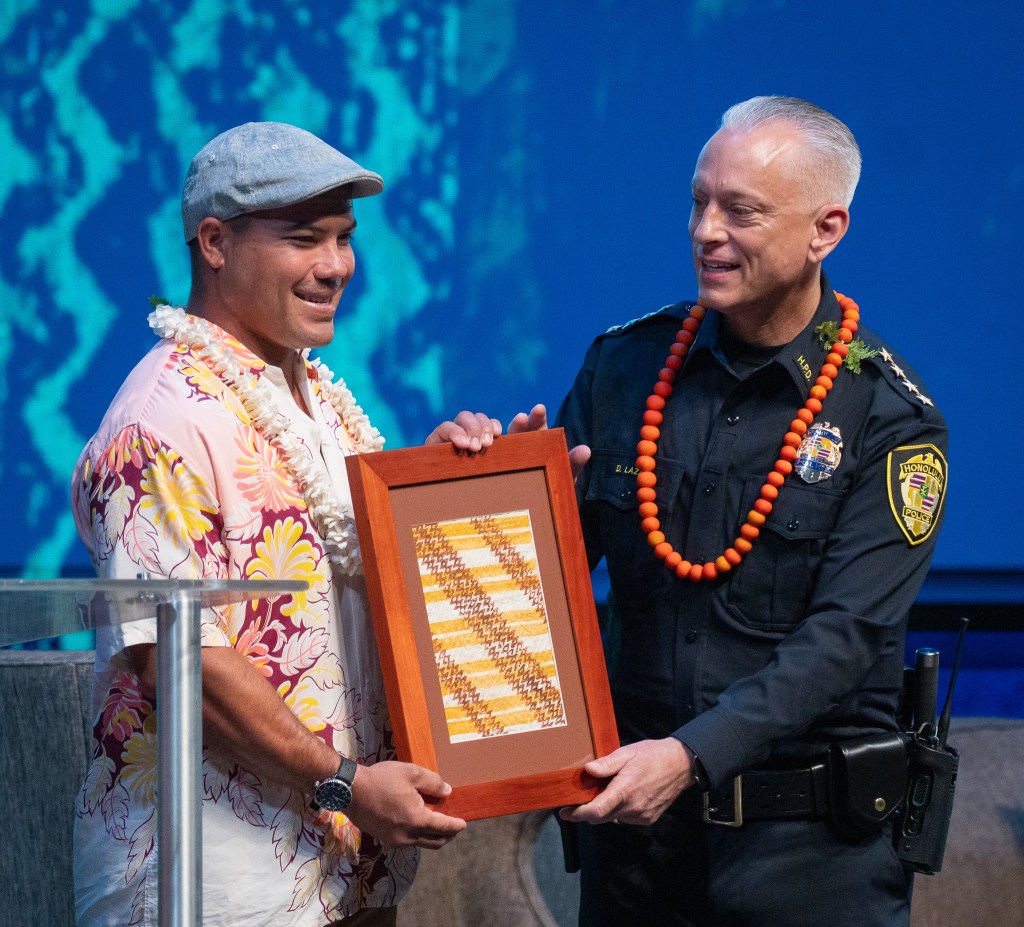
One of the first changes he implemented as chief was to regularly recognize and commend members of the department. Now at every command staff meeting and at the Honolulu Police Commission meetings, which are open to the public, an employee is brought forward to be recognized and given a certificate.
At the last commission meeting, Aug. 5, Lazar presented a certificate to Cheryl Young, a clerk with the Human Resources Division before giving her a hug and talking about the heavy lift she and other human resources employees were doing to help onboard new employees.
“It’s really folks that are behind the scenes really making that happen,” he told commissioners. “We’re grateful to honor you today.”
While some department employees said they’re still unsure about how Lazar will perform as chief, others say they’re feeling positive.
Don Faumuina, president of the state police union, said in a statement he’s happy with Lazar’s willingness to attack problems within the department head on and his readiness to listen and seek input.
“That doesn’t mean we’re going to agree on everything, and we haven’t,” he said. “Chief Lazar understands that there will be times when we may have to vigorously oppose one another. Both sides have made it clear that our expectation of one another is professionalism, not blind loyalty.”
Embracing Technology
One of the first initiatives Lazar has launched is a drone program in downtown Honolulu and the Kalihi area. The program is being piloted in partnership with the Department of Law Enforcement. Lambert spearheaded the initiative as director of the department and has used drones for fireworks enforcement and other special operations.
Lazar said through the program, drones would be used to respond to certain 911 calls ahead of officers to survey the scene and provide critical information before they arrive. During the pilot, drones will only be used for high-priority calls, which could include a person armed with a weapon, a robbery in progress or a crime involving injuries.
Reaction to the program from the community has been mixed. The ACLU of Hawaiʻi has opposed it over fears that it could lead to mass surveillance and abuse of facial recognition technology.
Lazar said he wants to work on clear policies that will govern how police use the drones and he plans to invite community input.
But some community members are concerned about how fast such technology is already expanding.
“The concern isn’t technology itself, it’s deploying powerful new technologies first and developing the rules afterwards,” said Liam Chinn, a Honolulu public safety and police reform consultant. “So with AI drones and other surveillance technologies, our hope is that Chief Lazar will recognize and slow down and allow safeguards to come before expansion.”
Tim Huycke, chair of the Waikīkī Neighborhood Board’s Public Safety Committee, said he supports the drone program as a tool to assist officers on the ground. Huycke, who formerly worked for the Vancouver Police Department in Washington, said he’s been impressed by Lazar, in part for how willing he is to embrace technology and also how visible he’s been in the community.
Huycke also said he appreciates Lazar’s vocal stance against collaborating with federal immigration enforcement. As a candidate for chief, Lazar was the only one who said he would create a formal policy prohibiting Honolulu police officers from collaborating with U.S. Immigration and Customs Enforcement in any way.
Lazar said last month that a written procedure had already been created and finalized under Interim Chief Rade Vanic that dictates how officers should address civil immigration detainers. Honolulu police officers are instructed not to detain people solely based on these detainers, which are requests from ICE to hold an undocumented person for up to 48 hours beyond the time they would normally be held to give federal agents time to pick them up.
Officers are also instructed not to contact the federal agency when a detainee is scheduled to be released from custody and they are only allowed to share publicly available information about the person’s detention status if the agency requests it.
Gaye Chan, who volunteers with the Oʻahu Rapid Response Coalition, a group dedicated to documenting ICE activity, said her group is planning to meet with Lazar this fall and hopes to work with him on a campaign to educate the public about the department’s non-collaboration policy and ensure that the immigrant community isn’t afraid to work with police.
“He’s full of energy, full of enthusiasm,” she said. “He definitely shows vision and experience.”
Lazar said other priorities for him moving forward are scaling up a new officer wellness division to focus on health and mental wellbeing and improving recruitment and retention. To encourage more officers to come on board, he hopes to expand job advertisements throughout the country, expedite the hiring process and offer benefits like housing incentives and even childcare. The department is actively seeking to raise money to stand up a childcare facility for officers, an initiative launched under the previous chief, Joe Logan, last July.
Community members say they’ve been pleased with how accessible Lazar has been and how much he’s made an effort to be out in public. But the ultimate test of his performance will come when he’s forced to handle a crisis. As a candidate, Lazar promised to release body camera footage in a timely manner after officer-involved shootings, something the police department has rarely done in the past, and handle allegations of officer misconduct with transparency.
Chinn, the police reform consultant, said how he responds in those types of situations will be telling.
“He’s engaged, and he’s visible,” Chinn said. “But those are early indicators of leadership, not yet evidence of institutional reform.”