

Hawaiʻi Freshmen Failing: Ninth Grade Repeater Rate Among Nation’s Highest
Hawaiʻi has held back high school freshmen at a higher rate than nearly any other state.
High school came with more responsibility and less accountability for Josiah Ulukita. Courses were much harder, teachers were less strict about attendance and it was easier to skip school with friends or go on his phone during class, he said.
Ulukita went from easily passing middle school to failing freshman English and social studies. After missing roughly half of his freshman year due to poor attendance, he found out he needed to repeat ninth grade. The shame of being held back led him to lose motivation and skip more school, he said, until his counselor warned him that he may not graduate on time.
“I was acing all my classes, and then I hit freshman year,” Ulukita said. “I thought it was going to be easy.”
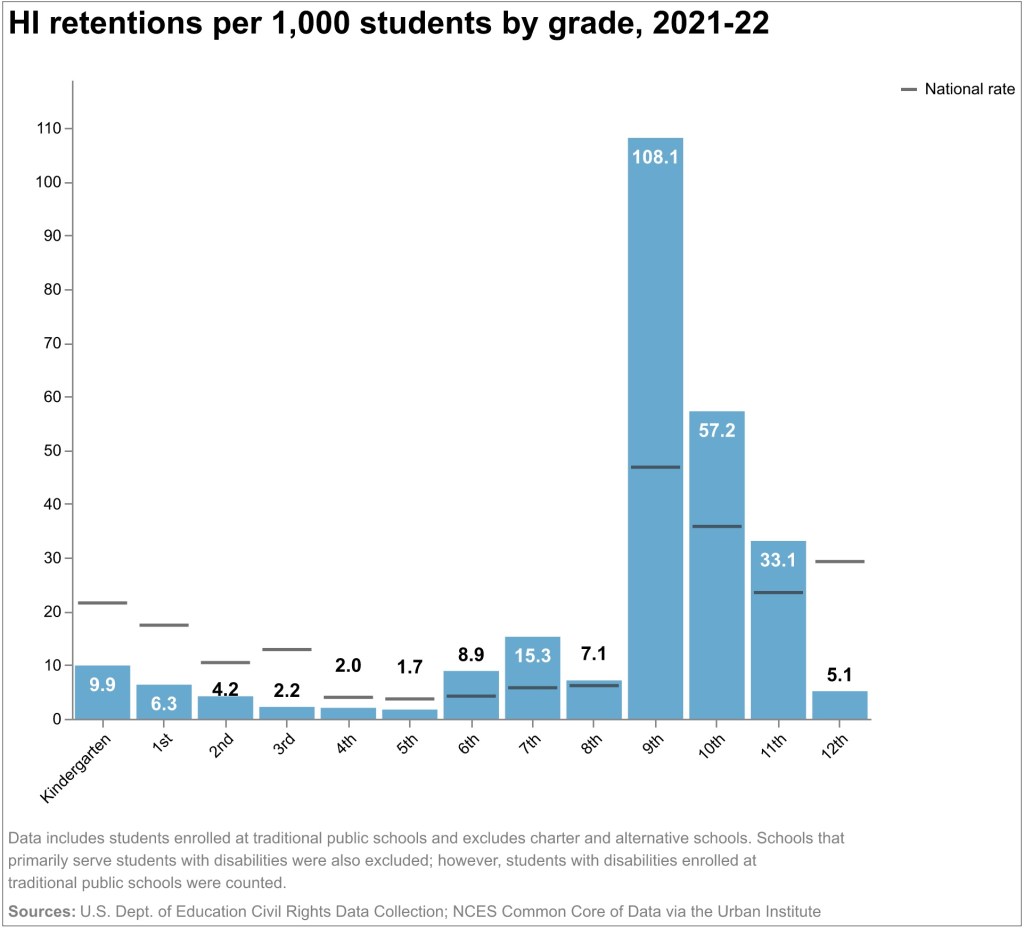
More than a thousand students in Hawaiʻi share Ulukita’s experience each year. Roughly 1 in 10 students failed their freshman year in the state’s public high schools and had to repeat the grade in the 2021-2022 school year, the most recent year for which federal data is available. That’s more than double the national rate for this group of teens that year, according to an analysis of national data by Big Local News, an initiative of Stanford University.
In the school years since, the rate has decreased somewhat but remained high. In the 2024-2025 school year, 1 in 13 freshmen were held back, according to the state education department.
Hawaiʻi’s status as a national outlier is made all the more jarring considering younger Hawaiʻi students rarely repeat a grade – less than 1% of elementary and middle schoolers overall. But that progress seems to come to a screeching halt in high school when more rigid requirements kick in to advance to the next level.
Other states like Mississippi and Florida are taking a more proactive approach to retention, holding students back as early as kindergarten through third grade. More than two dozen states require or allow schools to retain third grade students who aren’t proficient in reading. Hawaiʻi has no such law on the books.
While research on the effects of retention is mixed, some studies find that students have better outcomes when they’re held back in their younger years and receive additional support to catch up academically to their peers. There’s little evidence that holding teens back in high school improves their learning, and some researchers argue that it actually hurts students’ chances of earning their diplomas.
“In earlier grades, basically grade retention could work if retention is supplemented with educational supports for these kids,” said Umut Ozek, a senior economist at RAND, a nonpartisan research and policy organization. “In contrast, in middle and high school, the evidence suggests that retention could actually harm students.”
Hawaiʻi students and teachers attribute the high number of ninth graders being held back to a number of factors. Some say there’s more peer pressure to skip class and dodge assignments. Classes are harder and require students to have strong foundations in reading and math. Many students are unaccustomed to the strict credit requirements they need to fulfill to move to the next grade.
“It’s a shock for the kids to understand that unless they receive a certain amount of credits, they can’t move on anymore,” said Dean Cevallos, principal at Keaʻau High School on the Big Island.
Schools try to avoid holding students back by offering summer school, counseling, personalized learning plans and other resources, state education department Deputy Superintendent Heidi Armstrong said in a written statement. Freshman year can be academically challenging for some students, she said, and some teens might have challenges earning the credits they need to move on to 10th grade.
The education department has declared a goal of promoting more freshmen to 10th grade by doubling down on students’ academic readiness and engagement beginning in middle school, according to its strategic plan.
“The Department’s goal is to ensure students are prepared for continued academic success and remain on track toward earning a high school diploma,” Armstrong said.
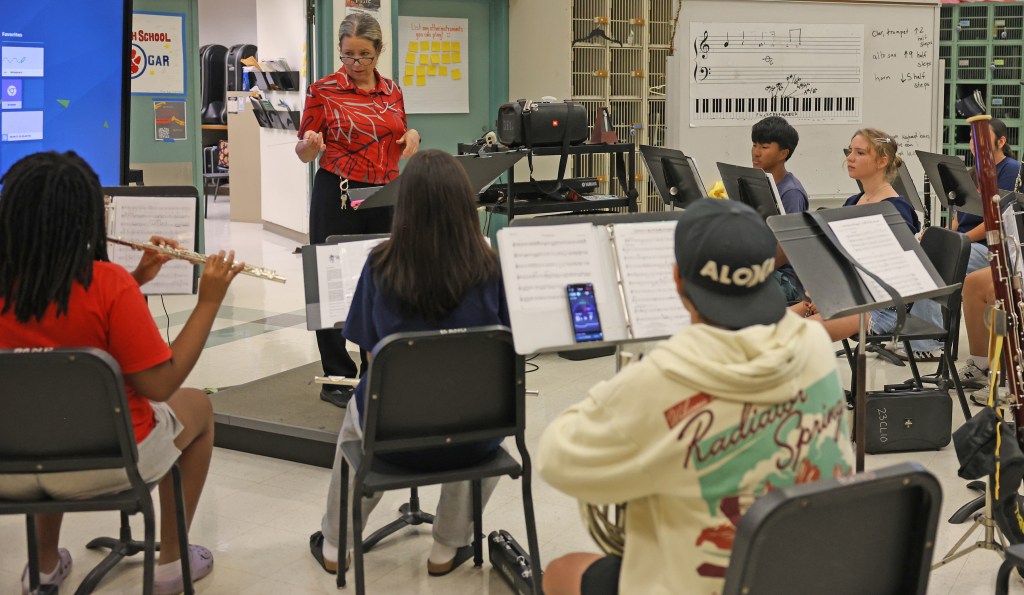
Repeating ninth grade comes with consequences, including the possibility that students drop out without earning their diplomas. Some say the embarrassment of taking classes with younger students led them to attend school less frequently and fall further behind in their studies, while others said it motivated them to take their academics more seriously and catch up with their peers.
Ulukita, who had to repeat ninth grade, was able to earn the credits he needed to complete both his freshman and sophomore year through additional courses, after-school work and a better attendance record. Now a junior at Kaimukī High School, Ulukita is on track to graduate with the rest of his peers in 2028.
“You’ve got to lock in more, do all your classes, make sure you get all your credits and graduate on time,” Ulukita said. “You don’t want to be that super senior.”
Why Ninth Grade?
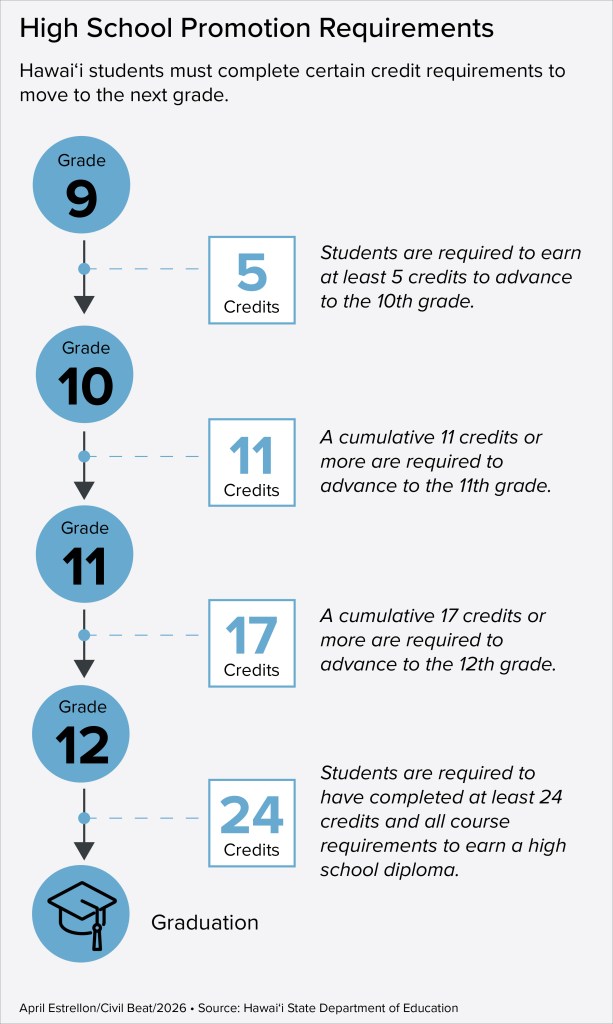
Freshmen must earn five credits – the equivalent of five yearlong classes – to move on to 10th grade. Most high school students take several classes during their freshman year, meaning that kids can fail one or two courses and still earn enough credits to move up. Students must continue to accumulate credits and pass their core classes throughout high school until they earn the 24 credits needed to graduate.
When students repeat ninth grade, they’re not starting from scratch, said Elise Hannigan, Keaʻau High School’s Freshman Academy coordinator. Instead, students retake the freshman classes they failed but move on to 10th grade coursework whenever possible.
If students don’t have foundational academic skills by the time they get to high school, teachers say, it can make passing freshman classes more difficult. Students often take heavier course loads once they get to high school, and teachers may move through material more quickly.
Students who scored below standards on eighth grade reading and math tests were less likely to pass all of their ninth grade courses and complete high school in five years, according to a 2024 report from Hawaiʻi P-20 Partnerships for Education, which studies students’ progress from preschool through college.
It’s sometimes hard to determine if students are failing ninth grade because of academic or social issues, Hannigan said.
If students attend school regularly, she said, they’re usually able to pass their classes, even if they need extra support from their teachers. But it’s difficult to get students up to speed if they’re not at school, she said, and teens may be less willing to engage in class if they already feel behind.
“I would say, of the students who are not getting their five credits, the majority of them, it’s because they just have not been in school enough to do the work necessary to pass the classes,” Hannigan said. “If they’re not in school, it’s really hard to support a student.”
Coming out of the pandemic, ninth graders were struggling academically, especially in math, said Kim Williamson, principal of Pāhoa High and Intermediate on the Big Island. At the time, the school was retaining nearly a quarter of its freshman class, according to data from the 2021-22 academic year.
The school strengthened its academic support for its students, Williamson said, offering after-school tutoring and setting aside blocks of time for kids to receive extra instruction in reading and math. Because ninth grade algebra can be especially challenging for some students, he said, the school has created a pre-algebra course to make sure freshmen have foundational skills before they start on the high school coursework.
“If they didn’t get a basic skill when they were younger, it does amplify as they get older,” Williamson said.
In the 2024-25 academic year, the school’s ninth grade retention rate was 12%, a significant improvement from a few years ago.
Lasting Effects
Shylyn Jimenez didn’t want to be at Leilehua High School in Wahiawā during her freshman year. She had been dealing with bullying since middle school and fell in with the wrong crowd, she said. When she needed to repeat the grade, she lost motivation to attend class and complete her course requirements.
“The more I kept messing up in school, the more I didn’t care, and the more it made it easy to not show up,” she said. “In my head at that time, the things that I was doing outside of school were way more fun than school itself.”
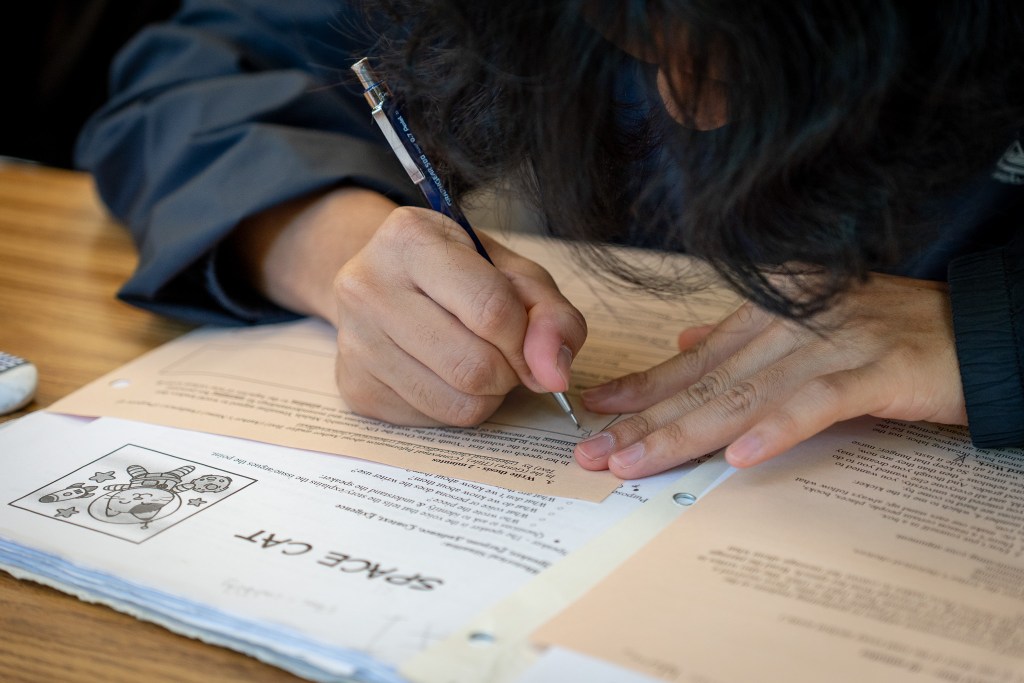
Only 57% of students who failed two or more classes in ninth grade completed high school in five years, compared to the state average of 89%, according to P-20’s research. Roughly 12% of freshmen who enroll in Hawaiʻi high schools drop out within four years, although the education department doesn’t specify how many of these students had to repeat a grade.
After her freshman year, Jimenez appeared in court for truancy. She was referred to an alternative learning program, which offered extended school days and year-round classes for kids who fall behind and need significant help catching up on their credits. While she initially resisted coming to class, the staff never gave up on her – sometimes showing up at her house to make sure she came to school.
“I needed somebody to tell me, ‘If you don’t get your ass in school, there’s going to be consequences,'” Jimenez said.
It took Jimenez an extra year to complete high school, but she earned her diploma last year and is now enrolled in a cosmetology program at Honolulu Community College.
“The bottom line is grade retention in later grades, especially in high school, is not really a good idea.”
Umut Ozek, a senior economist at RAND
It’s hard to say how repeating ninth grade affects student achievement, said Francisco Martorell, a professor at the University of California Davis School of Education. Most studies focus on students who were held back in elementary or middle school.
Generally, holding older students back can negatively affect their chances of completing high school and enrolling in college, said Ozek, the senior economist at RAND. Schools run the risk of students aging out before they earn their diplomas, meaning they can drop out at any time, and the stigma of repeating a grade may be stronger among older students.
“The bottom line is grade retention in later grades, especially in high school,” he said, “is not really a good idea.”
Gearing Up For High School
At Keaʻau High School, students’ transition to ninth grade starts weeks before the school year begins.
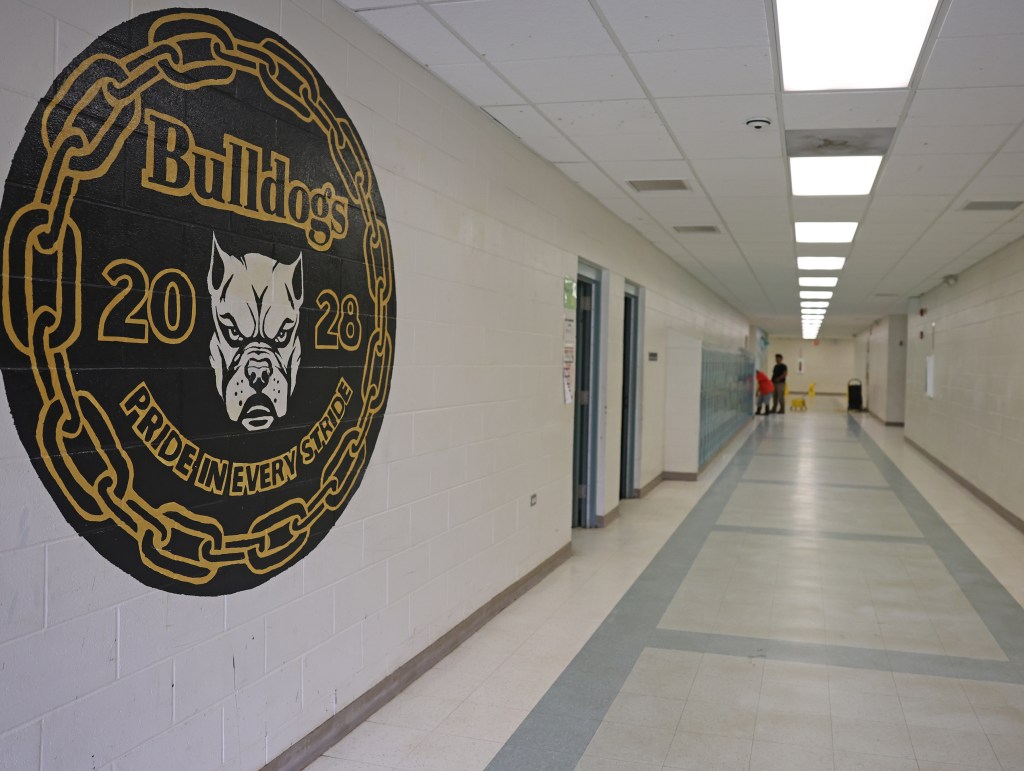
Incoming freshmen spend three weeks on campus in June taking classes, learning how to participate in clubs and athletics and painting a class mural in the ninth grade building. The most recent addition was a gray and white shark sternly folding its arms, surrounded by maroon and black block letters reading “2030 SHARKS.”
While the program isn’t mandatory, it typically draws 80 to 90 students – roughly 30% of the incoming freshman class. The summer initiative focuses on helping students develop a strong sense of belonging and community with their peers, which can translate to better attendance and lower retention rates during the school year, Hannigan said.
Typically, she said, around 6% of students need to repeat ninth grade at Keaʻau.
Over the summer, freshman Tristan Hanley was worried about choosing the right classes and adjusting to Keaʻau’s campus before entering the school’s summer transition program. He came out of the program excited to join the school’s band program and football team and had gotten to know some of his teachers.
“It just allowed me to see all of these new opportunities at the school and hear about them and try them out a little bit too,” Hanley said.
While many schools are trying to ease students’ transition to ninth grade, some challenges start well before teens enter high school, prompting national debates on whether kids should be held back earlier.
Danni-Cheree Lee’s son began falling behind in elementary school. He frequently asked to stay home from school and felt ashamed to ask for help in class, she said.
Despite his struggles, Lee’s son continued progressing through the grades until his attendance issues caught up to him in middle school, when he needed to repeat sixth and seventh grade. At the time, Lee was dealing with back and neck issues and didn’t have a car, she said, so it was hard to force her son to attend school.
Lee said her son might have benefited from being held back earlier, when his elementary school first began noticing problems with his attendance. While repeating grades in middle school gave him more time to learn the material, he also experienced teasing as his classmates noticed he had fallen behind.
Principals rarely hold kids back before high school and tend to have more discretion around student retention in the younger grades. The Hawaiʻi Board of Education only specifies that schools must promote students based on their academic achievement and social development, and students must pass core classes like English, math, science and social studies to complete middle school.
At Jarrett Middle School in Pālolo Valley, Principal Reid Kuba said it’s a balancing act when deciding whether to move some students up to high school. Teachers offer after-school classes and summer school to prepare students as much as possible for ninth grade, he said, but he also knows that students who need to repeat a grade in middle school face a greater risk of aging out of the system before they earn their diploma.
“For me, and I think all the middle school principals, that’s the main thing, is trying to get them to graduate,” Kuba said. “So they’re not only looking at grades, but their age.”
Ideally, Kuba said, it would be beneficial for some kids to repeat a grade when they’re much younger, such as kindergarten or first grade, when they’re developing fundamental skills and less aware that they’re a year behind their peers.

For Lee’s son, the turning point came when he enrolled in an alternative learning program, where the classes were smaller and teachers were strict about attendance, she said. Having adults who genuinely cared about his education motivated him to complete his high school classes and explore new topics like finance, she said.
Even though he fell behind in middle school, he earned enough credits to graduate on time with the rest of his peers in 2022.
“I do not think any child should have to wait to be held back once in high school because that’ll make it worse,” Lee said. “Imagine how much schooling, how far behind they are in these subjects, and then they’re only going to be given four years to catch up on everything.”
This story about being held back was produced in partnership with Big Local News at Stanford University and The Hechinger Report. Data analysis was conducted by Eric Sagara, senior data journalist with Big Local News.

