

Some Hawaiʻi Youth Love To Vape. Will New Limits Make Them Quit?
Hawaiʻi lawmakers approved some of the country’s most restrictive vaping regulations. Some doubt it will prompt youth to kick the habit.
Naiya Siple remembers how easy it was to find a vape when she was a teenager.
The 20-year-old started vaping her freshman year of high school, part of a generation that came of age alongside brightly colored disposable devices marketed in flavors like blue raspberry and cotton candy. Vapes are illegal for those under 21 to purchase or use publicly in Hawai‘i, but that hasn’t stopped teens, and even preteens, from accessing them.
“Teenagers and even younger kids will find a way to get nicotine somehow, some way,” Siple said.
Hawaiʻi hopes to change that.
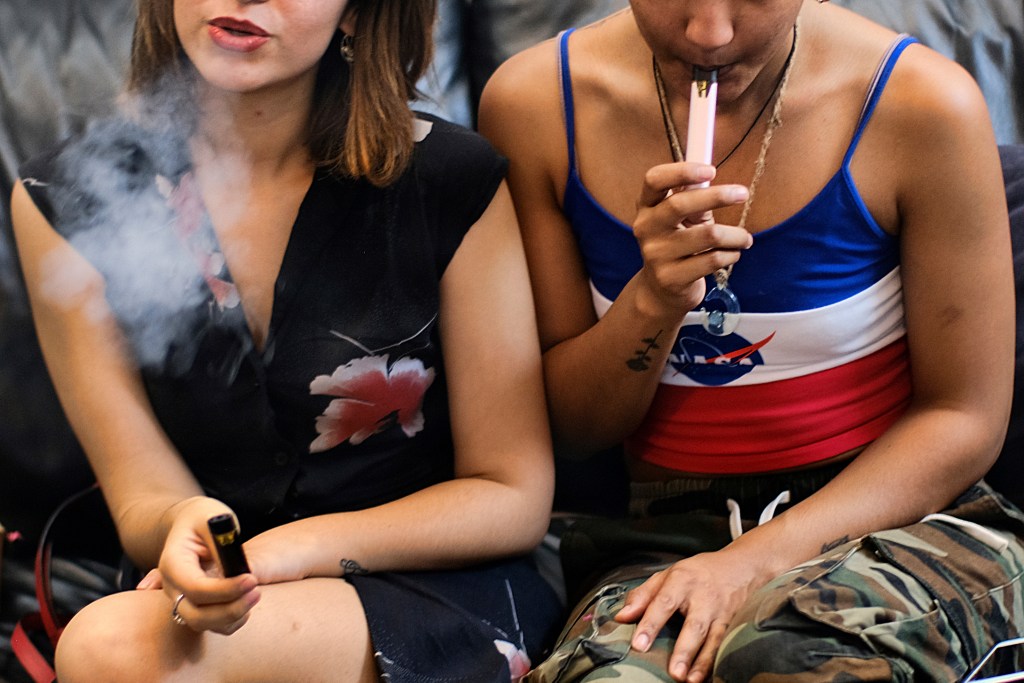
Starting Jan. 1, the sale of disposable vapes, the kind often favored by young people, will be banned in the islands. And rechargeable options will be limited to those approved by federal regulators. It’s a major crackdown on a market that has hooked youth and adults alike throughout the country. Hawai‘i health officials hope the new limitations will prompt users to kick the habit, or not start smoking at all.
Supporters say the laws represent Hawaiʻi’s most significant attempt yet to curb youth vaping and could become a model for other states.
“These types of policies that passed this year have potential to have real impact in tobacco prevention, especially with youth,” said Jill Tamashiro, supervisor of the Hawaiʻi Department of Health’s Tobacco Prevention and Control Section.
But the youth have their doubts. Young people interviewed for this story described a vaping culture that often extends beyond traditional retail stores, with products circulating through friends, older straw buyers and informal social networks. As Hawaiʻi prepares to implement the new restrictions, youth, lawmakers and health advocates are watching to see whether reducing supply will translate into reduced use.
Siple quit on her own three months ago, but she’s not convinced Hawaiʻi’s new vape laws will stop determined teenagers from getting their hands on the products.
“I definitely think people are either going to find ways around it,” Siple said, “or get addicted to something worse.”
Why Hawaiʻi Is Cracking Down On Vaping
Lawmakers took action amid what public health officials described as a yearslong youth vaping epidemic in Hawaiʻi and efforts by young people who had witnessed the rise of vaping among their peers, according to supporters.
About 25% of Hawaiʻi high school students reported using e-cigarettes in 2015, according to data from Hawaii Health Matters. The following year, Hawai‘i lawmakers raised the legal age for purchasing tobacco products and electronic smoking devices from 18 to 21 — making Hawai‘i the first state in the nation to do so. But the vaping rates continued to climb.
By 2019, 31% of high school students reported using e-cigarettes.
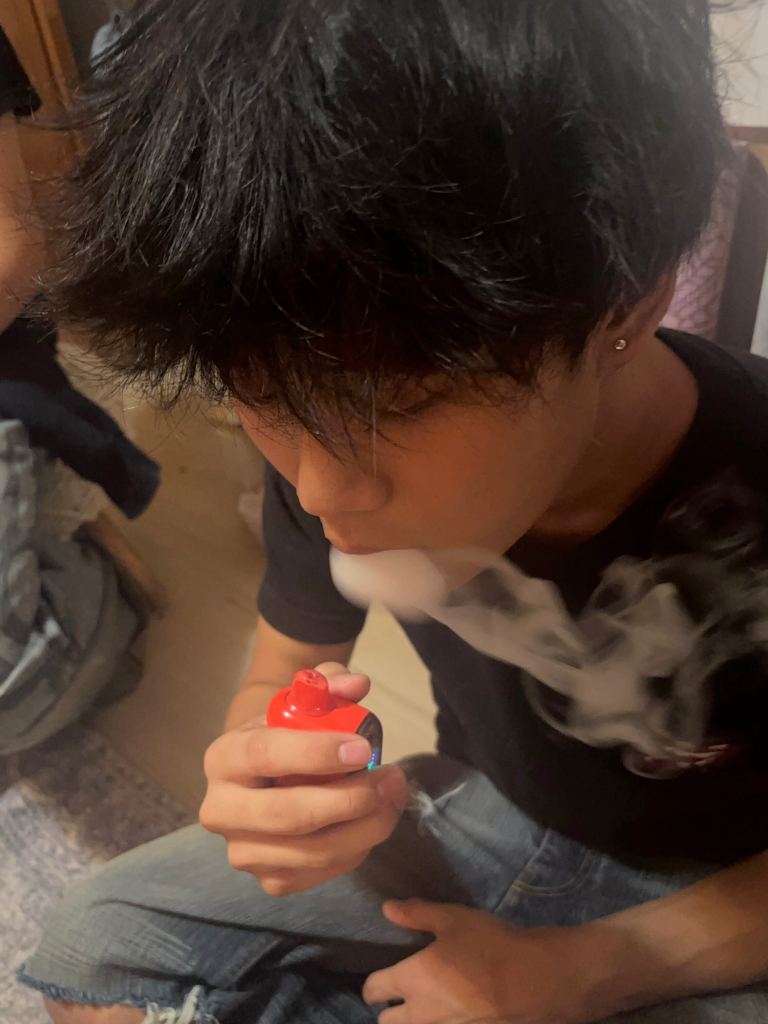
Youth vaping rates have declined since then and stood at about 13% of Hawai‘i teens as of 2023, the most recent year listed in Hawaii Health Matters data. Health advocates say more than 1 in 10 teens is still too high, and concerns about addiction continue to drive efforts to limit access to vape products.
Tamashiro said disposable vapes have transformed the nicotine marketplace over the last several years, becoming stronger, cheaper and increasingly attractive to young users. Research published in the American Journal of Preventive Medicine found nicotine content sold in disposable e-cigarettes increased dramatically between 2020 and 2024, while CDC Foundation sales data show disposable products now dominate the U.S. e-cigarette market.
Tamashiro said manufacturers frequently market the devices with colorful designs, sweet flavors and technology features that appeal to young consumers. According to the 2025 National Youth Tobacco Survey, about 66% of youth e-cigarette users reported using disposable devices. Those are the products targeted by a new law, Act 189.
The state believes the new laws could dramatically narrow the products available for sale. Tamashiro said another one of the new laws, Act 190, will limit legal sales in Hawaiʻi to roughly 45 FDA-authorized vape products, down from thousands currently available nationwide. In addition to restricting youth access, the legislation aims to eliminate illicit, unregulated products that pose fire risks, contain unknown toxic chemicals, and contribute to significant e-waste.
Retail Merchants of Hawaii opposed the disposable vape ban during the legislative session.
The interest group noted that vaping is already illegal for youth. If they’re still doing it, enforcement — not a lack of rules — may be the real issue, the group’s interim CEO Dave Erdman wrote in testimony.
“Strengthening compliance, enforcement, and accountability within the current framework may be more effective than adding new prohibitions that primarily impact licensed, law-abiding retailers,” Erdman said.
The organization warned that banning disposable vapes could unintentionally shift demand into unregulated markets.
Others see the vape restrictions as government overreach.
Andrew Stewart, a 32-year-old who said he had been vaping for more than a decade, said he originally turned to vaping while trying to move away from cigarettes. He expressed concern about how the restrictions could affect adults who use disposable products.
“I think that as an adult user, I have the ability to decide what I want to smoke and what I don’t want to smoke,” Stewart said. “If I want to spend my money on disposables, I should be able to.”
The Hawaiʻi Attorney General’s office declined a request to be interviewed about enforcement of existing and new vaping laws.
In a statement, AG spokesperson Toni Schwartz said the Department of Health already contracts with the University of Hawaiʻi to do compliance checks on retailers to ensure they are not selling to underage customers. And the Food and Drug Administration inspects brick-and-mortar establishments, online sellers and manufacturers.
Since January 2025, the AG’s office, along with other states, has done outreach to retailers and distributors to curb the importation and sale of vape products that are not FDA-approved, according to Schwartz. As the new laws take effect, the AG’s office is notifying retailers of the changes.
Youth ‘Need Help’ Quitting
Maya Butts, a sophomore at Kalaheo High School, said vaping is still commonplace among students despite existing age restrictions. The disposable products like Geek Bar, Aloha Sun and Elf Bar — many of which have “very sweet, fruity, candy-like flavors,” she said — are popular.
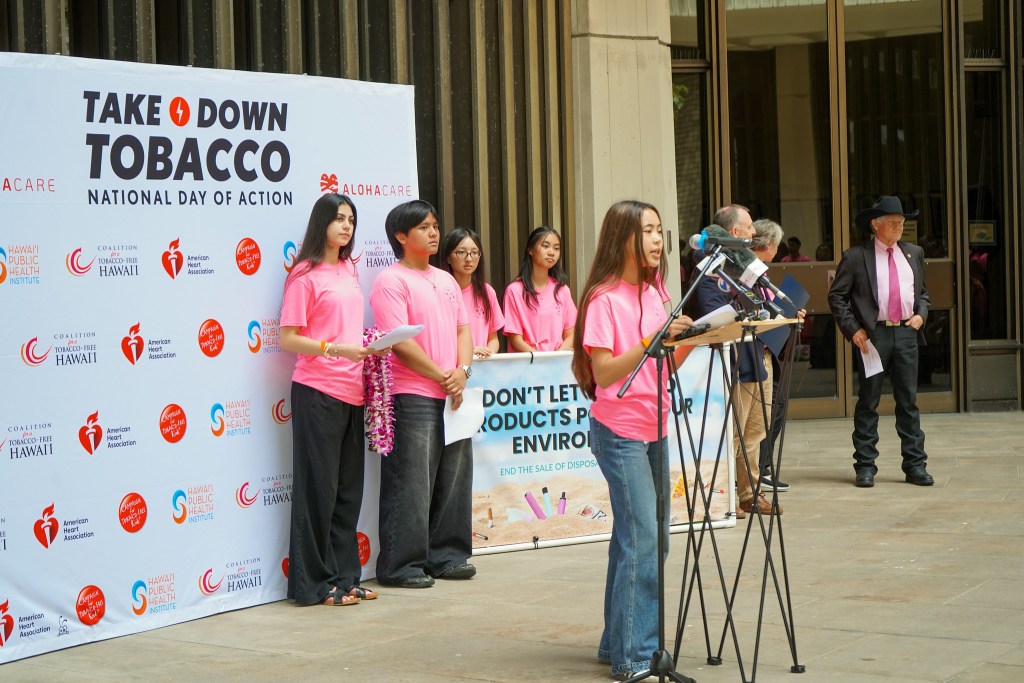
“There’s vapes quite literally everywhere in my school,” said Butts, a member of the Coalition for a Tobacco-Free Hawaii Youth Council. “There’s people even vaping in classrooms, not only the bathrooms during break time.”
Underage users often obtain products through older friends, relatives, or even informal sellers operating through social media, including Instagram and TikTok, according to Butts. Because of those existing networks, Butts believes the new laws will reduce legal sales but may not completely eliminate youth access.
Siple said she obtained her first vape through an older teenager and eventually became addicted, despite being aware of the health risks.
“I thought that it was cooler than anything,” she said. “That’s why I wanted to do it, because everyone my age was doing it.”
Still, Siple supports the state’s effort to restrict disposable devices, arguing that existing age restrictions have done little to keep nicotine products out of the hands of minors.
“A lot of people have this idea like, ‘I’m going to quit soon. Let me just buy one more vape or let me just finish the one I have,'” she said. “But since disposables are so easy to get, quitting is continuously pushed back for them.”
Taimane Matua, a 19-year-old from Kāneʻohe who said she experimented with vaping in middle school, said the new law’s effectiveness will come from enforcement.
“It’s like the fireworks law. Even with the fireworks law, on New Year’s Eve and the 4th of July, you see fireworks blowing up everywhere. With this ban on vapes, you will still see kids, 14 years old, hitting vapes at the mall,” Matua said.
“I hope that the law and HPD cracks down on the people that sell them.”
Supporters of the new laws argue that they do not need to eliminate youth vaping entirely to be successful. Instead, they hope reducing the number of products legally available will make it harder for young people to start using nicotine in the first place.
Whether Hawaiʻi’s new vape laws ultimately reduce youth nicotine use may take years to determine. State officials plan to track retailer compliance, youth vaping rates and quitting behaviors after the laws take effect in 2027. In the meantime, many youth remain cautiously hopeful that the restrictions will make it harder for the next generation to pick up the habit.
“I hope it gets better,” Matua said. “Because the kids of Hawai‘i definitely need help.”

