

He Oversaw Airports And Billions Of Dollars. Now He’s Accused Of Taking Bribes
Ford Fuchigami, who is on leave pending a review of his work, had “an extraordinary career as a public servant” before being charged in Hawaiʻi’s latest political corruption case.
Among the suspects in the state’s bribery case against Lt. Gov. Sylvia Luke and others, one name is probably unfamiliar to most people in Hawaiʻi.
Ford Fuchigami, the administrator of state airports, was long known as a get-it-done bureaucrat, one who could make rapid progress on projects. A longtime transportation official, his work is now under scrutiny by the agency he once oversaw.
An examination of Fuchigami’s record reveals he was in proximity to many of the key figures in recent corruption cases.
Emails from 2014 show he had been helping convicted briber Milton Choy secure funding for a wastewater project on Maui. Years later, a photo on social media placed them together at a Waiʻanae homeless camp where they were reportedly working to resolve issues around water access.
Under his tenure as transportation director, the DOT awarded millions of dollars in airport work to companies whose executives made political donations through clandestine fundraisers hosted by a high-ranking airport official. Choy and lobbyist Tobi Solidum, Fuchigami’s co-defendant in the current pending case, were among the attendees and donors at those gatherings.
Solidum was key to securing city and state contracts to establish mobile Covid-19 testing labs, some of which were located at the Daniel K. Inouye International Airport at a time when Fuchigami was responsible for implementing Hawaiʻi’s screening of airline passengers to prevent the spread of Covid under the Safe Travels program.
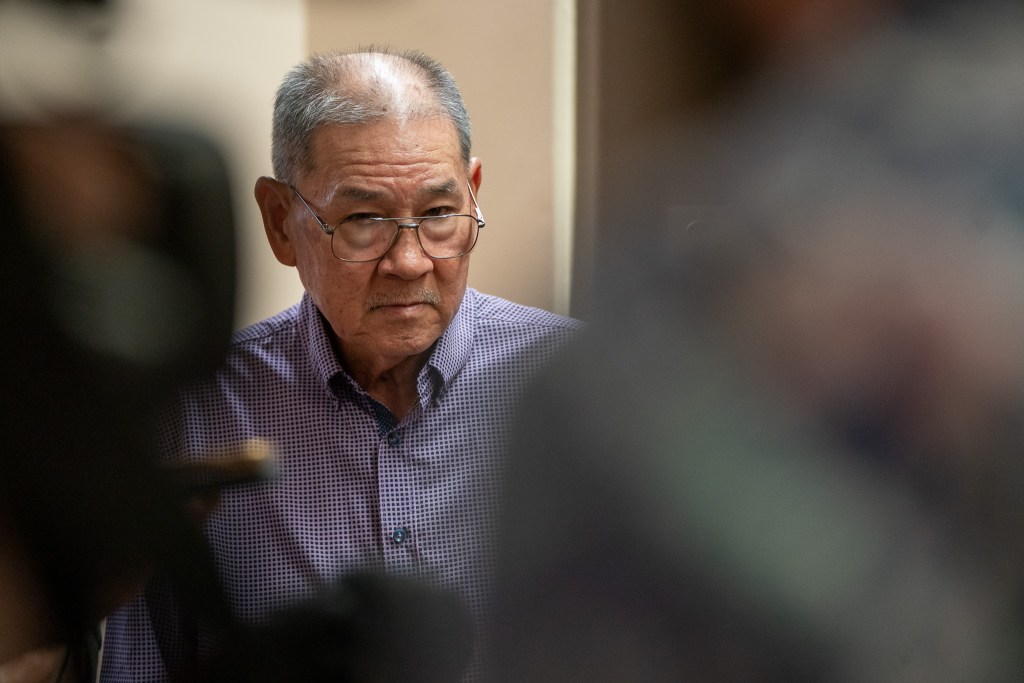
He has had four stints at the transportation department: first as deputy director of the airports from 2011 to 2014; next as transportation director from 2014 to 2017; then as an administrative services officer and airports administrator from 2019 to 2022; and later as airports administrator from mid-2023 until now.
Each job at the airport came with significant power. He oversaw an annual operating budget of more than $470 million and also had a role in approving or ensuring compliance of more than $3.7 billion worth of airport contracts during his years at the DOT, according to state data.
Fuchigami has been placed on paid leave from his role as airports administrator under a policy that allows for removal of employees from work “for the good of the State.” The Department of Transportation has also launched a review of initiatives he led, which is expected to be completed near the end of August, according to a statement to Civil Beat from spokesman Russel Pang.
Those decisions were made after he was charged with taking a bribe from Solidum while working for the Senate Ways and Means Committee in 2022. Fuchigami has pleaded not guilty.
The charges caught many by surprise.
“I was dumbfounded to see his name and read what he was accused of,” said former Gov. Neil Abercrombie, who appointed Fuchigami to his first role in government in 2011. “It floored me. He’s had an extraordinary career as a public servant … I can’t explain it.”
Fuchigami’s attorney declined to make him available for an interview.
‘Good Management Material’
A search of court records shows the bribery charge is Fuchigami’s only criminal offense.
He is twice divorced, and property records show he owns a condo in Pearl City and a home in Kapolei on which he still owes a mortgage. He earned between $135,000 and $216,000 in his job as airports administrator, according to salary records.
A graduate of Damien Memorial and a standout high school golfer, Fuchigami began his career working for Sheraton Hotels in Waikīkī from 1976 to 1994, where he was in charge of housekeeping at the Princess Kaiulani hotel. Later, he became an executive at United Laundry Service, owned by Vicky Cayetano. He would later help organize the 1998 inauguration for Cayetano’s husband, Gov. Ben Cayetano.
He stayed in the linens industry, supplying cleaning services for hotels and hospitals, until Abercrombie’s election in late 2010. He was chosen from among hundreds who applied for top positions in the new administration.
“He was good management material,” Abercrombie said, recalling a recommendation his transition team made on Fuchigami’s application.
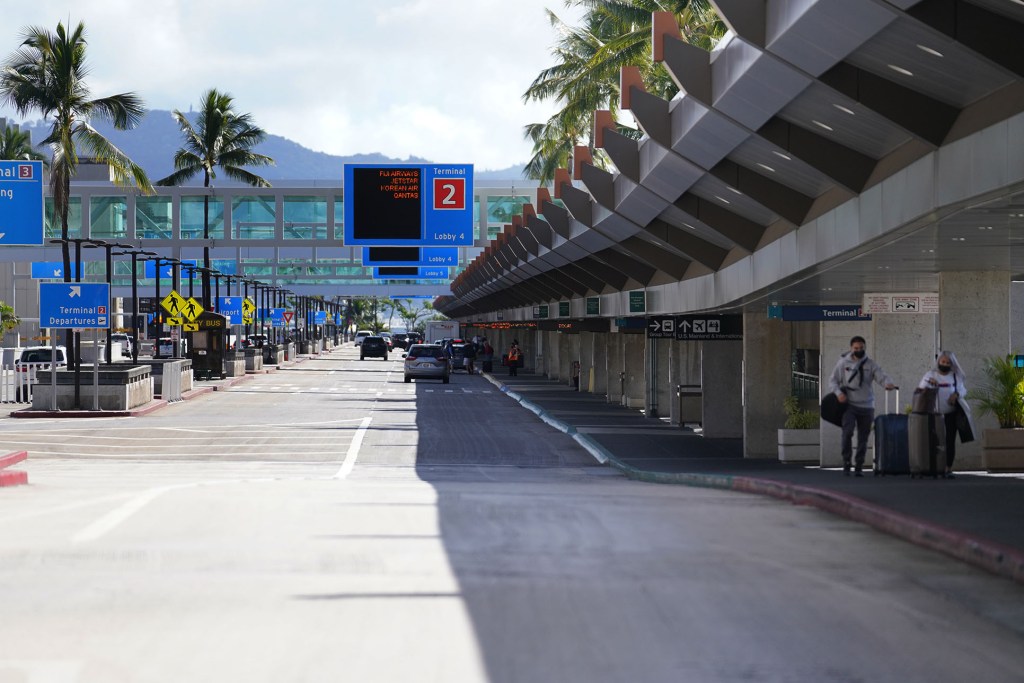
His first government gig saw him overseeing the 12 state airports across the islands and put him in charge of a more than $2 billion modernization effort. He wanted to put his years of experience in the hospitality industry to work in his new job, especially when it came to the Honolulu airport, which had been derided for years by travelers as an ugly start to their vacations.
“It’s the first impression and the last impression,” he is quoted as saying in a Star-Advertiser story on his appointment. “There’s no reason whatsoever why you can’t keep a property clean.”
Fuchigami earned a reputation as the person to get things done.
Abercrombie praised him for his work redoing runways. He was credited with shoring up procurement processes at the airports division, which had been a source of bid-rigging scandals involving contractors years earlier.
In 2014, Honolulu Mayor Kirk Caldwell appointed him to lead the Department of Enterprise Services, in charge of the Neal S. Blaisdell Center, city zoo and golf courses. Just a week after his confirmation hearing before the City Council, however, Fuchigami would go back to the state to instead lead the transportation department under Gov. David Ige, who had then been elected to his first term.
As DOT director, he received much praise from then-Big Island Mayor Billy Kenoi for finally starting work on a $90 million project to redo the Queen Kaʻahumanu highway. Federal officials commended him for using unspent roadway funds to clear a backlog of projects that at one point totaled more than $900 million. He took contractors to task for delays and construction flaws at a new airport hangar in Honolulu that had gone way over time and over budget, the Honolulu Star-Advertiser reported.
He was seen as the yardstick for progress in a state where bureaucracy is usually marked by sluggishness.
“I never heard a word of complaint about Ford, quite the opposite,” Abercrombie said. More often, people would say “‘Too bad I can’t have Ford.’ If someone was screwing up, that person screwing up would be compared to Ford.”
Connections To Convicted Briber
Airport contractors also knew to go to him.
In March 2014, Fuchigami had been in contact with Choy, owner of a company selling wastewater parts to county and state governments. Choy would later be convicted on bribery charges and aided the FBI in catching corrupt lawmakers in a case that would eventually lead to the state’s current bribery case.
At the time in 2014, Choy had been looking for ways to finance a county wastewater project that was to go to his company, emails obtained by Civil Beat through a public records request show.
In email exchanges with Stewart Stant, a Maui County employee whom Choy was bribing, Choy describes conversations he had with Fuchigami where the then-airports deputy agreed to put up $2.5 million as the state’s share of a $5 million county wastewater project to upgrade a wastewater plant at Kahului so that it could produce what is called “R-1” water – treated wastewater that can be used for non-potable purposes.

The idea was to take some of that R-1 water from the Kahului plant to the airport where it could be used for things like landscaping, flushing toilets and fire suppression. Fuchigami, Choy wrote, was “very supportive” of the project and helping the county pay for it.
The DOT and Maui County were to enter an agreement after a presentation on the project to the Maui County Council. But there’s no record that the presentation took place, at least not publicly, and there’s similarly no public record that they struck an agreement. The county budget approved that year allocated $6 million to the project between 2016 and 2020. Maui County later bought critical components of those upgrades from Choy’s company for $3.5 million through a no-bid contract, part of the work that would eventually land Stant and Choy in federal prison.
A year later, Fuchigami also testified in support of a 2015 bill that would aid Choy’s company. Former Rep. Ty Cullen had introduced the measure for so-called water scalping projects, a similar concept to Choy’s idea of reusing wastewater at the Kahului airport. The DOT supported the measure, which Cullen introduced after taking more than $20,000 in bribes from Choy the year before.
“We believe that reclaiming and reusing wastewater in our system will assist us in sustaining the quality of services we offer to our airport tenants, visitors and employees,” Fuchigami’s testimony said.
Choy’s company would later receive more than $9 million in subcontracts for work on a wastewater project at the Kahului airport that resulted from that bill, according to records in a lawsuit over that project. The prime contractor has sued Choy’s company for not paying back about $630,000 it owes.
In 2016, another of Choy’s companies won a consulting subcontract from the DOT to survey the Honolulu airport’s heating, ventilation and air conditioning system.
Choy, who died in 2024, was a major political donor and government contractor. He also frequented political fundraisers hosted by a high-ranking airport official where contractors seeking business from the state could socialize with state officials and politicians.
Some of those gatherings took place while Fuchigami was director of the transportation department.
In 2024, a New York Times and Civil Beat investigation found that more than $131 million worth of airport consulting contracts went to companies whose executives and employees made political contributions to candidates through those parties hosted by Wes Yonamine, a high-ranking airport official and a subordinate of Fuchigami.
Fuchigami attended too, according to witnesses and campaign spending records, which show he donated $250 around the time of one of those parties in 2019 to then-Sen. Gil Keith-Agaran. Solidum, the linchpin of the state’s current bribery case, appears to have attended the same function, donating $500 each to Keith-Agaran and Senate President Ron Kouchi.
Oversaw Program That Led To Pricey Covid Contracts
At the tail-end of Ige’s first term in 2017, Fuchigami became the governor’s administrative director, making him the office’s liaison among executive branch agencies and to the Legislature.
He could often be seen in the State Capitol scurrying from office to office to count votes on the governor’s appointments and appearing in committee hearings to weigh in on bills and gain support for the executive branch’s priorities.
Midway through 2019, he went back to the airports division, an area for which former colleagues said he always had an affinity.

That job put him in charge of implementing the state’s Safe Travels program during the pandemic. It was intended to screen incoming passengers for Covid-19 to help stem the spread of the disease.
He appeared before state senators on multiple occasions to talk about the intricacies of the program. Aided by maps of the airport, he’d talk about the flow of passengers through terminals, how queues were arranged to ensure people stayed six feet apart, and he answered questions from impatient senators on the minutiae of travel forms.
The screening program was one he kept a tight fist on and was keen to personally oversee, according to administration officials.
Under that program, the state began a $24 million contract to install thermal screening cameras that could also scan faces at state airports. It was panned by civil rights groups, although a department spokesperson said at the time that people shouldn’t think of technology from “spy movies.”
But, in one hearing in 2020, Fuchigami explained to senators how the thermal cameras actually could be used in conjunction with other airport cameras to aid law enforcement in tracking and finding potential Covid rulebreakers.
State officials later canceled the contract. The DOT paid $6.1 million on the contract, according to testimony to state lawmakers.
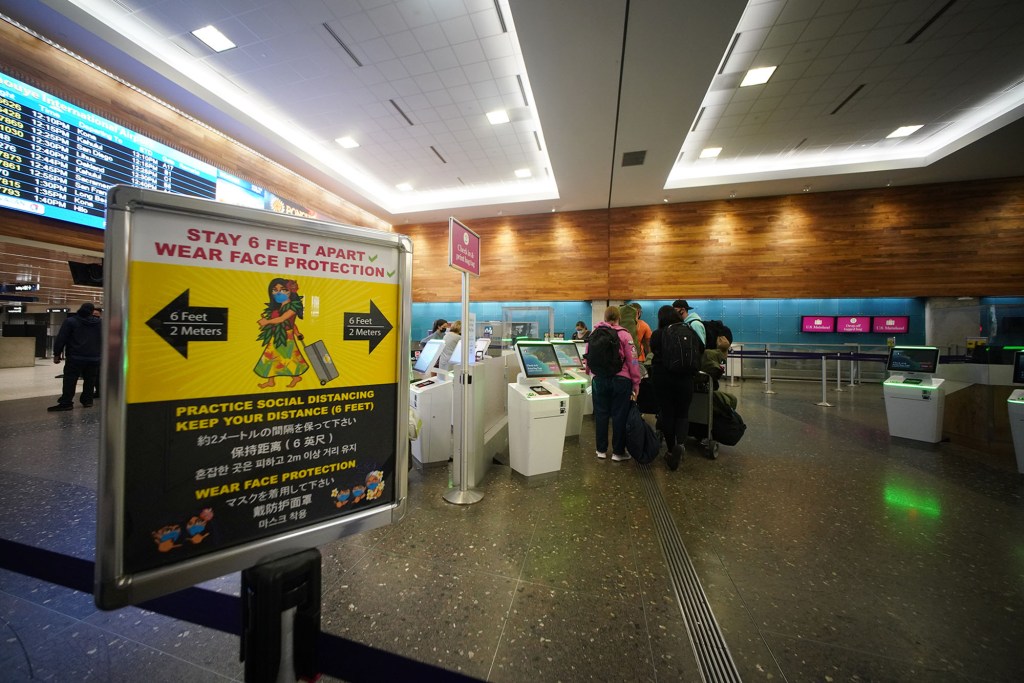
The Safe Travels program implemented a mandatory 14-day quarantine for travelers arriving to Hawaiʻi without evidence of a negative Covid-19 test. To reduce the number of travelers required to go into quarantine as part of the Safe Travels program, Honolulu hired the National Kidney Foundation of Hawaiʻi to set up mobile testing labs at airports, according to emergency procurement requests from the city.
Solidum, the primary defendant in the current bribery case, brought together the mobile testing lab consortium and pitched the project to the city. The kidney foundation would later be awarded pricey testing contracts from the state health department that have become a key part of the new criminal indictments.
Fuchigami left the DOT and started work for the Senate in 2022, where prosecutors allege he took a bribe from Solidum.
According to the indictment, Solidum gave Fuchigami a $7,000 check while he was on the staff of the Senate Ways and Means Committee. Fuchigami later cashed the check and met with Rep. Ryan Yamane, a co-defendant in the case, and Solidum to discuss an emergency appropriation to the health department that was to fund the kidney foundation’s testing labs.
That year, the Senate Ways and Means Committee, where Fuchigami worked, axed funding for some of the positions he once occupied at the transportation department. At the time, Sen. Donovan Dela Cruz explained that the positions had been vacant for years.
A year later, in 2023, the Senate restored funding for those positions, one of which Fuchigami would occupy in May after leaving his job at the Senate committee. That position, airport administrator, is the one Fuchigami holds today.

