Lala Triggers Nation’s First Coral Insurance Payment
The unusual policy was created in 2022, and the wind speed brought by Hurricane Lala has triggered a $200,000 payment that will go toward assessing and repairing the reef.
Hurricane Lala has triggered the first payment from a novel coral reef insurance policy created by The Nature Conservancy.
In 2022, the organization worked with the German company Munich Re to create a policy — the first of its kind in the U.S. — that would pay out up to $2 million in damages when coral reefs are hit by hurricanes and tropical storms. The Nature Conservancy, with funding from the Howden Foundation, has been paying premiums ever since.
Now, the storm has triggered the policy’s minimum payout of $200,000, which will pay the Hawaiʻi Emergency Reef Restoration Network — a coalition of groups created to receive the insurance funds — to assess and repair the reef.
The payout amount is probably not enough to cover all the work, especially as a second storm prepares to hit the state, and it’s only about half of the $432,000 the nonprofit has paid in premiums over the last four years.
Scientists, however, say they expect to see a much faster payout than they’d typically receive from state or federal agencies. They also hope the payout may help the insurance industry build momentum around other similar insurance policies in the future.
“This network has a huge potential to have a key function in helping our reefs like get through the next 20 years,” said Julia Rose, marine project manager at The Nature Conservancy. “I would hope that, as the market grows, we might see premiums become a little more affordable.”
Coral Is Its Own Insurance Policy
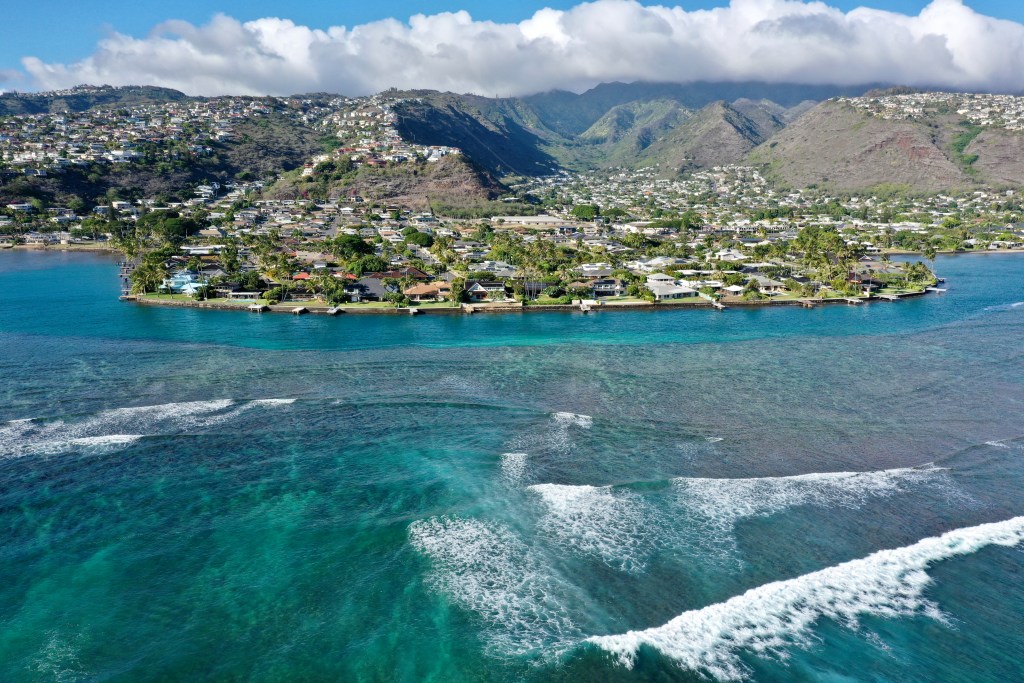
As communities take stock of the damage caused by Lala, some scientists note that the impacts would have been much worse if it weren’t for Hawaiʻi’s built-in storm defense mechanisms: coral reefs.
The underwater ecosystems serve as natural breakwaters that neutralize most of the wave power that accompany big storms. Reefs have been shown to cut wave energy by as much as 97%.
“When these storms are happening, the reefs are a big part of why we may not be seeing more impacts.” said Doug Harper, executive director Malama Maunalua, an organization that works to restore the reefs in Maulaua Bay on Oʻahu.
Healthy reefs diminish the force of the waves when they reach the beach, reducing massive erosion and flooding that can cut off sections of the highway or entire communities. The work reefs do, he said, is especially important in places with roads that are located right next to the bay, like his home turf.
In this way, the reefs serve as a form of invisible insurance for the islands during hurricanes and other large storms. However, their degradation in recent years has put that role in jeopardy.
On Wednesday, Rose was on a boat on the Kona Coast getting ready to begin surveying the damage from Lala, which passed over Big Island waters with winds as high as 140 miles an hour. She and others in the Hawaiʻi Emergency Reef Restoration Network were gearing up to spend just a few days assessing the damage so they could quickly move on to repairs.
“The amazing thing about reefs is that they can heal themselves,” Rose said. “A piece breaks off and it gets wedged somewhere else, starts to regrow and makes a whole new coral. Or that is how things should work.”
The reefs in Hawaiʻi are still recovering from the massive 2015 die-off due to coral bleaching from a historic ocean warming event linked to climate change. That left ecosystems much more vulnerable than they have been in the past. As a result, a growing number of organizations have begun to intervene in replanting the coral themselves.
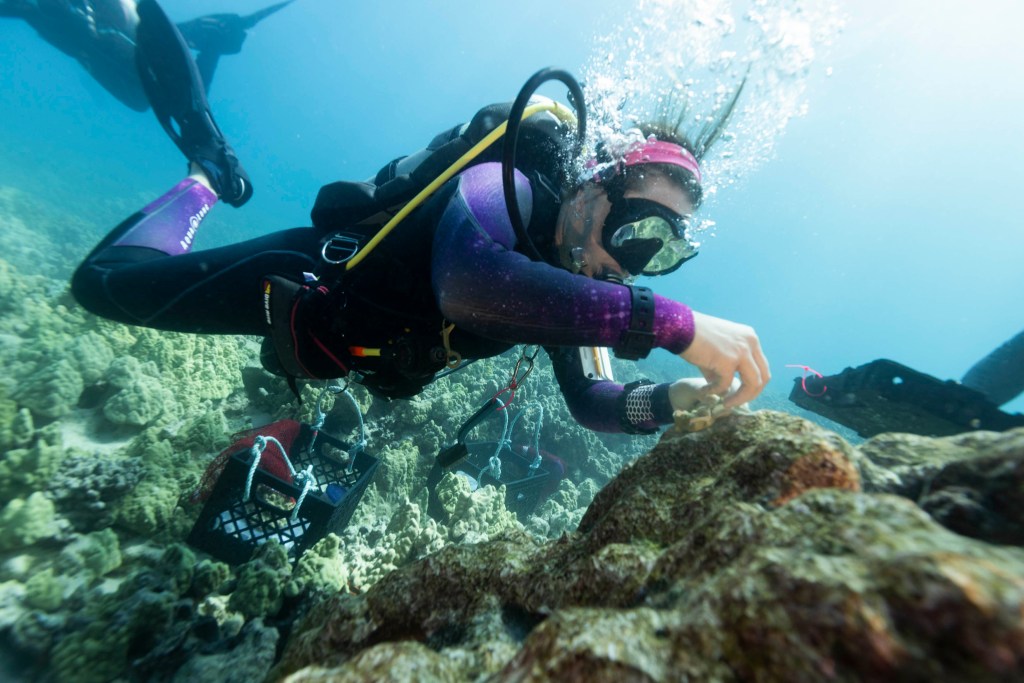
In the next few days, Rose and others in the network plan to rapidly assess the damage caused by Lala. Off the Kona Coast, they will use the insurance funds to tow snorkelers over sections of reef to identify where restoration work is needed most, and then acting quickly to replant the fragments they find.
“We have a window of time here to go and identify areas where a lot of coral breakage has happened, and we can directly reattach corals with cement underwater to give them that stable base and ensure that they survive and start regrowing,” Rose said.
If that repair isn’t done, said Alika Garcia, a Native Hawaiian fisherman and firefighter who runs the nonprofit Kuleana Coral, part of the HERR coalition, the problem will be compounded very quickly, especially as the combination of climate change and El Niño bringing yet more tropical storms this week.
Even if the storms only take 5% of the reefs every year, it won’t be long before it adds up, Garcia said.
“If we cannot keep up with what nature used to be able to keep up with,” he added, “the impacts are going to be worse on the coastal communities every time, and that’s just going to compound over time.”
Insurance As Conservation Strategy
Other places in Mexico and Central America have taken out insurance for their coral reefs in recent years. The organizations that applied for those policies identified robust third-party data from the National Oceanic and Atmospheric Administration’s National Hurricane Center that TNC’s Hawaiʻi policy was able to use in determining its triggers.
“They built an understanding of the history of storms and how they’ve been hitting certain areas around the world, and an understanding of the probability of that happening in the future,” Rose said. That existing work made it much easier for TNC and Munich Re to write up a similar policy for Hawaiʻi.
Despite the clear evidence that storms will continue to hit the islands, and will likely intensify in the years to come, Rose said there seems to be a lot of interest from the insurance industry in policies geared toward protecting the natural world from damage.
The industry, Rose said, appears to want to grow the industry “in a way that is going to support strong environmental outcomes.”
The Howden Foundation focuses on helping communities adapt to climate change. It’s also the corporate foundation of Howden, a company that describes itself as “the world’s largest employee-owned insurance intermediary.”
The Hawaii Insurance Division also supports the idea. “The Healthy coral reefs provide important protection for Hawaiʻi’s coastlines and communities. We are encouraged to see insurance being used as a tool to help make resources available quickly for reef restoration following damaging events,” Insurance Commissioner Scott Saiki told Civil Beat.
“Brian Neilson, administrator at the Division of Aquatic Resources in the Department of Land and Natural Resources added that department, “appreciates The Nature Conservancy’s commitment to Hawaiʻi’s environment and welcomes the potential for additional resources to support efforts such as marine debris removal and addressing storm-related damage to our reefs.”
Given the high cost of the policy premiums, however, there has been some question among the network members about whether it’s the best funding mechanism, in part because it is only triggered by tropical storms and hurricanes, and not by coral bleaching, for instance, or other destructive forces.
The insurance policy led to the creation of the network, and effectively brought together people working toward the common goal of reef restoration. It required the HERR members to design projects they could start as soon as the funding was released.
Some HERR members say that the insurance isn’t enough on its own. That’s in part because the network is also responding to other damaging events, such as major swells, tsunami and vessel groundings.
“Those impacts are not covered by the policy,” Rose said.
Garcia said the network also has applied for Green Fee funding from the state, but they are waiting to see if they receive the added support.
“The insurance policy is one part of it, but there’s a lot of other roles that the state can play, and federal agencies can play, in funding this work at scale,” Garcia added.
However it is funded, the coral restoration groups agree that reef restoration is worth its weight in gold. Beyond storm protection, Harper said, “When you’re paying to restore a reef, you’re also paying to have healthier larger fish populations, and all the other benefits reefs provide. So it’s like compounding benefits.”
The investment is especially urgent, Rose said, because half of Earth’s coral reefs have been destroyed by a combination of climate change, overfishing, pollution and habitat destruction, since 1950.
“We’re in a unique situation where we haven’t lost everything yet,” she said. “We still have our corals — and not every place in the world can say that anymore.”