Neal Milner: We Need More Insurgencies In Hawaiʻi Elections
Upstart candidates are great motivators for voter turnout and make us think about what we’re voting for.
August 23, 2026 · 7 min read

About the Author

Thanks mainly to critics of the Democratic Socialists of America, “insurgency” has gotten a bad name.
In this narrow view, insurgency is bad, a radical fringe disrupting the political process, subversive, threatening our basic values. “A secular religion,” a DSA critic called it, and she didn’t mean this in a good way.
I’m not defending the DSA. But the DSA-centric view is too narrow. It ignores how valuable insurgency and disruption can be.
Ignore the violent connotations that insurgency has. Think of it as a form of rebellion, but not a violent one.
Some of your best friends have been insurgents. More of your friends should be.
I want to take a broader, more generous look at what insurgencies are and what they do. The DSA movement is part of this, but only a part.

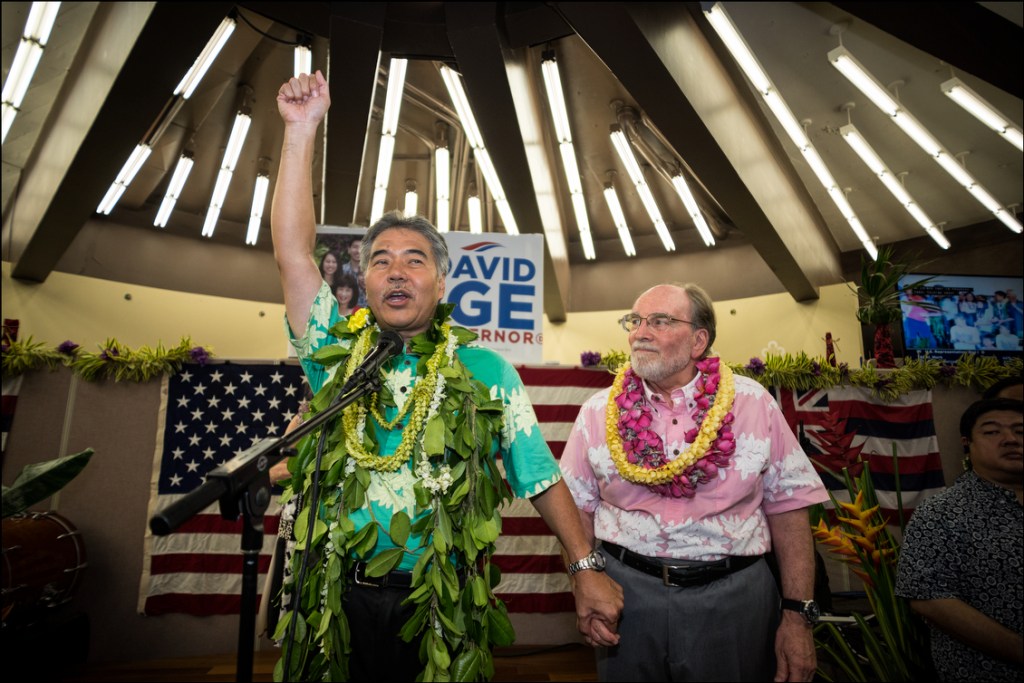
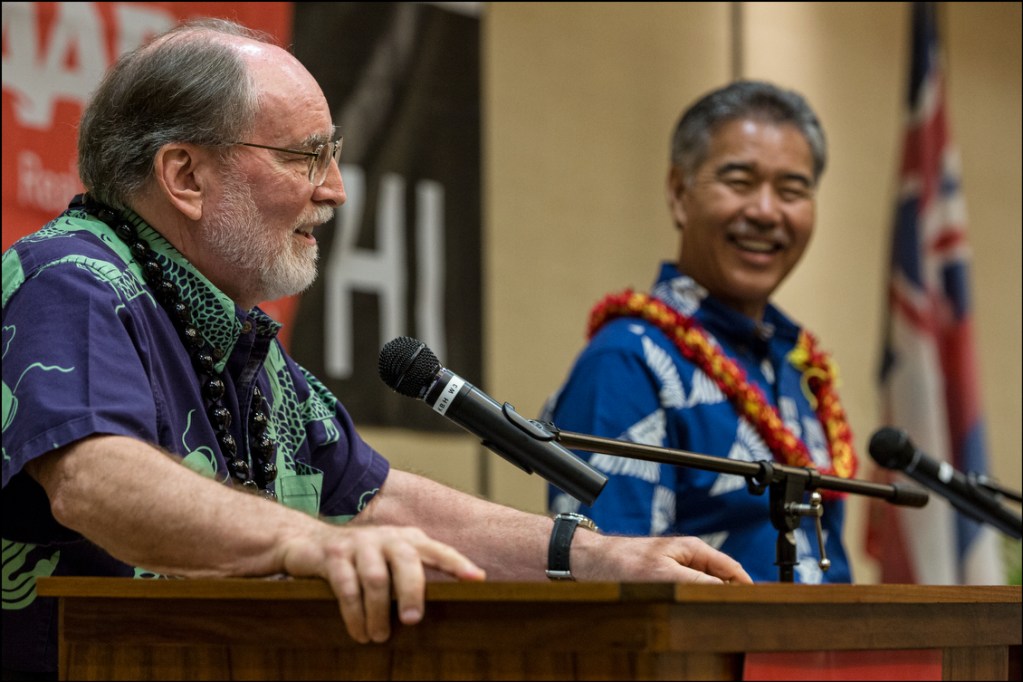
We’ll look at three insurgencies. One is the biggest political insurgency in Hawaiʻi since statehood, the 2014 Democratic primary race between Neil Abercrombie and David Ige.
The second shows what happens when insurgency disappears and orthodoxy returns. That’s the recent 2026 primary race between Ed Case and Jarrett Keohokalole — a big nothing burger.
The third happened just three days after this Hawaiʻi primary in the Wisconsin gubernatorial primary where socialism was a big issue. It included not just one but two insurgencies.
Finally, I’ll show how much Hawaiʻi is harmed by the lack of insurgencies. Hawaiʻi is too peaceful, and it’s a false peace.
Hawaiʻi’s Biggest Political Insurgency Ever
David Ige’s victory over incumbent governor Neil Abercrombie in the 2014 primary was the biggest insurgency in Hawaiʻi’s history.
Ige was a state senator but really a political nobody. Early polls showed not only that he had little support but that almost no one even knew who he was.
Yet he beat Abercrombie by a historic 37 points.
Abercrombie had all the usual advantages — incumbency, a much bigger campaign war chest, endorsements by powerful people, including President Obama, as well as name recognition.
Plus, this is Hawaiʻi, for goodness sakes. Hawaiʻi’s elections are generally so calm, quiet, and often little more than ritualistic, and with a few exceptions so clear in advance who the winner will be.
What’s most extraordinary is that in such an incumbent-friendly, political business-as-usual state, Democratic voters didn’t just dislike Abercrombie, they changed their typical behavior and actually voted against him. That’s virtually unprecedented.
But, really, mere minutes after the 2014 results were announced, Hawaiʻi politics jumped securely back onto the path of the same old, same old.
Since that 2014 primary, elections here have been as non-insurgent and pre-2014, as you can get. Hawaiʻi Democrats win easily all the time. Voting turnout continued its pre-2014 decline.
There are squabbles among Democrats, but overall that big tent continues to be a warm and cozy spot.
And DSA? What’s that?
CD1: A Poster Child Ho Hum Return To Orthodoxy
The 2026 First Congressional District primary contest between Ed Case and Jarrett Keohokalole was a totally orthodox, completely non-insurgent return to the way things were before 2014, as if Dan Inouye was still on the ballot.
Despite the national turbulence about DSA, that 2026 race was the full opposite of insurgency.
Case won handily for the usual predictable reasons. He was the incumbent, had greater name recognition, and stressed the importance to Hawaiʻi of his well-established DC connections.
An easy victory. Jarrett Keohokalole’s mere 34% of the vote is almost exactly what Abercrombie’s losing total had been.
Keohokalole never identified as a Democratic Socialist, but rather as a younger more progressive version of what the Democrats should look like, as in my opponent is too old and not progressive enough.
By the book. Made sense maybe, but still — low turnout, old incumbency voting habits, and nothing close to the passion that drove so many voters to reverse course like the Ige insurgency 12 years before.
Meanwhile, just three days after this, in the Wisconsin Democratic gubernatorial primary, Wisconsin voters created not just one but two insurgencies. Both had to do with the DSA.
A Double Insurgency
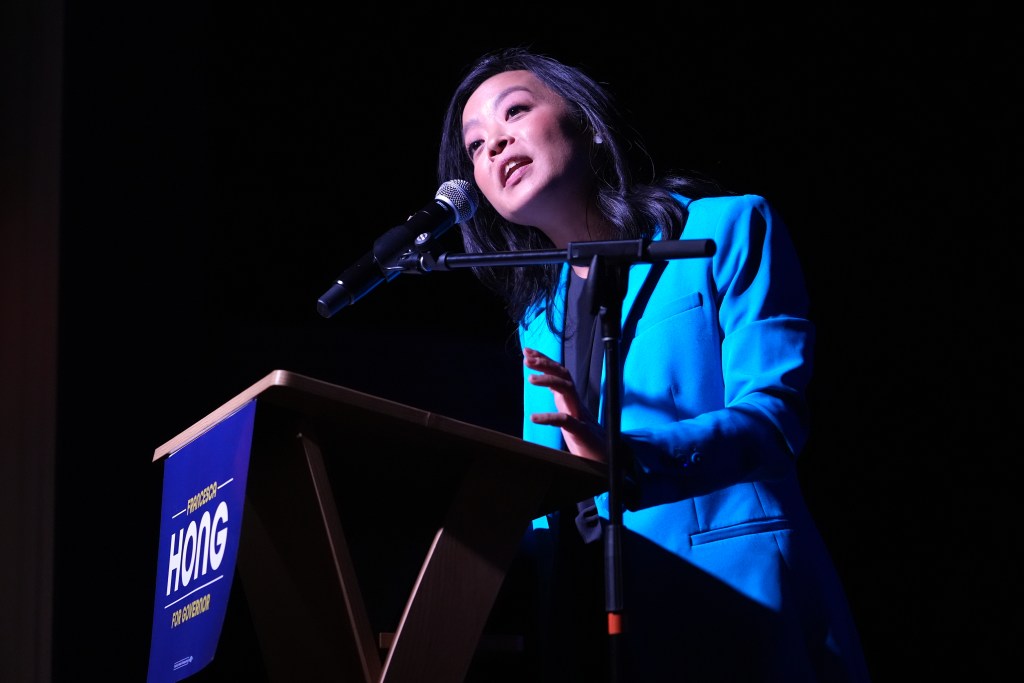
One insurgency was the powerful rise of the DSA itself. Francesca Hong, a state legislator and avowed DSA member, led the race from the beginning.
A month before the election, polls showed Hong was the choice of 39% of the voters. No one else was close. In fact, a story by itself, almost all the other candidates had dropped out, including the ultimate winner David Crowley who never had more than support from 15% of the voters. There were still a large number of undecideds.
Hong was this close to becoming the first DSA governor in the U.S.
But only this close because during just the last couple weeks of the campaign there was another insurgency, this one at least as dramatic as Hawaiʻi’s in 2014.
Tony Evers, the very popular sitting governor, got Crowley, the Milwaukee County Executive, back into the race and actively supported him.
As a campaigner, Hong made some terrible rookie mistakes. She never learned how to walk back some of her more controversial DSA positions, like eliminating Thanksgiving and defunding the police.
Hong did well. She finished with the same numbers she had during the campaign. She received 39.4% of the votes, which is higher than Abercrombie got in 2014. Crowley got just a smidgen more — 39.6 %
The real story is the resurgence of huge numbers of voters who at the last minute made up their minds, bringing Crowley out of the depths of Nowhere Land.
It was a powerful comfort vote spurred by potential primary voters who paid enough attention to know that they weren’t comfortable with Hong but didn’t like the increasingly puny alternatives until Crowley reappeared in a different light. More like Ige voters in 2014 than anti-socialists.
Put aside your own preferences for a moment and consider how powerful and valuable insurgencies can be, whether they involve the DSA or the Tea Party movement, which was tremendously successful.
There is something exciting, mysterious and, most of all, ennobling about insurgencies.
Think of 2014 Hawaiʻi. Because of the insurgency, the question became “How did something like this happen?” That question is a mobilizer, giving people reason to think about politics and see the out of the ordinary in action.
Compare that to the orthodoxy of today’s elections in Hawai‘i where the question isn’t “How could this happen?” but rather “Come on, how could it not have happened that way?”
That question is demobilizing, a destroyer of interest, leading to an even greater “why bother” turn away from participating.
The insurgency-driven Ige voters and last-minute Wisconsin voters took a step forward.
And the day after her loss Francesca Hong endorsed her much more moderate opponent, as both began to campaign together in a “unity tour.”
Elections in Hawaiʻi are boring and for the most part inconsequential because it is so easy to see in advance who is going to win.
No wonder Hawaiʻi now has a strong tradition of non-voting. What’s the point?
 Sign up for our FREE morning newsletter and face each day more informed.
Read this next:
Local reporting when you need it most
Support timely, accurate, independent journalism.
Honolulu Civil Beat is a nonprofit organization, and your donation helps us produce local reporting that serves all of Hawaii.
ContributeAbout the Author