‘Utter Devastation’: Lala Turns Hawaiʻi Upside Down, Spares Some
Even as the hurricane settled into a tropical storm, it bore down across the island chain, hitting rural Big Island harder than other areas.
The storm ripped through a cemetery, leaving bones and headstones scattered. Dozens of houses, if not more, are reportedly gone, uprooted by winds that topped 80 miles per hour. Roads have collapsed.
For people who call Kaʻū home it is no comfort that Hurricane Lala’s eye just missed the Big Island’s southeast tip and made no official landfall. In the space of hours, their homes and lives were violently upturned.
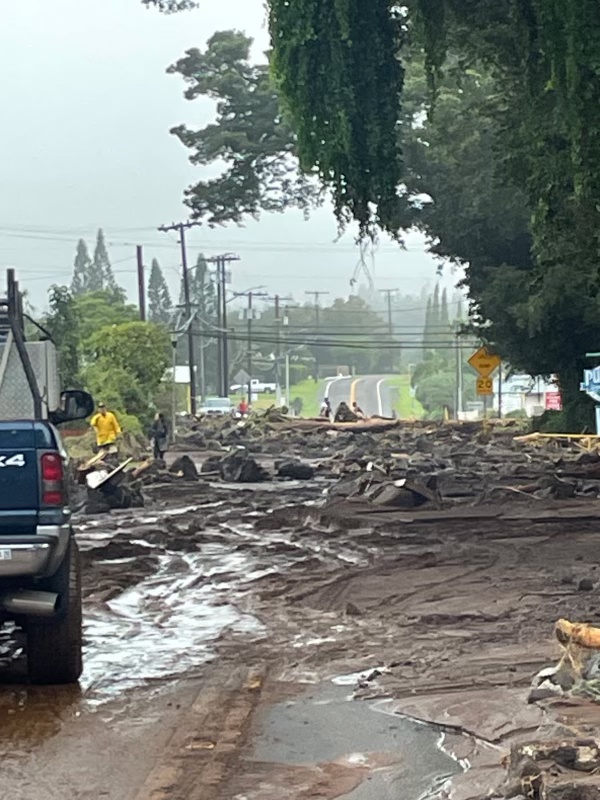
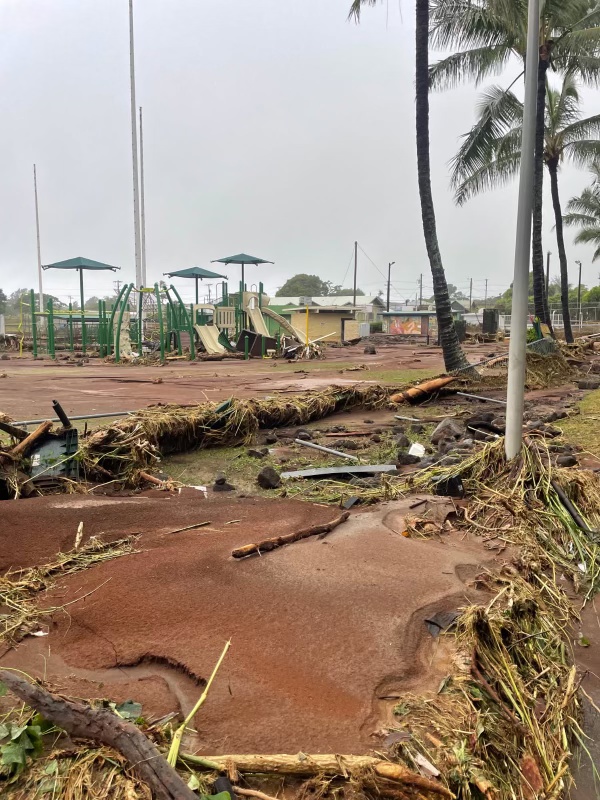
“It’s complete and utter devastation,” said Rep. Jeanne Kapela, whose District 5 includes Kaʻū, where the communities of Ocean View, Nāʻālehu and Punaluʻu were slammed.
“Familes have lost their homes; the entire community is impacted,” Kapela said.
As skies cleared off and on Sunday afternoon, the damage Hurricane Lala caused to Kaʻū appeared to be the worst suffered in the state. But elsewhere, too, as Lala as a tropical storm hit Maui, Oʻahu and to a lesser extent Kauaʻi overnight Saturday and into Sunday, howling winds still tore down trees and power lines and flooding washed cars away as if they were toys.

Tourists waiting for cruises found themselves stranded, neighbor island residents faced endless flight delays and many who live on these islands picked up the pieces — literally and figuratively. On Oʻahu, in Waiāhole, 12 people were rescued from four houses threatened by flooding. On Maui, dozens of residents streamed into shelters.
Neighbor Swept Away In Kaʻū
Jolynn Grimes, who lives next to Wai’ōhinu Community Park in rural Kaʻū, spent the night fearing for the life of her elderly neighbor, who was swept away with her home by 5-feet-deep floodwaters between 7 and 8 p.m. Saturday.
Grimes’ son tried and failed to reach her.
“It was pitch dark, no power and no power lines,” Grimes said. “All night long we just sat here hugging each other because we thought she was dead.”
Grimes was relieved to find her neighbor alive on Sunday morning. She had been found acres away — the distance of several football fields.
Grimes said she heard a couple of community members remained unaccounted for, including a child. But Hawaiʻi County Fire Chief Daniel Volpe, in a noon press conference, said there were no reports of anyone missing.
In the middle of the night in Nāʻālehu, a Hawaiʻi National Guard unit rescued two paramedics from their pickup as rushing waters swept it down the road as if it were no more than a toy Matchbox truck.
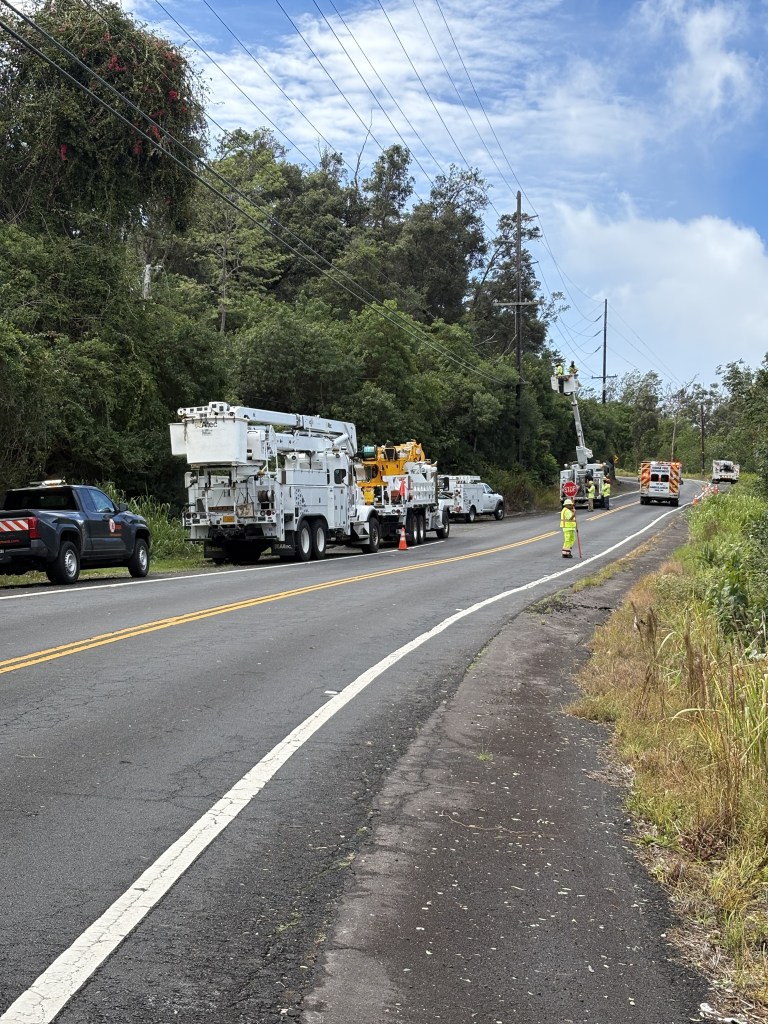
Sandy Sturbaum lives above and works at Honua’s Coffee House on Nāʻālehu’s main road. It had been drizzling when she went to bed Saturday, following a rainy barbecue with friends – nothing out of the ordinary. She awoke to the flooding at about 11 p.m.
“It started pouring really hard again, and we didn’t think anything of it,” Sturbaum said. “Then all of a sudden, all of our cars are underwater, there’s a bunch of logs everywhere and there’s a roof, a couple roofs actually.”
Sturbaum’s residence was not affected, but floodwaters picked up and floated more than 10 homes south of the highway, from what she could see.
By daybreak, South Kona and Kaʻū were littered with downed trees, including dozens of ʻōhiʻas that could be seen from the highway. In Manuka State Wayside Park, at least a dozen trees were down.
Drivers heading south into Kaʻū were being stopped by police officers at the South Point lookout, just past the community of Ocean View. It was raining lightly and a power line could be seen in the middle distance, hanging diagonally into the road.
From their parked cars, drivers who had come from the nearby Waiʻōhinu area described flooding that had pushed a wall of rocks and trees into the road in Nāʻālehu.
“No one can get through,” said Trudy Mākaha, who had left her home in a minivan to survey the area and was frustrated to be stuck, just a 10-minute drive from her house. Mākaha pointed to a neighbor in a similar situation, sitting in a nearby vehicle. “He needs to get back to take his medication,” she said.
Residents started clearing Nāʻālehu beginning as early as 9 a.m. Sunday morning, but many roads remained closed.
Oʻahu’s North Shore Escapes Major Damage
On Oʻahu, flooding closed the H-1 temporarily Sunday morning where it passes through Makiki, and downed trees forced the closure of major roads and intersections in Waikīkī and elsewhere. A towering monkeypod tree crashed onto a Toyota Tacoma near Kapiʻolani Park. No injuries were reported.
Damage was light on the North Shore compared to the havoc caused by the Kona low storms in March, when historic flash flooding submerged entire neighborhoods and destroyed local farms.
“Everyone definitely has post-traumatic stress,” said India Clark, a farmer at Kaʻena Farm Lots off Farrington Highway near Dillingham Airfield.
“We didn’t know how much storm prep to do,” Clark said. “We’re following all the radars and we’ve got Honolulu alerts, but people still were just kind of fumbling through, like, ‘How prepared are we?’”
She said solar panels had been ripped away this time, and many farms were without water Sunday, but fears of March-like flooding were not realized, with less rain falling and soil that wasn’t as saturated.
“I’m getting calls from everybody, but it seems like everyone’s okay,” Clark said. “We’re still just saying, ‘Are you OK? Are you OK? Is everyone good.’”
The Kona lows provided a rude awakening for public and private landowners throughout the North Shore, home to a web of derelict or deteriorating irrigation infrastructure that worsened the storms’ devastation. Members of the farming community — most of whom lease their land — have worked since then to clear those waterways, including on former plantation lands between Mokulēʻia and Wailua, while the county has cleared some local streams.
Clark said the county and state had done a good job of preparing roads for the storm, too, and those efforts paid off, but Tropical Storm Lala drove home the fact that many ditches that flooded in March still need clearing.
“The work’s just not done,” she said. “We can’t let up.”
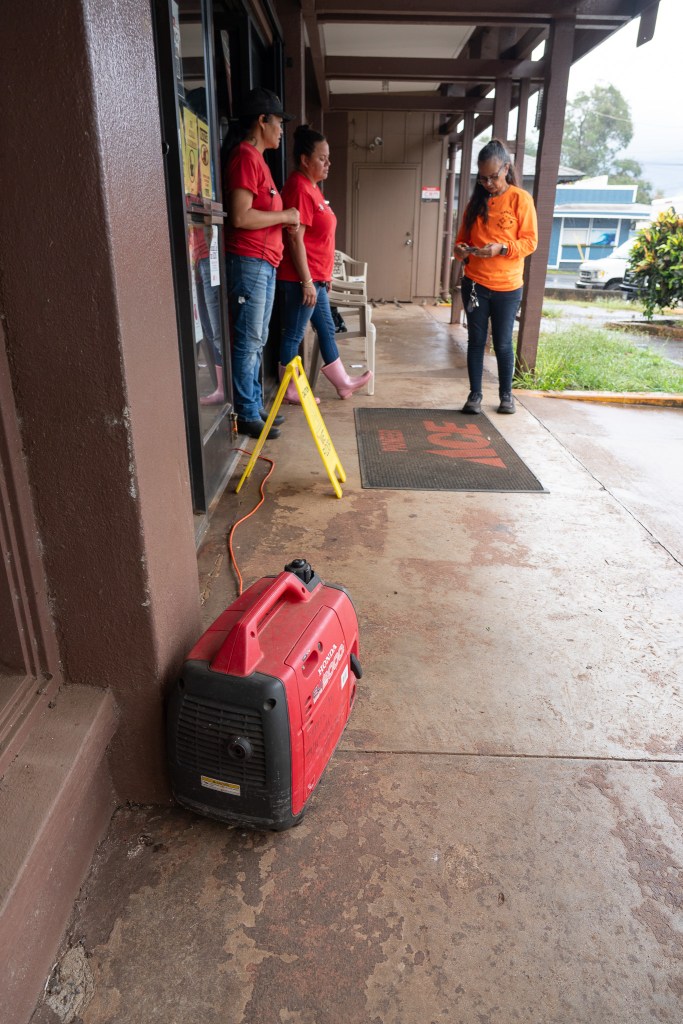
At Pioneer Ace Hardware in Haleʻiwa, Manager Ua Viernes agreed that folks planned ahead this time. The store was running on generator power Sunday morning, but she noted that most people had already come in to get what they needed.
“This time everyone was better prepared,” Viernes said, compared to the Kona lows when batteries, flashlights and tarps sold out by the second storm.
“We started ordering heavier just to have on hand,” Viernes said. Instead, “people are coming by looking for snacks and board games.”
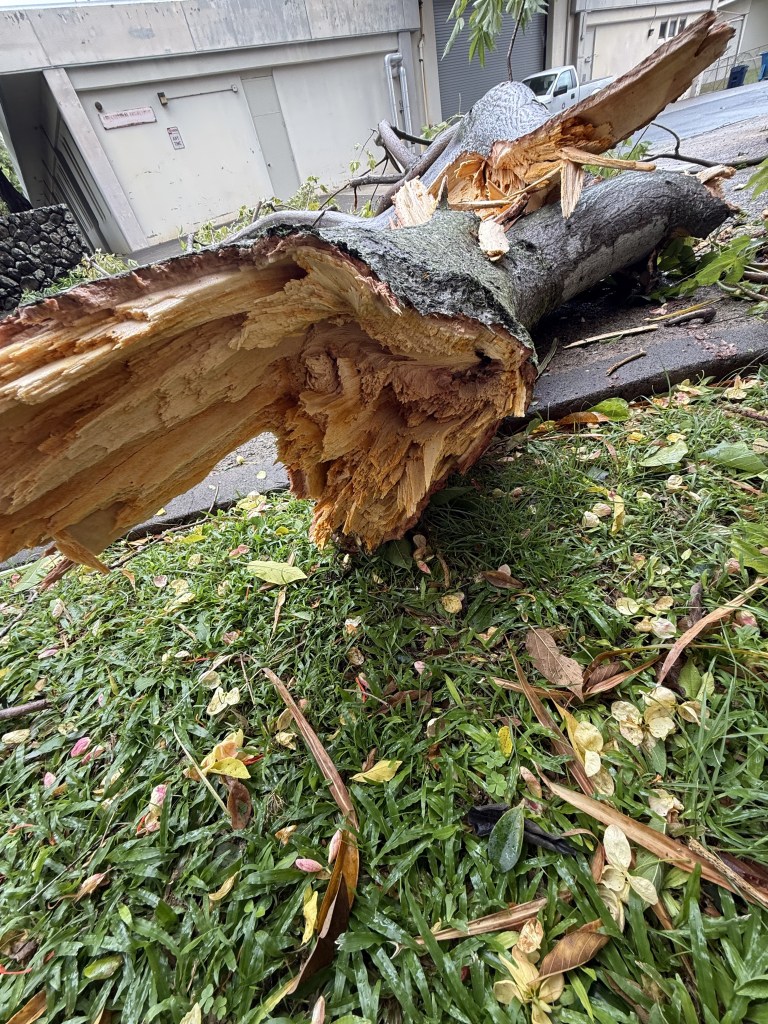
In town, the wind splintered trees like pencils on the University of Hawaiʻi at Mānoa campus, mowing down a row of five plumeria trees outside the William S. Richardson School of Law library, where the massive tops of the old growth trees lay in heaps amid white blooms and mud.
Early Sunday afternoon in east Oʻahu, a huge kiawe tree was down in the field near the sidewalk at Kalani High School. Another tree blocked part of the road to enter ʻĀina Haina valley by the Foodland.
A handful of people were still out fishing at Maunalua Bay, which was turning brown as Kuliʻouʻou Stream funneled dark, turbid water from the valley into the bay. Traffic lights were all out from Hawaii Kai through Kaimukī, but traffic was moderate and drivers calmly took turns at intersections.
Businesses in Kaimukī, Kāhala and Makiki were generally closed, without power. Kāhala Mall was closed, as was most of Mānoa Marketplace.
Tarps were flying off the shelves at City Mill in Kaimukī. Other big sellers, acting store manager Sharlyn Leleo said, were flashlights and propane.
Shaun Peck had driven in from Hawaii Kai to refill two propane tanks for his home generator. The owner of Paradise Ciders, Peck lost electricity around 11 p.m., he said, and turned on the generator after the thermostat on his refrigerator hit 55 degrees.
At Mānoa Marketplace, customers also lined the sidewalk in front of the Safeway in Mānoa Marketplace, where staff were escorting customers through the darkened aisles.
Making The Best Of It
Kat Findlay waited behind dozens of people Sunday morning in a long line that snaked out of Kona Coffee Purveyors and through the International Market Place in Waikīkī. It was one of the few coffee shops open in the usually bustling tourist hub.
Findlay, a touring cello player from Salt Lake City, was scheduled to play at the Blue Note Sunday night with the Australian soft rock duo Air Supply.
She had realized how serious the storm was getting when she and other musicians left the venue after a show Saturday night to find part of Kalākaua Avenue closed off. Honolulu police had shut it down because of large debris blowing off the roof of the Sheraton Princess Kaiulani Waikiki Beach. On Sunday morning, part of the road was still closed off with caution tape.
When she woke up before 7 a.m. Sunday, Findlay said she could hear the wind roaring outside her hotel room at the Outrigger Waikīkī Beach Resort. But she was trying to stay positive.

“Everyone has been kind of concerned, checking our apps,” she said. “Obviously I want everyone to be safe, but it looks like it’s going to be OK.”
By mid-morning, Phyllis and Dwight Scholz stood under an umbrella at Waikīkī Beach. The couple are from northeastern Kansas and used to strong winds.
“We have tornadoes in Kansas,” Dwight said as they watched the churning gray waves roll into shore. “70 mile-an-hour wind…”
“That’s nothing,” Phyllis chimed in.
But what they aren’t used to in their landlocked state is seeing the ocean.
“I love it,” Dwight said. “Just the waves and the sound of them.”
They’d hoped to set sail Saturday on a seven-day Norwegian Cruise Line voyage to Maui, the Big Island and Kauaʻi, but it was postponed as Tropical Storm Lala’s unforgiving winds, rain and surf lashed the islands. They were waiting to find out when they could leave.
As the rain picked up, the couple huddled tighter together under Phyllis’s umbrella to keep enjoying the sounds of the waves as long as they could. As they looked out onto the nearly-empty beach, a lone surfer paddled out into the turbulent ocean.
“I think he’s an idiot right now, oh my gosh,” Phyllis said. “But more power to him.”
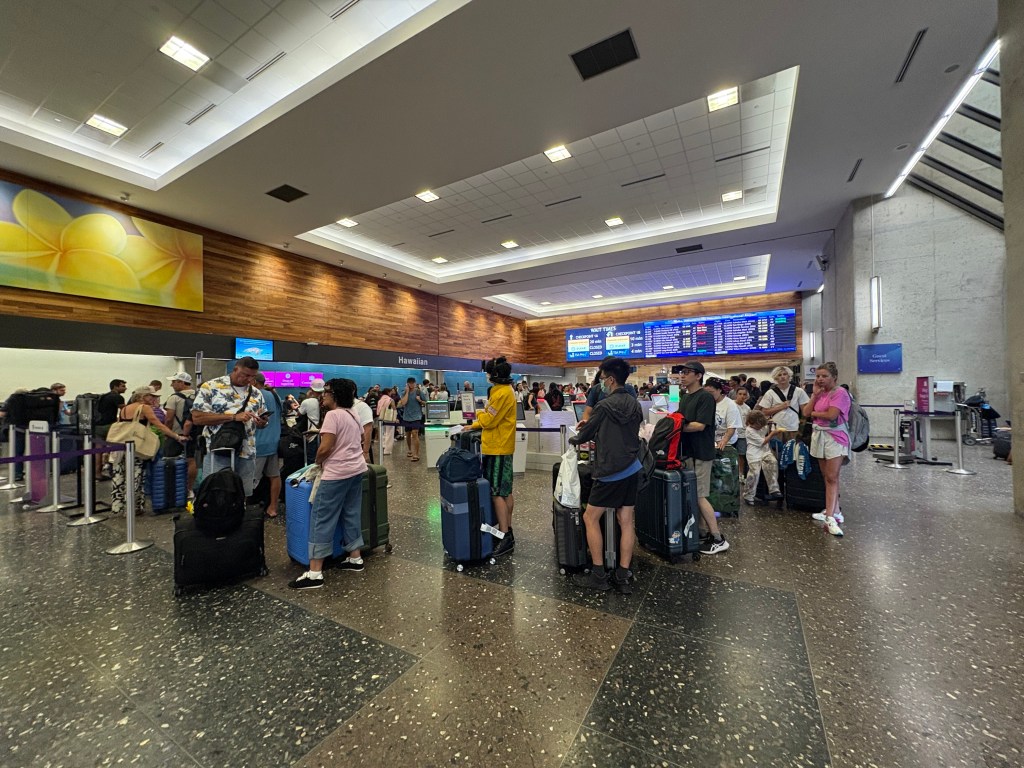
At the Honolulu airport, Sharise Dolera arrived several hours early for her 4 p.m. flight to Hilo with her husband Lance, her daughter Anuhea and her nearly 1-year-old grandson.
Originally from Oʻahu, the Dolera family moved to the Big Island about five years ago. They arrived in Honolulu Tuesday for a family funeral that wrapped up before the rain began.
“It’s crazy. We need to get back home.”
Sharise Dolera, Big Island resident
Because they were off island, they weren’t able to take any substantial preparations to protect their Hilo home from the wind and rain. They prepared themselves for the worst, including no electricity.
Fortunately, a friend watching their house was able to assure them it is undamaged. But Lance Dolera was already getting word of roads washed out in the area, meaning getting there might be more challenging than just getting on a flight.
The baby giggled in his stroller as the group joined the throngs of families in the line snaking halfway across the terminal to hand off their bags to Hawaiian Airlines around midday on Sunday.
“It’s crazy,” Sharise Dolera said. “We need to get back home.”
On Maui, Expecting ‘Way Worse’
Charlene Schulenburg was expecting more damage from the storm, but her home in Kīhei on Maui was remarkably spared.
There was some rain but mostly in short squalls or a heavy mist of condensation flowing off Haleakalā rather than the deluge that other parts of the state received. The storm primarily brought heavy winds, but even that didn’t cause substantial damage in her neighborhood.
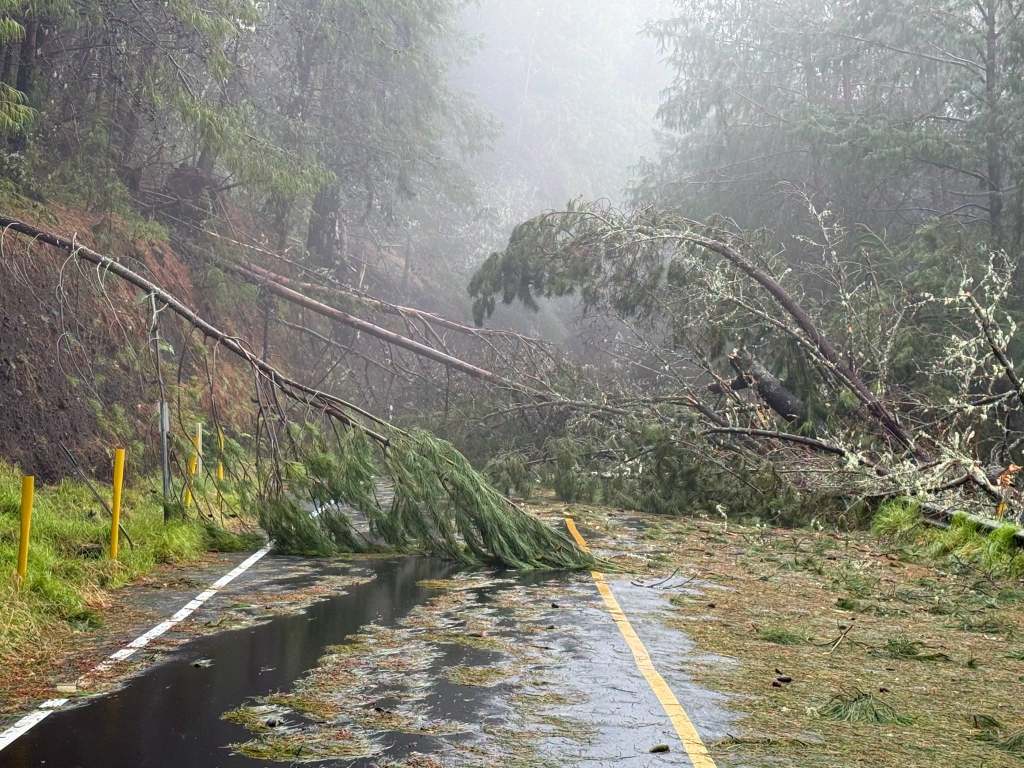
“We were really quite lucky,” she said. “We were expecting it to be way worse.”
South Kihei Road was closed between Uwapo and North Kīhei Road, where raging water continued to surge through the storm channel. The water flooded onto the road, leaving a stretch of pavement covered in several inches of soupy mud.
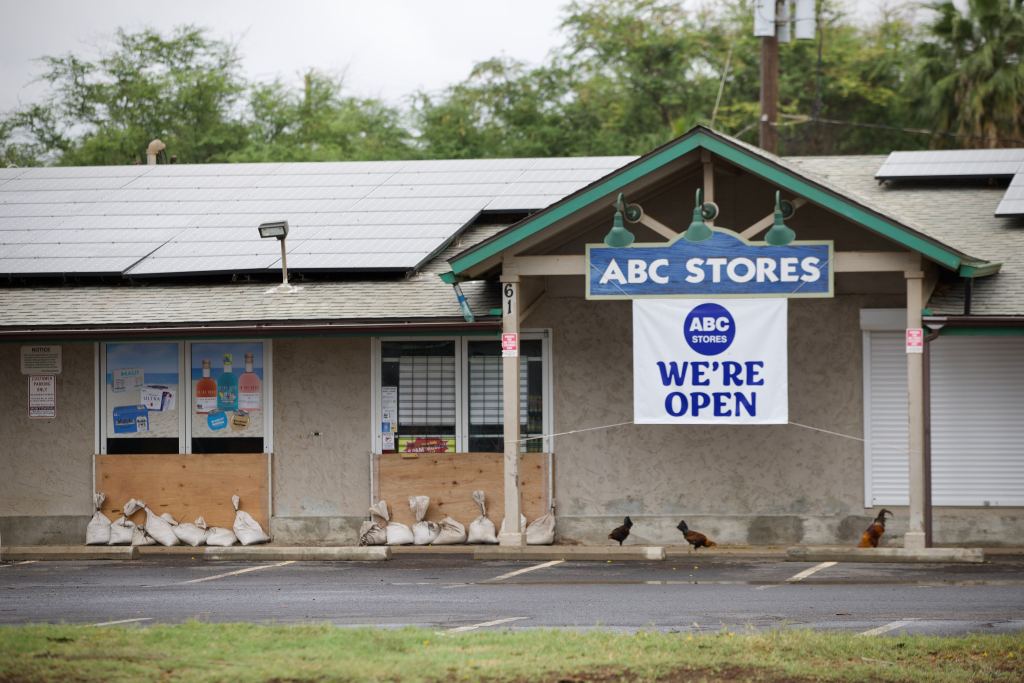
At the North Kīhei strip mall that houses Ululani’s Hawaiian Shave Ice and a local farmers market, a large banner was unfurled in front of the ABC Store reading, “We’re Open.” But the door was barricaded with wooden boards and sandbags.
Maui Emergency Management Agency Administrator Amos Lonokailua-Hewett said East Maui, upcountry and Haʻikū appeared to take some of the worst hits of Lala.
Upcountry, Sebrey Shimada, 22, and her boyfriend Evan Hansen, 25, said early Sunday evening that their Makawao home was still without power and water.
“It will be a long time,” Hansen said, referring to when he expected power to be restored. “All of the power lines are down around us. All of the poles are down and they’ll have to cut the trees that are down so they can put the lines back up. Then on our property… the power lines are also broken, so they have to go on property and fix that too.”
Because their neighborhood has so many tall, invasive eucalyptus trees that do not fare well in the wind or rain, the couple said many residents expect dangerous conditions during storms.
On Sunday morning, Shimada had gotten ready for her shift at the Grand Wailea in South Maui and headed out around 9 a.m., but she said it wasn’t long before she had to turn around because the road was blocked by downed trees, power lines and other debris.
“I just did not want to like go through that,” she said. “I thought to myself, ‘Hey, I better stop here.’ I was already already pushing it, driving through crazy branches.”
Spotty Power, Happy Sugar Cane
Waipā resident Joel Guy said the North Shore of Kauaʻi was basically rained out Sunday morning. He’s also the executive director of The Hanalei Initiative, which helps manage the visitor access system at Hā‘ena State Park and operates a shuttle system.
“The mountains are completely sopped in, you can’t see a thing anymore,” he said. “It’s been like that for two hours.”
But Guy said the area hadn’t experienced extreme gusts of wind yet, as it was the last of the island chain to feel the effects of Lala. And while his yard had some debris, he said it was nothing major.
“We’re getting hammered on the rain,” he said, “but we’re not getting the wind.”
While Guy lives off grid he said family and colleagues in other parts of the North Shore, such as Kalihiwai and Hā‘ena, have reported spotty power.

Kaua‘i fire captain Jeremie Makepa had spent the night watching the weather while on duty at the Kaiākea Fire Station just north of Kapa‘a.
“Last night was very minor,” he said. “It was only starting (to) get bad now with the rain, but wind-wise not too much.”
Makepa estimated that winds were roughly 25 miles per hour during his drive home early Sunday morning to Anahola, where he lives, although the trees he passed weren’t moving that much. He also didn’t see debris on the road.
“The farm is probably drinking the water like alcohol now.”
Kelsey Hesapene, Kauaʻi farmer
On the island’s Westside, as the day wore on, Kekaha resident and farmer Kelsey Hesapene said winds were slowly picking up after a night and early morning of very little wind. The area hadn’t seen much rain in months, so Hesapene was looking forward to his crops getting much-needed water.
“The farm is probably drinking the water like alcohol now,” he said. “It’s been so dry for months. So the (sugar) cane and everything is probably super happy right now.”
Around the island, high winds did end up felling trees and branches, causing road closures in Hanalei, Wailua Homesteads, Kōloa, Līhu‘e and Lāwa‘i. Localized rain has caused heavy ponding and some flooding of streams, rivers and roads. But the bridge to Hanalei on the North Shore, which often closes during storms, remained open.
By mid afternoon Guy — the Waipā resident — said a steady rain was being carried by the wind, rather than a straight downpour.
“The mountains are getting belted with rain,” he said. “It’s been raining nonstop for four hours.”
‘Our One Family’
Speaking at midday in a press conference held at police headquarters in Hilo, Hawaiʻi Mayor Kimo Alameda recounted a flyover that he took in Kaʻū: “It’s devastation,” he said. “I counted six bridges that are destroyed or almost destroyed.”
He could not provide a financial estimate for the damage yet but said he would work with Gov. Josh Green to get federal funding to help with recovery efforts.
Alameda said he was also aware of a disturbing photo of a coffin unearthed by the storm and was exposed in the mud at the cemetery in Nāʻālehu. He said county crews would work with the community to restore the cemetery.
As he spoke, county work crews and locals were already bending their backs toward recovery around Kaʻū.
“They are working as quickly as they can,” said Kapela, the area’s state representative, who noted that Highway 11 — which connects every major community in Kaʻū — had washed away. “And we have community leaders and hometown heroes using their own equipment to try and clear the road from the inside out.”
Around noon, Puna council member Ashley Kierkiewicz was without power but that didn’t deter her from teaming up with volunteers to make sandwiches for folks heading out to assess damage. Others were carting supplies between Wai’ōhinu and Nāʻālehu, which are still connected by the highway. The community needs fuel for generators and water, because neither township has either.
“You know, we’re not blood related, but we’re all family here.”
Jolynn Grimes, Kaʻū resident
As cleanup moved forward, Grimes — who lives next to Wai’ōhinu Community Park in Kaʻū — fought back tears recalling the horrifying night.
“Tombstones, caskets came down from the graveyards, all sitting down in Nāʻālehu by the bakery; cars from the auto shop are all over the place. It’s pretty bad at the gas station, the school. It’s just very devastating,” she said.
“It was a very emotional night for all of us here,” she said. “You know, we’re all we got. We’re our one family. You know, we’re not blood related, but we’re all family here.”
Civil Beat reporters Caitlin Thompson, Megan Tagami, Madeleine Valera, Stewart Yerton and Thomas Heaton reported from Oʻahu, Erin Nolan reported from Maui, Noelle Fujii-Oride reported from Kauaʻi, and Twilight Greenaway and Taylor Nāhulukeaokalani Cozloff reported from Hawaiʻi island.