Council District 5 Candidates Want to Build A More Resilient Puna
What is taken for granted in other communities is needed in Puna: paved roads, public gathering spaces and alternative evacuation routes.
Upper Puna has long been plagued by poor roads, traffic, natural disasters and systemic problems such as poverty, limited medical care and substandard housing.
The Hawaiʻi County Council has begun to tackle some of those issues in recent years. With current Councilman Matt Kanealiʻi-Kleinfelder terming out, the two candidates vying for his seat have different ideas about how to proceed.
Shannon Lopeka Matson will face off against Ikaika Rodenhurst in November for Council District 5, which stretches from Keaʻau and Orchidland Estates to Mountain View and Royal Hawaiian Estates. Matson won the primary by a slim margin of 30 votes.
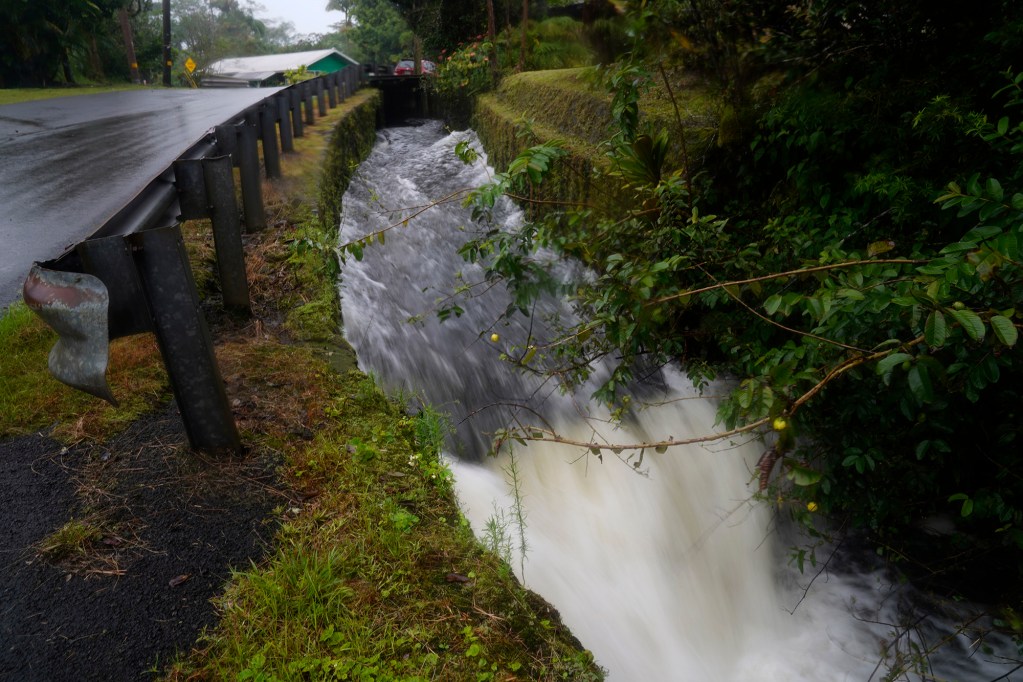
Roads in the upper Puna subdivisions are private. Community and road associations pay for maintenance through fees paid by residents. But for some of those associations, getting members to pay has been difficult and the money they do collect barely covers the cost of paving or repaving a mile stretch a year.
That’s led to canceled bus routes and fears that emergency services won’t be able to reach a fire or person in need of medical assistance because they can’t drive over gravel roads.
“Some of our roads, they’re not really roads – not a dirt road or even a rock road. It’s almost like a trail or a path of craters,” Rodenhurst said. “We’re part of this county. We pay our taxes. We deserve the services just like everybody else.”

For decades, the county couldn’t touch subdivision roads because they were private, created by the developers who established the neighborhoods. The development corporations are long gone, leaving maintenance and improvements to the residents.
But a bill that passed in 2024 cleared the way for the county Department of Public Works to maintain subdivision infrastructure. Another bill, passed last year, provides a tax credit to residents who pay their road fees.
Matson, born and raised in Kona but now living in Hawaiian Acres, helped advocate for those policy changes.
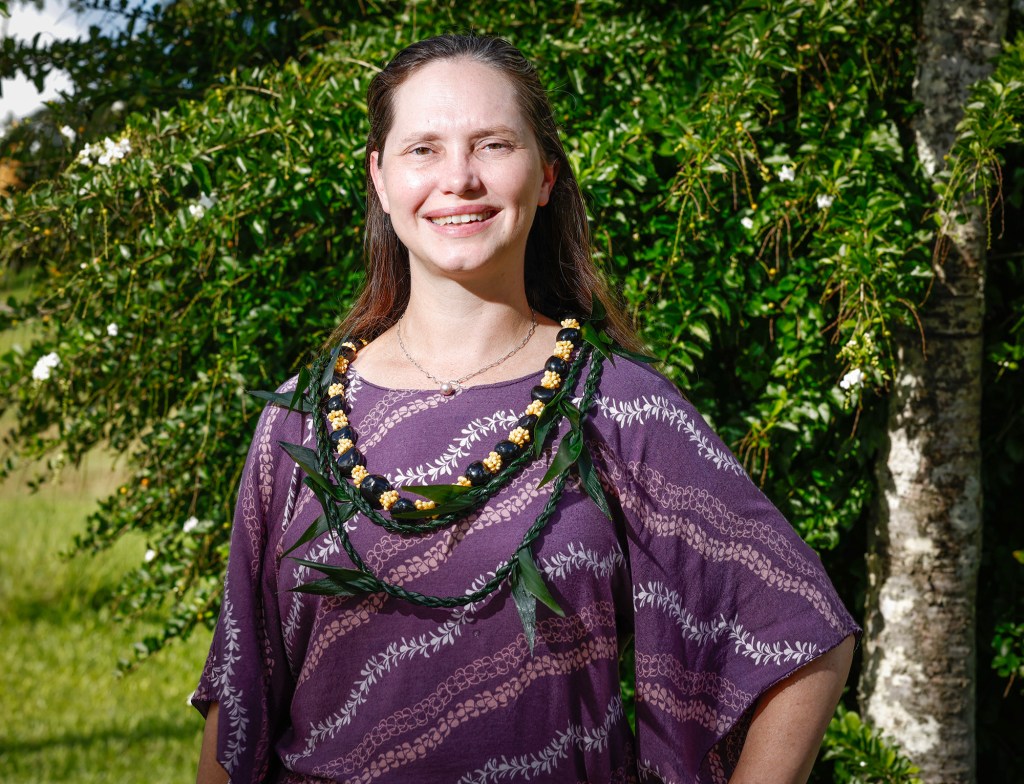
The Puna subdivisions, Matson said “really shouldn’t have been created the way that they were with zero infrastructure to begin with, but we can’t turn back the clock. We’ve got to move forward.”
She’d like to see more county money set aside for road paving projects in her district. The council has already secured nearly a million dollars in the operating budget over the last two years to pave arterial roads in subdivisions across the island.
“I would really love to see some of the specific numbers before I push for how much more,” Matson said. “But I would absolutely want to keep with that amount and potentially increase it.”
The road associations could also pay the county to pave the roads rather than private contractors, she said. If it costs less for the Department of Public Works to do the work, Matson said that could be an option to meet infrastructure needs without increasing the tight county budget.
Roads are a top issue for Rodenhurst, too. The Kamehameha Schools graduate and Hawaiian Acres resident is a civil engineer and served as the head of the public works department for two years, from 2020 to 2022. His website notes that he also assisted the state Department of Transportation during the 2018 double whammy of a volcanic eruption and Hurricane Lane.
That background will help if he’s elected, he said. While he’s glad to have seen recent road legislation passed and money put toward paving, there are other avenues for funding he’d like to explore.

“As council members, one of the things we can do is advocate and talk to our federal and state partners,” Rodenhurst said.
Paving subdivision roads is just one transportation issue Upper Puna is facing. Traffic congestion is another.
The state is studying two alternative routes, one makai and another mauka, to relieve congestion. Both candidates have indicated support for those new roads. While the process inches forward, they’d like to push dramatically different types of interim measures.
Rodenhurst suggested the council should press the state to widen roads and add new acceleration and turn lanes on the highway that connects the subdivisions.
Matson isn’t convinced wider roads will help. She favors staggered school and work start times and beefing up Hele-On bus routes to prevent everyone from being on the road at once.
‘Smart Development’
One reason traffic backs up in Puna is that the district functions as a bedroom community. Residents often have to travel to Hilo or Kona for work and other services such as medical care and mail pickup.
The two candidates agree that economic development within Puna could not only alleviate traffic but other challenges, such as poverty.
A former small businesswoman, Matson wants the council to incentivize and support local business in Puna. That could reduce money spent on gas and time wasted in traffic.
“Why are people driving all the way to Hilo if they can find ways to work in Puna?” she said. “How can we support the people already doing good things within our small little microcosms?”
Matson has supported the construction of a new community center and kitchen in Hawaiian Acres to replace the one destroyed by fire in 2023. That also will support the many farmers who live and grow in the subdivision, she said, by giving them a place to develop value-added products such as jams and baked goods.
Rodenhurst isn’t so keen on more development in Puna, which could encroach on agricultural land. He believes with the right policy and enough support for farmers, the district could help feed the island — even the whole state — to lessen dependence on imports. If he’s elected, he wants to support the region’s farmers to ensure they have adequate support to feed people.
But he said he’s not exactly anti-development: “I’m pro smart development.”
Disaster Resilience
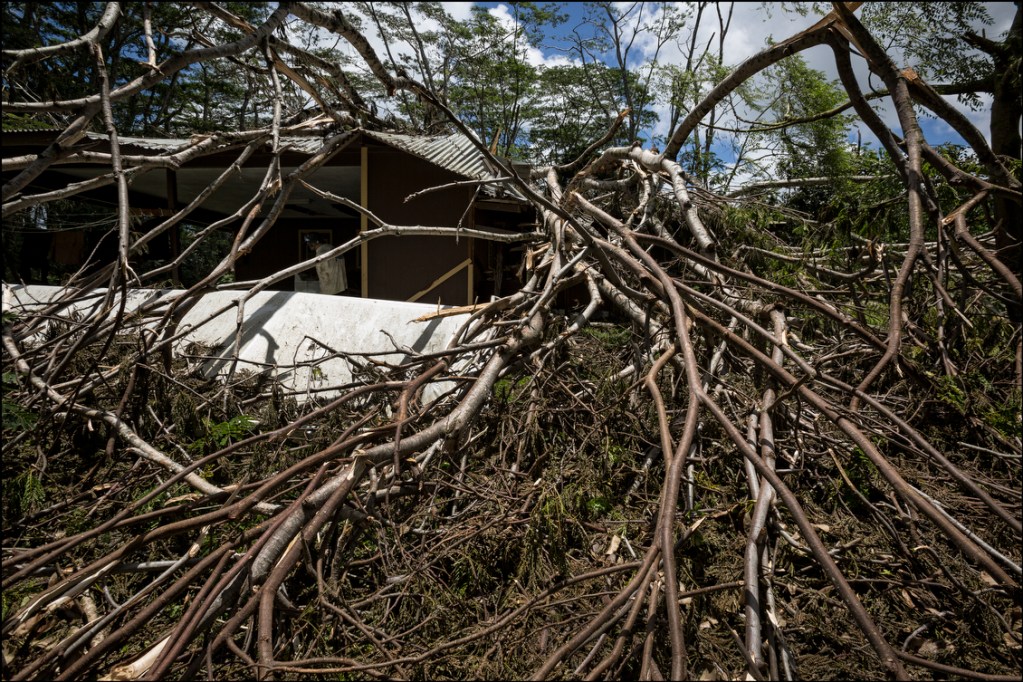
Recent storms have exposed and exacerbated many of the issues faced by Puna residents. In Mountain View, roads were flooded and washed away during Hurricane Lala. Fern Acres, which has just one way in and out, was cut off by broken trees. The entire district faced weeks-long power outages, many caused by non-native albizia trees.
As recovery continues, the candidates want to build better disaster resilience in the community for the future.
Matson helped create the Vibrant Hawaiʻi resilience hub in Hawaiian Acres. A key part of the hub’s response, she said, are the after-action reports that audit how recovery went and what gaps exist. She thinks those discussions also need to happen at the council level.
“We can still do better and be better prepared for whatever’s coming next, and so I’d like to see that happen more frequently,” she said.
She also wants the county to sponsor more chainsaw safety courses for community associations so residents can clear debris themselves.
While the council embarks on new solutions, she said, there are things the county already knows it needs to address, such as the evacuation routes. That’s one thing she would prioritize if elected.
For decades, community associations have asked the county to add more arterial routes in and out of neighborhoods. No roads have actually been added, though some are in the works.
Rodenhurst has watched discussion after discussion about evacuation routes with little action. From his time at Public Works and working with the state, he knows the conversations can die out and be brought back up again. It’s time to act, he said.
“As long as we’re mindful, as long as we’re staying focused and on task, we can keep moving forward,” he said. “It’s not going to be extremely fast, but it’s about that steady, consistent progress moving forward.”
Rodenhurst also wants to improve communications during storms. Cell service is spotty on a good day in Puna. Without power and WiFi, many have no way to receive important updates.
Rodenhurst advocates for building more central places for people to gather during emergencies.
“When a disaster strikes, we’re not going to have the modern comforts of technology,” he said. “So I think gathering places is a no-brainer. We got to have some place where we can connect as a community, as a people.”
Connecting community members with each other and their leaders is a goal for both candidates.
Matson wants to focus on bringing leaders to the community they represent and supporting public conversations. Working as an aide for District 2 Councilwoman Jennifer Kagiwada for the past two years, she said she knows how difficult it can be for residents to connect to their legislators when offices are far from their district.
She wants to explore opening county council offices in Puna or scheduling more town halls in the district to ensure constituents have easy access to their representatives.
“Most people are not as civically engaged, and they do not have the time or energy to be as civically engaged,” she said. “It’s up to our elected officials to make themselves accessible and to provide education and information reliably and regularly and consistently to community.”