‘Double Death’: Grief Revived Amid Search For Bones From Nāʻālehu Graves
A community devastated by Hurricane Lala now faces the gruesome and heart-wrenching task of identifying their deceased loved ones and burying them all over again.
The last time Carmen Pestano visited her mother’s grave three months ago at Nā‘ālehu Cemetery, she brought a bouquet of tropical flowers — giant red and green anthuriums and birds of paradise.
But after Hurricane Lala ravaged the southern tip of the Big Island on Aug. 15, Pestano’s mother’s resting place had been turned to a pile of rubble.
“There were a lot of rocks on top of her grave,” Pestano said.
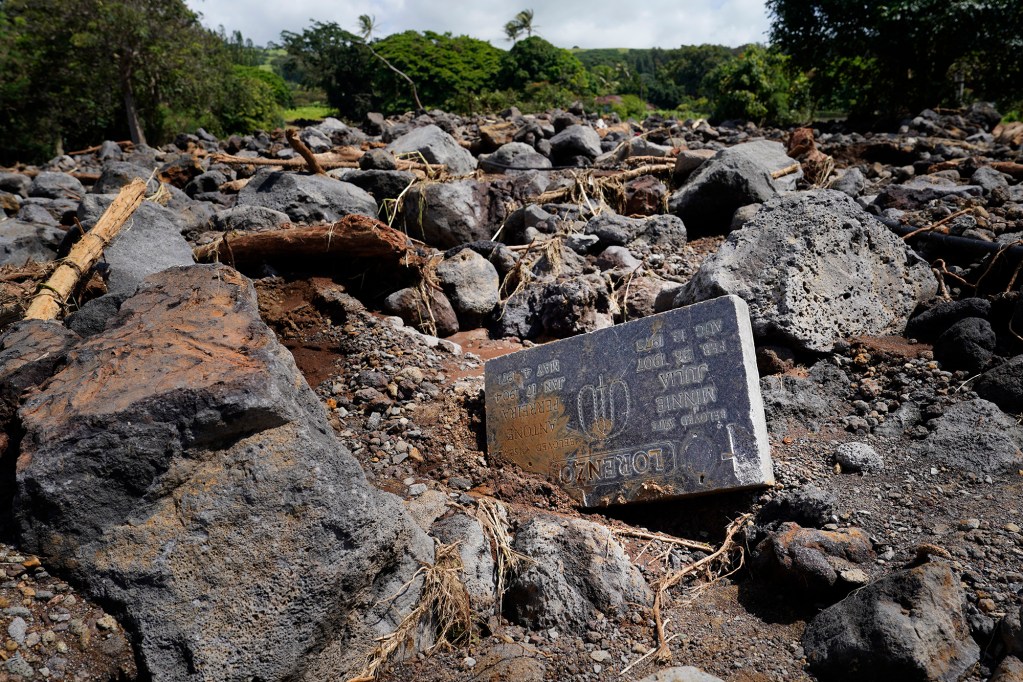
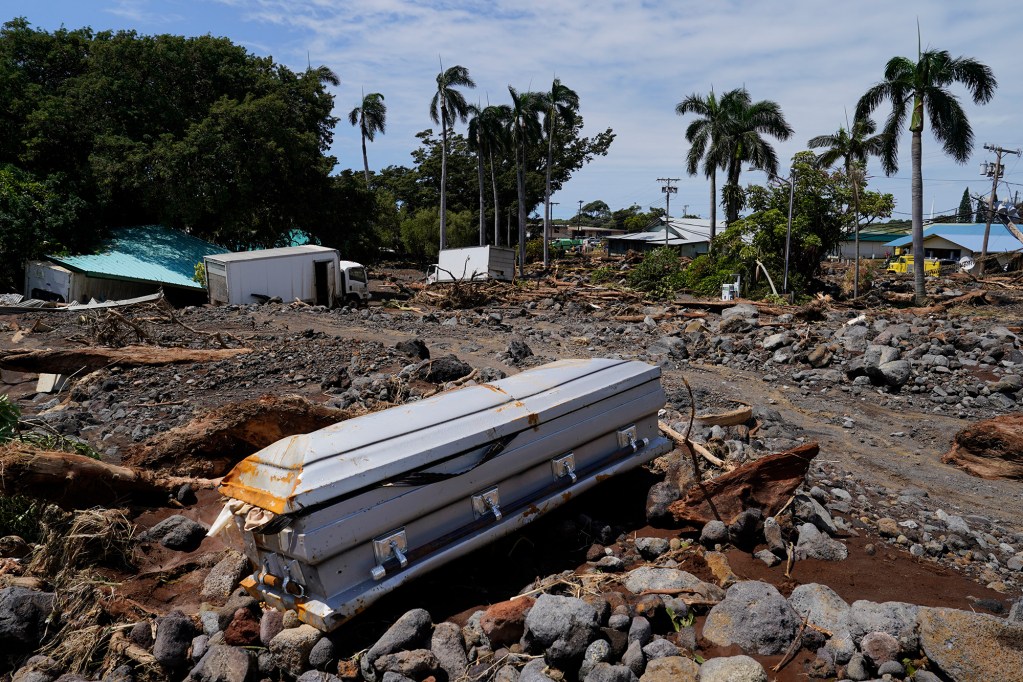
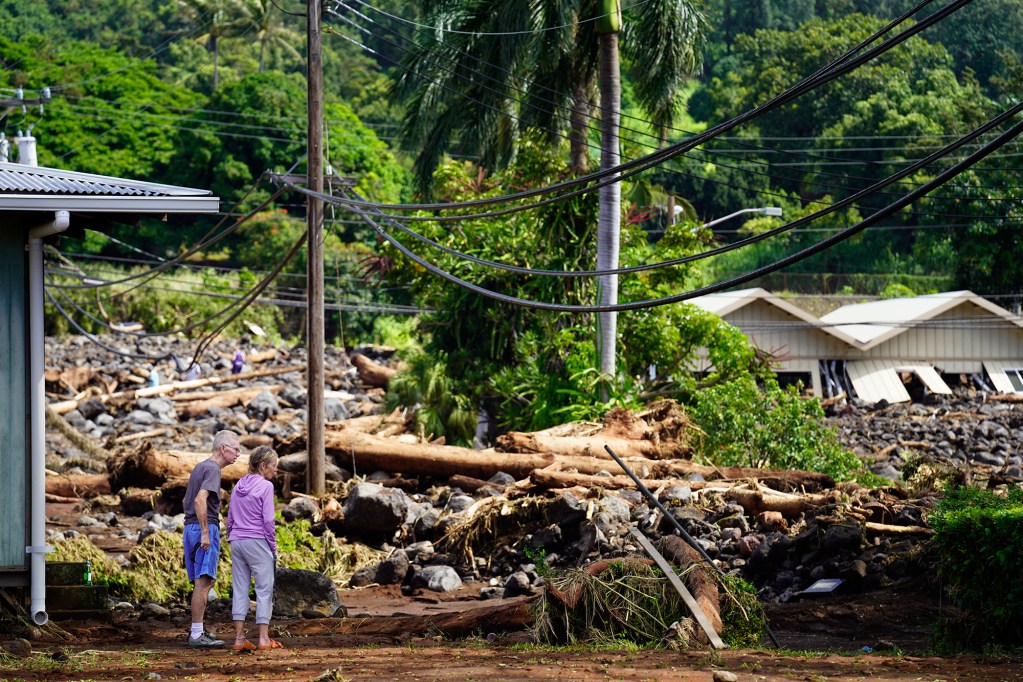
County officials estimate about 125 gravesites have been affected to varying degrees. The floodwaters tore through the 75-year-old cemetery, unearthing caskets, tossing aside tombstones and strewing bones and artifacts throughout the area.
The storm exposed remains in various stages of decomposition, from bodies laid to rest just a year ago to bone fragments discovered a mile away from the burial grounds.
“I think it’s hard for our recovery people to witness some of this,” Hawaiʻi County Mayor Kimo Alameda said.
The county has put together a team of search and rescue professionals, cultural practitioners and forensic anthropologists to work on respectfully recovering, storing and identifying the remains. Once that’s completed, the final step will be figuring out how to lay them back to rest. Alameda said he plans to create a communal memorial for any remains that ultimately can’t be identified.
The restoration effort could cost millions of dollars and take over a year. Alameda said he hopes to receive money from the Federal Emergency Management Agency to reimburse the county for all or part of the recovery costs. The county has already calculated $50 million in damages from Lala, he said, not counting the damage done to the cemetery.
For a community already reeling from the hurricane, which caused catastrophic flooding in Kaʻū and knocked out power to nearly 60,000 homes on the island, the destruction of loved ones’ graves is a particularly heart-wrenching tragedy.
“It’s like a double death,” Alameda said. “They grieve once, and then now they’ve got to go grieve again with the disturbance of their loved ones’ remains.”
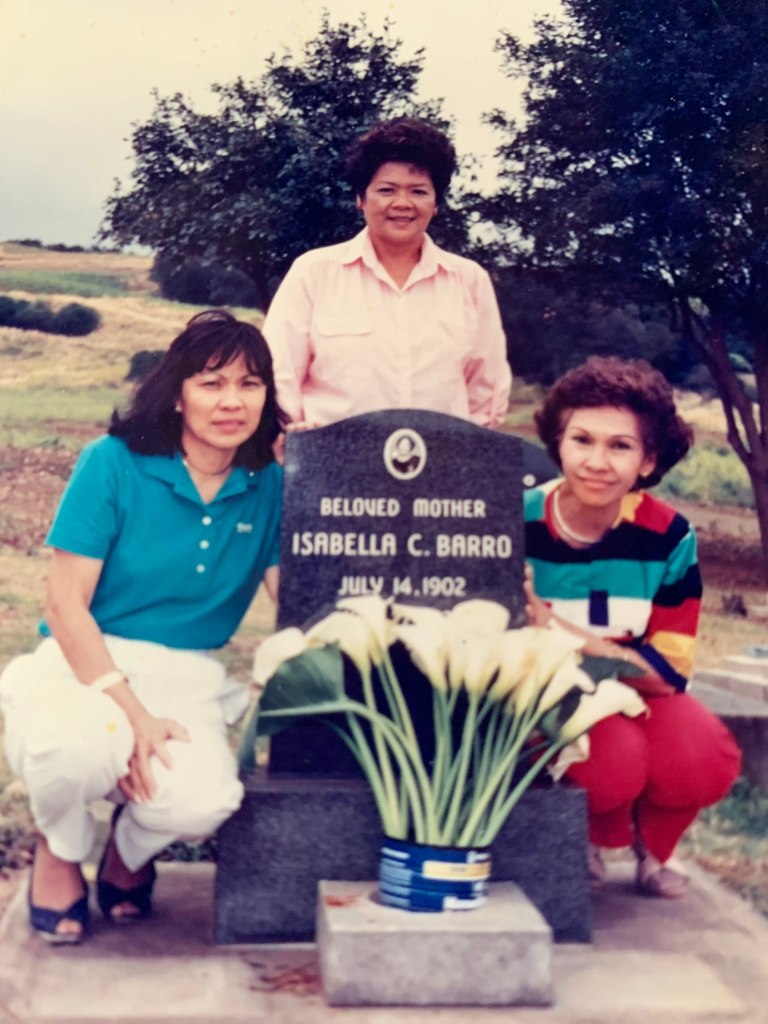
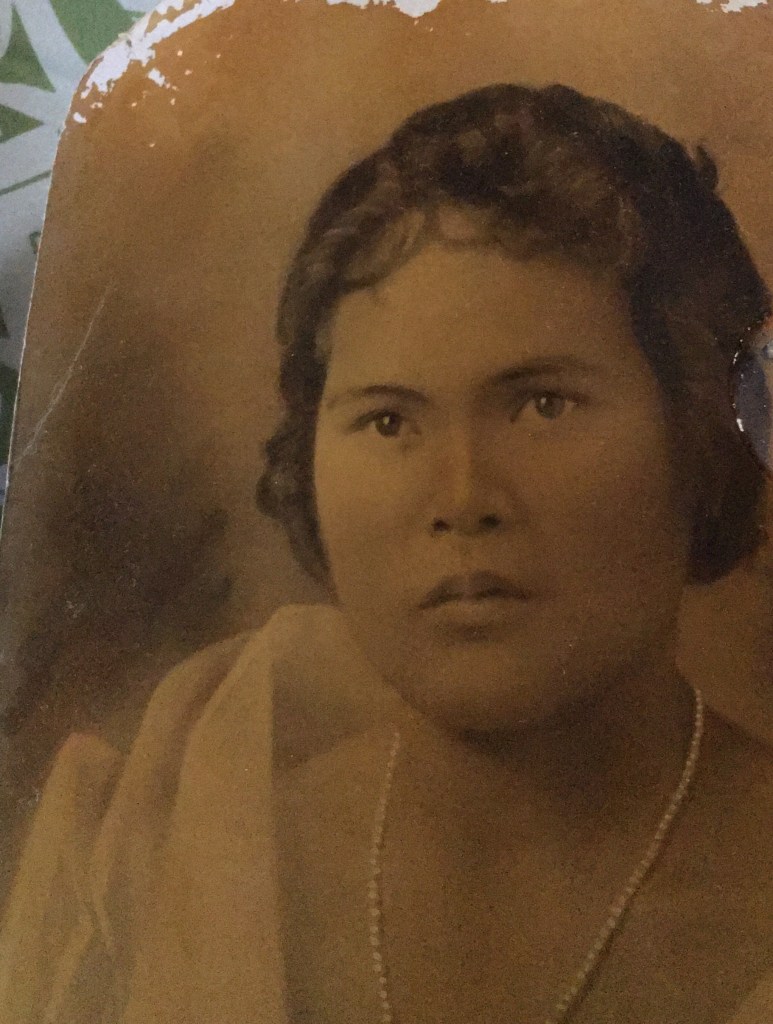
For Pestano, 86, the ordeal has brought back the emotions of burying her mother, Isabella Barro, in 1973.
“When we buried her, I felt that that was her final resting place, “ Pestano said, her voice breaking with tears. “We did it with so much love.”
Respectful Restoration
Alameda said the first people to sweep the cemetery were search and rescue officials with the U.S. National Guard and Hawai’i County Fire Department. The county has instructed the public not to go to the cemetery themselves because of dangerous conditions and blocked roads, though some have tried to access the area anyway.
The county also brought in two cadaver dogs from Kaua’i Search and Rescue to help search for remains.
Cultural practitioners from Maui’s Department of ʻŌiwi Resources have joined in the effort and brought GPS equipment, 50 lauhala baskets and muslin wrapping to help respectfully handle remains. Lauhala baskets are traditional Hawaiian baskets that remains can be placed in and prayed over before being transferred into cold storage at the Nāʻālehu police station, Alameda said.
The director and deputy director of the ʻŌiwi Resources Department were not available for an interview.
Cultural practitioners from consulting firms around the state have responded to the site to conduct ceremonies and oversee the handling of remains, according to Jordan “Kea” Calpito, history and culture branch chief with the State Historic Preservation Division.
At the beginning of each workday, all members of the search and rescue team gather in a circle for an opening ceremony that includes an oli — a traditional Hawaiian chant — asking for ancestral guidance, he said.
Throughout the day, as remains are found, they are wrapped in muslin cloth, placed in the lauhala baskets and taken to a staging area protected from the sun and elements. Traditional Hawaiian burial practices often included wrapping bodies and remains in kapa, a Native Hawaiian cloth made from the bark of certain trees, but today’s practitioners use muslin because kapa can be hard to come by, Calpito said.
At the end of each work day, the team will gather again in a circle for a closing, or cleansing, ceremony, which includes another oli.
“That’s really the foundation of the protocol,” said Calpito, who said similar protocols are followed across the state when historic bones, or iwi, are discovered, “to show respect to the iwi and show commitment to the work.”
The county also hired forensic anthropologists from ASM Affiliates to help comb through the site and preserve artifacts and remains.
Darryl Oliveira, acting administrator for the Hawaiʻi County Civil Defense Agency, said he has reached out to the California Governor’s Office of Emergency Services to request assistance with DNA testing of unidentified remains. That office will deploy personnel and equipment to the Big Island to conduct testing on site. Oliveira said he doesn’t think any remains will need to be shipped off island in order to be tested.
Analysts will need to collect cheek swabs from family members, ideally a close blood relative of the deceased, such as a sibling, parent or child. If family members are off island, they can work with a local healthcare provider to get swabbed and have their sample shipped to Hawaiʻi, Oliveira said. He is not sure what the turnaround time will be for testing or whether rapid testing will be an option.
Alameda said some of the remains have already been identified by family members because of items they were buried with that were still on their person, such as a wedding ring, clothing or shoes. But others, particularly the scattered bone fragments, will need to be tested against DNA samples to be identified.
It’s possible some remains are so small or so degraded they won’t be able to be identified at all, Oliveira said.
“For families, they would like to get closure, but it’s also managing expectations,” he said. “Even with the best equipment and science, we may not be able to identify all the fragments or pieces that are collected and associate them with family.”
Alameda said as of Monday, more than 80% of the affected area had been searched. Once the initial search is complete, he said, search and rescue teams will do a second sweep to ensure nothing is left behind.
Searching the cemetery has been a challenge because the ground is extremely unstable and has many eroded pockets up to 10 feet deep, Oliveira said. While some graves were washed away, others ended up covered in piles of rocks and sediment.
Archeological monitors have also been stationed at areas around the cemetery to monitor debris clearing efforts and stop work if they see something that looks like human remains or sacred artifacts, he said.
Around 300 people attended a meeting last week held by the county to get updates on the process and learn about what will happen next. Another meeting is planned for next week.
Alameda said the effort will go in phases: Phase one is collecting and preserving the remains. Phase two is identifying them. Phase three is reunifying remains, artifacts and tombstones with family members. And phase four is reburial.
Right now, the priority is ensuring all remains and artifacts that were exposed are collected and stored before any more bad weather rolls through. Authorities are keeping their eye on two hurricanes brewing in the Pacific Ocean, one of which, Lowell, is currently tracking south of the islands and is expected to make a sharp turn north over the weekend.
Oliveira said there’s no guarantee other parts of the 1,000-plot cemetery won’t be affected by a future storm. He said he’s working on getting a hydrological assessment, possibly from the Army Corps of Engineers, for the rest of the cemetery to find out whether it’s stable or at risk for future flooding.
“So what we’ll be telling the families right now, I cannot tell you for certain that your loved ones in the cemetery are safe and not going to be impacted with a future flood until we have this analysis done,” he said.
‘Truly A Resting Place’
Nāʻālehu Cemetery was built on old plantation land around 1951 after community members appealed to a local board for a new burial ground. An old cemetery in the area was already full and “some of the bones were being washed away,” says an article in the Hawaiʻi Tribune-Herald in 1951. The article does not specify which cemetery that was. Another article from the time says a Japanese cemetery in Nāʻālehu was experiencing washouts.
The cemetery was created to serve the entire Kaʻū community, Calpito said.
“The Nāʻālehu Cemetery was intended to be a final resting place for people from various ethnic, cultural and religious backgrounds,” he said. “I think that’s really reflective of the diverse communities within the Kaʻū district.”
The state officially transferred custody and management of the cemetery to Hawaiʻi County in 1952, according to the county’s parks department.
Cemeteries are important, Calpito said, because they are places where we can not only remember and honor our loved ones but also stay rooted in our history.
“I think a lot of society sees cemeteries and graveyards as something more morbid or scary or a reminder or our inevitable death,” Calpito said. “But cemeteries can really be a place of remembrance, of happy remembrance. It can be a place of creating new connections.”
Troy Gacayan recalled the beauty and tranquility of Nāʻālehu Cemetery, surrounded by tall Christmas pines and nestled at the foot of rolling green hills.
“It’s truly a resting place,” he said.
Gacayan is Pestano’s grandnephew and Barro was his great-grandmother. Around 20 years ago, right next to Barros, he buried his stillborn daughter, Sierra Lyn Gacayan. He doesn’t know to what extent her gravesite has been disturbed, but it makes him emotional just thinking about it. Even though his great-grandmother and his baby daughter never met, it brought him comfort to think of them together.
“Now they’re separated,” he said. “Just think about a baby being buried next to strangers.”
Gacayan is a pastor in Pāhala and led a prayer at Alameda’s community meeting. He said the process has been difficult for many families, some of whom worry about the ultimate fate of their loved one’s remains.
Alameda said he hasn’t started thinking about that phase of the restoration yet. It’s possible some remains could be re-buried at Nāʻālehu, or, if it’s deemed unsafe, an alternate location may need to be found.
Gacayan just wants to find a safe place for his great-grandmother and his daughter where they can be together. Pestano also wants her loved ones’ remains to be safe. But it makes her sad to think of her mother being moved from Nāʻālehu.
Her mother, who came from the Philippines at 19 years old, lived there and raised six children. Pestano remembers her delicious Filipino cooking — sabao with vegetables grown from the garden, chicken raised in their yard and fish caught by their father. She would also make mochi rice in coconut milk wrapped in banana leaf for the children.
“I cannot forget the taste,” Pestano said.
Pestano worries that the process of identifying remains and reburying them will take so long that she won’t be around to see it through. She worries about leaving the responsibility of identifying her mother and reburying her to her grandchildren.
“It’s not their responsibility,” she said. “It’s mine.”
Alameda said he aims to finish the process within a year.
Gacayan said he’s heard many differing opinions from affected family members about what they’d like to see done with their loved ones’ remains. Some want an alternate site that won’t be impacted by future disasters while others want to rebury their loved ones at Nāʻālehu, where the deceased originally chose to be laid to rest.
“I just want what’s best and most safe, so our families can just have a definite, secure resting place,” he said. “But living on an island, nothing’s guaranteed.”
CORRECTION: A previous version of this story misstated the age of Gacayan’s daughter.