The Latest Challenge For Honolulu Police: Hire More Women
Honolulu police signed a national pledge to increase the percentage of women in their ranks to 30% by 2030. Few departments have neared the mark.
Police departments in Hawaiʻi have been increasing the number of women in their ranks at a glacial pace over the last decade, but the Honolulu Police Department is making a push for progress.
HPD, where female officers make up 14% of the ranks, signed a pledge earlier this month aiming to have 30% of its force made up of women by 2030 — doubling over the next three years.
The pledge is part of a nationwide initiative called 30×30 launched in 2021 with the goal of increasing the representation of women in law enforcement across the country. The Hawaiʻi Department of Law Enforcement also signed the pledge, but no other county department in Hawaiʻi has.
It’s an ambitious, and possibly unattainable, goal, especially given that HPD has struggled to recruit across the board in recent years. The department has 474 vacancies, up from 459 in 2021.
But Deputy Chief Parker Bode said it’s not about hitting a quota. It’s about improving the department and making it a place that’s more attractive for women.
“For us, signing the pledge is really about committing to meaningful progress,” he said. “It’s about looking at what we can do better when it comes to recruiting and advancing women throughout their careers.”
Tanya Meisenholder, director of police research at the NYU Policing Project and leader of the 30×30 initiative, said reaching 30% women on the force is an aspiration, not a strict benchmark. The most important thing is that departments start to implement women-friendly policies, reform their work environments and cultures, and expand recruitment to populations they hadn’t previously tapped.
“What we really want is for the agency to be a place where women want to join, where they want to stay, where they can advance, where they feel supported,” she said. “It’s much more about improving and modernizing the workplace for women and everyone than it is about that actual percentage.”
Is It Possible?
State legislators already passed a law two years ago requiring law enforcement agencies to make it their goal to reach 30% women by 2030. Female officers have been shown to use less excessive force, are named in fewer lawsuits and can have greater success in building trust with certain victims, including victims of domestic violence and sexual assault, according to the 30×30 initiative.
But so far, the needle hasn’t moved much.
In 2023, women made up 13% of Honolulu’s ranks, 9% on the Big Island and in Maui County and 7% on Kauaʻi. Today, those percentages are 14% for Honolulu — the national average — 10% on the Big Island, 9% in Maui County and 8% on Kauaʻi.
Meisenholder said agencies that join the 30×30 initiative have made progress. When a department signs the pledge, it agrees to share demographic data with the 30×30 organizers every six months for two years. Administrators from the department also work closely with 30×30 staff to strategize and develop plans for implementing reforms.
More than 400 agencies in the U.S. and Canada have signed the pledge and, on average, they saw a 28% increase in female representation in recruit classes in the two years after signing, according to a 30×30 initiative report published in March 2025.
Even though they haven’t signed the pledge, spokespeople for Kauaʻi, Big Island and Maui County police said their departments are committed to hiring more women and are working on targeted recruitment efforts for women and girls.
For Honolulu, signing the pledge meant formalizing work already underway.
For example, the department announced last year that it was working toward establishing a childcare program for personnel.
Bode said the department has earmarked money in next fiscal year’s budget for a $400 monthly childcare stipend for 100 employees who will be selected by a lottery system. Bode said the department couldn’t fund a stipend for all employees because of budget constraints.
But department officials are working with the National Law Enforcement Foundation to raise money for a brick-and-mortar childcare center that could serve all department personnel at a discounted rate.
The foundation seeks out state and federal grants and solicits donations from private organizations to fund their child care programs for departments for three years. After the three years, cities can look into how to include the continued operation of the childcare center in their budgets.
Honolulu police are also looking at expanding recruitment strategies and refining their messaging to reach a broader array of applicants. Chief David Lazar said he plans to highlight the work of female officers and professional staff on “Wahine Wednesdays.”
The department is also working on new recruitment materials that focus on officers’ work in the community, Bode said.
“Instead of showing an officer repelling from a helicopter, we need to focus more on the everyday interactions,” he said. “Those are the kinds of materials that we need to highlight to resonate with people.”
Meisenholder said she also encourages departments to seek out applicants from diverse sources, such as nursing schools, social work programs and female collegiate sports teams.
“A lot of people recruit from traditional, criminal justice, military sources,” she said. “But you might be missing out on other applicant pools by not expanding your reach to other areas.”
This Department Hit The Mark
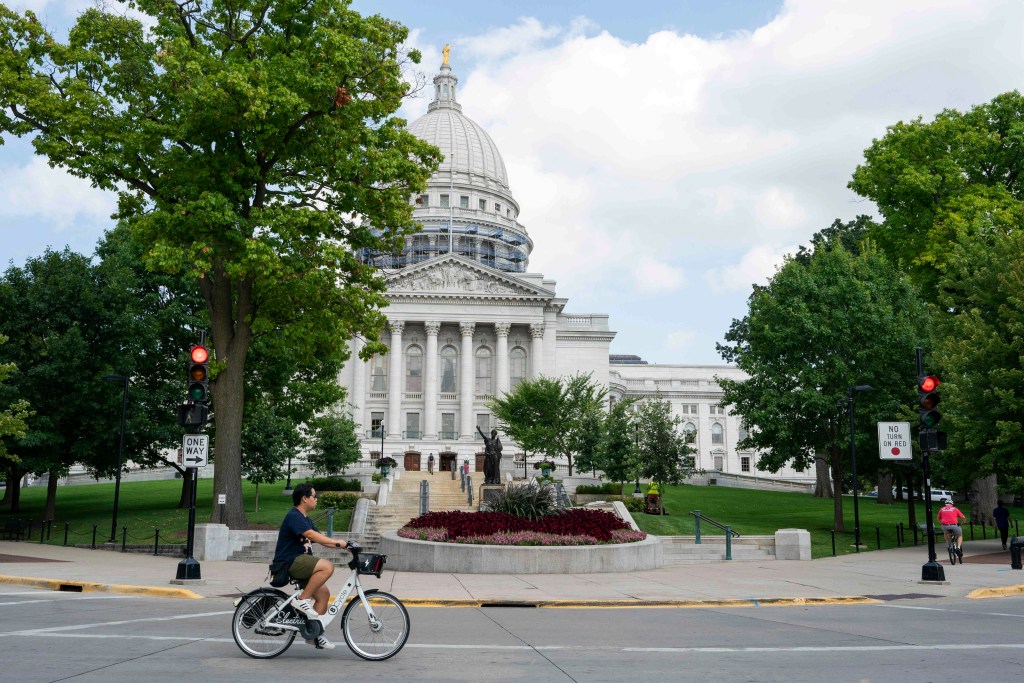
Very few departments have reached 30% women representation, but for decades, nearly a third of the Madison Police Department in Wisconsin has been female.
The department is rare in another way, too: It’s fully staffed. Police departments across the nation have reported declining staff levels since 2019, though hiring ticked up slightly in 2025, according to the Police Executive Research Forum.
The Madison department, which has 492 officers and serves a city of just under 300,000, has made a concerted effort for years to separate themselves from the stereotype of policing — that it’s a militaristic job focused on arresting bad guys with brute strength. The department instead leans into the realities that officers around the country face on a day-to-day basis: interacting with community members, helping the homeless and mentoring young people.
“Sometimes you’re maybe more of a social worker or a mentor or just someone to listen to someone talk,” said Paige Decent, recruiting officer for the Madison Police Department. “I think those are all things that people want, but they don’t realize that ‘police officer’ encompasses all of that.”
Especially appealing to female applicants are the department’s many speciality units, such as the community outreach team, the gang unit and the mental health division.
The mental health division, made up of majority female officers, works on strategizing with other community resources to figure out how to help people in crisis before a police response is required. These officers form relationships with shelters and group homes and have an intimate knowledge of the people in their district who often interact with police because of mental health issues.
The department also has part-time positions, which are popular with women. All six of its part-time officers right now are new moms, according to Stephanie Fryer, department spokesperson.
In addition, women-friendly policies have helped attract and retain women who want to become officers but also start families. The department, for example, allows women to work from home for up to one year after giving birth, doing tasks such as assisting with report writing and making phone calls.
Decent said the best thing departments can do to bring on more women is highlight the work female officers are doing so young women and girls can envision themselves in the role.
“Humanize the badge,” she said. “Really show the human side of the women in your department.”