

Can OHA’s Next CEO Move The Needle On Rebuilding A Hawaiian Nation?
The selection of a new leader for the Office of Hawaiian Affairs lands in the middle of key elections for the Board of Trustees.
The Office of Hawaiian Affairs was created nearly five decades ago as a placeholder for a future Hawaiian nation.
Now, the office is poised to welcome a new chief executive this week at a time when legal threats to Native Hawaiian programs continue to increase.
The finalists for the CEO position are former Honolulu City Councilman Todd Apo, former Hawaiian Homelands Director Kaulana Park, and interim OHA CEO Summer Sylva.
There’s a view among former trustees and others who have watched OHA over time that the organization has occasionally lost focus on its ultimate goal of building a nation. In fact, “Ea” – sovereignty, self-governance or self-determination – was removed as an objective in the office’s strategic plan several years ago.
Trustees recently added it back.
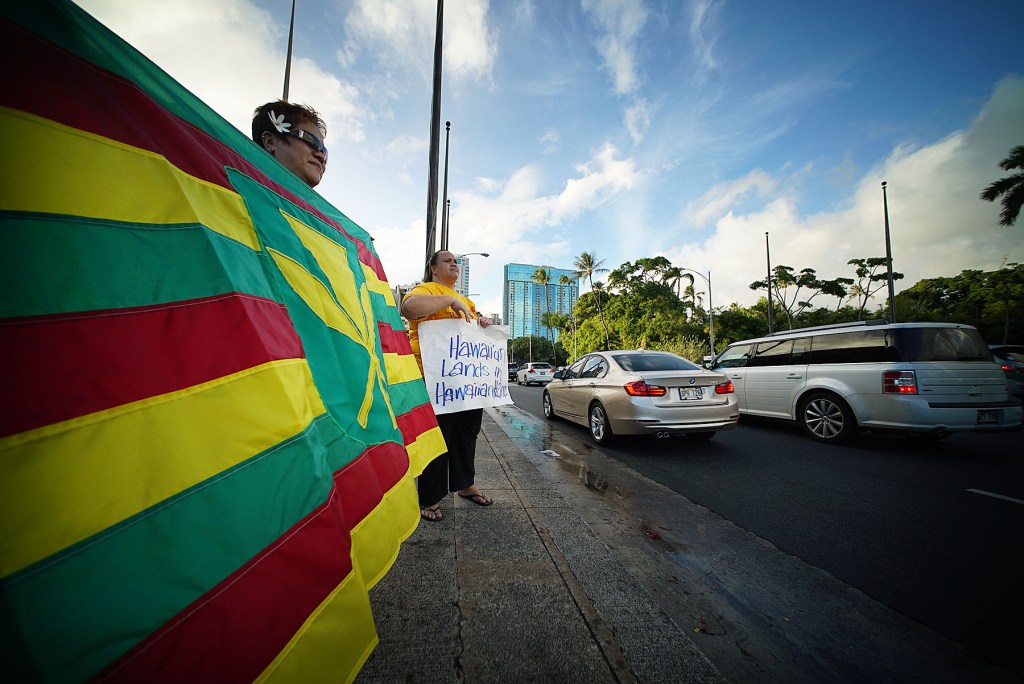
OHA’s last attempt at self-governance launched more than a decade ago, then fizzled. The office funded a Hawaiians-only constitutional convention as an early step to nation building. But the process was ultimately struck down by the U.S. Supreme Court and opposed by prominent Hawaiian activists who questioned the independence of the convention.
On the eve of one of them taking charge, Civil Beat asked each of the finalists what self-determination means to them and what putting that in action would look like.
Apo said that self-determination is “really about having control over the culture, the assets, and the interaction that all of that has with the rest of the world for the benefit of Native Hawaiians.” He said that OHA must work with many groups as part of nation building, but that a self-governance process must be determined by the office’s Native Hawaiian beneficiaries.
“There’s a number of varying opinions that need to get put together for us as a Hawaiian community, for OHA as an organization so we have a common voice as we move forward,” he said.
Apo said his experience as a councilman and working for developers taught him to learn from people in the community before springing into action, an approach he plans to take if he is appointed CEO, including on the question of self determination.
Park said Ea binds the areas OHA focuses on including housing, health, education and economic development as well as values around culture, the land and family.
“Ea is all of that,” he said. “We should strive toward that. Ea should be in everything we do.”
But Park said the office must also start creating a roadmap toward nation building. To start, he said OHA needs to look back at the last 50 years and determine what it has actually achieved before setting out on a course for the future.
Although he’s a former employee of the agency, he said that the role that had the most impact on him was leading an effort at the state’s Hawaiian homelands agency to assist homeless on Oʻahu’s Westside, which exposed him to many of the issues facing those struggling with poverty.
Sylva said that self-determination “means autonomy in all the most meaningful ways.” For people, that means having the ability to make decisions that impact their lives, their families and their communities. She said OHA must facilitate that among its beneficiaries.
“It’s easier to grow a lāhui that feels empowered,” she said.
She said that while OHA should facilitate discussions around self-governance, the process must be community-driven instead of being led by a government agency. She said that OHA is planning to begin those discussions in the community soon.
Sylva said that she aims to bring stability to the organization after it has gone through four administrators in the last three years. A former attorney with the Native Hawaiian Legal Corps., she said her most impactful case, which went all the way to the state Supreme Court, involved working with Maui kalo farmers and other groups to fight stream diversion permits in East Maui.
“Those streams,” she said, “keep feeding my work and my professional journey.”
Selection Will Come This Week
The nine-member Board of Trustees is scheduled to select the next leader of the agency in the coming days.
The office is at another critical juncture: A majority of the seats on the Board of Trustees are up for reelection this year, meaning the new chief executive could also be walking into a boardroom with new members who want to take a different direction on policies than the current group of trustees.
This leadership change also comes as the office pushes for a role in negotiating with the military over land leases, prepares for the next legislative session, determines its future on lands it owns in Kakaʻako and elsewhere, and fights a lawsuit from Stacy Ferreira, who took the trustees and OHA to court after she was removed from her post as CEO more than a year ago.
On Monday, the trustees met briefly to receive public feedback collected by OHA’s search firm to inform their decision on the next CEO. The firm received the most letters and public comments about Sylva while Apo’s candidacy had the least.
The trustees will meet again on Wednesday to recommend compensation for the next CEO, rank the finalists and recommend whether Sylva, Park or Apo should lead the office. The board is scheduled to make a final decision on Thursday.
Changes OHA Needs To Make
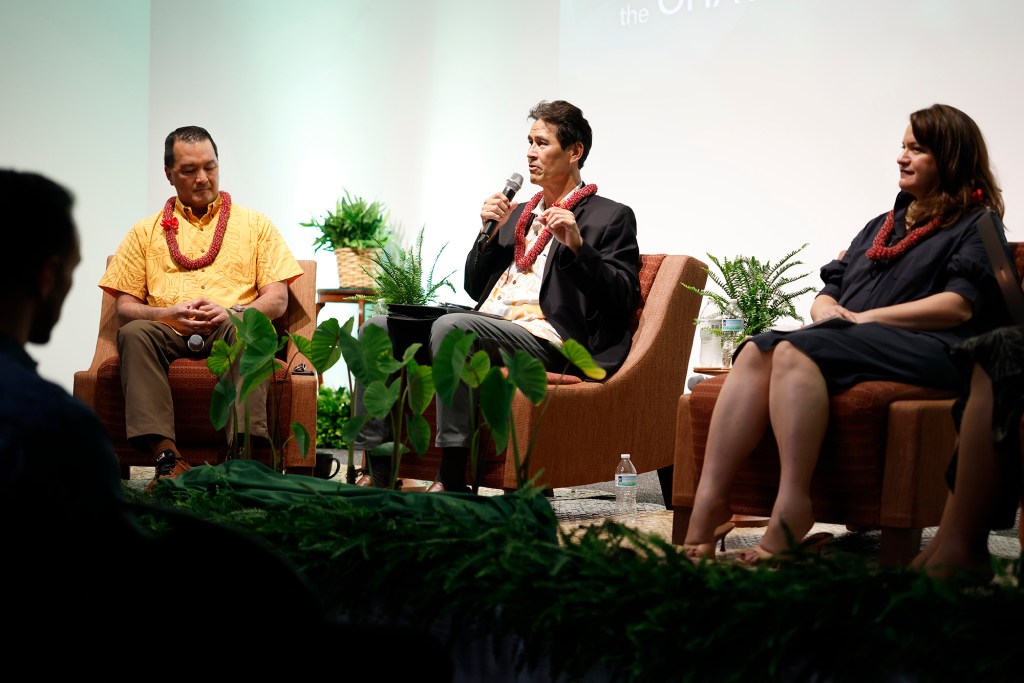
Appearing at a forum last Thursday evening to take questions from a live audience, the finalists shared similar goals for the office but differed on leadership styles and what changes they think OHA needs to make, as well as how they would approach advancing self-determination for Native Hawaiians.
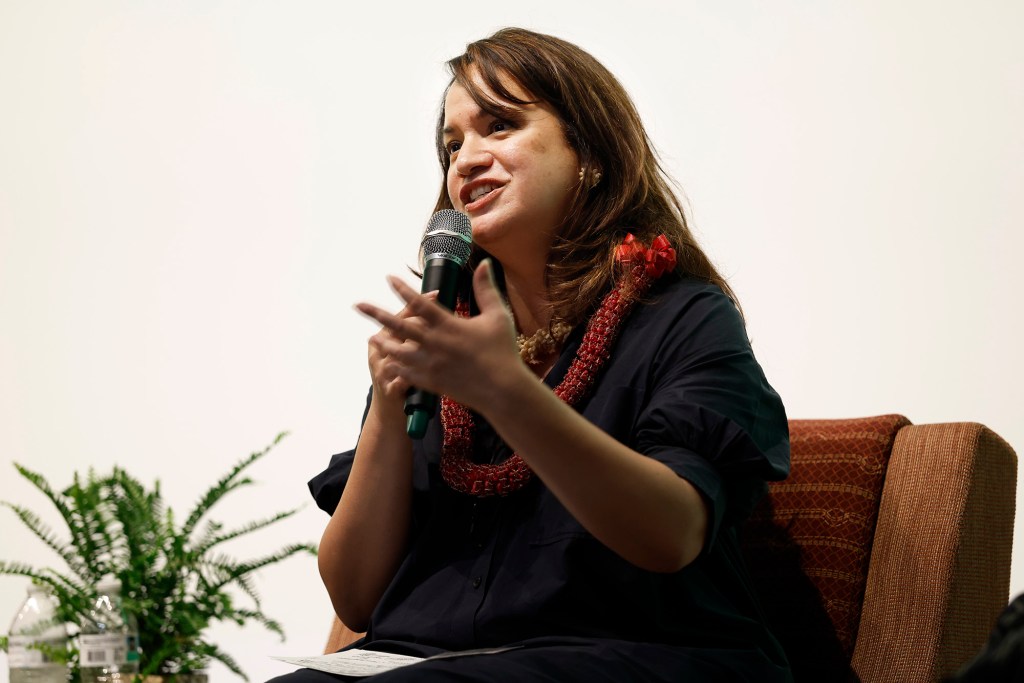
Sylva said that legal attacks and other Trump administration efforts targeting Native Hawaiian programs should spur the office to restart conversations around self-determination.
Park and Apo both want to see a bigger focus on housing, though they were light on details on how that would be accomplished.
Apo said that solving housing issues can help alleviate financial pressure on families, while Park Park thinks OHA needs to provide more financial education, and pull together resources to help those who can’t qualify for the DHHL waitlist.
Their Weaknesses
Near the end of the forum, moderator Kuʻuwehi Hiraishi asked each finalist how people would describe their management style and their biggest weakness.
Park, who worked in finance before moving into various roles in state government, said he is often impatient and has had to temper that by learning to be more collaborative.
Apo said people often believe he works too slowly because he wants to hear from all sides on an issue before taking action.
Sylva said that she always has “an advocate hat on” and while she can use that advocacy to help people feel empowered, she said she needs to make sure others aren’t left behind as well.
Their Biggest Challenge As A Leader
Sylva, who has been the interim CEO since last year, said that some of her toughest decisions came during the office’s response to weather disasters this year. In responding to those most in need, she also had to explain to some other communities why they weren’t receiving assistance from the office.
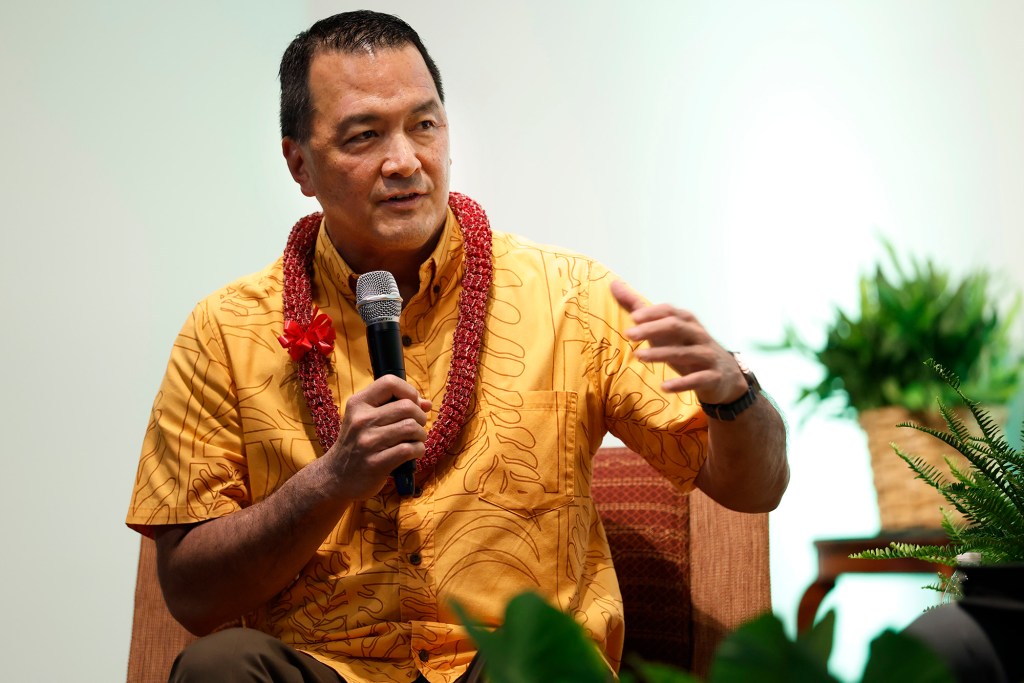
Apo said one mistake he made early in his first term as a city councilmember was failing to recognize the differences in the Westside communities he represented. He said he had to take the time to really listen to people from each of those communities, and for himself in the future, to “get smarter faster.”
Park recalled hostile meetings he and then-director Micah Kane had with DHHL beneficiaries. He said building trust took time, and in many areas, it took years. But he said it was important to face people who were angry, and recognize that they were angry because the department in the past made promises that it didn’t keep.
“If we gotta take bullets, we’ll take bullets,” he said. “And if we need to take bullets for the previous administration, that’s fine too.”
How They’ll Address Neighbor Island Needs
One audience member asked about the perception that OHA is Oʻahu-centric: What would the finalists do to ensure that neighbor islands are not left out?
Park said he’d want the office to develop region-specific plans based on feedback from communities in those regions, similar to the planning process DHHL undertakes every few years.
Sylva said she would rely on the trustees who represent neighbor islands to best understand the needs of their communities and bring that to the administration.
Apo, by contrast, said that he would help people understand that Oʻahu is the most populous island, and so much of OHA’s resources may be directed there and how OHA allocates its resources must be dictated by where the greatest needs are in the community.
How They’ll Handle Conflicts With The Board of Trustees
While the current board agrees on most issues, it has found itself split over how to handle the lawsuit from Ferreira, with four trustees breaking away earlier this year to file their own legal responses in the case that OHA lawyers say hurt the office’s ability to defend itself.
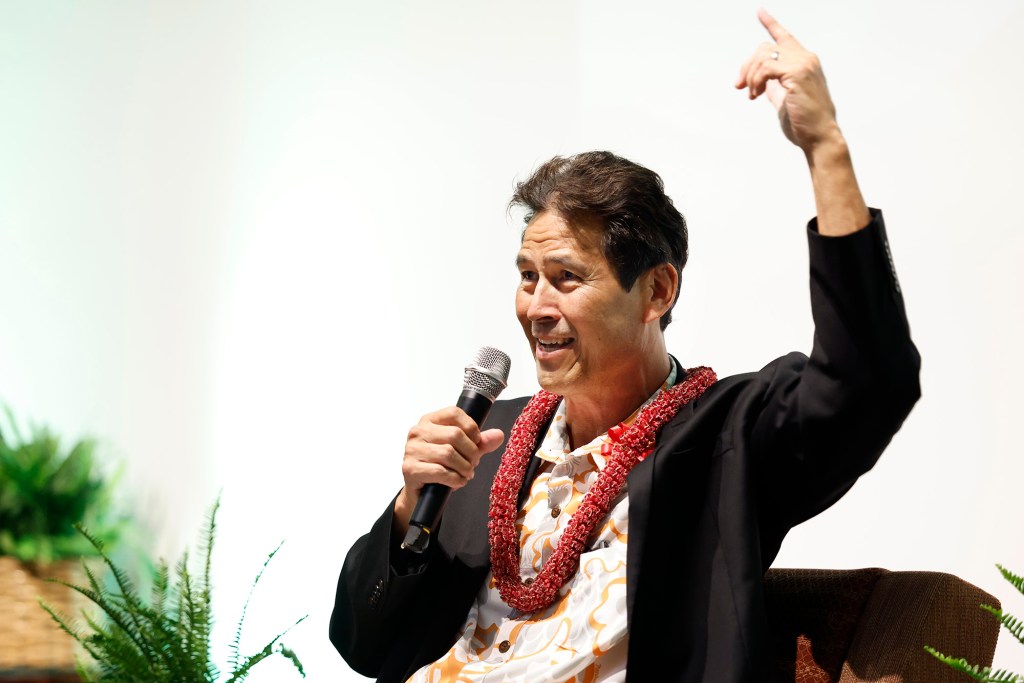
Apo said there will always be disagreements among trustees, but he sees his role as a facilitator who would make sure conversations stay on track. And although board decisions are based on a majority vote, he would want to find ways to address concerns from trustees who may not agree with the majority decision.
Park said he would work to build trust with all of the trustees. He said he had to help manage some conflicts that arose on the Hawaiian Homes Commission in his time as chairman.
Sylva said that it’s the OHA administrator’s job to mitigate disagreements on the board and to provide enough facts for the trustees to make informed decisions. And once the board makes a decision, even if the CEO disagrees, it’s their job to champion that directive from the trustees.

