

Native Hawaiian Benefits Face Sweeping Legal Attacks
Conservative groups and the Trump administration have taken aim at programs supporters say are foundational to making amends for Hawaiʻi’s history.
The Pacific Legal Foundation’s lawsuit on behalf of David Kalahiki and Linda Twitchell over the Department of Hawaiian Home Lands’ blood quantum requirements is not happening in isolation. An overlapping network of conservative legal groups, think tanks and government lawyers are targeting Native Hawaiian programs in the courts and within the federal government.
The attacks stretch back decades, including the undermining of the Akaka Bill, which sought to grant formal federal recognition to Native Hawaiians and create a government-to-government relationship with the U.S. similar to that of Native American tribes. It could never muster the votes necessary to pass the U.S. Congress.
The latest challenges rely on arguments propagated by conservative groups such as The Heritage Foundation, which has played a central role in shaping the Trump administration’s policies aimed at dismantling diversity, equity and inclusion initiatives.
The Heritage Foundation, in particular, has a long history of arguing that Native Hawaiians should be treated as a racial class rather than a political one, and in 2007 published commentary describing the Akaka Bill as a “terrible idea” that if realized would allow for “racial discrimination on behalf of a favored interest group.” The group dismisses that Native Hawaiian benefits were designed to make amends for the overthrow of the Hawaiian Kingdom and the expropriation of native lands.
“A separate ‘Native Hawaiian Government’ is both offensive and nonsensical, except to racial separatists and greedy opportunists,” the Heritage Foundation’s lawyers wrote at the time. “Those burdened with liberal guilt about ancient wrongs should think seriously about the harm they would do to the very values they purport to espouse.”
Conservative Nonprofit Sues Kamehameha Schools

In October of 2025, Students for Fair Admissions, the conservative nonprofit that successfully challenged affirmative action in higher education at the U.S. Supreme Court, filed a federal lawsuit against Kamehameha Schools over its admissions policy that gives preference to Native Hawaiians. The plaintiffs in the suit include two families, described only as “Family A” and “Family B,” that want their non-Hawaiian children to attend the school.
Kamehameha Schools faced a similar lawsuit when an anonymous student challenged its admissions policy in 2003. The school narrowly won at the 9th U.S. Circuit Court of Appeals on an 8-7 decision, but ultimately settled the case for $7 million before it could be heard at the Supreme Court. Attorneys for Students for Fair Admissions cited that settlement in their 2025 lawsuit, stating that, “No amount of money could make Kamehameha’s admissions policy lawful. The time has come for its blood-based discrimination to end.”
After the case was filed, Edward Blum, the head of Students for Fair Admissions, declared in a press release that Native Hawaiian culture can be “celebrated without imposing ancestry-based barriers that exclude white, black, Hispanic and Asian children.”
DOJ Issues Memo On ‘Race-Based’ Education Grants
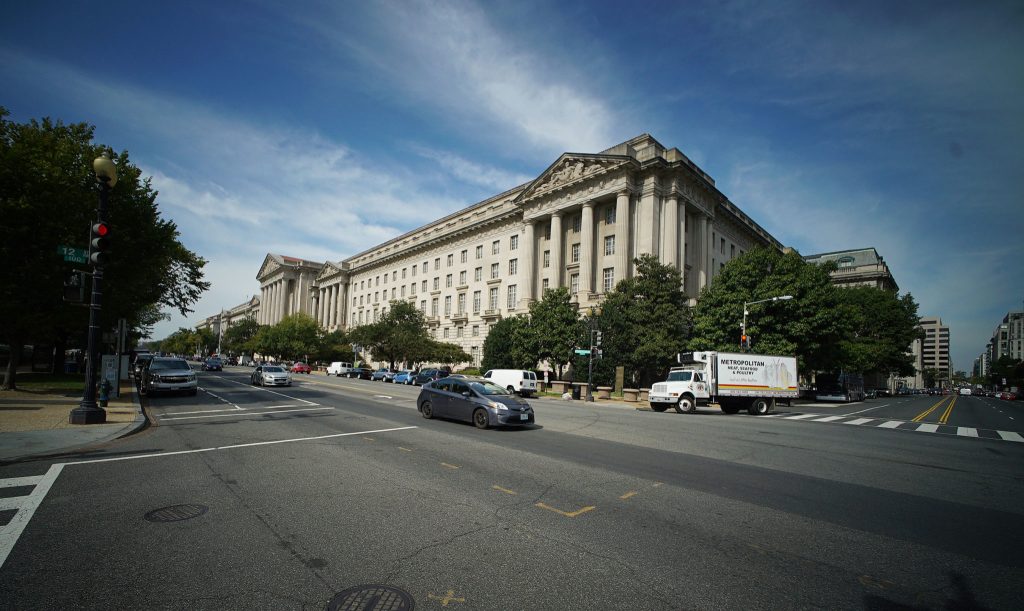
Two months after the Students for Fair Admissions lawsuit, the Justice Department’s Office of Legal Counsel issued a memo declaring several grant programs administered by the education department unconstitutional because they used race-based eligibility criteria. The memo argues that “Native Hawaiian” is a racial classification rather than a political one due to a lack of formal recognition.
“There are … no federally recognized Native Hawaiian or Native Pacific Islander political entities with which the United States has maintained a government-to-government relationship,” the memo states. “Thus, there is no equivalent political status from which constitutionally permissible preferences for those groups might flow.”
The Office of Legal Counsel is led by T. Elliot Gaiser, a conservative litigator and former solicitor general for Ohio who was appointed by President Donald Trump. Gaiser was recognized by the Heritage Foundation in 2024 as a distinguished alumnus after he served as an intern there nearly a decade earlier.
Lawsuit Targets Native Hawaiian Health Scholarships

In March this year, Do No Harm, a conservative group seeking to “expose political bias and discrimination in healthcare and medical education,” filed a federal lawsuit in Washington, D.C., against the Department of Health and Human Services challenging the constitutionality of its Native Hawaiian Health Scholarship Program, designed to get more Native Hawaiian doctors and nurses into some of the islands’ most underserved communities.
The suit argues that the federal requirement that applicants be Native Hawaiian amounts to racial discrimination and seeks to open the program to all people regardless of ancestry. When announcing the lawsuit Dr. Stanley Goldfarb, the founder of Do No Harm, said that despite the Trump administration making “historic strides toward ending racial bias in medicine and restoring meritocracy” the fact that the Native Hawaiian scholarship program still exists “proves just how widespread institutional race discrimination has become.”
Blum, of Students for Fair Admissions, was listed as a board member on Do No Harm’s most recently available public tax filings.
Trump Budget Slashes Native Hawaiian Funding
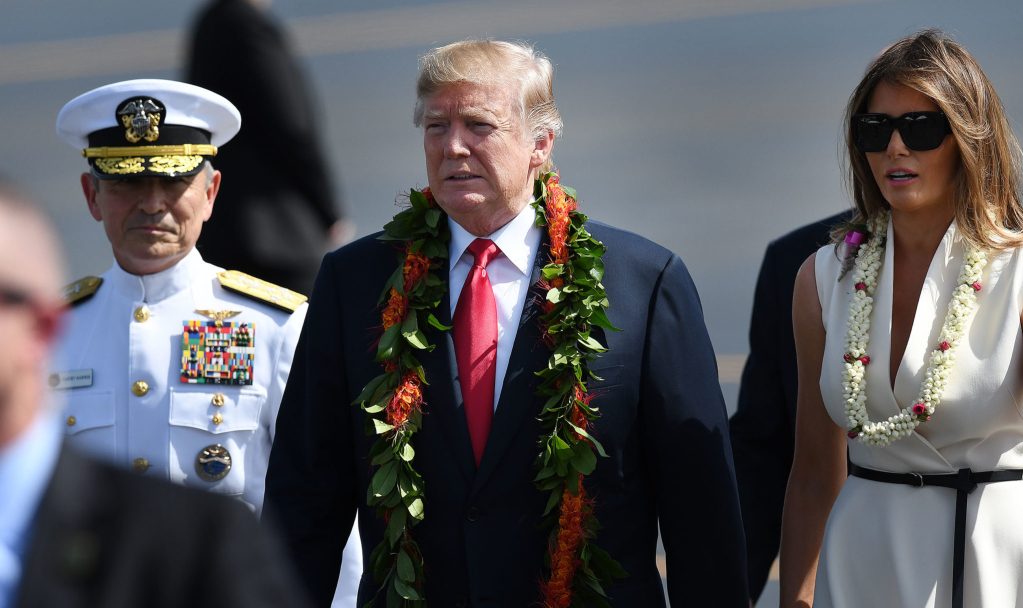
Trump proposed deep cuts to Native Hawaiian programs as part of his fiscal year 2027 budget proposal released in April. While most presidential budgets are considered dead on arrival in Congress, this one sounded alarm bells in the islands.
Trump has tried to cut funding to Native Hawaiian housing and education programs in the past. But he raised the stakes when he zeroed out a block grant program that annually sends tens of millions to the Department of Hawaiian Home Lands to help build housing and lease homesteads for its beneficiaries.
Trump’s stated reason for slashing the funds was that “Native Hawaiians are not a tribal nation but a racial group.”
Hawaiian Homelands Focus Of Litigation

The Pacific Legal Foundation filed a federal lawsuit in June on behalf of Eric Ryan, a white, conservative blogger who was denied a Hawaiian homestead lease because he failed to meet the program’s 50% blood quantum requirement.
The suit argues the requirement is unconstitutional because it is based on ancestry and that anyone, including white people like Ryan, should have access to lands that were set aside for Native Hawaiians after the overthrow of their kingdom.
“Homestead leases are a valuable public benefit,” said Caleb Trotter, an attorney for the Pacific Legal Foundation, “and the Constitution does not permit them to be distributed based on blood quantum.”

