

How Can Kauaʻi Be More Resilient? Where 14 Council Candidates Stand
The candidates vying for the seven seats this election have their sights on policies and funding to ensure the county is ready for future disasters.
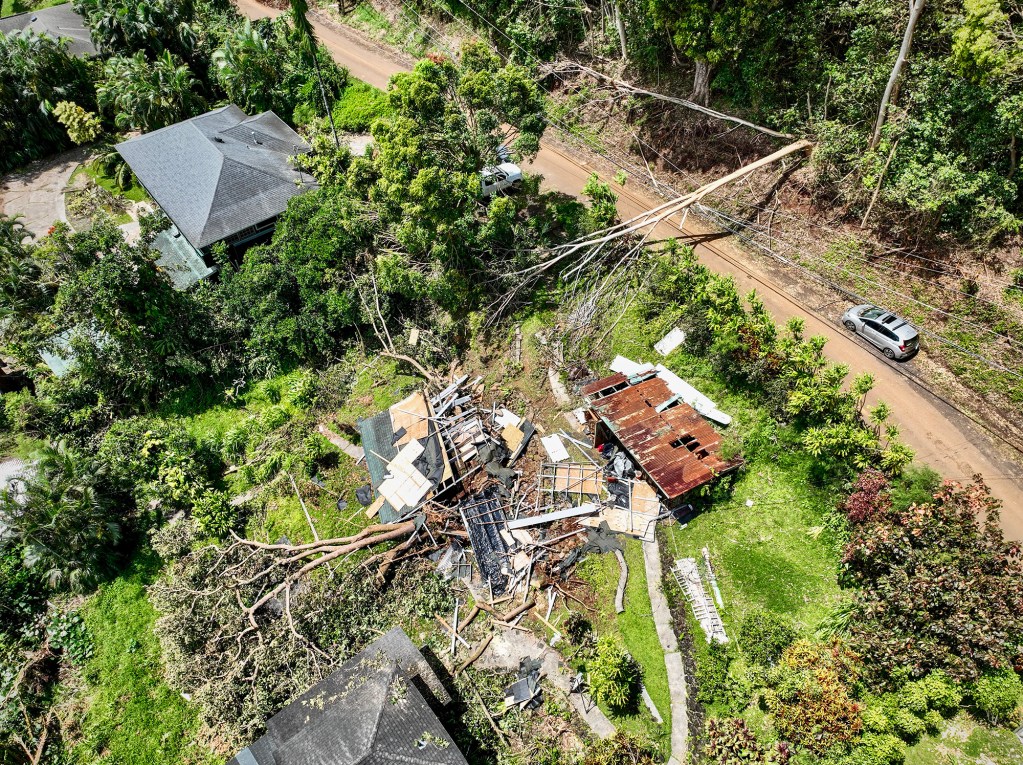
A month after Hurricane Lowell devastated parts of the Garden Isle, Kaua‘i County’s council candidates say they want to help communities around the island be better prepared for the next disaster.
The category 2 storm — the largest since Hurricane ‘Iniki made landfall in 1992 — tore down trees and utility lines that blocked roads, ripped off roofs, flooded homes and cut power to 90% of the island.
As storm cleanup and recovery continues, the 14 candidates seeking seats in the Nov. 3 election want to explore policies and budget investments for more evacuation routes, refuge areas, community resilience hubs and infrastructure improvements.
Kaua‘i’s Election Division sent out mail-in ballots Wednesday. Kaua‘i voters choose the seven candidates they want to represent the entire county, which includes Niʻihau, rather than a certain district of the island.
Community-Level Resiliency
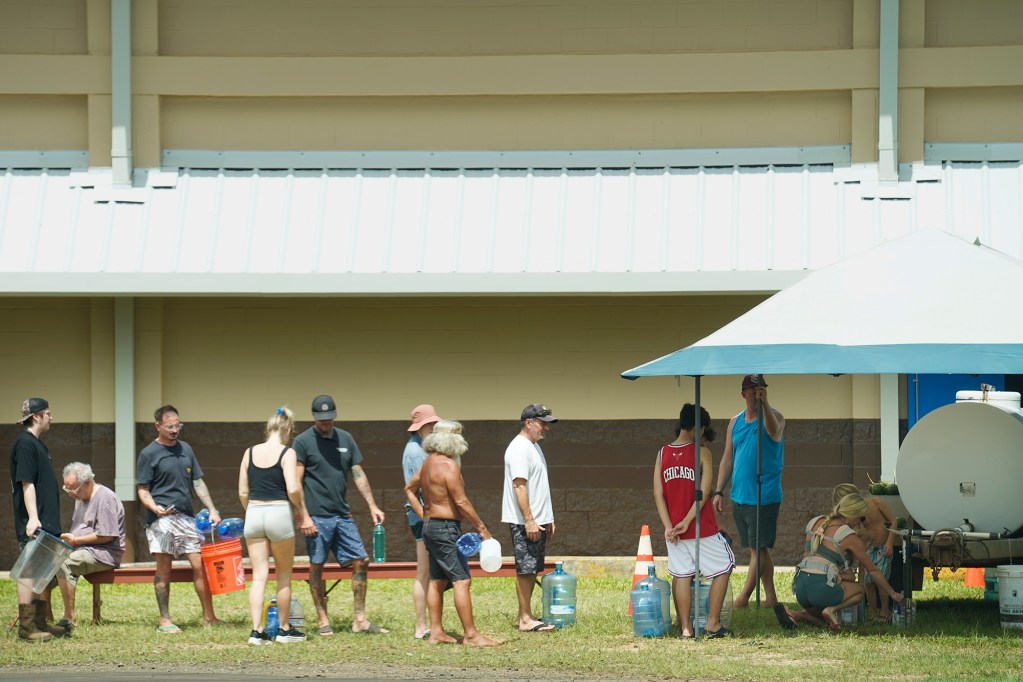
Ice and generators were in great demand as crews worked to restore power in the first week after Lowell. Several council candidates say ice makers and generators should be pre-placed in communities around the island ahead of the next storm to help prevent food from going back during extended power outages.
Billy DeCosta, who served on the council from 2020 to 2024, said commercial ice machines could be placed in the county’s 10 neighborhood centers. When not used for emergencies, the machines can be used for parties or to provide ice for local fishermen.
“That’s how we can be more resilient,” he said. DeCosta finished 8th in the August primary, which narrowed the field of candidates down to 14.
Some communities, such as Kekaha and Wainiha, are already looking at how they can purchase shipping containers to store ice machines, generators, chain saws, extra saw chains, and other items that helped them clean up after Lowell.
Mike Coots, a Kīlauea small business owner who finished 10th in the primary, said he’d want to see the county help cover some of the costs for those containers. He and several other candidates pointed to Vibrant Hawai‘i’s resilience hub model on Hawai‘i island, where local community members come together to prepare for and respond to emergencies. Twenty hubs operate in nine regions.
Such hubs on Kaua‘i could contain shared cold food storage — such as a refrigerated trailer — so that not all residents need to have their own generators to keep their fridges running, said Fern Ānuenue Holland, a current council member who was 2nd in the primary, and Paul Noboru Applegate, a retired Kaua‘i police captain who served as incident commander during past disasters and Covid-19.
Gas, Holland said, should be prioritized for cars in case people need to get to the hospital or for other emergencies.
Dane Smith, a retired Kaua‘i firefighter who lives in Wainiha and finished 9th in the primary, said he supports the community-led, government-supported model that North Shore nonprofits and resilience hubs have been using.
Council member Addison Bulosan, who was 5th in the primary, said he’d want to look at policy to create a more formal structure for emergency response, both within county government and between government and the community. Kaua‘i residents are good at jumping in to help on their own, but formal structures will enable better collaboration, response and access to resources and equipment.
“Government is far from perfect, but when our entire societal system is in coordination, there’s no storm too heavy,” he said.
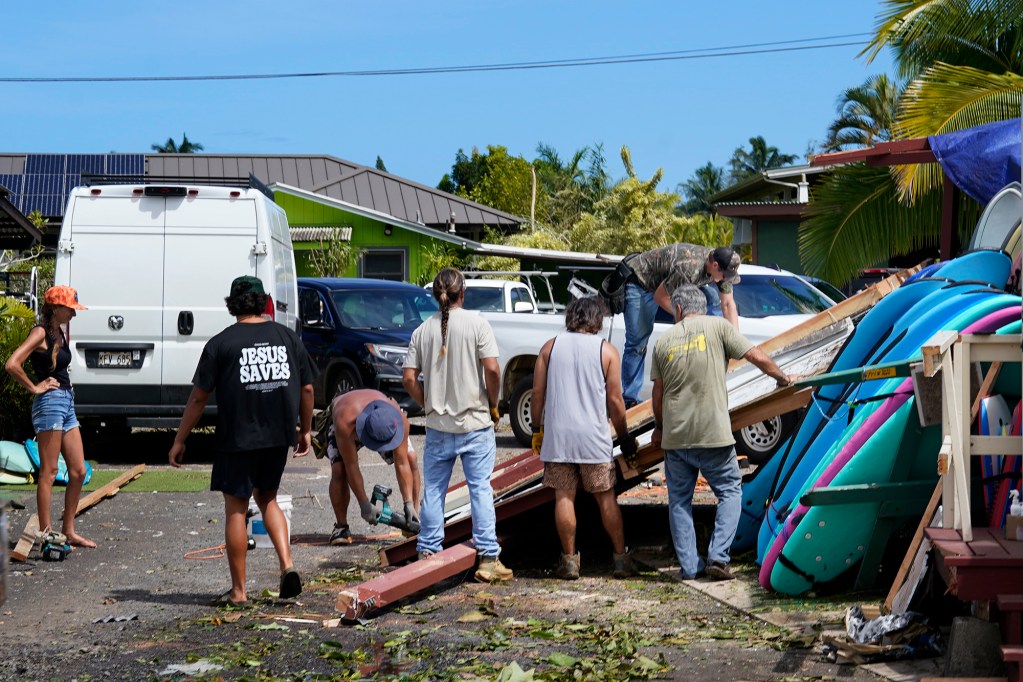
Coots and Keola Kaiminaauao, who works as a county bus driver and for the Līhu‘e airport, said if elected they’d like to look at reducing or removing liability for community members who use their own heavy machinery to help with clean-up efforts.
“It’s a community-first kind of mindset and I think that would be a huge help for our island,” Coots said.
Volunteers were the biggest asset to the Westside community, said John “Scooby” Mattos, a Kekaha resident and supervisor at the Kaua‘i Island Utility Cooperative. Kekaha residents brought out their backhoes, loaders and other machines to clear rocks and sand that Lowell’s storm surge had pushed onto the town’s coastal highway.
Mattos, who finished 14th in the primary, said he’d support more funding for Community Emergency Response Teams. The program, which was run by the Kaua‘i Fire Department and Kauaʻi Emergency Management Agency, is now offered through the nonprofit North Shore Give. It follows a national framework for training residents in search and rescue, medical triage and other disaster response activities.
Michelle Kaleiohi Correa, who manages the county’s Waimea Neighborhood Center and finished 4th in the primary, said each community has different emergency response and recovery needs. She’d want to hold listening sessions with the different communities to better understand how the county can support them.
“Kind of more government supporting them instead of taking over,” she said.
Arryl Kaneshiro, a current council member, agrees, saying community resilience hubs could be an avenue for communities to ask the county to address problematic roadways or stream mouths they saw during Lowell ahead of the next storm.
Evacuation Routes, Infrastructure And Preparedness
Some candidates want to see old cane haul and other private roads opened for emergency evacuations.
Cheree Rapozo, a business owner and real estate professional, said the roads could be used by those transporting large amounts of trash. After Lowell, refuse trucks and others hauling debris contributed to clogged roads while state and county crews were cleaning up fallen trees and utility lines.
DeCosta said he’d want to work with landowners and the next mayor to get those alternative routes opened. He said if landowners aren’t willing to open their roads for natural disasters, he’d be in favor of condemnation.
Other candidates want to see more places for residents and visitors to go during emergencies.
Earlier this year, the county released an updated list of 19 facilities that could serve as refuge areas. The county spent two years assessing the facilities using the Federal Emergency Management Agency’s Best Available Refuge Area, or BARA, standards and may provide increased protection during high wind events.
Twelve of the 19 facilities have enhanced protective characteristics beyond baseline BARA standards. Kaua‘i is the second county in Hawai‘i to use those standards to assess its potential refuge areas; Honolulu was the first.
Taylor Shigemoto, a former banker, said he’d like to see more facilities that meet BARA standards, as well as more identified facilities where people can seek protection from floods and tsunamis, but those efforts ultimately need to be spearheaded by the next mayor and his administration.
Mattos said Kekaha has been asking for a shelter for tsunami evacuations for decades so that residents don’t have to travel along the coastal highway to get to county-designated refuge areas in Waimea.
Todd Ozaki, executive assistant to the mayor and Capital Improvements Program manager who finished 3rd in the primary, said disaster preparedness also includes years of improving roads, culverts, bridges and other infrastructure that serve essential roles during and after emergencies. Many of those projects are already underway and need to continue.
“We’ve been actively working on culvert projects, and no one sees the culverts until it’s a problem, so when culverts start to fail, I mean, the roads will fail as well,” he said.
Election Resources
-Hō‘ike Community Media’s council candidate interviews
-KauaiVotes.org’s KKCR candidate listening room
-Princeville Community Association’s candidate forum on emergency preparedness, response and recovery
Hardening infrastructure applies to the island’s communications. Radio communications failed across much of the public in the days after Lowell because of power problems. Rapozo said she’d like to see the county provide financial support to the island’s two emergency radio stations so they can continue broadcasting even if the power goes out.
Umi Martin, a Kekaha farmer, said the county should also invest in other types of backup communications, such as Starlink Internet. Community groups set up communication hubs using Starlink hotspots across the island after Lowell.
The council has passed and discussed policies over the last several years to help make Kaua‘i more resilient amid climate change, such as getting tougher on its shoreline setback requirements and requiring that new homes be built to better withstand wildfires, Kaneshiro said. More lessons will likely come out of Kaua‘i’s experience with Lowell.

