See How Kauaʻi Residents Are Taking Recovery Into Their Own Hands
On Kaua‘i, neighbors are repairing each other’s roofs, delivering meals and using their own equipment to clear roads.
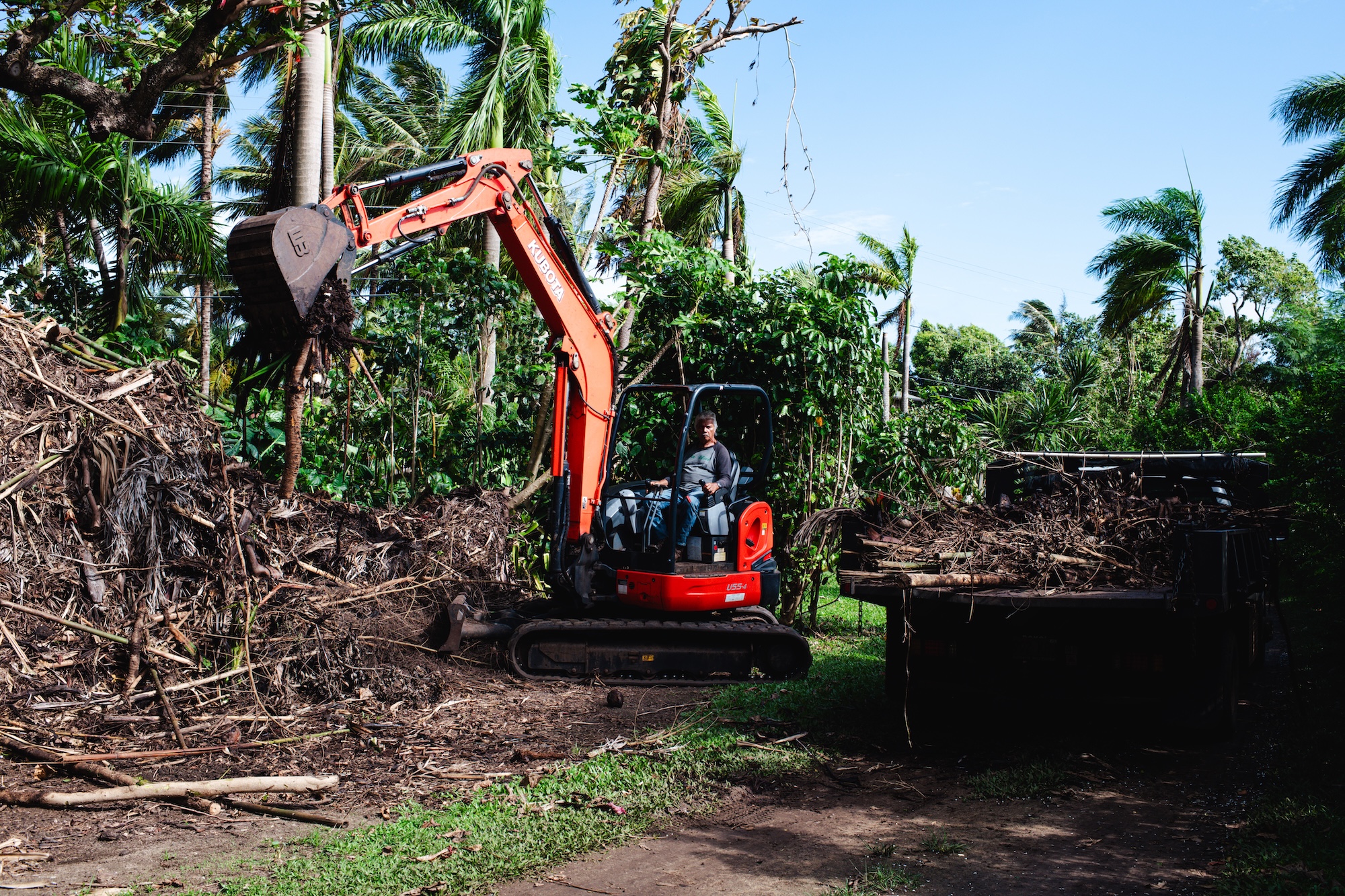
It was a few hours after the sun rose over the verdant valleys and clear waters of Hā‘ena on Kaua‘i’s North Shore. Michael Olanolan was already in his excavator, clearing the main highway where a wall of fallen trees had blocked access. Other neighbors joined him, moving debris so electric crews could reach utility poles downed by Hurricane Lowell.
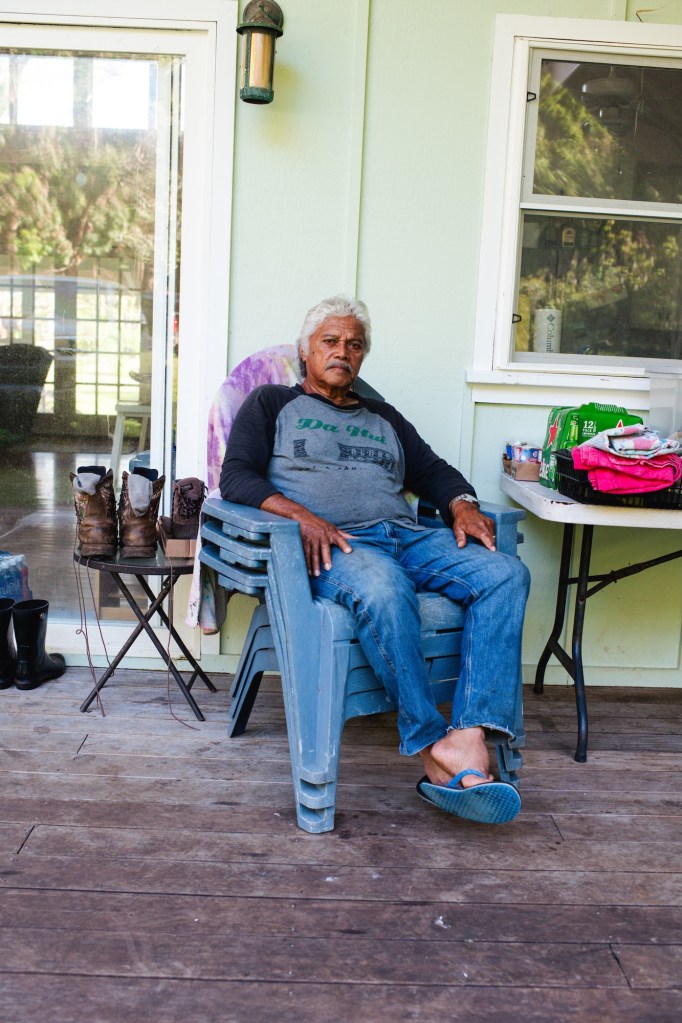
The 76-year-old father of nine and grandfather of 26 did this every day for weeks after Lowell sideswept the Hawaiian islands of Kaua‘i and Ni‘ihau on Sept. 7. His generational home lost part of its roof to Lowell’s winds, but family and friends helped him repair it, freeing him up to also help his community. Clearing out roadways became his full-time job while residents were getting back on their feet.
“That’s the way we are up here,” said Olanolan, who owns a landscaping and excavating business. “We help each other.”
The strongest storm to impact Kaua‘i in 34 years, Lowell brought intense rains, winds and coastal waves to the island, knocking out power to roughly 90% of the island’s 36,000 electric utility customers. Rural North Shore homes suffered flood damage and went without power for nearly three weeks; on the South Shore, Lowell’s storm surge devastated beachfront properties and roads. So far, Hawai‘i Gov. Josh Green’s office reported 10 destroyed homes and 67 with significant damage.

Past storms, like one in 2018 that damaged hundreds of North Shore homes and cut off the community from the rest of the island, have taught communities to take disaster response and recovery into their own hands because government aid — such as financial and cleanup assistance — will take time to come through. Some don’t put hope in government aid at all. They know they need to rely on one another.
After Lowell, residents islandwide cleaned flood-damaged homes, tarped roofs, cooked hot meals and conducted door-to-door checks of neighbors. When the power was out, communities created systems to deliver ice and gas to those in need. Their efforts persisted even as two more storm systems passing south of the Hawaiian Islands brought more winds and rain.
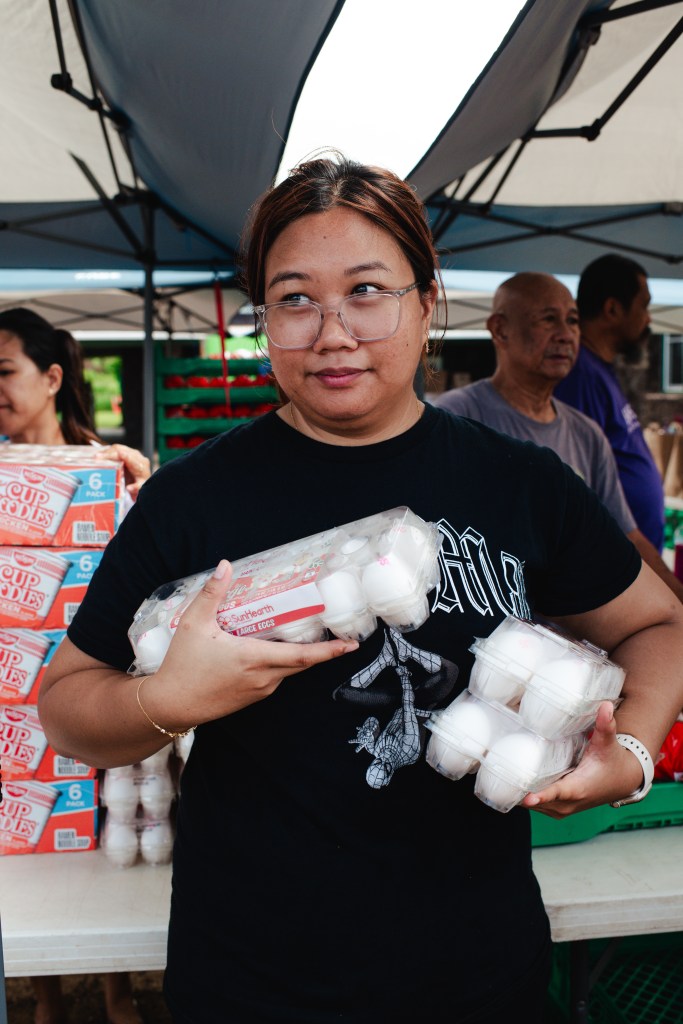
Hawaiian culture is steeped in mālama, or care, of each other and the land, even encouraging newcomers to help out, said Megan Wong, a Wainiha resident who coordinates the Kaua‘i Resilience Team, which ran a community hub where nearby residents could get supplies, meals and other help in Lowell’s immediate aftermath.
“I think it comes from this innate place of, like, seeing your community as family and ‘ohana,” said Wong. “If everyone steps to the table and does their part, then we can all make it through together.”
‘We Do It Because We Love Kekaha’
The island, with its 73,000 residents, is still waiting on federal aid. Hawai‘i has seen six storm systems this year — five of which occurred within the last two months and were driven by a strong El Niño. So far, the Federal Emergency Management Agency, or FEMA, has approved nearly $21 million in household and individual assistance for a set of storms in March.
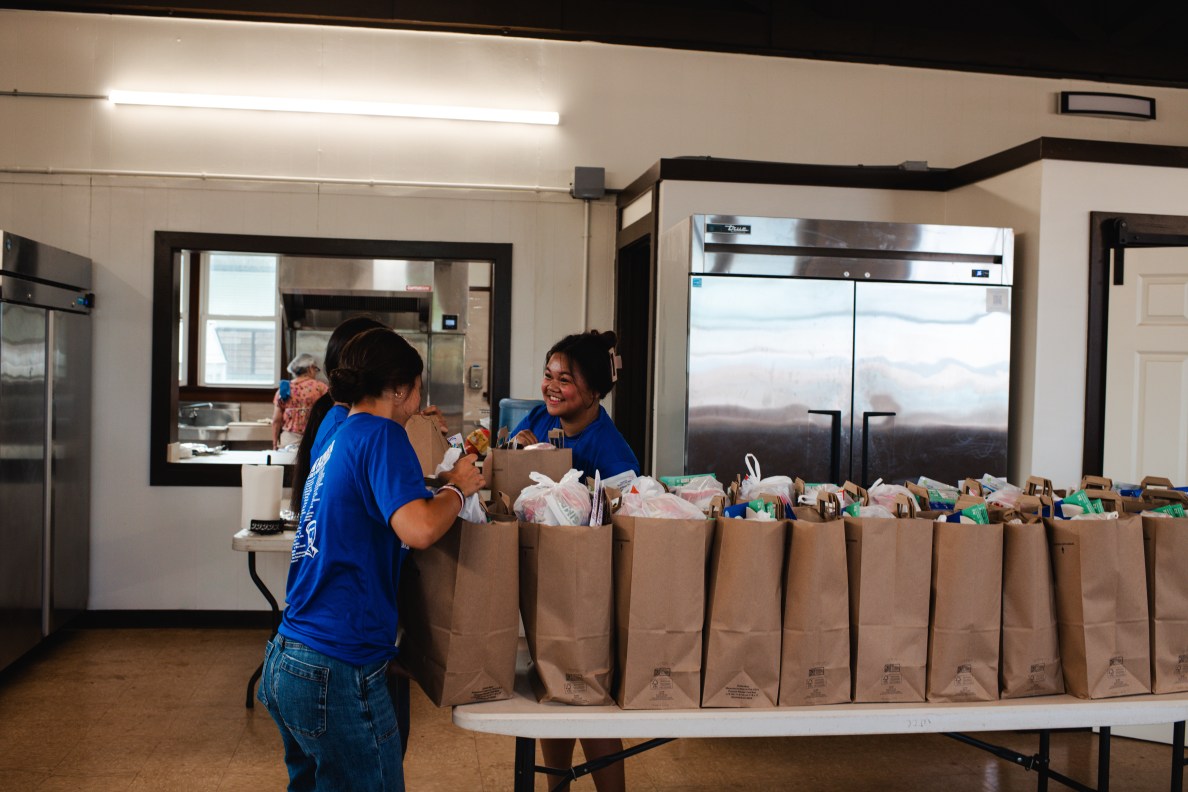
In the coastal town of Kekaha on Kaua‘i’s Westside, residents weren’t waiting for the government to rescue them.
Dennis Eguchi, a Kekaha resident who is part of area nonprofit E Ola Mau, said when he went outside the morning after Lowell hit, he already saw 18 people assessing damage or cleaning up yards in the neighborhood. Two others went down nearly every road with chainsaws cutting damaged trees. Dozens of others were asking how they could help.
Before the state could clear the coastal highway, another group was removing sand and boulders in the early morning hours. The volunteer crew grew to a handful of residents who brought out their backhoes, skid steers, loaders and other machines. The road was clear by 1 p.m.
“That’s because the community, they’re resilient enough to know what the issues are and they just do it,” Eguchi said.
Born out of the sugar plantations that were Hawai‘i’s economic engine for over a century, Kekaha is home to a tight-knit, multiethnic community. Eguchi said plantation laborers took care of each other through activities like building a community pool and handing out gift bags during the holidays.
Chris Faye, whose grandfather was a manager for Kekaha Sugar Company for decades, said the plantation mobilized its people and machinery to help clean up after hurricanes ‘Iwa, which damaged over 11,000 buildings on Kaua‘i and O‘ahu in 1982, and ‘Iniki, which damaged or destroyed 14,000 homes in 1992.
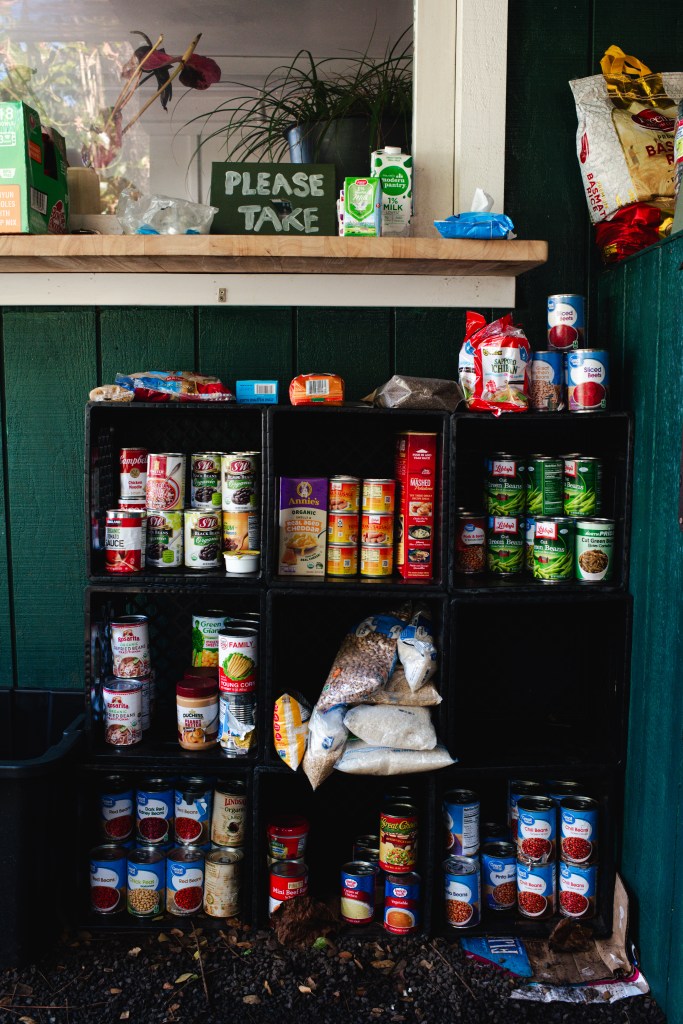
Those efforts instilled a sense of giving that continues today.
“On the Westside, no one takes credit for what we do,” Eguchi said. “We do it because we love Kekaha.”
Lessons Learned From The Past
North Shore residents learned lessons from the 2018 storms, which left its main highway closed for over a year. For example, one community hub wasn’t enough for all residents affected, especially if areas only accessible by crossing single-lane bridges got cut off by landslides or flooding. So after Lowell, a second Lowell hub was created at Wainiha Country Market, near the mouth of the Wainiha River.
In the weeks after the storm, community members and nonprofits dropped off food, water, gasoline, ice, baby food, shovels and other supplies. The hub’s team also sent kids on bikes to deliver food to residents who were cleaning their flood-damaged homes. Now, it focuses on helping residents connect with other resources, like financial assistance.
Megan Fox, executive director of local food production nonprofit Mālama Kaua‘i, said she’s seen community-based disaster response improve since the 2018 North Shore floods. Different groups know their roles and are better at avoiding duplicating efforts. Wainiha Country Market operates a community hub, for example, while Wong’s group coordinates volunteer crews.
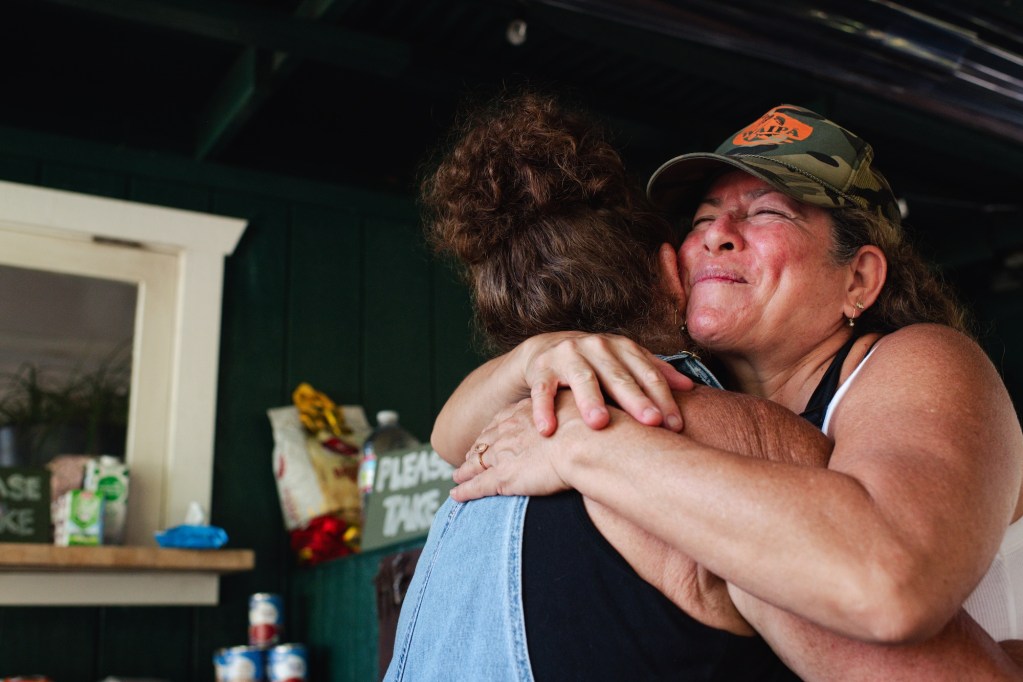
There’s also a way for everyone to help. Kūpuna, or elders, have done wellness checks of other kūpuna, helped sort through flood and rain damage and cleared homes from mud and other debris.
“Everyone is giving what they got,” Fox said.
Kōkua Aku, Kōkua Mai
In rural communities like Hā‘ena and Wainiha on the North Shore, some residents were first reluctant to accept help because they believed others needed it more. In the days after the storm, Wong had trouble getting neighbors to accept donated ice even though the area didn’t have power or running water.
“You really need to be in touch with your community to say, like, ‘It’s OK to say that you need something. We’re here to help, and we’ll help all the people that need something,’” she said.
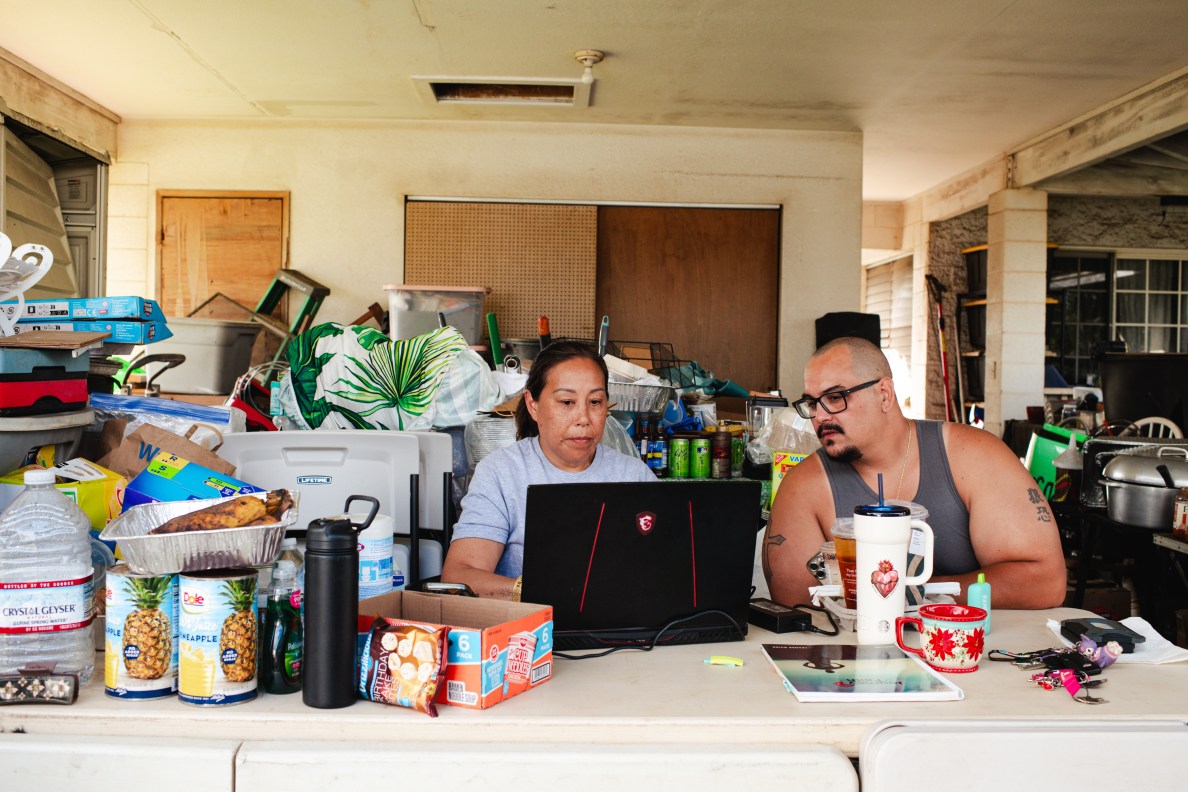
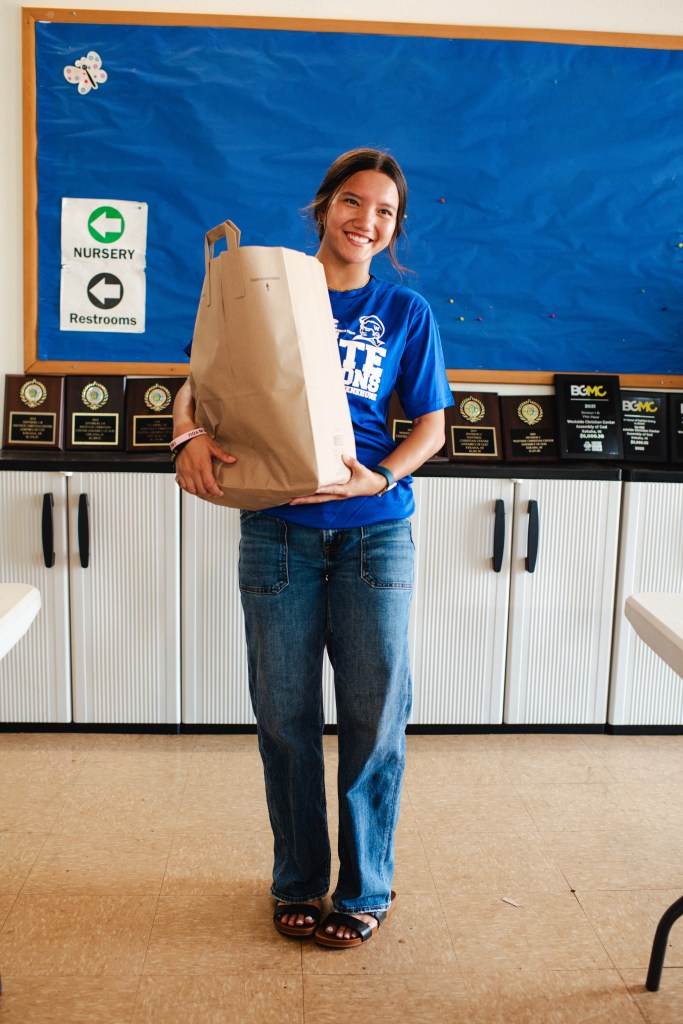
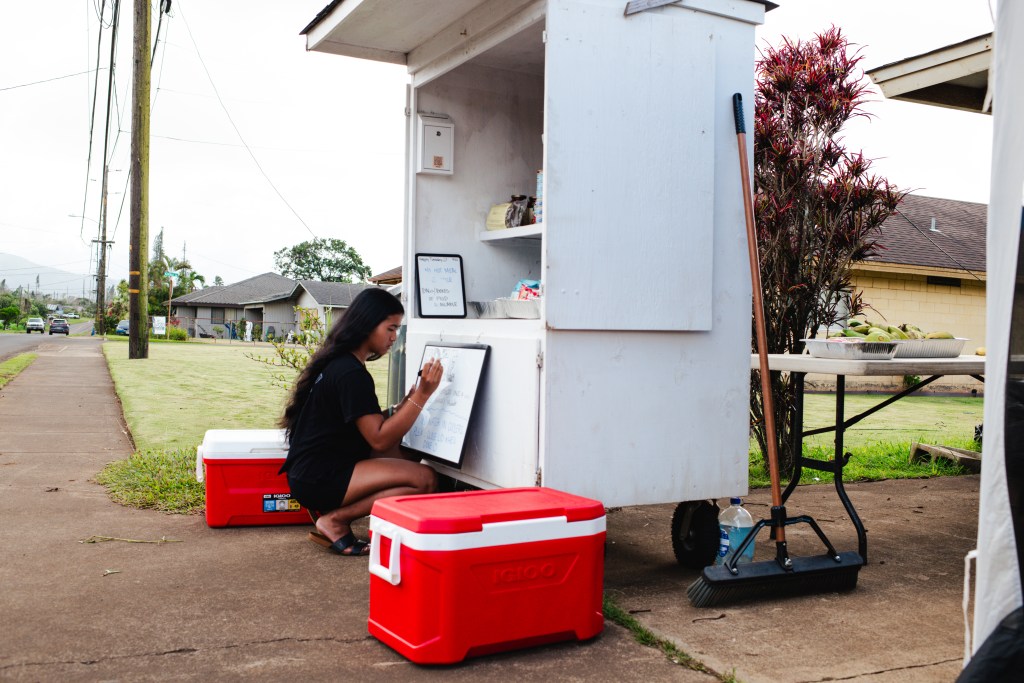
In the town of Kīlauea on the North Shore, Raina Bautista and her family cooked as many as 220 meals a day for utility and county workers and neighbors, even while they waited for their own water and electricity to be restored. They relied on their camping stove and stored water before switching to collected water from a water buffalo sent by the county. Meals were simple, such as spaghetti, chowder, pasta and adobo, based on items from their church’s food pantry before community members began donating food.
Her 15-year-old niece Kale Sambrano was the face of the operation, standing on the side of the road each day to hand out meals and toiletries to passing cars. She also waved down buses and postal workers to feed them, too.
“I was 11 when ‘Iniki hit, and that was all we did was go up and help with the Red Cross, you know, pack bags and give meals,” Bautista said. “And it’s kind of ingrained, so we’re passing it on to this next generation.”
Myrah Kanahele, who grew up on the private island of Ni‘ihau and now lives in Kekaha, said it’s been inspiring to see so many community members jump in to help. Many were struggling before the hurricane, as Hawai‘i’s cost of living, which was already 84% higher than the US average, has increased. The storm has reminded many of the importance of checking in on one another and giving whatever help they can.
Kanahele, who has been helping other Ni‘ihau descendants and Kekaha residents through her nonprofit, Hi‘ianelani o Ni‘ihau, mentions the ‘Ōlelo Hawai‘i, or Hawaiian, phrase “kōkua aku, kōkua mai”: Help others, and help will be given to you. Kanahele hopes that spirit will continue even as Kaua‘i’s recovery ends.
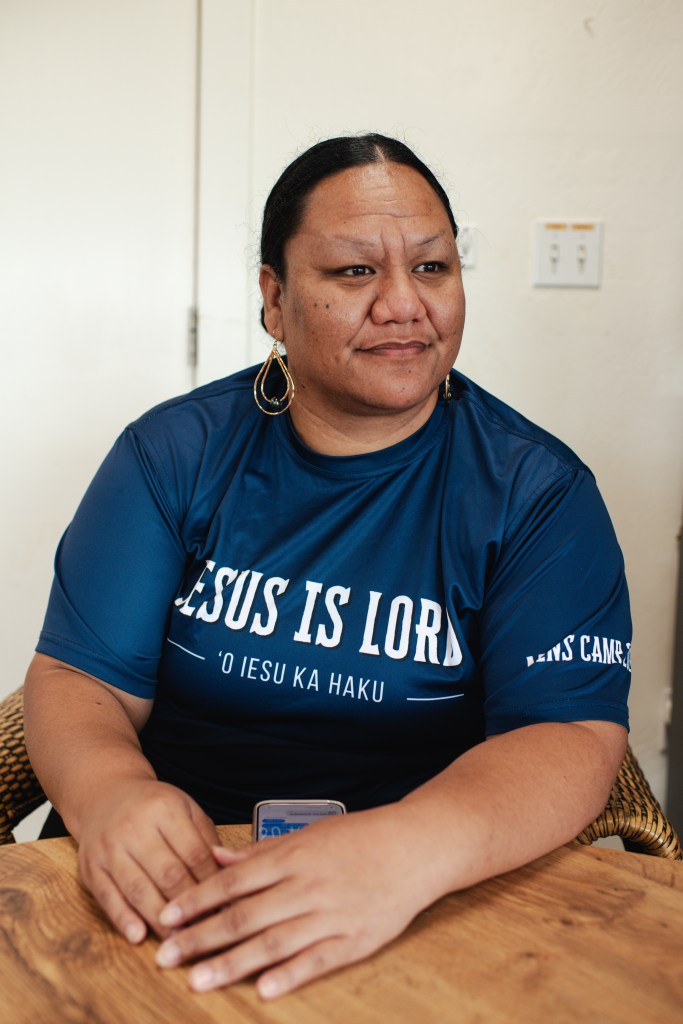
“At that little point of time, just seeing everybody working together in the neighborhood, I was like, ‘Wow, maybe we need this,’” she said.
This story is a collaboration between The Guardian US and Honolulu Civil Beat.