Jeta: Lego By Lego, Getting Hawaiʻi Kids Excited About The Arts
The team behind Aloha Bricks ’26 – a Lego exhibition at Hawaiʻi’s Bishop Museum – invited schools to participate, filling a gap in arts education.
October 6, 2026 · 9 min read

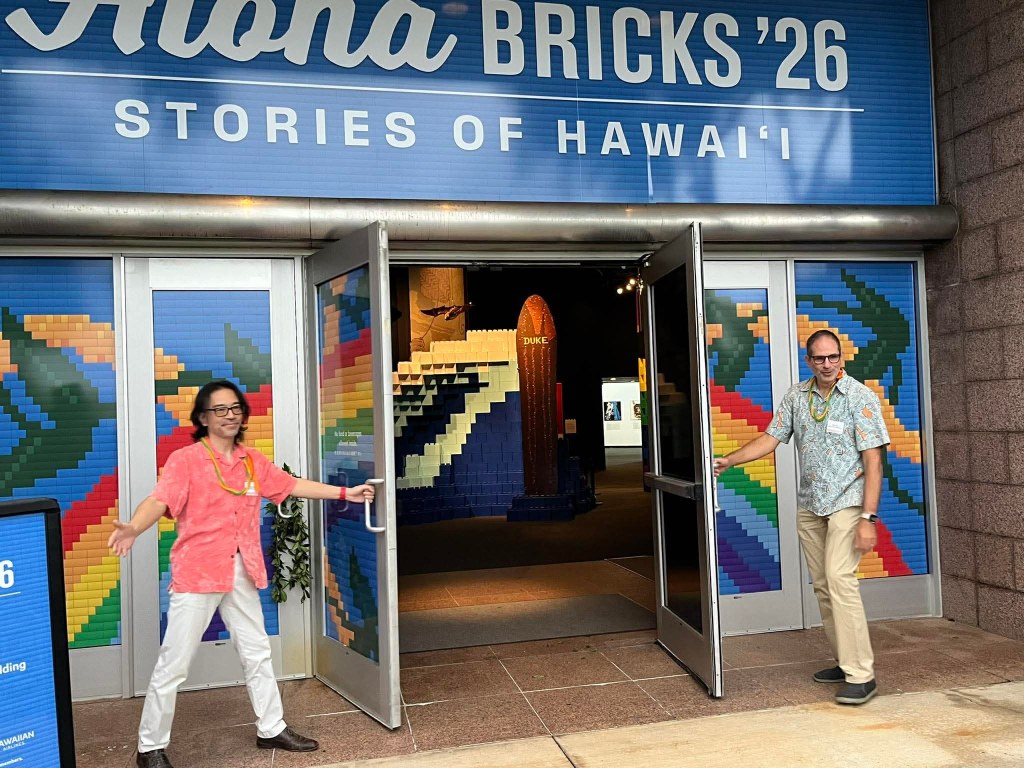
About the Author

Two types of exhibitions are guaranteed crowd pleasers at Bishop Museum: dinosaurs and LEGO®. In 2024, director of exhibits Brad Evans was instructed to drive ticket sales. His drawing cards were limited.
The museum rents dinosaur exhibitions every three years. They deviate from the usual focus on Native Hawaiian history and culture but bring the world to Hawaiʻi, especially for keiki in the surrounding working-class neighborhood of Kalihi-Pālama. Some may never visit institutions like the Smithsonian.
Lego exhibitions are rented, too. With dinosaurs between rotations, then-legal counsel Raymond Kong suggested producing an in-house show instead. Evans was skeptical. “Could we?” he asked. “That’s a big exhibit hall to fill up, and we don’t know how to build Lego.”
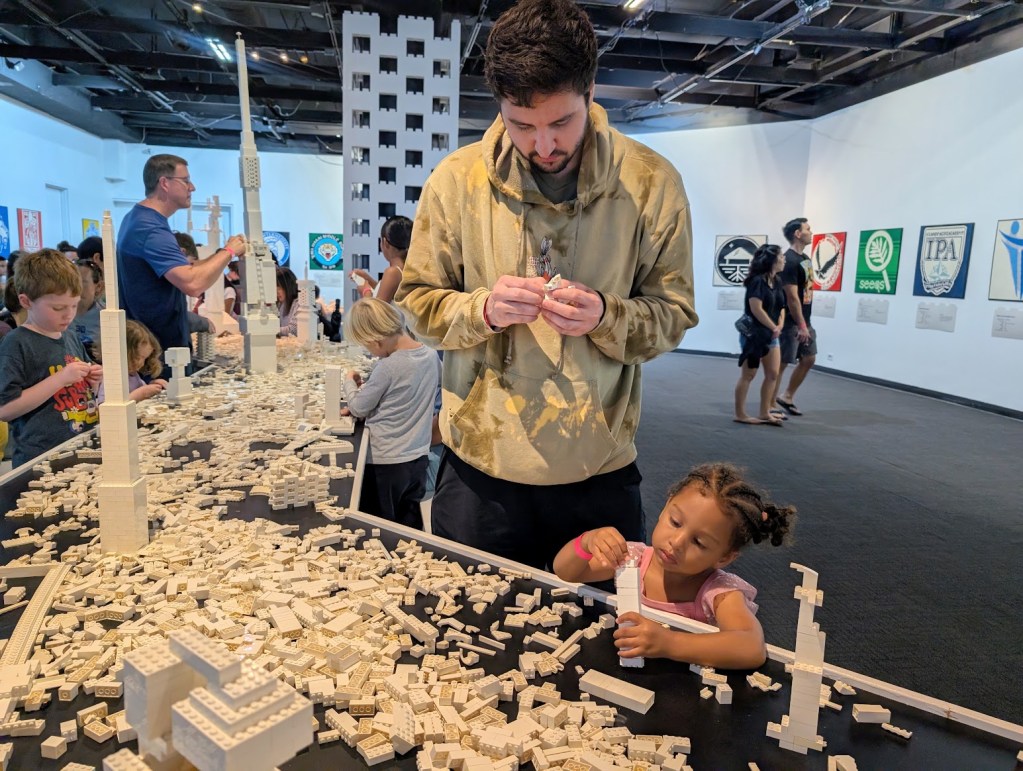
Anyone faced with a “sandbox” of loose plastic bricks understands the struggle. Skilled builders draw on encyclopedic knowledge of thousands of pieces to create complex structures, engaging analytical and creative thinking.
But Kong knew just the people for the job: the Hawaiʻi Lego Users Group (HILUG). Evans accepted the challenge, kickstarting a two-year undertaking to build the museum’s first original exhibition of this kind. Brick by brick.
An Unsung Hero
Before “Aloha Bricks ’26: Stories of Hawaiʻi,” HILUG had already been summoned. When California-based builder Peter Bartl failed to sell his 9-by-9-foot Lego replica of the Royal Hawaiian Hotel for $18,000 on Craigslist, he shipped it unsolicited to Hawaiʻi State Art Museum (Capitol Modern).
Museum staff had neither room to store it nor means to return it. The freight company warned the unclaimed delivery would go to the dump. With nowhere else to turn, they contacted HILUG.

Ideas showcases stories, opinion and analysis about Hawaiʻi, from the state’s sharpest thinkers, to stretch our collective thinking about a problem or an issue. Email news@civilbeat.org to submit an idea or an essay.
Roy Gal, who co-founded the group with his wife Christine, received the call unexpectedly. Staff sent photos, and he immediately recognized the artistry.
“I said, bring it here,” he recalls. “We’ll put it in my garage and figure it out later. No way this is going into a landfill.”
The crates occupied the Gals’ garage for a year, taking up an entire parking space. But Roy was “crazy enough” about this art form to make the sacrifice. He later posted online to find the model a new home, catching Kong’s attention.
A fellow Lego enthusiast, Kong saw proof in the hotel that a homegrown exhibition was possible. And he was right.
A ‘Jazz Performance’ In Bricks
Bishop Museum acquired the hotel replica for Aloha Bricks ’26, the “seed model” around which the exhibition blossomed.
HILUG’s builders were the creative engine. Without boxed-set instructions, they replicated Hawaiʻi landmarks in painstaking detail, including ʻIolani Palace, Bishop Museum’s Hawaiian Hall, and Aloha Tower.
Vintage Hawaiʻi license plates and native specimens, such as ʻiʻiwi and ʻōhiʻa, became 2D brick mosaics through the service Brick Me. Museum scientists, interns, and staff assembled over 30 kits, 9,000 pieces each, during lunch breaks and spare moments.
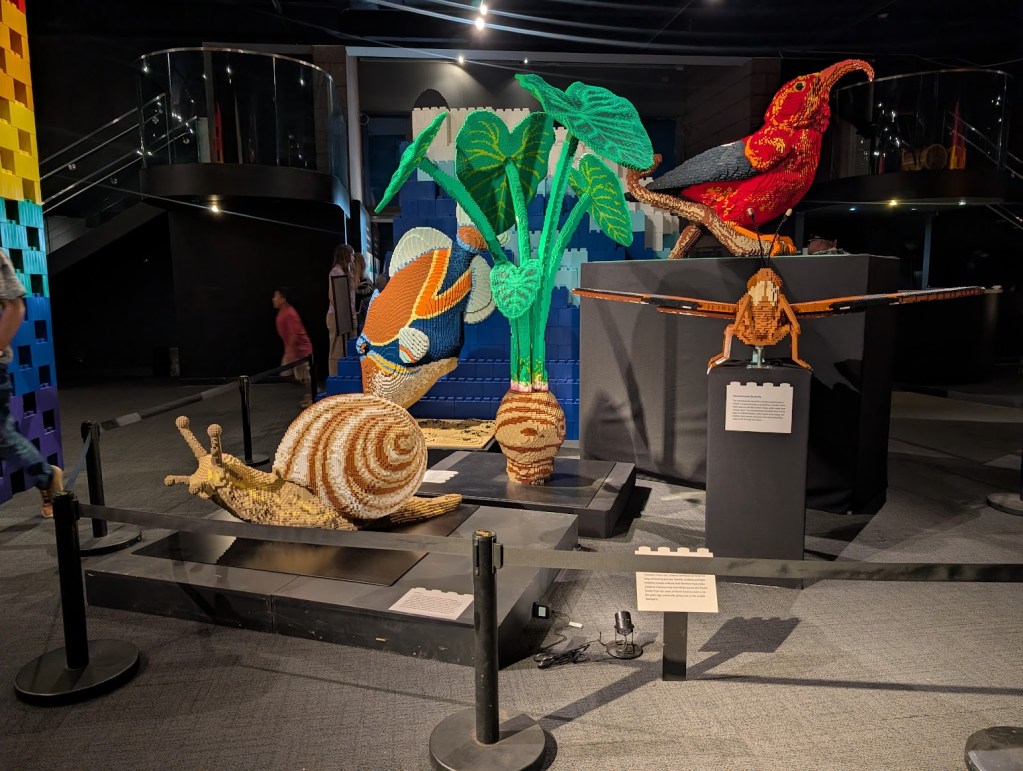
The biggest expenditure involved the 200-pound statues, among them the humuhumunukunukuāpuaʻa (reef triggerfish), kalo (taro), and tardigrade (microscopic water bear), all enlarged up to 1,000 times their actual size.
Commissioned from a UK firm, the sculptures totaled $202,810, accounting for more than 80% of the production budget. Bishop Museum scientists were consulted for biological accuracy, providing guidance like, “legs need to be more orange.”
Evans likens the design process to jazz: improvisation, spontaneity, and organic decision-making. The hula exhibition next door was more like a “Bach Prelude,” he says, installed on a strict schedule mapped to the hour.
As it happened, the supersized sculptures shipped from London and arrived just 24 hours before the exhibition opened on March 14, a fitting final note in Evans’ “jazz performance.”
The Room To Create
During planning, Evans realized HILUG’s models would fill only a quarter of the 3,500-square-foot gallery in the Castle Memorial Building. He needed more “critical mass.” With limited money and staff, the solution had to be visually massive yet curatorially minimal.
Cue the middle schools of Hawaiʻi.
Evans recruited 50 schools and sent each a free mosaic kit of their school mascot. Students assembled the mosaics, with some schools involving their entire student body. Forty-seven of the 50 mosaics made it into the exhibition and will be gifted to the schools after the show closes on Oct. 11.
In the back gallery, mascot emblems representing schools from five islands line the walls. At the center are long tables covered with thousands of loose bricks for free play. Visitors of all ages are invited to build to their hearts’ content.
Any Room For Art?
Evans’ assignment was to increase admission revenue while staying within budget, but by enlisting students for the exhibition, he incidentally filled a gap in arts education.
“Lots of schools that got in early were just searching for anything for their kids,” Evans says. “They took advantage of it.”
But efforts to expand arts education have faltered at the Legislature.
This year, two related bills died: House Bill 2436 would have established an arts coordinator role within the Hawaiʻi Department of Education to help integrate art into core curricula. House Bill 2437 would have funded SFCA’s Artists in the Schools (AITS) program, bringing artists into classrooms.
This was not just another case of “no funding for art,” but an example of how the state undercuts a broader shift in modern education that puts the arts alongside science, technology, engineering, and math (STEM).
They call it STEAM.
Picking Up STEAM
While art still has a place in public schools, its perceived value varies widely. Hawaiʻi Department of Education (DOE) does not require fine arts for graduation, while STEM has its own honors recognition and required capstone project.
In 2023, the State Public Charter School Commission documented a demand for newer educational strategies to prepare students for “jobs of the 21st century.”
“Lots of schools that got in early were just searching for anything for their kids.”
Brad Evans, Bishop Museum director of exhibits, commenting on school demand for arts education.
STEAM answers that call.
Developed in the late 2000s, the framework integrates creative thinking and human-centered problem solving into STEM education. Hawaiʻi’s education system already embraces the principle of arts integration; DOE even acknowledges that it can enhance learning across subjects.
HB2436 and HB2437 would have expanded those opportunities. But alas, when it comes to funding and implementation, we keep hitting the same proverbial brick walls.
Art Without Borders
Art routinely gets relegated to a secondary subject: a sacred pastime for some, a waste of time for others.
Aaron Bloom, a former educator at DreamHouse ʻEwa Beach, taught the 10-student team that built the school’s mosaic. “Just compare biology to drawing,” he says. “The career outcomes are blatantly different in the number of jobs available post-graduation.”
Reflecting on his experience with at-risk youth, he continues, “When I’m working with kids whose families literally have nothing, I can’t tell them ‘just keep painting’ because that’s bad advice for a young kid.”
That characterization, while practical, reinforces the very silos STEAM aims to dismantle.
Hawaiʻi Academy of Arts & Science built their mosaic through a STEAM class. Responding to a survey sent to participating schools, an educator there noted that teaching materials on ʻiʻiwi were difficult to find, but the supersized sculpture gave students another way to engage with a subject they had previously learned, illustrating a successful application of arts integration.
In that regard, Bishop Museum succeeded where the Legislature fell short.
The Heroes Of HILUG
HILUG is among the clearest community advocates of STEAM. Its mission bridges technical skill and artistic expression while spreading joy across the islands through play.
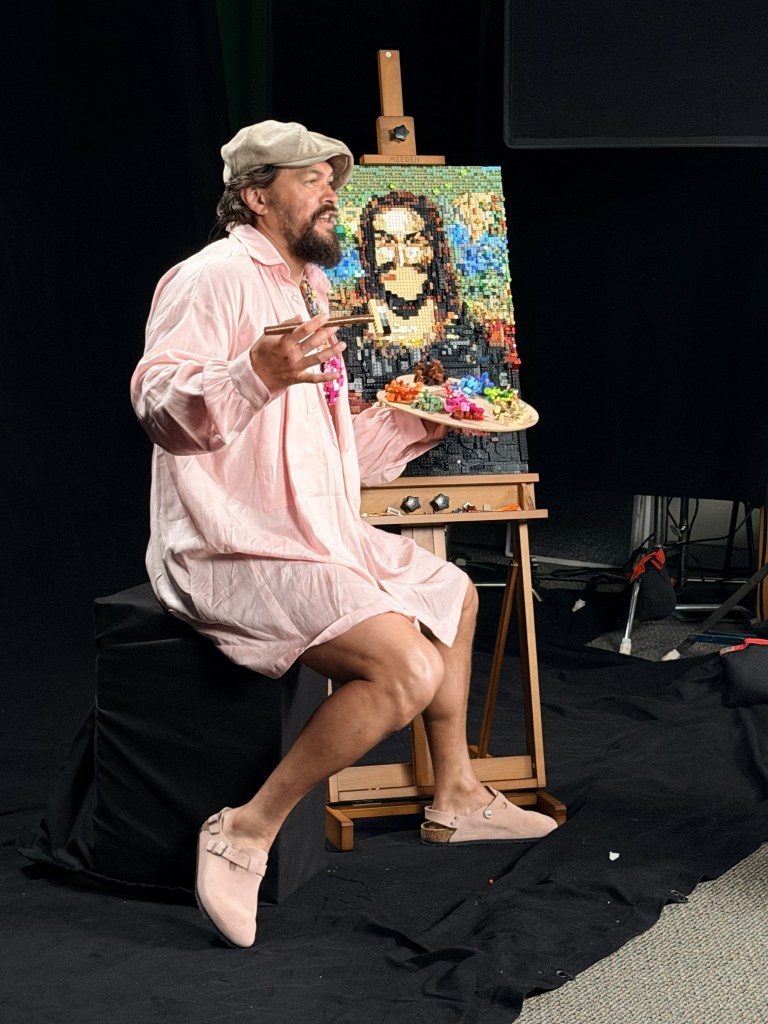
The group participates in various events throughout the year, bringing their plastic bricks to public spaces at no cost. As they volunteered hundreds of hours for Aloha Bricks ’26, HILUG was tapped for another unpaid mission: a Lego commercial starring Jason Momoa for UNICEF’s International Day of Play.
The production crew had just two weeks to film on the UH Mānoa campus but encountered the same kind of problem as Bishop Museum: big ambition, little Lego expertise, and no time to ship materials from Denmark.
Enter HILUG.
Members supplied the bricks and built and rebuilt custom props on demand, from a vine-covered cuckoo clock and a series of emojis to a portrait of Momoa. Once again, HILUG made it happen.
Built Like An Artist
Lego is inherently STEAM, harnessing both logic and imagination. But does that make builders artists, too?
The Gals work in STEM: Roy Gal is an astronomer and Christine Gal a physician; HILUG member Yusuke Yamana is an IT project manager.
Yamana is respected for the uncanny realism of his models. For the ʻIolani Palace replica, he used monochromatic light-gray bricks to cast natural shadows, evoking the solemn weight of Queen Liliʻuokalani’s forced surrender.
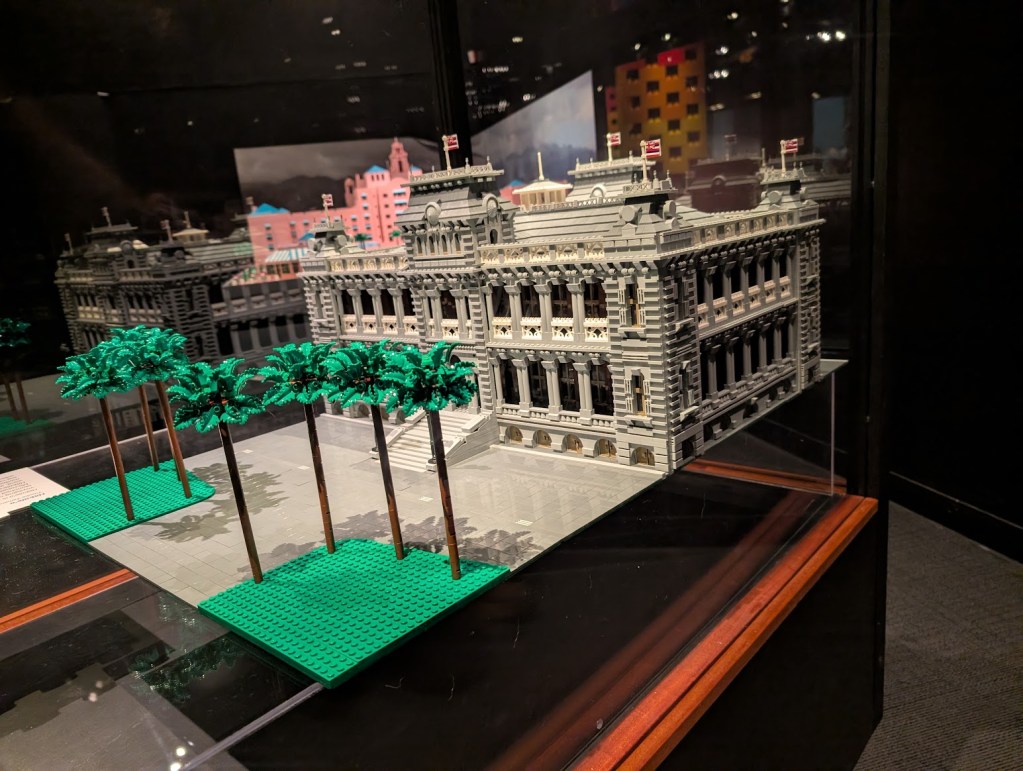
Yet he insists he is not an artist, seeing Lego building as an extension of project management: analyzing needs, managing inventories, and meeting deadlines.
For Hawaiian Hall, Yamana added handrails, restroom signs, and even the air-conditioning unit maintained monthly by museum staff.
He wanted observers to feel something.
“When I translate cultural and historical icons into Lego models,” Yamana says, “I always imagine how people will feel. I don’t want them to think, ‘Oh, it’s just a toy.’ I want you to feel the way you would when viewing the original inspiration.”
That experience will naturally differ by viewer. A restroom sign may trigger memories for visitors who once searched for it; museum staff may grumble at the reminder of monthly maintenance.
But like any work of art, resonance will always remain in the eye of the beholder.
 Sign up for our FREE morning newsletter and face each day more informed.
Local reporting when you need it most
Support timely, accurate, independent journalism.
Honolulu Civil Beat is a nonprofit organization, and your donation helps us produce local reporting that serves all of Hawaii.
ContributeAbout the Author