Olin Lagon: Who Are Native Hawaiians Most Related To? You May Be Surprised
A new study finds the same waʻa settled both Hawaiʻi and Easter Island, carrying genes that leave some at risk of rare diseases.
October 8, 2026 · 13 min read

About the Author
It’s not a strong memory, but years ago I heard Nainoa Thompson tell a story about Hōkūleʻa’s arrival at Rapa Nui (Easter Island) in 2017. As I remember it, the Rapanui welcomed the crew with an ʻoli. Nainoa listened and knew exactly where on Maui they were describing, down to the mauna. No waʻa had passed between our islands in centuries. But a chant might have remembered shared places.
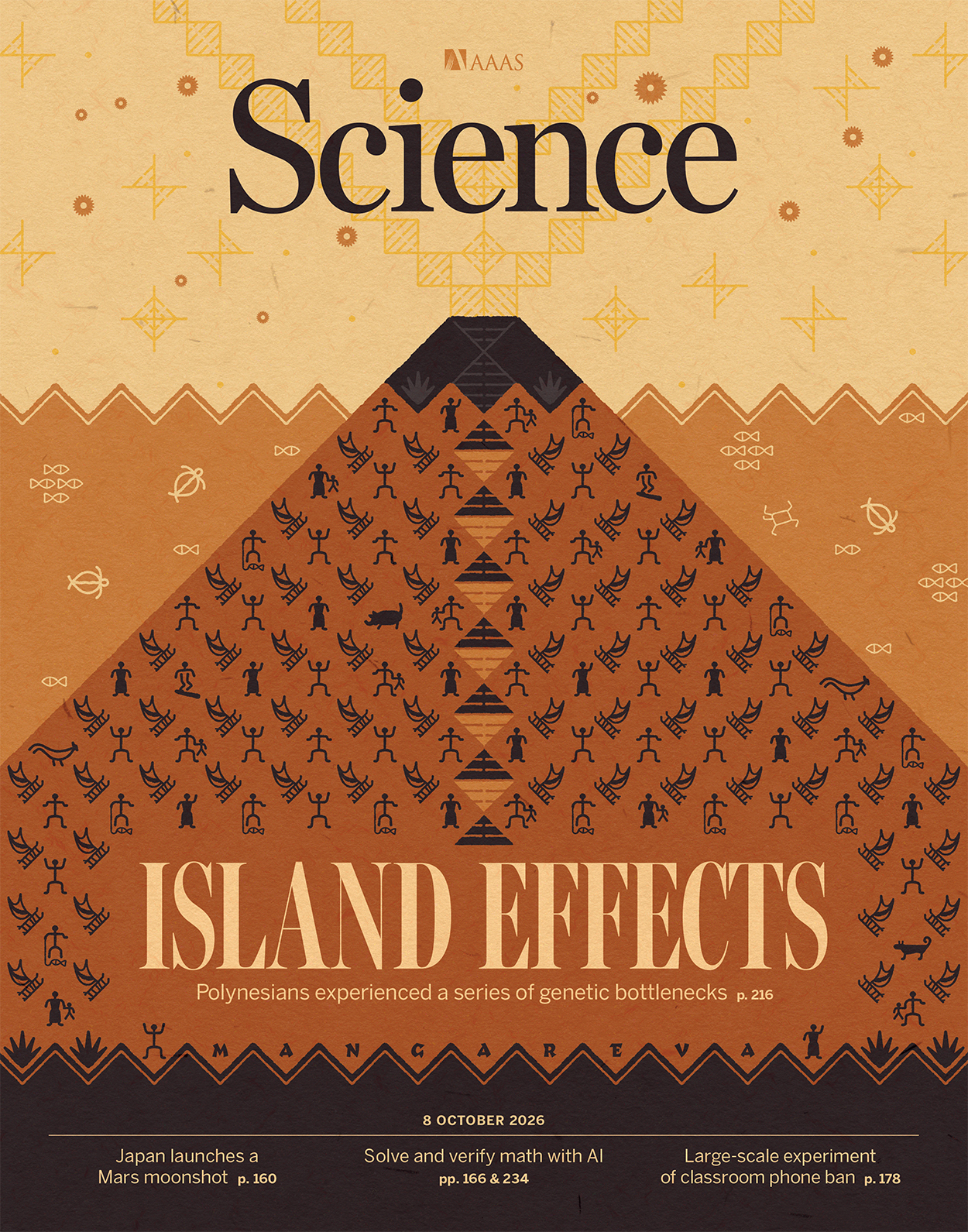
A mind-blowing study in Science, published today, brought that fuzzy detail roaring back.
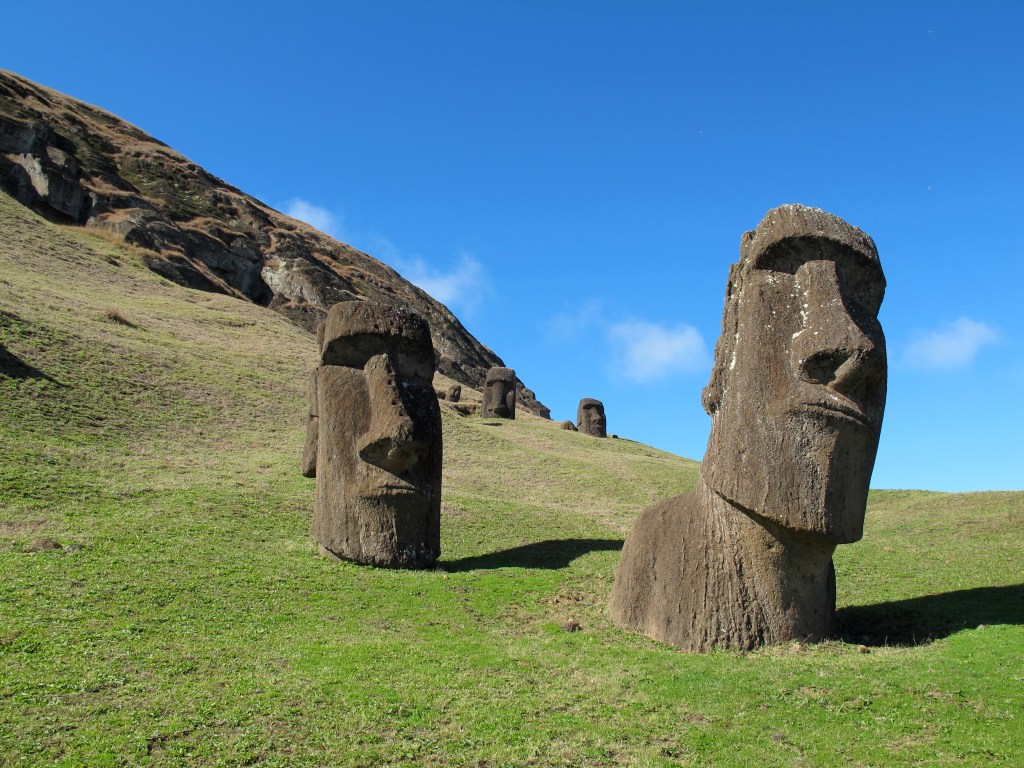
Of every Polynesian island the team studied, the people most closely related to kanaka ʻōiwi are the Rapanui. The authors say the simplest explanation is that the same crews settled both. Rapa Nui is part of Chile, and I am still kicking myself for not going when I studied abroad there.
One of the two senior authors is my buddy Keolu Fox, an anthropologist and human genomics professor at UC San Diego. Their paper is called “Message in a bottleneck: Nested founder effects from French Polynesia to Rapa Nui and Hawaiʻi,” and their findings were so jaw dropping that the elite scientific community blessed it as this monthʻs cover story of Science.
I asked Keolu to walk me through what his team found, especially on what this means for the health of Native Hawaiians, some of whom share with the Rapanui distinct genetic traits that could make them susceptible to rare diseases.
This Q&A runs long, so skim my questions and jump in where it may be interesting. Keoluʻs team covered a lot of new ground.

When the analysis first showed Hawaiʻi and Rapa Nui pairing up, what went through your head?
Keolu: That we had better check it again. Those are the two most remote islands in Polynesia. Each one is more than 1,800 miles from the nearest inhabited Polynesian island, and they sit about 4,400 miles from each other. Hawaiʻi is the only Polynesian population north of the equator. Rapa Nui is down in the cold South Pacific.
If you had to guess which two islands were least related, you might pick those two. So we came at it four different ways. Gene frequencies. The total amount of DNA people on the two islands share. The average length of the shared pieces, which tells you how recent the common ancestors are. And 2,500 family trees built by resampling the data over and over. In 61% of those trees, Hawaiʻi and Rapa Nui pair off by themselves. Mangareva takes that spot about 10% of the time. The Marquesas, under 3%. Every method pointed the same direction.
Who were these people?
We call them Holomoana Nui, great ocean voyagers. Their deeper roots trace to Mangareva, and behind Mangareva, the Marquesas. That matters because many of us were taught the Marquesas were the homeland of Hawaiʻi. Our results support the Marquesas as a dispersal center for remote Polynesia. But the founding path to Hawaiʻi passed through Mangareva, and the people who made the last leap north are the closest relatives of the people who made the leap south to Rapa Nui.
Other lines of evidence sit right on top of this. Roger Green drew a tree of Polynesian languages in 1966 that groups Hawaiʻi, Mangareva, and the Marquesas, with Rapa Nui as a close outlier. The DNA of the Pacific rats our ancestors carried on the waʻa shows a Hawaiʻi and Marquesas link too. And earlier work found voyagers from this same corner of Polynesia reached the Americas around the same period. This was a group with the ability to reach the far edges of the Pacific, and they did.
The chant Nainoa recognized. Does science have anything to say about that?
Not directly. The genome cannot tell you which island settled which, or who sailed where after the founding. What it says is that Rapanui and Hawaiians share more recent ancestry with each other than either shares with anyone else in Polynesia. When oral history and the genome land in the same place, I take both more seriously.
My dad died when I was young. I got things like one stray eyebrow hair from him and the smell of his razor. That is me inheriting from one person. Explain to me what 40 people on a waʻa hand down.
Take a gene for a disease so rare it shows up in one person out of many thousands. Put that person on a waʻa with 40 people and land them on an empty island. On that island the gene is now in one person out of 40. Even twenty generations later, it may still be in about one person out of 40, because everyone descends from the same few dozen. That is a founder effect. Now stack them. The settlement of Polynesia did not go through one bottleneck. It went through a chain of them.

Ideas showcases stories, opinion and analysis about Hawaiʻi, from the state’s sharpest thinkers, to stretch our collective thinking about a problem or an issue. Email news@civilbeat.org to submit an idea or an essay.
The sequence we traced starts in Samoa and ends in Mangareva, and every hop in between meant a new waʻa, a new few dozen people, a new squeeze. Hawaiʻi and Rapa Nui sit at the end of that chain. We measured the amount of DNA people on each island share because of common founders, and remote Eastern Polynesia has the highest scores we have seen. Native Hawaiians are at once one of the largest and one of the most intense founder populations in the world.
You put a date on a waʻa landing from blood drawn today. How?
Every generation, the chunks of DNA you share with a relative get shorter, because they get shuffled. Count how many shared chunks there are in a population and how long they are, and you can estimate how many people were having children in each generation going back in time. We did that on Tahiti, where we had 581 genomes. The founding population behaved like about 800 people per generation, 34 generations ago. At 28 years a generation, that is the year 1069.
Archaeologists working from radiocarbon dates had already placed the settlement of the Society Islands between 1025 and 1120. We did not know that number when we ran ours. Then you see the population grow fast for roughly 700 years. And then, nine or ten generations ago, it drops by nearly 40%. That is disease arriving after European contact in the 1700s. The dying is still in the genomes of Tahitians walking around today.
Now the hard part. The same thing that made us ʻohana also made some of us sick.
Yes. In French Polynesia, where we had more than a thousand genomes and the sampling was designed to be representative, we report three disease variants at high frequency. Each one causes disease only when a child gets two copies, one from each parent.
About 1 in 40 people carries an ADAMTSL4 variant that dislocates the lens of the eye early in life. About 1 in 27 carries a PDE6B variant that wears down the retina and takes vision with it. About 1 in 45 carries a FAN1 variant that causes karyomegalic interstitial nephritis, a kidney disease that is ultra-rare everywhere else on earth and usually ends in kidney failure.
The American College of Medical Genetics and Genomics says once a carrier rate in a founder population passes 1 in 200, screening is medically necessary. These three run four to seven times past that line.
Your paper mentions gnomAD, a giant database of human DNA that labs use to tell harmless gene changes from dangerous ones. What does it miss about our people here?
The database gnomAD holds more than 800,000 genomes and exomes. It is built from whoever got sequenced, and there is no Polynesian group in it. If we are in there at all, we are scattered into other categories where no one can see us. The FAN1 variant is one example. Our team found variants carried by more than 1 in 20 French Polynesians that gnomAD does not list at all. That gap decides what gets screened.
ACMG (The American College of Medical Genetics and Genomics) uses gnomAD to recommend screening panels to anyone pregnant or planning a pregnancy for instance. A condition makes the list when at least 1 in 200 people in one of gnomAD’s population groups carries it. With no Polynesian group, a condition common only among us can never reach that bar.
A young kanaka walks into a clinic in Hawaiʻi with failing kidneys. What happens?
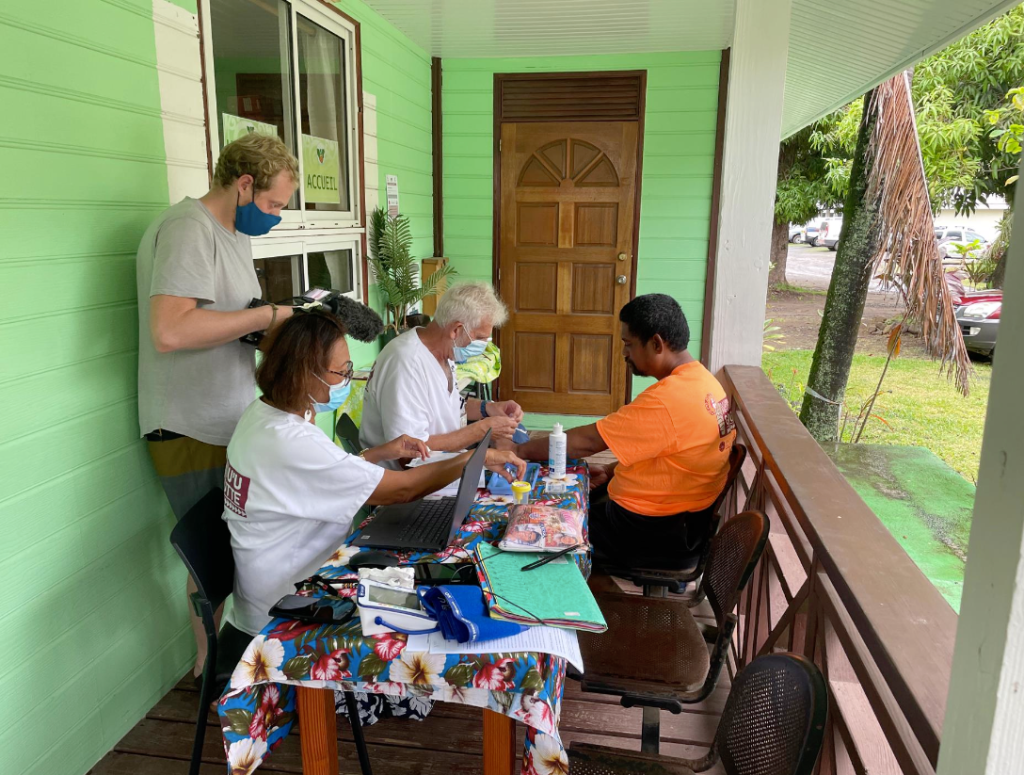
In French Polynesia, kidney doctors went back through the records of patients under 45 with end-stage kidney disease. About 75% had kidney failure with no link to diabetes, high blood pressure, or obesity. Genetic testing found a cause in 32% of cases. As far as I know, no one has done that study in Hawaiʻi.
So the conversation here starts with diet and weight, because those are common causes doctors are trained to look for. And we have reason to think the picture in Hawaiʻi is different again. Hawaiʻi and Rapa Nui came out of their own bottlenecks, so Hawaiians likely carry clinically important variants at very different rates than Samoans and other Pacific Islanders farther west.
Then why couldn’t you report numbers for Hawaiʻi?
Not enough data, and I would rather report nothing than report something wrong. We used Native Hawaiian genomes from the All of Us program. But the statistical power we got from AOU was low because it has insufficient representation from Hawaiʻi.
The Native Hawaiian genomes we did use from AOU carry a lot of recent ancestry from outside Polynesia, including a Philippines-like layer that traces to the Sakadas the sugar planters recruited last century. We used local ancestry methods to pull out the Polynesian segments from those samples, but these other ancestries further reduced the amount of data that we had from a Native Hawaiian background.
There are good reasons not to trust people who want our DNA. Why should anyone give you theirs?
Because of how the work is set up, not because of who is asking. Genomic data are not an abstract resource. They are tied to identity, to heritage, to sovereignty. Our partnerships run on transparency and community agency, and we hold to Indigenous data sovereignty, meaning the knowledge that comes out of this has to serve the health of the people the data belong to.
One of our partners, Variant Bio, is the only biotechnology company so far that shares direct benefits with the participants who make the research possible, through financial, infrastructure, and community support. The people who have historically borne the risks of research should share in its rewards. The paper notes that I am the first Native Hawaiian to earn a PhD in genome sciences. That line is in there to make a point about who leads this work.
“The people who have historically borne the risks of research should share in its rewards.”
We were reluctant to use the AOU dataset given the lack of community consent and consensus building that was used to generate it. I am on the record in the New England Journal of Medicine saying this was a bad idea – and it looks like a lot of my apprehension was well founded, given how tech firms are using public health data. However, if you’re going to put the data on the internet – we’re going to use it!
In the near future, we would like to build a new dataset with our lāhui – hopefully something in the 1,000+ individuals range, governed by Indigenous data sovereignty protocol and stored on our private servers in Hawaiʻi nei. Ideally, we recruit about 100 individuals from each Ahupuaʻa on every island, such as Oʻahu, Moku o Keawe, etc., accompanied by in-depth questionnaires with questions like, “Please note where all four of your grandparents are from.”
There is a ton of evidence to support multiple and iterative waves of migration throughout the Pacific – “to and from” different islands in Hawaiʻi. We call this working hypothesis the “holo holo” model. The signal we’re detecting in this paper is the very earliest signal. If we were to take this Ahupuaʻa recruitment approach we could begin to create a more detailed or – higher resolution – and dynamic map of the Hawaiian diaspora throughout Moananuiākea.
What does finishing the map for Hawaiʻi take?
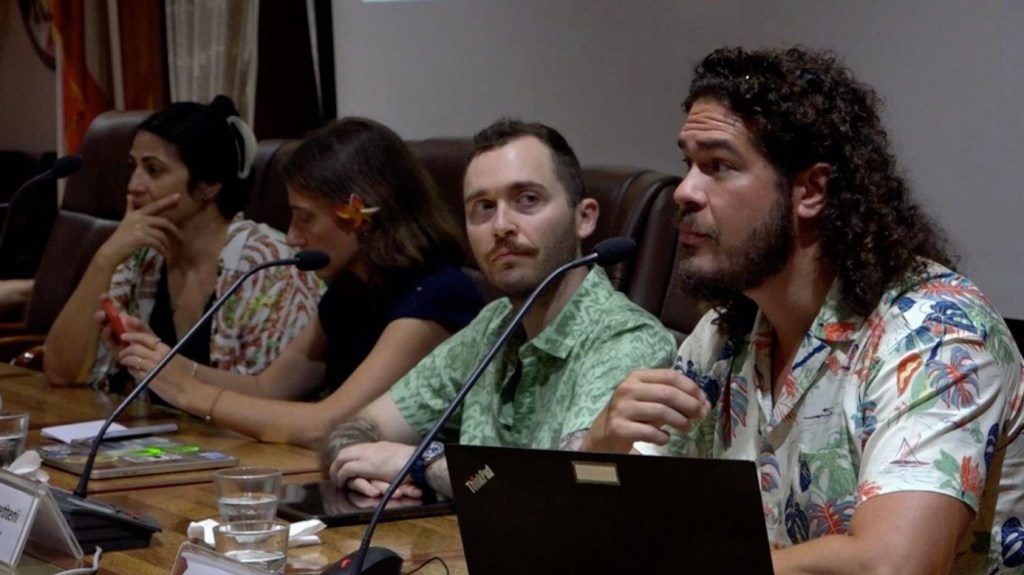
Sequencing on something like the scale we had in French Polynesia, where a thousand genomes gave us real frequencies. Enrollment on terms our communities set. Money to do it right. Then the numbers go to the ACMG and the insurers, a panel gets created, it gets reimbursed, and doctors in Honolulu have tests to order. None of that is exotic. The Finns did it. The Amish did it. Ashkenazi families did it.
Last one. What do you want a Hawaiian reading this to carry out of it?
Our kūpuna crossed over 4,000 miles of open water in waʻa that held a few dozen people, and that everything our kūpuna carried, they passed down to us including variants no database on earth has recorded. And for some ʻohana, a disease a doctor here would never think to test for. We wrote in the paper that precision medicine only means something if it reaches the least, the last, the looked-over, and the left-out.
For a thousand years we were the most remote people on the planet. We do not have to be the most remote people in medicine.
 Sign up for our FREE morning newsletter and face each day more informed.
Local reporting when you need it most
Support timely, accurate, independent journalism.
Honolulu Civil Beat is a nonprofit organization, and your donation helps us produce local reporting that serves all of Hawaii.
ContributeAbout the Author