Punaluʻu Black Sand Beach Park To Belong To The Public
The Hawai‘i County mayor made a deal to buy the nearly 7-acre property owned by Eva Liu.
Hawaiʻi County has reached a tentative agreement to buy Punaluʻu Black Sand Beach Park for $1.46 million after prior negotiations with the private landowner failed in August, Mayor Kimo Alameda announced Tuesday.
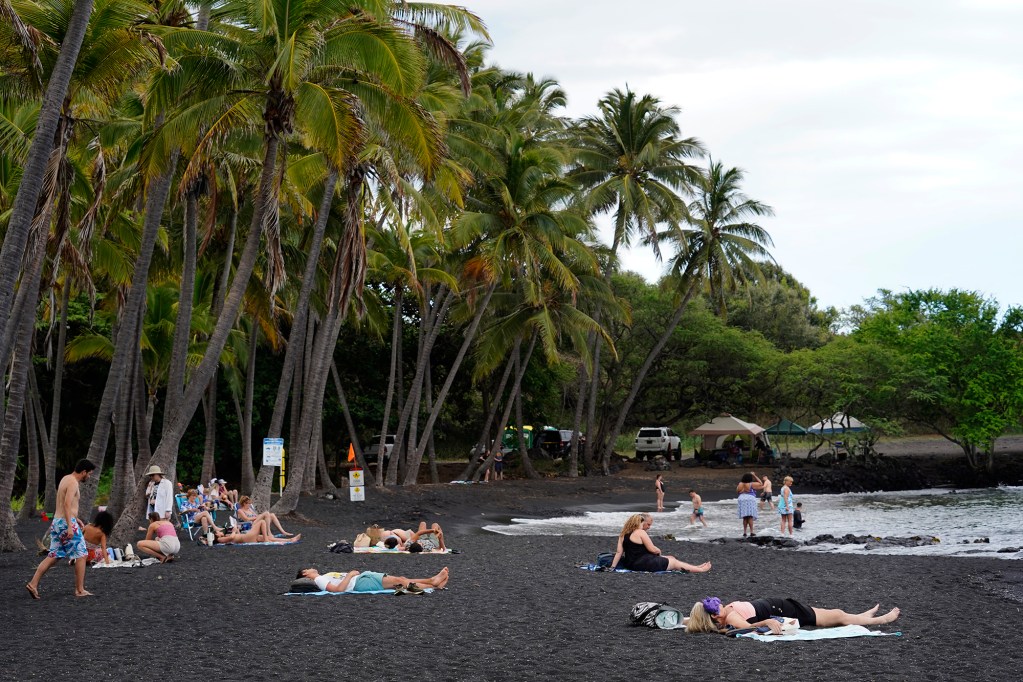
The Kaʻū beach is culturally significant and popular among locals and tourists alike. It’s surrounded by heiau, petroglyphs and iwi kūpuna and hosts endangered and threatened species including hawksbill and green sea turtles and Hawaiian monk seals.
The county has leased a 6.8-acre parcel, which now includes a park, campgrounds and parking lot, since at least 1954. That park closed in August after the landowner, Black Sand Beach, declined the county’s offers to purchase the site or renegotiate the lease.
A tentative agreement was finally reached to buy the property through the county’s Public Access, Open Space and Natural Resources Preservation Commission (PONC), according to a county press release Tuesday. The park will remain closed until the purchase is completed, which could take six months, Alameda told Civil Beat. Beach access, though, will remain open.
“I’m just very, very happy with this tentative agreement,” Alameda said. “Punaluʻu has a beautiful future in terms of preservation.”
Details Still Under Discussion
The county is attempting to enter a lease agreement to open the park before the purchase is complete, Alameda said. The agreement the county will put forward will be similar to the one Black Sand Beach rejected in August but some tweaks may need to be made, he added, such as a clause about who would be in charge of major repairs to facilities.
As a part of the purchase agreement, the county will need to maintain a quarter-mile section of the landowner’s road that connects the park to the county’s road.
Black Sand Beach, owned by Eva Liu, purchased over 400 acres around Punaluʻu and Pāhala in 2019, with the goal of developing the area. Residents have been protesting development there for years, calling on the county to ensure Kaʻū maintains its rural nature and ensure public access to the beach.
A lawyer for the company said no one could comment at this time.

The company’s application to build condos, a retail and wellness center, seafood restaurant and fish market was withdrawn last year, but community members are still worried about the threat of development.
Alameda said the purchase of the park sets the tone for how the area should be used. While he’s wary of the condo development the company proposed, he said the company needs a source of revenue.
Punalu’u Water and Sanitation, also owned by Liu, was severely damaged during Hurricane Lala. Residents who rely on the system haven’t been able to flush their toilets or use their taps since. But the water company is facing financial stress and doesn’t have the money to fix it yet.
“Nothing is for free,” Alameda said. “So how are you going to provide all these upgrades if you don’t generate some kind of revenue.”
County Councilwoman Michelle Galimba, who represents the area, said it’s clear the public wants to preserve the shoreline.
“I know that the community very much wants the shoreline to be preserved and kept in as natural a state as it can be,” she said.
But further inland, a regenerative tourism model with a small footprint could work for the area, both Galimba and Alameda said.
“With people feeling just comfortable with this open space,” Alameda said, “maybe we’ll get to the place where an idea comes forward where we could financially sustain this area.”