Hawaiʻi Supreme Court Weighs Who Is Worthy Of Freedom From Captivity
The elephant in the room: Ethical questions about animals in captivity.
State Supreme Court justices considered the case of unlawful detention Monday of Mari, 51 and Vaigai, 41, who have been detained for decades in Honolulu.
Their attorney described the trials of their captivity — a dirt floor hard on their joints, and they are unable to bathe. A petition to the court on their behalf said: “Mari and Vaigai’s lives are nothing but a succession of boring and frustrating days, damaging to their bodies and minds.”
But neither plaintiff was able to plead her own case.
For starters, both are nonverbal. Beyond that, both are too large to fit in the courtroom set up inside Punahou School’s expansive theater — or most any room for that matter.
That’s because both are elephants at the Honolulu Zoo.
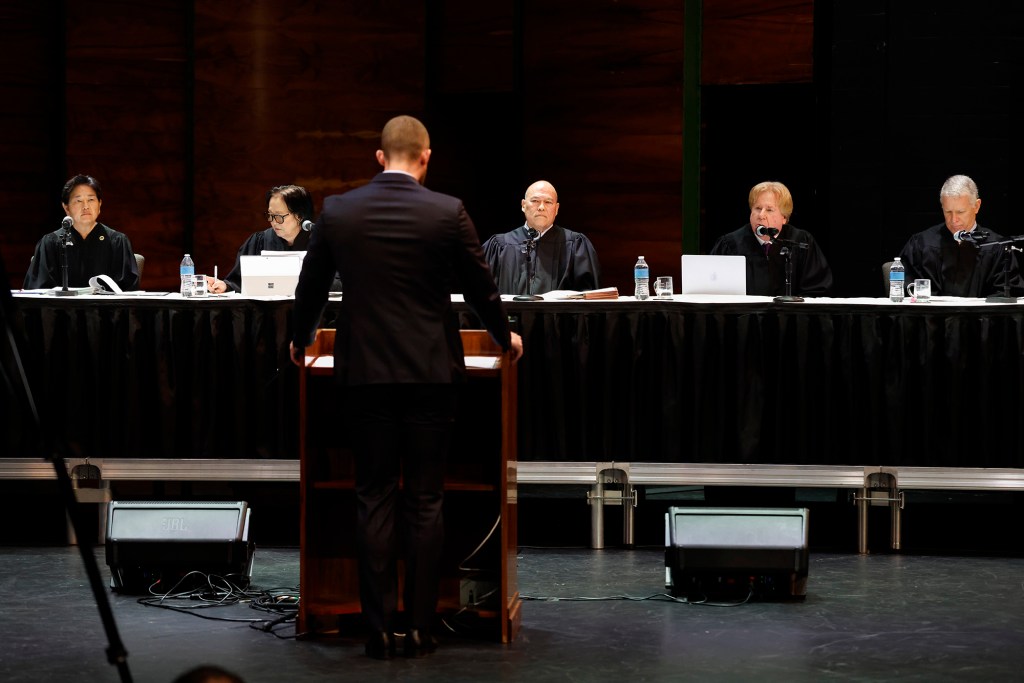
The zoo is “a world away from the serene forests of their native homes,” Nonhuman Rights Project attorney Jake Davis said during Monday’s hearing. His plea to the court: Declare the elephants eligible for a hearing to determine whether they can go free.
His organization says that the zoo’s 1.5-acre enclosure overly restricts Mari’s and Vaigai’s liberty, and that they should be released to a sanctuary closer in size to the 6,400 acres they would be able to roam in the wild.
The Nonhuman Rights Project, a nonprofit civil rights firm, has so far failed to convince a Hawaiʻi court that elephants Mari and Vaigai are eligible for state-ordered release. The group’s 2023 petition was dismissed by the Circuit Court in 2024, a decision the Intermediate Court of Appeals affirmed earlier this year.
The group has tried to get elephants and chimpanzees freed in other states, including California, Colorado, Michigan and New York, but courts there too have ruled against it.
If the project’s attorneys are successful, it could challenge the legal framework that allows humans to keep animals in captivity. This idea is being litigated at a time when Mayor Rick Blangiardi wants the Honolulu Zoo to become even more of a draw with the addition of giant pandas.
Justices expressed concern that a ruling in the elephant’s favor could lead to attempts to free other animals. They also questioned the city’s claim that only human beings are eligible for release from confinement.
“There’s a lot of animals that have autonomy,” Justice Sabrina McKenna said as she questioned where to draw the line.
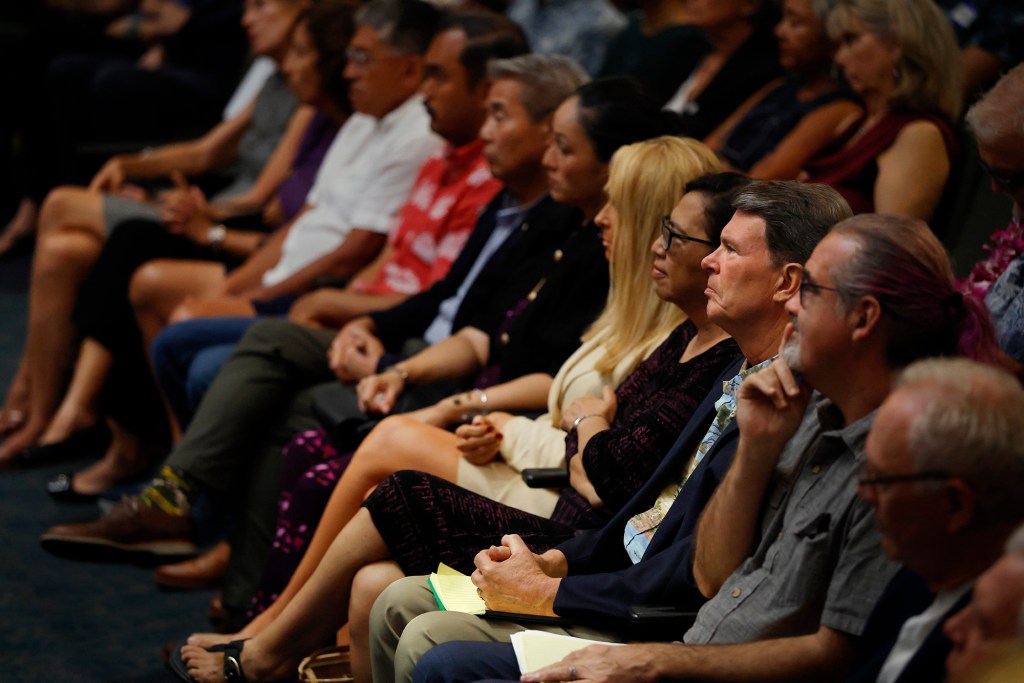
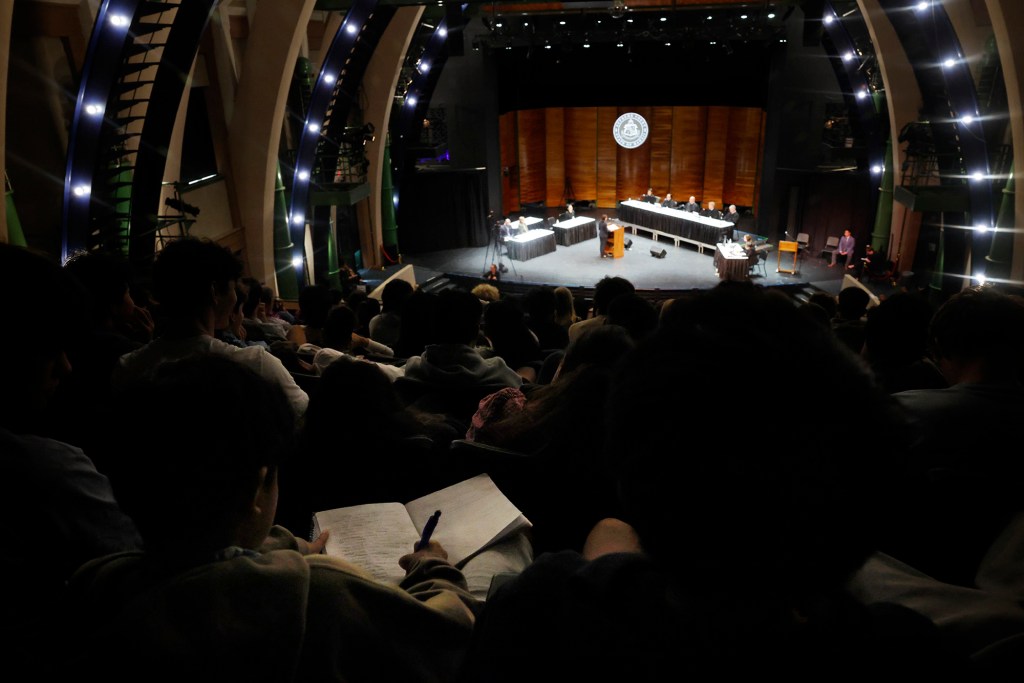
Chief Justice Vlad Devens presided over the hearing, which took place in the auditorium at Punahou’s Dillingham Hall Monday morning. Media, members of the public, city officials including council members Esther Kiaʻāina and Tyler Dos Santos-Tam, and roughly 450 students from Punahou and beyond squeezed in to watch.
They witnessed a debate that careened from deeply serious philosophical discussions of freedom, to questions about the rights of household pets and a comparison to a character in the 1960s Flintstones cartoons who was an alien.
Are Elephants ‘Persons?’
The question at Monday’s hearing was not whether Mari and Vaigai can go free tomorrow. The Nonhuman Rights Project is seeking a habeas corpus proceeding, which would determine whether the elephants have claim to individual liberty. If the court agrees, there would still need to be a separate hearing where each side could bring in expert witnesses to argue their case.
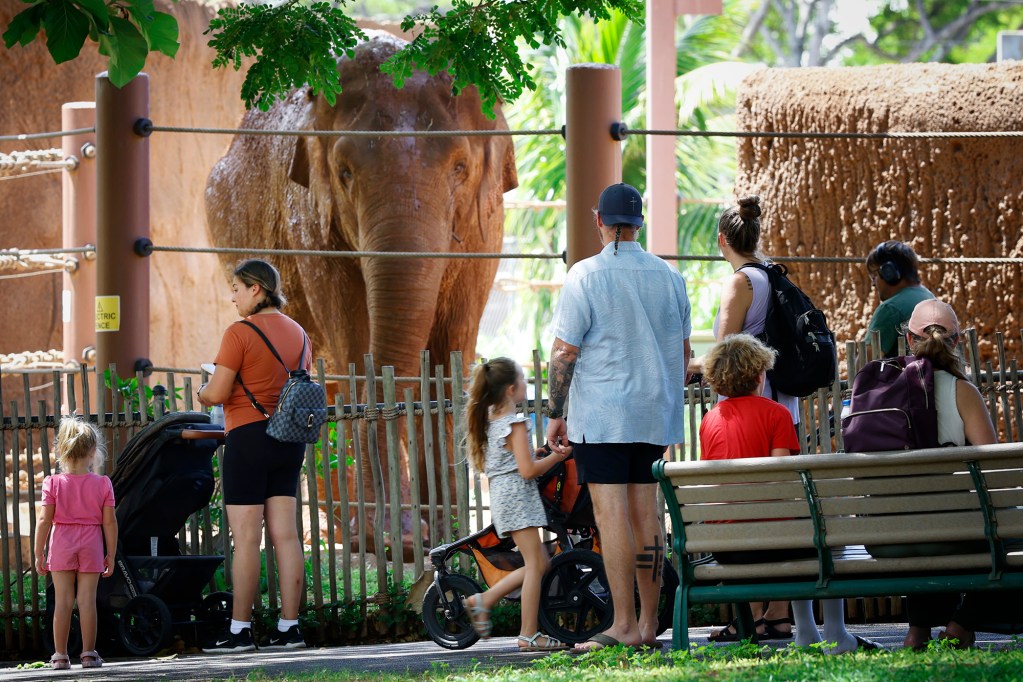
Davis’s organization argues that Mari and Vaigai – female Asian elephants who have been kept at the zoo since 1982 and 1992, respectively – are intelligent beings forced to live under oppressive conditions far smaller and more isolated than their natural habitats. In the wild, elephants roam far and live in complex social groups. Not so in Honolulu.

The zoo enclosure’s ground has little cushioning for the elephants’ joints, the petition says, and it lacks adequate shade or water features deep enough to bathe.
“They can’t be elephants,” Davis told Civil Beat before the hearing. “You aren’t seeing elephants at the Honolulu Zoo. You’re seeing artifacts.”
Zoo Director John Berry, meanwhile, described their lives differently in a recent Civil Beat Community Voice opinion piece. Berry said the elephants are active and happy, and that they have deep relationships not only with each other but with their human keepers.
A legal method does exist for freeing those kept in captivity, but it only applies to “persons,” as written in Hawaiʻi state law, and a fundamental disagreement at the core of the case centers on whether Mari and Vaigai count as “persons.”
“You aren’t seeing elephants at the Honolulu Zoo. You’re seeing artifacts.”
Nonhuman Rights Project attorney Jake Davis
The legal procedure habeas corpus, meaning “produce the body,” dates back to the Magna Carta when it was used to prevent the King of England from secretly disappearing people into dungeons. As a concept, it is over 800 years old. It is known as the Great Writ, and it has been used to protect formerly enslaved people as well as children in custody cases. Nowadays, it is a common tool in immigration detention cases.
Davis told the justices he’s not alleging that Mari and Vaigai’s captivity at the Honolulu Zoo violates any specific statute written by Hawaiʻi lawmakers. Instead, he argued their confinement violates the common law – a concept that develops continuously via court decisions – and that the court should consider the elephants as “persons” eligible for habeas corpus.
Although the common law interpretation of habeas corpus has not yet been successfully used to free elephants from a zoo anywhere in the U.S., Davis said that shouldn’t prevent justices from ruling differently in this case.
“The common law evolves,” Davis said during the hearing. “It is responsive to the times. It changes as society changes.”
Underlying the case was a broader question: Would a ruling in the group’s favor challenge humanity’s entire relationship with animals kept in captivity? Justices expressed concern that it might even extend to pets.
“The argument is it does create a slippery slope,” Justice Sabrina McKenna said. “So the courts could be inundated with these requests. If we were to recognize this, we would have to set some reasonable parameters. So would you limit it to mammals? Would you exclude domesticated mammals?”
Davis sidestepped the question. He said he doesn’t know the science of all non-human intelligence, but that in this specific case, elephants’ self-awareness, empathy and long-term memory – their “autonomy” – should make them eligible for release from confinement.
The city argued against this autonomy-based claim.
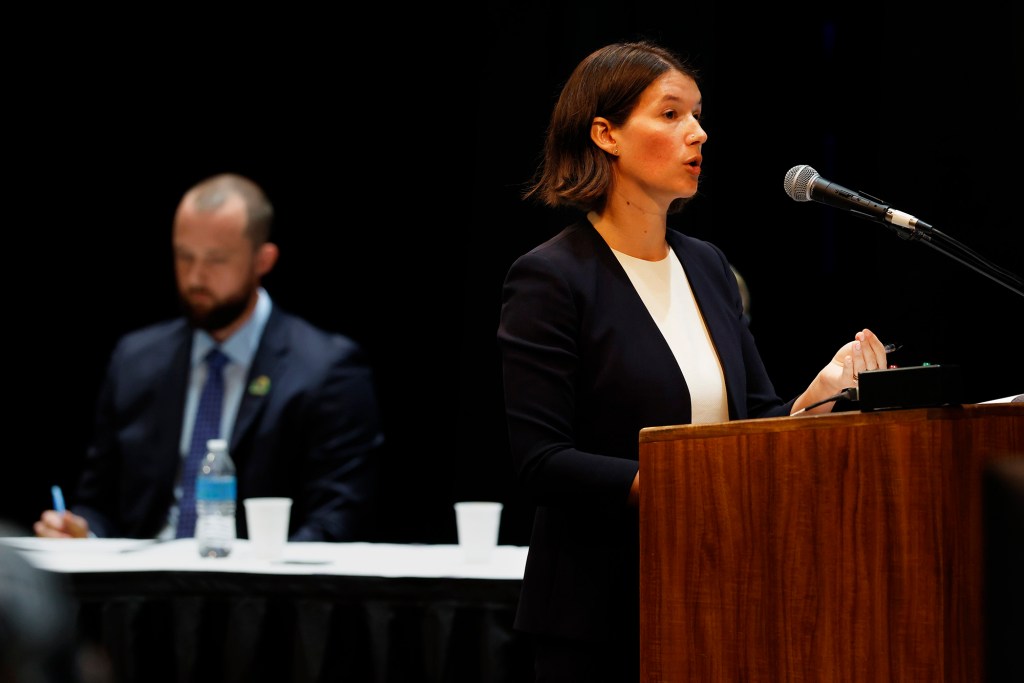
“Autonomy is not the standard for entitlement to habeas relief,” Deputy Corporation Counsel Patricia Sendao said.
Habeas corpus is only available for human beings, she said. Even past cases that dealt with formerly enslaved people or women and children – demographics the country has not always treated as full legal “persons” – gained their freedom simply because they were human beings, she said, not because of a ruling in some evidentiary hearing.
But McKenna and Justice Todd Eddins challenged the view that animals automatically should be treated differently than human beings.
On the continent, McKenna said, denying animals their freedom comes from a different point of view — one that harkens to biblical times — compared to what is enshrined in the Hawaiʻi’ State Constitution, which has local Indigenous roots.
“It’s really based on Western cosmology, and the concept that animals are beasts under Genesis that are to be dominated and exist for human beings who are much more superior,” McKenna said of the mainland cases that have ruled against the release of captive animals. “Hawaiian culture is that living things are our relatives. We are not dominating beasts – these are our relatives that we must respect. So should that be considered?”
“Hawaiian culture is that living things are our relatives. We are not dominating beasts – these are our relatives that we must respect.”
Supreme Court Justice Sabrina McKenna
Other courts have expressed “great reverence,” for animals, Sendao replied, but that doesn’t mean it’s appropriate to shift their legal status to “persons.”
Similarly, Eddins referenced a Flintstones character called the Great Gazoo, “a last-dash effort to increase their ratings” in the form of an intelligent alien who came to earth. If humans were to detain the Great Gazoo, Eddins said, “would that alien ever be able to get out of confinement? Just because we have restricted it to persons, and that’s not a human being?”
Sendao said she thinks interplanetary relations would not hinge on an individual writ of habeas corpus.
‘A Sweeping Pronouncement’
Given the potentially huge implications, Sendao said, courts should avoid making a decision that could upend the current system of animal captivity.
“This is such a sweeping pronouncement of how we are going to fundamentally alter our relationship to animals that it should be made through the legislative branch,” Sendao said.
In an amicus briefing siding with the city, the Hawaiʻi Veterinary Medical Association makes a similar point. While animals are unquestionably more beloved than other forms of property, the group says, that doesn’t mean they are legally persons. They argued that animal welfare can be best facilitated by humans owning and caring for them — and presumably paying their veterinary bills.
“In Hawai’i and all other states, the legal system governing animals has always been based on ownership, which is not demeaning to animals,” the veterinarians say in their briefing.
But Mari and Vaigai’s attorney argues that habeas corpus by nature is decided on a narrow case-by-case basis, and that the court’s decision would not cause broader legal havoc.
“This case does not concern a sweeping pronouncement of animal personhood,” Davis said to the court. “It doesn’t concern wholesale recognition of animal personhood. It concerns the recognition of two innocent beings’ right to liberty.”
Justice Lisa Ginoza asked whether Nonhuman Rights Project has considered advocating for the elephants’ release through other channels such as the City Council or mayor. Davis responded that his group is focusing on the judiciary because that’s where decision-making power related to habeas corpus resides.
Ginoza said that’s all well and good, but deciding in favor of Mari and Vaigai could expand the courts’ power by reinterpreting the word “persons.”
“Courts are often very careful whether and when to exercise that authority,” she said.
McKenna, for her part, noted the U.S. Supreme Court’s landmark Citizens United case expands the definition of persons to encompass corporations. Davis made that point as well to show that the word’s definition can be flexible.
He referenced the hundreds of students sitting in the audience behind him, saying, “What would we be telling these impressionable minds about our moral life to deny two innocent beings an evidentiary hearing they are entitled simply because they have the wrong biology?”